


Why Does Car Roof Lining Sag?
A car can feel mechanically sound and still look tired the moment the headlining starts to drop. If you have found fabric hanging above the rear seats or a bubbling section near the sun visors, it is fair to ask: why does car roof lining sag? In most cases, the problem is not the fabric itself. It is the breakdown of the foam backing and adhesive hidden behind it.
This is one of those faults that starts quietly. A slight ripple appears. Then the material loosens around the edges. Before long, the lining is hanging low enough to affect visibility, cabin comfort and the overall condition of the interior. For owners who care about presentation, resale value and proper workmanship, it is worth understanding what is actually happening.
Why does car roof lining sag over time?
A standard car roof lining is made up of more than a visible layer of fabric. Behind that surface is usually a thin foam layer bonded to a rigid backing board. The foam gives the material a smooth, padded finish, while the adhesive keeps it fixed in place. Over time, heat, humidity and age attack that foam layer first.
Once the foam begins to degrade, it turns brittle and powdery. At that stage, the glue is no longer holding fabric to a solid surface. It is trying to grip crumbling material. That is why sagging often looks sudden even though the deterioration has been developing for years.
In Singapore, the climate accelerates the process. High cabin temperatures, strong sun exposure and moisture in the air all place stress on interior trim materials. Vehicles parked outdoors for long periods tend to show roof lining failure earlier, but even sheltered cars are not immune. Time alone is enough to weaken the original bond.
The age of the vehicle matters, but so does the quality of the factory materials. Some models are known for longer-lasting headlining, while others begin to fail much earlier. Previous repair work also plays a part. A quick patch using the wrong adhesive may hold briefly, then fail again once the cabin heats up.
The main causes of a sagging headlining
Heat is usually the biggest factor. The metal roof panel absorbs sun and transfers that heat into the trim assembly below. Adhesives soften, foam ages faster and the bond between materials becomes unreliable. The hotter the roof area becomes, the more strain the lining takes.
Humidity is the second major cause. Moisture does not always arrive as a visible leak. Even normal atmospheric humidity can affect ageing foam and glue over time. If a vehicle also has water ingress from door seals, a windscreen edge or a sunroof drain, the damage can move much faster.
Simple age should not be underestimated. Many headlinings fail because the original materials have reached the end of their service life. A car that is ten, fifteen or twenty years old may have no accident damage and no leak at all, yet still suffer sagging because the foam backing has perished.
Poor past repairs are another common cause. We often see owners try pins, staples, spray glue or double-sided tape. These methods may seem cheaper at first, but they rarely address the failed foam beneath the surface. In practice, they can stretch the fabric, mark the board or make proper restoration more difficult later.
Early signs that the roof lining is starting to fail
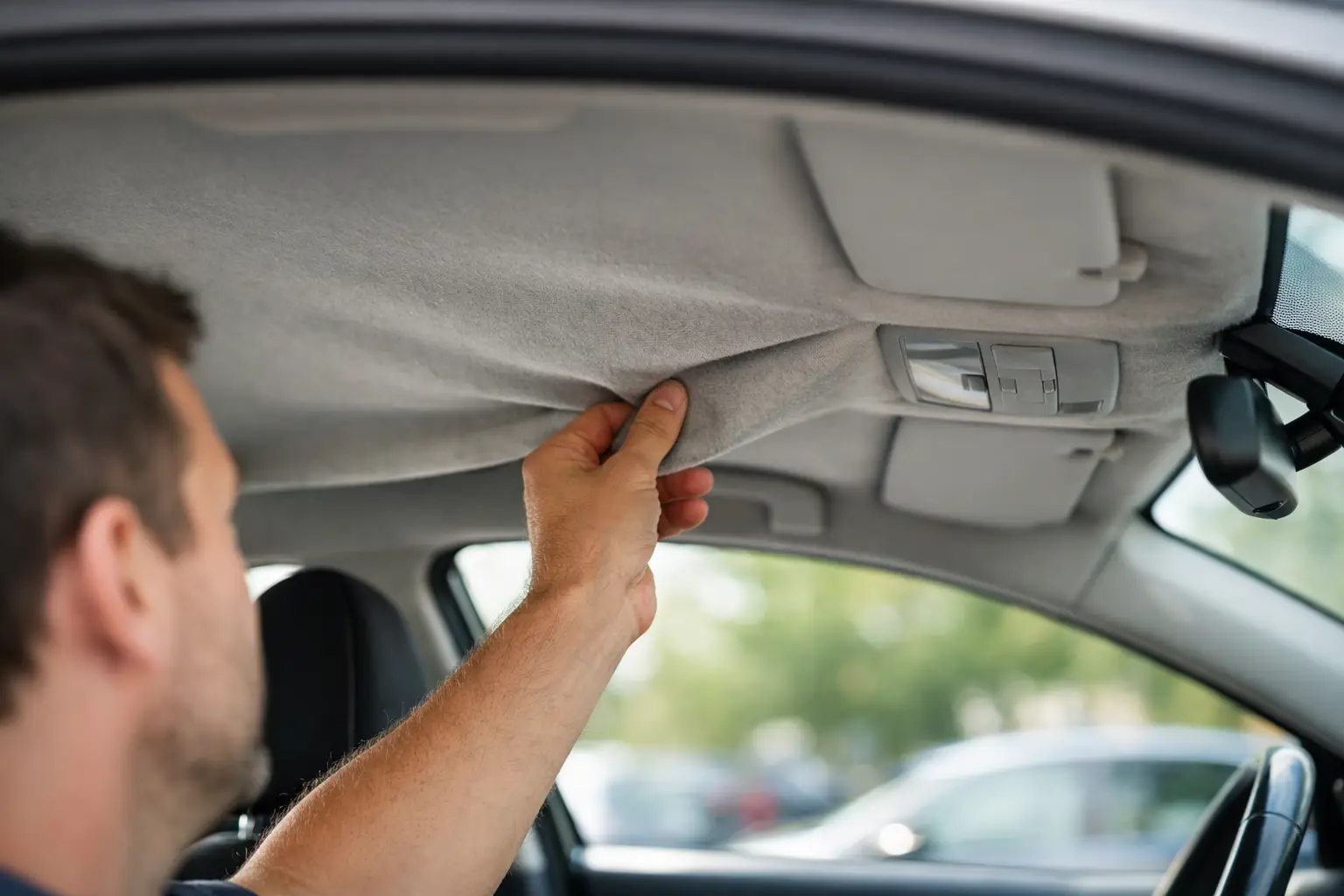
Roof lining rarely drops all at once. The first clues are usually subtle. You might notice waviness around the dome light, slight separation near the windscreen edge, or a soft ballooning effect above the rear passenger area. On some cars, the fabric begins to come away around grab handles or sun visors first.
A stale or dusty smell inside the cabin can also appear when old foam is breaking down. If you gently touch the lining and it feels loose, fragile or uneven, the material underneath may already be disintegrating. At that point, cosmetic fixes are unlikely to hold for long.
It is best not to ignore these early signs. Once sagging becomes severe, the fabric can crease, stretch or tear. The backing board may also suffer damage during removal if the lining has been repeatedly disturbed by makeshift repairs.
Can you fix a sagging roof lining yourself?
This depends on what you mean by fix. If the goal is to stop the fabric falling onto your head for a short while, there are temporary methods people use. If the goal is a correct, durable repair, the answer is usually no.
A proper roof lining repair involves removing trim components, taking out the board, stripping off failed fabric and decayed foam, preparing the backing carefully, and applying new automotive-grade material with the right adhesive. That process needs control, cleanliness and experience. If the board is bent, cracked or contaminated, the finish can suffer even with new fabric.
DIY repairs often fail because they treat the symptom instead of the cause. Spraying glue through a gap does not restore the foam. Pinning the fabric in place may stop it dropping, but it leaves visible marks and uneven tension. In warm conditions, many consumer adhesives soften again, especially on broad roof surfaces.
There is also the question of access. Some vehicles have large one-piece boards that are awkward to remove without careful handling. Cars with sunroofs, curtain airbags, complex trim layouts or tight cabin openings need even more attention. This is why specialist in-house work tends to give better long-term results than improvised fixes.
Repair or replace – what is the right approach?
If the board is still structurally sound, a proper re-trim is usually the right solution. That means replacing the old material and rebuilding the surface correctly rather than trying to save degraded foam. For most sagging headlinings, this is the standard and most sensible repair route.
Replacement becomes relevant when the backing board is badly damaged, warped by moisture, broken during previous handling, or no longer suitable for reuse. Some vehicles also have model-specific challenges where sourcing or remanufacturing parts makes more sense than reworking a compromised panel.
This is where honest assessment matters. A specialist workshop should explain what condition the board is in, whether hidden water ingress is present, and what material choices are appropriate for the vehicle. Premium cars, classics and convertibles often need a more considered approach because finish quality and material match are part of the value of the car itself.
Why workmanship matters more than a quick price
A roof lining sits in direct view every time you enter the vehicle. If the material is slightly off, the edges are untidy, or the contours around lights and handles are poorly finished, it shows immediately. More importantly, weak prep work can lead to repeat failure.
Good headlining work is not just about sticking fresh fabric overhead. It is about disciplined removal, careful cleaning of the board, correct adhesive use, proper curing and neat refitting. There is no real shortcut if the aim is a result that looks right and lasts.
For owners of older or higher-value vehicles, there is another consideration. A sloppy interior repair can make the whole cabin feel neglected, even when everything else is in good order. A properly restored lining, by contrast, lifts the entire interior and supports long-term care of the vehicle.
At 8 Cushion, this kind of work is handled in-house because quality control matters. When a specialist team manages the process from inspection to refit, there is clearer accountability and fewer compromises.
When to act
If your lining has just started to ripple, now is the right time to have it checked. Waiting rarely makes the repair simpler. The longer the fabric hangs, the greater the chance of staining, stretching or damage to the board.
There is also a practical point. A sagging section near the front can interfere with visibility and become a distraction while driving. Even when it is not yet severe, the interior will continue to deteriorate until the failed material is properly dealt with.
A sound vehicle deserves an interior that matches it. If you are asking why does car roof lining sag, the real issue is usually age, heat and material breakdown – but the outcome depends on how the repair is approached. A careful, specialist fix restores more than appearance. It brings the cabin back to the standard the car should have had all along.
Related posts
Custom Car Interior Refurbishment Done Right
Custom car interior refurbishment restores comfort, value and finish with specia
7 Signs of Windscreen Seal Failure
Spot the signs of windscreen seal failure early. Learn what leaks, noise, rust a
Alcantara Versus Leather Car Interiors Compared
Alcantara versus leather car interiors: compare comfort, heat, upkeep, durabilit