


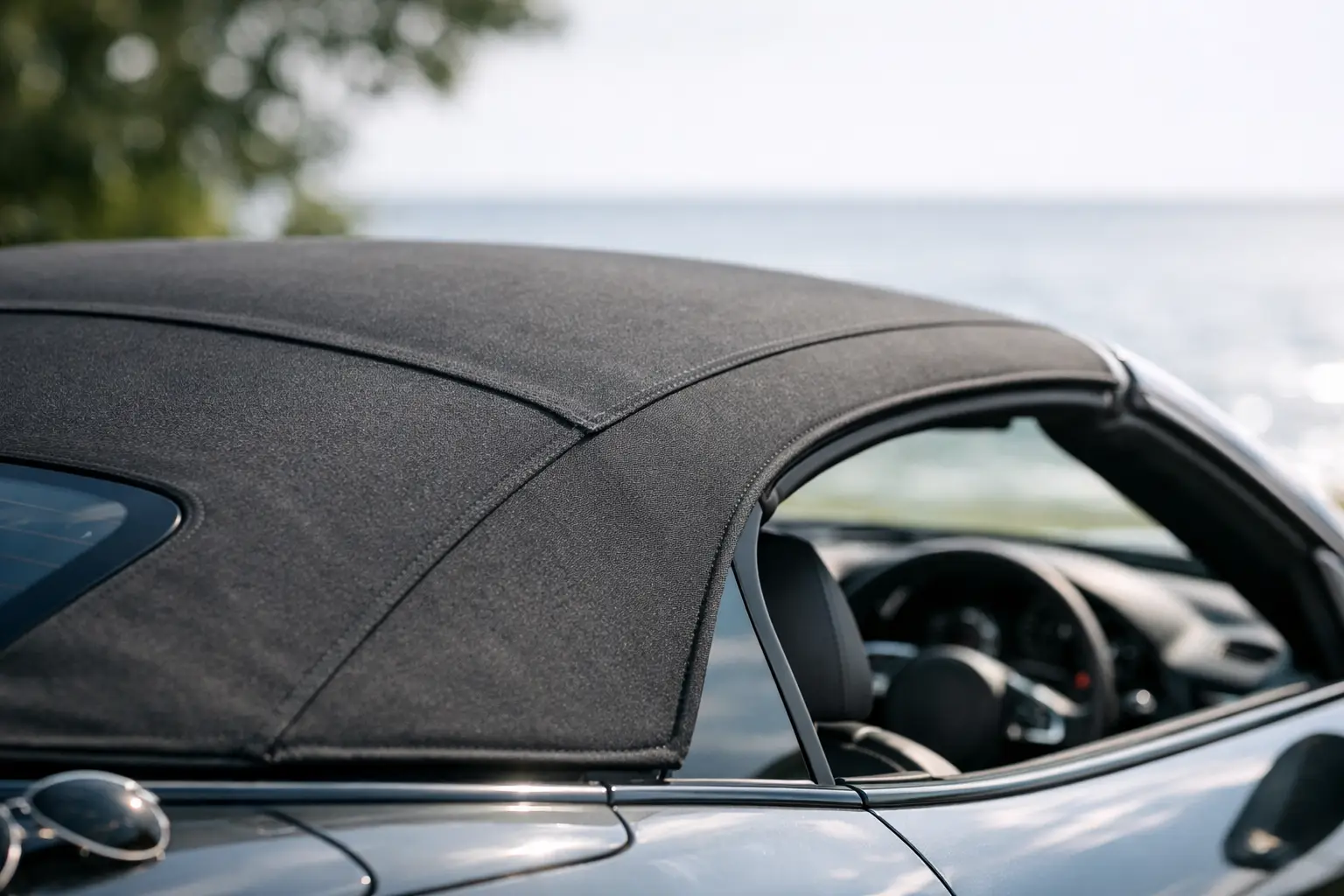
Convertible Roof Fabric Review: What Matters
A convertible roof can look perfectly acceptable from a distance while already losing the qualities that keep the cabin dry, quiet and properly finished. This convertible roof fabric review looks beyond colour and first impressions, focusing on the material, construction and fitting details that determine whether a replacement soft top is a sound long-term investment.
For convertible owners in Singapore, heat, humidity, heavy rain and regular sun exposure place real demands on a fabric roof. The right choice is not simply the darkest fabric, the lowest quoted price or the material that feels thickest in hand. A proper assessment considers how the roof will sit on the frame, seal against the glass, fold into its storage area and age with the vehicle.
What a convertible roof fabric is expected to do
A soft top is a working exterior component, not merely a trim panel. It must resist ultraviolet exposure, shed water, tolerate repeated folding and maintain a clean profile across a moving roof mechanism. It also contributes to cabin comfort by reducing wind noise and insulating the interior from heat and rain.
Most quality fabric roofs use multiple layers. The outer layer provides the visible finish and weather resistance. Beneath it, reinforcement layers add strength and dimensional stability, while an inner lining gives the cabin a more refined appearance and helps manage noise. The exact construction varies by vehicle and roof design, but the principle is consistent: every layer has a job.
This is why a roof that appears similar at first glance may perform very differently after a year or two. A material can have an attractive grain and colour yet stretch too easily, fade prematurely or become difficult to tension correctly. Conversely, a suitable automotive-grade cloth, fitted with care, can preserve the original character of the car while offering dependable daily use.
Convertible roof fabric review: material is only one part
When reviewing roof fabric, the visible surface naturally receives the most attention. Owners often compare canvas-like textures, smooth finishes and shades of black, blue, burgundy or beige. These choices matter, particularly on a classic or premium vehicle, but they should not overshadow the less visible requirements.
Outer cloth and weather resistance
A good outer cloth should hold its colour, resist water penetration and remain stable through frequent heat cycles. In Singapore, intense sunlight can dry and fade lower-grade material, while sudden rain tests the fabric’s coating and the roof’s drainage path. Water beading on the surface is useful, but it is not the only sign of a healthy roof. The seams, rear window surround and edge binding must also prevent moisture from reaching the inner layers.
Do not assume that a heavier fabric is automatically better. Excessively thick material can be difficult to fold neatly on some roof frames, creating pressure points or uneven stacking. The correct material is one suited to the vehicle’s original roof geometry and mechanism.
Inner lining and cabin finish
The inner face of a convertible top is easy to overlook until it starts sagging, staining or separating from the outer material. A clean, well-tensioned lining makes a substantial difference to the cabin, especially with the roof raised. It should sit evenly around bows and corners, with no loose sections that flap or rub during operation.
The lining also affects perceived quality. Owners restoring a cherished car may prefer a finish close to the factory specification, while a modern convertible may require a particular material profile to keep the roof operating as intended. Independent advice is valuable here because the best choice depends on the model, the condition of the frame and the owner’s priorities.
Stitching, seams and bindings
Stitching is a key point of failure on tired roofs. Sun exposure weakens thread, repeated tension pulls at seams, and improper repairs can leave uneven lines that channel water towards vulnerable areas. Quality work requires appropriate thread, controlled stitch spacing and careful alignment from the first panel to the last.
Bindings around the edges are equally important. They help the roof meet the frame, seals and tension cables correctly. If an edge is cut or finished inaccurately, the roof may look acceptable when stationary but produce wind noise, lift at speed or allow water past the seals.
Fitment is the real test of a replacement roof
A replacement convertible top should never be judged only while it is laid flat on a workbench. The meaningful test comes after it has been installed, tensioned and operated through its full range. The roof needs to meet the windscreen header, side windows and rear deck in the correct sequence, without forcing the mechanism or leaving excess material at the folds.
A poor fit can create problems that are wrongly blamed on the fabric itself. Uneven tension may lead to wrinkles across the roof. Misaligned side sections can leave gaps at the windows. A rear window may sit under strain, and water can enter through a seal that was not properly seated during installation.
Older vehicles and restoration projects deserve particular care. Their frames may have worn pivots, tired straps, damaged seals or previous repairs that changed the original geometry. Replacing the fabric without checking these related components can produce a disappointing result. In some cases, the right decision is to address the roof frame or weather seals before fitting new material.
At 8 Cushion, convertible-top work is handled in-house so the inspection, material selection, preparation and fitting remain under one accountable process. That matters because a roof is only as good as the workmanship joining its materials, frame and seals together.
Choosing between restoration and replacement
Not every aged convertible roof needs complete replacement. A local repair can make sense when damage is limited to a small tear, a loose seam or a specific worn section, provided the rest of the cloth remains stable and waterproof. Repairing a sound roof can preserve original material and avoid unnecessary expense.
However, isolated repairs have limits. If the fabric is brittle, badly faded, shrinking, porous or separating across several areas, patching may only delay a larger problem. The same applies when the inner lining has deteriorated widely or the rear window area is pulling away. A full replacement gives the roof a consistent finish and allows the underlying components to be inspected properly.
Price should be considered in this context. A lower initial quote may exclude material grade, lining work, seal checks, roof-frame adjustments or proper finishing around the rear window. Transparent scope is more useful than a headline figure. Owners should understand what is being replaced, what is retained and what condition-related issues may affect the final result.
Care that protects fabric and workmanship
A new roof benefits from regular but gentle care. Harsh household cleaners, abrasive brushes and solvent-based products can damage coatings, dry out stitching or leave marks in the fabric. Use products intended for automotive convertible cloth, follow the recommended dilution and rinse thoroughly.
It is also wise to clear leaves, dust and debris from roof gutters and drainage areas. Blocked drains can cause water to collect where it should not, leading to damp carpets, unpleasant odours and corrosion concerns that have little to do with the roof fabric itself.
Avoid lowering the roof when it is heavily wet or dirty where possible. Folding contaminated fabric can create abrasion lines and trap moisture between layers. If the car is parked outdoors for long periods, periodic cleaning and protection are preferable to waiting until staining or fading becomes obvious.
Questions worth asking before approving the work
Before committing to a fabric roof replacement, ask whether the proposed material suits your exact model and roof mechanism. Confirm whether the lining, tension straps, seals and rear window surrounds will be inspected as part of the process. It is also reasonable to ask how the workshop will assess alignment, water resistance and roof operation after fitting.
For a vehicle with restoration value, discuss originality as well as durability. The closest factory-style grain or lining may be the right choice for one owner, while another may prioritise easier maintenance or improved insulation. Neither preference is wrong, but the decision should be deliberate rather than driven by what happens to be readily available.
The best convertible roof fabric is the one that suits the car, is installed with disciplined attention to detail and can withstand the way you actually use it. A careful inspection before the old roof comes off gives you the clearest path to a finish that looks right, works properly and remains worth protecting.
Related posts
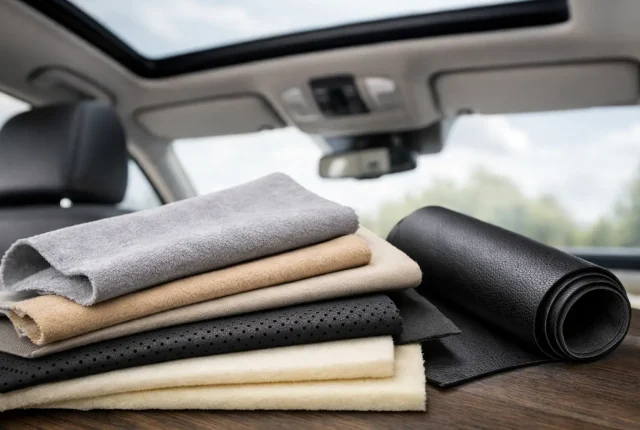
Best Materials for Car Roof Lining
Choosing the best materials for car roof lining depends on heat, durability and
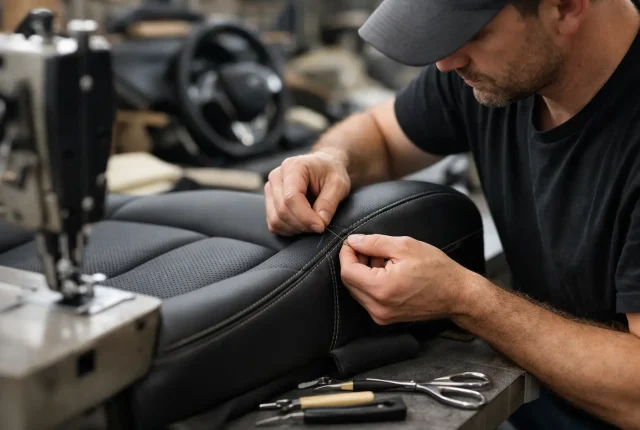
How to Learn Automotive Upholstery Properly
Learn how to learn automotive upholstery with the right tools, practice plan, ma
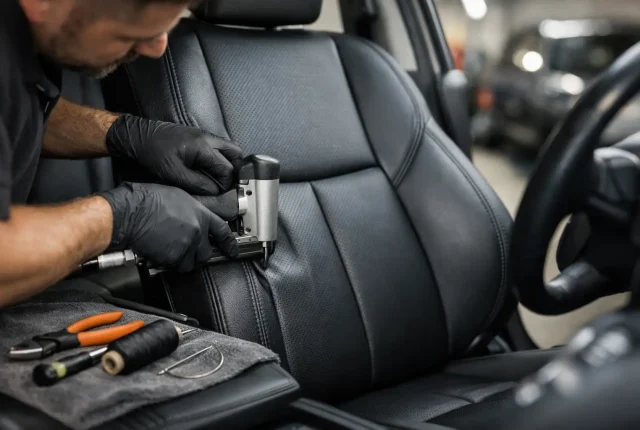
Best Auto Upholstery Repair: What Matters
Looking for the best auto upholstery repair? Learn what separates specialist wor