


What Causes Windscreen Distortion in Cars?
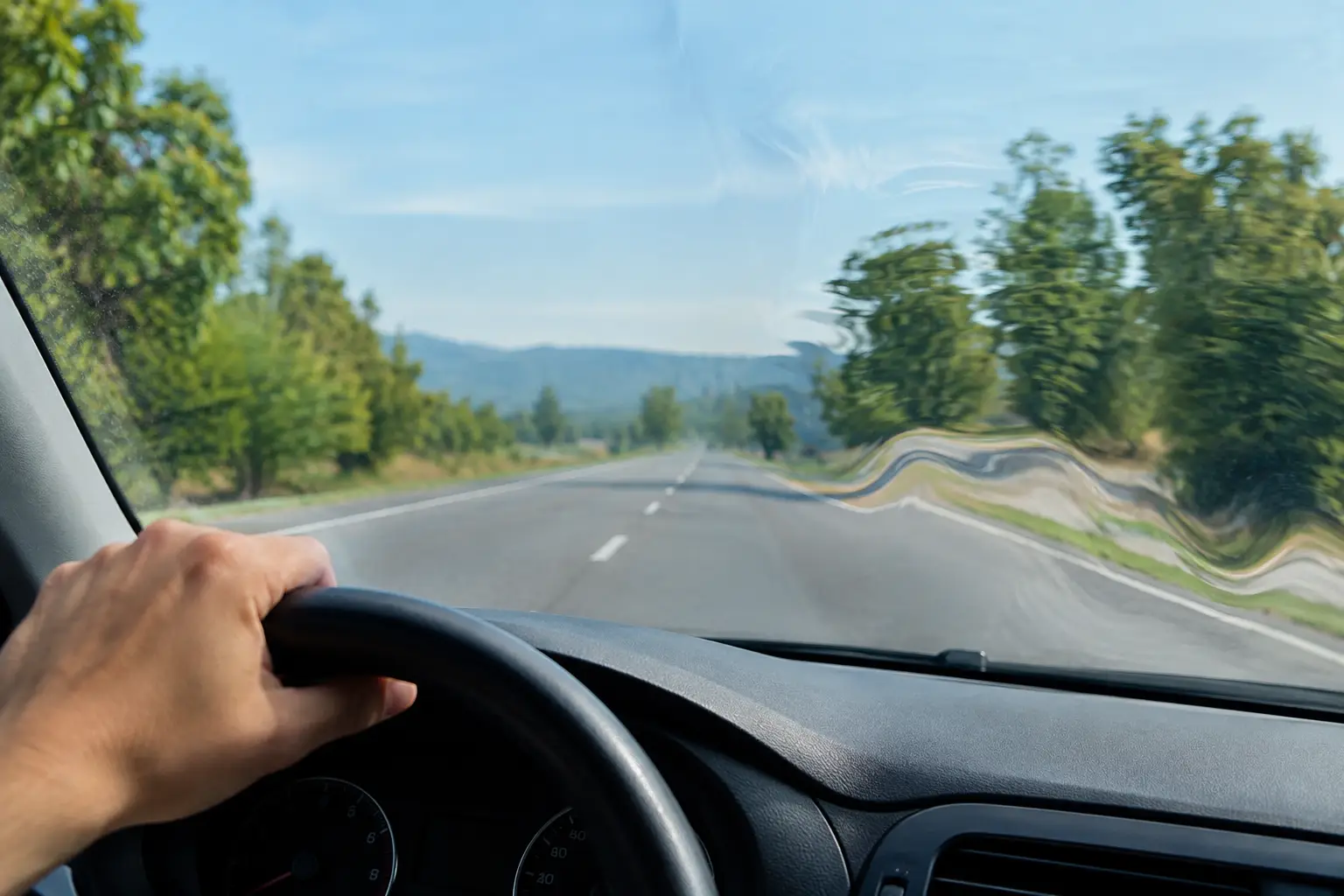
A windscreen can look clean and intact yet still make the road ahead appear to ripple, bend or shift as you drive. If you are asking what causes windscreen distortion, the answer is not always a crack or an obvious fitting fault. It may be an optical issue within the glass, tension introduced during installation, deterioration at the edges, or even a surface condition that only becomes visible in strong sunlight or rain.
For a driver, the concern is more than cosmetic. Distortion around the steering wheel line of sight can make lane markings, kerbs and vehicles seem to move unnaturally. Over time, it can contribute to eye strain, headaches and reduced confidence behind the wheel. On a premium, ageing or restoration-worthy vehicle, it can also undermine an otherwise carefully maintained appearance.
What causes windscreen distortion?
A modern windscreen is not simply a flat sheet of glass. It is a laminated safety component, normally made from two glass layers bonded around a plastic interlayer. It must also follow the precise curvature of the vehicle body, support the intended view from the driver’s seating position and, in many cars, provide a mounting surface for cameras, sensors and rear-view mirror equipment.
Small variations in any of these elements can change how light passes through the screen. The result may be a wavy view, a stretched image, a double outline or a localised area that looks uneven when you move your head.
Glass quality and optical variation
Not every replacement windscreen is made to the same optical standard. Lower-quality glass may have subtle inconsistencies in thickness, curvature or lamination. These are sometimes difficult to see when the vehicle is parked, but become clear when driving past repeated objects such as railings, road markings or building lines.
A degree of visual effect can occur at the outer edges of a deeply curved windscreen, especially where the glass wraps around the A-pillars. That does not automatically mean the glass is defective. However, distortion in the primary driving area, directly ahead of the driver, should not be dismissed as normal.
The correct screen is not only about matching the vehicle make and model. Specifications can differ for rain sensors, heads-up displays, acoustic layers, solar coatings, camera brackets and heating elements. Fitting an incorrect or poorly matched screen can affect both appearance and function, even if it physically fits the aperture.
Installation pressure and body alignment
A windscreen needs to sit accurately within the body aperture. If the bonding surface has not been prepared properly, if old adhesive has been cut back unevenly, or if the screen is positioned under pressure, the glass may not settle as intended.
This does not mean a windscreen can be casually bent into shape. Laminated glass is rigid and should not be forced. But uneven support, excessive local pressure or incorrect setting blocks can create stresses that may lead to visual irregularity, poor sealing or later cracking.
The condition of the vehicle itself also matters. After an accident repair, the windscreen aperture may be slightly out of alignment even when panel gaps look acceptable. Corrosion around the frame, previous poor-quality repairs, or distorted trim can also prevent the replacement screen from sitting correctly. A disciplined workshop checks the surrounding structure instead of treating the windscreen as an isolated part.
Heat, sunlight and rapid temperature changes
Singapore’s heat and intense sunlight can reveal windscreen problems that were less obvious before. Heat does not usually make a sound laminated windscreen permanently warp in normal use. Claims that a healthy screen has simply “melted” or bent from the sun are rarely accurate.
What heat can do is place extra stress on glass that already has a chip, an edge defect or uneven pressure from installation. Rapid temperature changes can have the same effect. For example, directing very cold air-conditioning at a heavily sun-heated screen may increase the chance of a small existing defect spreading into a crack.
Heat can also accelerate deterioration of accessories and treatments on the glass. Old tint film may develop haze, bubbling or a rippled appearance. Worn coatings, adhesive residues and degraded dashboard materials can produce reflections that drivers mistake for distortion within the windscreen itself.
Stone chips, scratches and surface wear
A chip does not need to be large to interfere with vision. Damage in the driver’s direct view can refract light and become particularly distracting at night, in rain or when facing low sun. Fine scratches from dry wiper use, abrasive cleaning methods or contaminated wiper blades may create a broad hazy area rather than one obvious mark.
Road grit caught beneath a wiper blade can leave curved scratches that scatter light across the glass. In heavy rain, worn wipers may also leave a water film that makes the screen appear wavy. This is a surface performance issue rather than true glass distortion, but the effect at the wheel can be much the same.
A trained inspection should separate repairable surface damage from an optical defect in the glass itself. Polishing may improve very light surface marks in selected cases, but aggressive polishing can alter optical clarity or create a lens effect. It is not a universal cure.
Delamination and edge deterioration
The laminated construction of a windscreen is designed to hold the glass together during an impact. If moisture enters at a damaged edge, the bond between glass and interlayer can begin to break down. This may show as milky edges, bubbles, discolouration or a spreading cloudy patch.
Delamination is more likely where the screen has been chipped at the edge, incorrectly handled during an earlier replacement, or exposed to long-term moisture intrusion. Once it has progressed, replacement is usually the sounder option. Attempting to hide the appearance does not restore the screen’s integrity or optical quality.
Reflections, tint and the dashboard
Not every visual complaint comes from the windscreen. A glossy dashboard, a light-coloured dash top, poorly fitted tint or reflective items placed near the base of the glass can create a second image across the driver’s view. This is most noticeable at night, in tunnels and during wet-weather driving.
Aftermarket tint deserves careful assessment. Low-quality film, contamination beneath the film or heat-related film deterioration can all cause visual unevenness. On vehicles with advanced driver-assistance cameras, the tint placement and windscreen specification must also be compatible with the sensor area. A clear view for the driver and a clear view for the vehicle’s systems both matter.
How to tell whether the distortion needs attention
Park safely and look through the screen at a straight, stationary feature such as a building edge, gate or lamp post. Move your head slowly from side to side. A localised wave or bend that travels across the feature can indicate an optical issue. Repeat the check from the passenger side, as the driver’s seating position can make certain effects more apparent.
Then inspect the glass in good daylight. Look for chips, star cracks, edge haze, scratches, lifting tint and signs of moisture around the perimeter. Check whether the issue remains after cleaning the inside and outside of the windscreen, and whether it becomes worse with wipers operating or in rain.
Do not rely on a quick look alone if the concern sits in your main driving view. A screen can appear acceptable from outside the car while creating a distracting optical effect from the driver’s seat.
When repair is suitable and when replacement is the safer choice
A small stone chip outside the driver’s main viewing area may be repairable, depending on its size, depth, position and age. Prompt action can prevent moisture and dirt from entering the damage. A specialist should assess it before assuming that replacement is necessary.
Replacement is generally more appropriate where there is a crack, significant delamination, widespread scratching, distortion in the primary viewing zone, damage at the edge, or a screen that is not correctly specified for the vehicle. If camera or sensor equipment is fitted, the correct glass and post-installation calibration requirements must be considered as part of the job, not as an afterthought.
There is a trade-off between the lowest initial replacement cost and lasting clarity. The cheapest available screen may be tempting, but poor optical quality, incorrect features or careless installation can create a second problem immediately after the first has been removed. For vehicles that owners intend to keep, restore or protect for resale, the better decision is usually to establish the true cause before choosing the remedy.
At 8 Cushion, windscreen-related work is approached with the same care given to convertible tops, roof linings and interior restoration: assess the vehicle, identify the right scope, and carry out the work with clear accountability. The condition of the glass, frame, trim and fitted equipment should be considered together.
If straight road lines appear to flow, headlights flare unusually, or your eyes feel strained on familiar journeys, trust that observation. A properly specified and correctly fitted windscreen should disappear from your attention, leaving you with a clear, comfortable view of the road.
Related posts
Best Convertible Roof Cleaning Products Reviewed
Find the best convertible roof cleaning products for fabric and vinyl soft tops,
How to Restore Sagging Roof Lining Properly
Learn how to restore sagging roof lining with sound diagnosis, suitable material

Car Interior Rejuvenation, Uplift Your Self-confidence
Dinner is set at 7pm, Hotel Fullerton. You put on a tie to look smart, styled up