


Headliner Replacement Comparison: Repair or Renew?
A sagging roof lining can make an otherwise well-kept car feel neglected every time you open the door. In Singapore’s heat and humidity, deteriorated foam backing is a common cause. This headliner replacement comparison looks beyond the cheapest visible fix, so you can choose work that suits your vehicle, budget and expectations.
What has actually failed?
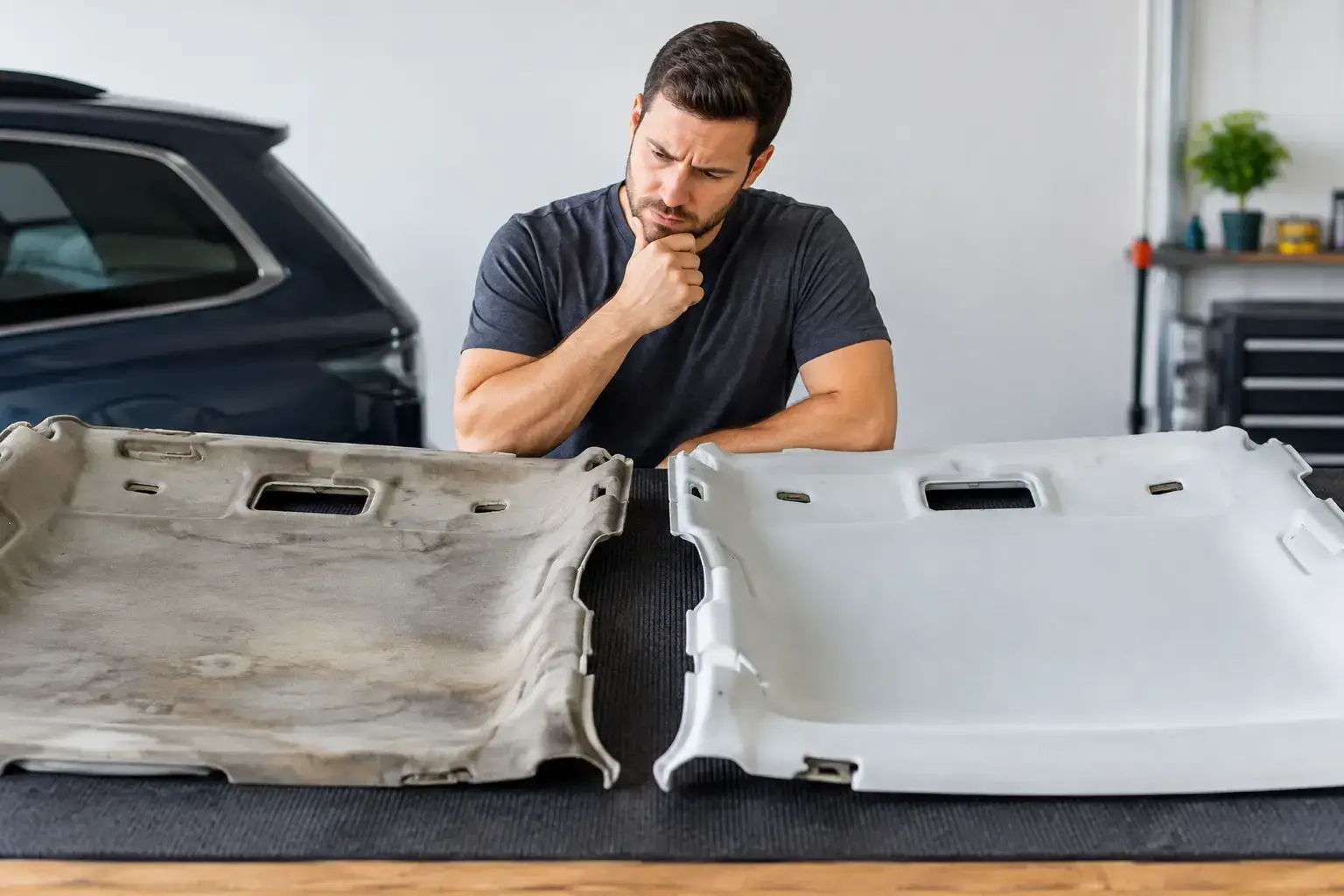
Before deciding between repair and replacement, establish whether the problem is local or structural. A headliner is usually made up of the roof board, a thin foam layer and the visible fabric. Over time, the foam can break down and turn to powder. The fabric then loses its bond to the board and begins to sag, wrinkle or detach around the edges.
If a small area has come loose because of a damaged trim clip, windscreen work or an isolated impact, a targeted repair may be sensible. If the fabric is drooping across the cabin, however, the adhesive beneath it has normally failed over a wider area. Pressing it back into place does not restore the degraded foam, and the lining often drops again.
The roof board itself also needs inspection. Water ingress, a leaking sunroof, a damaged convertible top or poor previous repairs can warp, soften or crack the board. In these cases, fresh fabric alone is not a complete solution. The underlying cause must be addressed first.
Headliner replacement comparison: your main options
Spot repair
A spot repair is the lowest-cost option and can be appropriate for a very small, contained issue. It may involve refitting an edge, replacing a clip or securing a section that was disturbed during another repair.
It is not usually the right answer for foam failure. Pins, staples and visible adhesive marks can hold fabric temporarily, but they can also damage the roof board and leave a finish that looks improvised. For owners preserving a premium, classic or enthusiast vehicle, this short-term approach rarely represents good value.
Overlay or partial retrim
Some providers offer to cover the existing lining or treat only the visibly sagging section. This can appear attractive because it reduces removal time. The trade-off is that the failed material remains underneath. Added thickness may affect the fit around grab handles, sun visors, lights and pillar trims, while seams or mismatched texture can be noticeable.
A partial retrim can work where the original design is already sectional and the surrounding material is sound. It is less suitable for a one-piece headliner with widespread deterioration. A specialist should explain clearly where the new material will begin and end, rather than presenting a partial solution as a full restoration.
Full headliner replacement
A full replacement is normally the most durable choice when the fabric has sagged across a large area. The headliner board is removed, old fabric and failed foam are stripped away, and the surface is carefully prepared before new automotive-grade material is fitted.
This method takes more time because the interior must be dismantled methodically. Handles, lamps, visors, weather strips and trim components may need removal, depending on the vehicle. The benefit is a clean finish, correct tension and proper treatment of the entire board rather than only the portion you can see from the driver’s seat.
For cars with complex roof shapes, panoramic openings, rear entertainment fittings or fragile aged trims, experience matters as much as material choice. Careful removal prevents broken clips, damaged pillar trims and poor refitting later.
Material choice changes the result
Not all headliner fabrics are interchangeable. A suitable material needs the right stretch, thickness, backing and heat tolerance for the roof board and vehicle design. A fabric that looks similar on a sample card may fit poorly around contours or separate prematurely in a hot cabin.
Most modern vehicles use foam-backed automotive headliner cloth. It offers a neat, soft finish and conforms well to shaped boards. The foam thickness should be appropriate for the original construction. Too thin can make the board’s imperfections visible; too thick can create bulky edges and interfere with trim fitment.
For heritage, luxury or customised interiors, other materials may be considered. Suede-effect fabrics can provide a richer appearance but require careful handling and have a different maintenance profile. Original-style woven cloth may be the better choice for a period-correct restoration. The right answer depends on how the car is used and whether authenticity or a tailored new look is the priority.
Colour deserves the same consideration. Matching the original shade usually protects the car’s cohesive appearance and resale appeal. A darker roof lining can create a more sporting cabin but may make a small interior feel less open. Viewing samples against the actual seats, pillars and dashboard is more reliable than choosing from a photograph.
Cost comparison: look at scope, not only price
Headliner quotations can differ significantly, even for the same model. That does not automatically mean one workshop is overcharging or another is offering better value. The scope may be entirely different.
A meaningful quotation should clarify whether it includes removal and refitting, stripping the old foam, board preparation, new material, adhesive, replacement clips where required, and reinstatement of lamps, visors and trims. It should also state whether related work, such as repairing a water leak or cracked board, is included or priced separately.
A low initial figure may exclude essential preparation or rely on a quick in-car application. That can be suitable for a vehicle nearing the end of its life, but it is not comparable with a properly removed and retrimmed headliner. Conversely, a full restoration may not be necessary if the issue is genuinely limited to one component.
For convertible owners, the distinction is especially important. A convertible top, roof lining and interior headliner may involve separate layers and mechanisms. The correct repair depends on which layer has failed. Treating a visible interior symptom without checking the top’s drainage, seals and frame condition can lead to repeated damage.
Why in-house workmanship matters
A headliner job is judged long after collection. The fabric should sit evenly, the edges should be secure, lights and visors should operate correctly, and the surrounding trims should be refitted without rattles or marks.
In-house execution gives a specialist workshop direct control over each stage: inspection, dismantling, preparation, material handling, trimming and quality checks. It also creates clear accountability if hidden damage is found after removal. Rather than passing work between suppliers, the team handling your vehicle can explain the condition of the board and recommend the appropriate next step.
This does not mean every car needs the most extensive option. Good advice is vehicle-specific. A daily-driven hatchback, a family saloon, a classic coupe and a premium convertible deserve different considerations. The useful question is not simply, “What is the cheapest repair?” It is, “What will solve the actual failure without creating another problem?”
Questions worth asking before approving work
Ask how the workshop will assess the roof board and whether the old foam will be fully removed. Confirm the proposed material type and colour, then ask if removal and refitting of associated trims are included. If there is evidence of moisture, ask what will be checked before the new lining goes in.
It is also reasonable to ask who performs the work. Specialist interior restoration is not a generic add-on service. At 8 Cushion, core trim work is handled in-house, allowing the team to maintain process control and discuss the work directly with the owner.
A clear handover discussion is valuable too. You should know how long the work is expected to take, whether any aged clips may need replacement, and what care is recommended after collection. Freshly retrimmed interiors benefit from sensible use while adhesives and materials settle, particularly in very hot weather.
The best time to address a sagging headliner is before it begins obstructing rearward vision, catches on passengers’ heads or pulls against fragile trim. Bring the vehicle in for a proper assessment with the roof lining visible in its current condition. A disciplined inspection will tell you whether a careful repair is enough or whether a complete retrim is the honest, lasting route.
Related posts
What Causes Convertible Top Shrinkage Over Time?
Learn what causes convertible top shrinkage, how heat, age and poor care affect

Can Car Seat Leather be Repaired?
If you’ve spotted a tear, hole, or crack in your leather car seat, it’s unde
Best Car Headliner Fabric Options Explained
Compare the best car headliner fabric options for heat, durability, fit and fini