


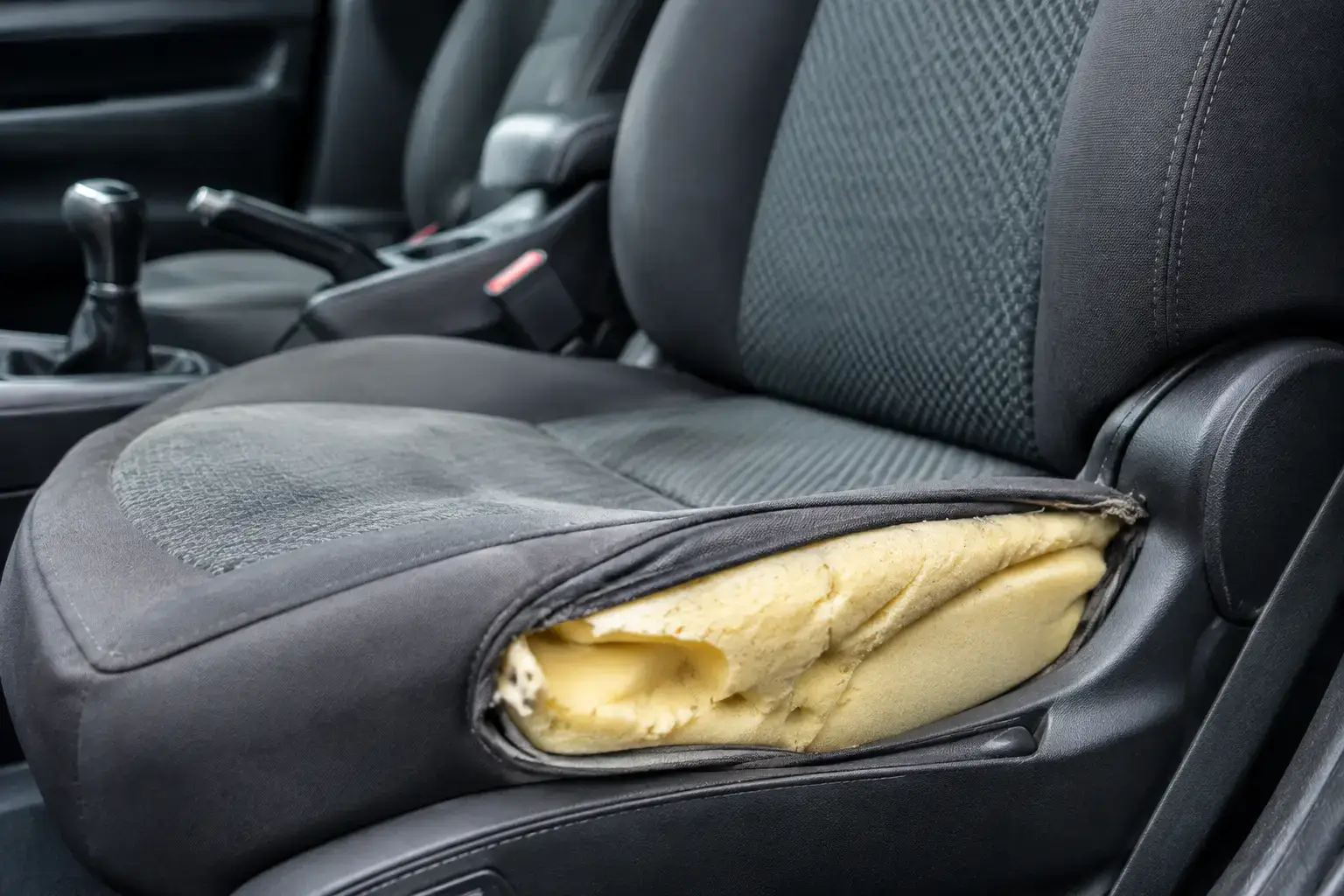
Why Seat Foam Collapses in Car Seats
A driver may first notice it at a traffic light: one side of the seat feels lower, the bolster presses into the hip, or a familiar driving position suddenly causes discomfort. Understanding why seat foam collapses helps you deal with the real issue before worn upholstery, damaged frames and poor posture turn a repairable seat into a more involved restoration.
Seat foam is not merely padding beneath the trim. It gives the seat its shape, supports the body, holds the cover correctly and works with the springs or support structure below. When it loses strength, the effect is felt long before the seat looks completely worn out.
Why Seat Foam Collapses Over Time
Most vehicle seats use moulded polyurethane foam. When new, it contains a network of small air cells that compress and recover as the driver gets in and out. Years of repeated loading gradually weaken those cells. Once the foam no longer rebounds fully, it becomes permanently compressed, softer in some areas and uneven across the cushion.
The driver’s seat usually fails first because it receives the most concentrated use. The outer bolster carries stress every time someone slides across it. The front edge of the cushion takes repeated pressure from the thighs, while the centre section supports the driver’s weight on every journey. A car with modest mileage can still have a tired driver’s seat if it has spent years in daily stop-start use.
Age matters as much as mileage. Foam slowly dries, oxidises and loses flexibility, even in a car that is carefully maintained. In Singapore, high cabin temperatures and humidity can speed up material ageing. Heat makes foam soften and expand; repeated heating and cooling places additional strain on its cellular structure. Moisture is not always the direct cause, but a damp interior from a leaking roof, door seal or window can contribute to odours, mould and deterioration beneath the seat cover.
The Signs Are Not Always Obvious
A collapsed cushion does not always look flat. Modern seat covers, especially leather and thick fabric trims, can conceal the condition of the foam beneath. The clearer signs are usually felt rather than seen: a low sitting position, a tilted pelvis, a hard point under one thigh or a seat that feels as though it has a hollow in the middle.
You may also notice that the upholstery has become loose or wrinkled. This happens because the cover was cut and fitted around the original foam profile. As the cushion shrinks or breaks down, the cover loses the firm foundation that kept it smooth. Pulling the cover tighter may improve its appearance briefly, but it cannot restore the support that has disappeared.
On bolstered sports seats, worn side bolsters are particularly common. The leather or fabric may split because the foam underneath has softened, shifted or crumbled. Repairing only the visible trim leaves the underlying cause in place. A proper result requires the seat to be assessed as a complete assembly.
What Can Make a Seat Fail Earlier?
Not every collapsed seat is simply the result of normal use. Several conditions can accelerate wear, and identifying them prevents the same problem from returning after repair.
A damaged seat base, broken spring, stretched support webbing or bent frame can concentrate pressure in one area of the foam. The cushion then collapses unevenly, often creating a sharp or uncomfortable spot. In these cases, replacing foam alone is not enough. The support system has to be inspected and repaired before the rebuilt cushion is fitted.
Poor previous repairs are another cause. Adding a thin layer of generic foam over a tired cushion may raise the seat temporarily, but it often creates an unnatural shape and does little for lasting support. Very soft foam can feel comfortable in the workshop, yet it may compress quickly in service. Excessively firm foam has the opposite problem: it can make the seat feel hard, place strain on the cover and alter the intended driving position.
Incorrect cleaning products can also have an indirect effect. Saturating seat upholstery during cleaning allows moisture to reach the foam, while harsh chemicals may damage the adhesive or backing materials that help the trim hold its shape. For convertible owners, water ingress should never be ignored. A roof or drainage issue can affect far more than the carpet if moisture remains trapped inside the cabin.
Why the Right Foam Matters
Seat foam is selected for density, firmness, resilience and shape. These are related, but they are not the same. Density influences durability; firmness affects how the seat feels under load; resilience determines how well the material recovers after compression. A suitable repair material needs to work with the vehicle’s original design, not simply make the cushion feel thicker.
There is no single “best” foam for every car. A luxury saloon may require a more progressive, cushioned feel, while a performance seat relies on firmer bolsters to keep the driver stable. Older vehicles can have seat constructions that differ greatly from current models, with springs, wire frames, coconut fibre pads or layered materials beneath the upholstery. Restoration work requires judgement, not a one-size-fits-all insert.
Where possible, a foam repair should retain the seat’s intended contours. The height, thigh support, lumbar area and bolster profile all affect comfort and control. Changing them without care can make the seat look acceptable while feeling wrong on a longer drive.
Repair, Rebuild or Replace?
The correct approach depends on the condition of the foam and the support structure. Localised damage, such as a worn outer bolster or a small split, can often be rebuilt by removing weak material and bonding in carefully shaped replacement foam. This preserves sound areas of the original cushion and is often appropriate for a seat that has otherwise aged evenly.
If the centre cushion has lost its support across a wide area, a more comprehensive rebuild may be the better option. The cover is removed, the frame and supports are checked, and the foam is rebuilt or replaced to restore the seat’s proper profile. This is also the sensible time to address loose stitching, damaged seams, worn leather panels or degraded fabric, because the trim is already off the seat.
Replacement can be necessary where foam has severely crumbled, absorbed contamination, or no longer provides a stable base for the upholstery. However, replacement should not mean fitting the nearest available universal cushion. The fit around the frame, recliner mechanisms, airbags, sensors and trim components must be considered. Seats in newer vehicles may contain occupancy sensors, heating elements and side airbag systems, so disassembly needs careful handling.
Why Surface Fixes Rarely Last
A seat cover can be re-coloured, re-stitched or patched, but upholstery is only as sound as the structure beneath it. When foam is collapsed, the cover continues to flex over an uneven base. That movement puts stress on repaired seams and weakens leather at the bolster edge.
Similarly, a cushion topper or loose pad may make a seat feel better for a short period, but it raises the driver without correcting the failed base. It can interfere with the intended relationship to the steering wheel, pedals and seatbelt. For regular driving, proper support is safer and more comfortable than an improvised layer.
A disciplined repair begins with inspection. The seat should be removed where necessary, stripped carefully, and assessed for foam condition, frame damage, support failure and trim deterioration. Material selection, shaping and fitting should then be carried out in-house so that workmanship remains accountable from the first assessment to final refitting.
When to Arrange an Inspection
Do not wait until the seat frame can be felt through the cushion. Early attention can limit damage to the upholstery and may allow a targeted rebuild rather than a full restoration. Persistent back or hip discomfort while driving, a sagging bolster, loose trim or a noticeably lower seating position are all valid reasons to have the seat checked.
For cherished, premium or ageing vehicles, restoring the seat properly also protects the character and value of the interior. At 8 Cushion, the focus is on examining the complete seat rather than selling a quick cosmetic fix. The aim is a result that looks correct, supports the driver properly and stands up to daily use.
A well-restored seat should disappear from your attention once you are behind the wheel. You should simply sit comfortably, find your natural driving position and enjoy the car as it was meant to feel.
Related posts
Best Materials for Car Roof Lining
Choosing the best materials for car roof lining depends on heat, durability and
Windscreen Calibration After Replacement Guide
Our windscreen calibration after replacement guide explains when ADAS recalibrat

Can Car Seat Leather be Repaired?
If you’ve spotted a tear, hole, or crack in your leather car seat, it’s unde