


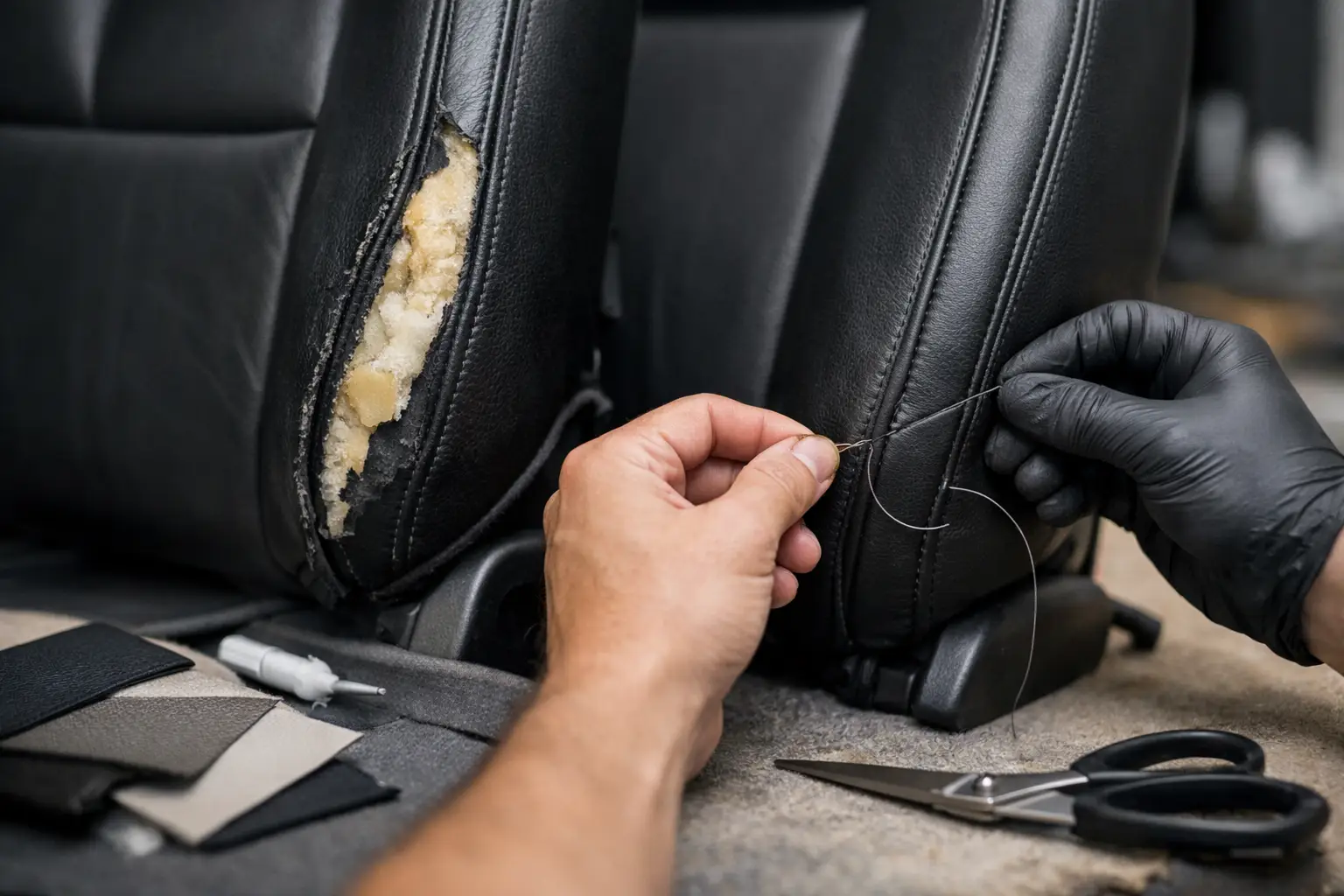
Car Seat Bolster Repair That Lasts
You usually feel a worn bolster before you properly see it. Sliding into the driver’s seat starts to feel uneven, the side support collapses under your weight, and the leather or fabric at the outer edge begins to crease, crack or split. That is where car seat bolster repair matters most – not as a cosmetic extra, but as a proper fix for comfort, support and the overall condition of the cabin.
The bolster is one of the hardest-working parts of any seat. It takes repeated pressure every time you get in and out of the vehicle, especially on the driver’s side. In Singapore, where heat, humidity and regular daily use speed up wear, bolster damage tends to show earlier than many owners expect. Premium cars, older vehicles and enthusiast models are especially vulnerable because the materials, stitching and seat shape are often more specialised.
What a worn seat bolster is really telling you
A damaged bolster is rarely just about surface wear. Sometimes the problem is limited to the outer trim layer. The leather may have dried, the top coating may have worn through, or the fabric may have frayed at the edge. In those cases, repair can be relatively straightforward if the surrounding material is still sound.
In other cases, the visible damage is only part of the story. The foam beneath may have softened, compressed or torn. The internal structure may no longer hold its original shape. If that is ignored, the seat can continue to deform even after the surface is patched. That is why proper assessment matters. A neat-looking finish is not enough if the seat no longer supports the driver as intended.
There is also the question of progression. Small cracks and flattening do not stay small for long on a high-contact area. Once the surface coating breaks down, friction increases, moisture gets in more easily, and the trim starts to fail faster. Acting earlier usually gives better repair options and a more natural end result.
Car seat bolster repair or full panel replacement?
This is where experience makes a difference. Not every bolster should be repaired in the same way, and not every seat needs a full retrim. The right approach depends on the material, the construction of the seat, the age of the vehicle and how visible the affected area is.
If the damage is light – mild cracking, worn dye, slight abrasion or minor compression – a localised repair may be the sensible option. This can preserve more of the original seat while controlling cost. For owners who want to maintain factory character, that can be important.
If the leather has split deeply, the stitching line has failed, or the panel has stretched beyond recovery, replacement of the affected section is usually the better long-term choice. The same applies when the foam has collapsed enough to alter the profile of the seat. Repairing only the surface in those cases often leads to disappointment, because the shape underneath continues to telegraph through.
For cloth seats, the decision can be even more material-dependent. Some fabrics can be repaired neatly, while others are difficult to match if a section needs replacing. Patterned inserts, perforated materials and model-specific trim can complicate the job. The best result is often the one that balances appearance, durability and the availability of suitable matching material.
Why bolster repairs fail
Most failed bolster jobs come down to one of three issues: poor preparation, poor material choice or poor judgement about scope.
If the technician treats a structural problem like a surface problem, the repair may look acceptable for a short period and then sink, wrinkle or split again. If low-grade filler, foam or trim material is used, the area can age at a different rate from the rest of the seat. And if colour matching is handled carelessly, the repaired section stands out every time the door opens.
The outer bolster is a high-friction point. It is not enough for the finish to look good under workshop lighting on the day of collection. It needs to withstand regular entry and exit, body movement, heat build-up and cleaning over time. That is why disciplined preparation matters – stripping back weak material, restoring shape where needed, and selecting a repair method that suits the seat rather than forcing a one-size-fits-all solution.
What proper car seat bolster repair should include
A sound repair starts with inspection, not assumptions. The workshop should assess the visible trim, the foam beneath, the seam condition and the broader state of the seat. If the opposite side bolster or adjacent panels are heavily worn, that should also be part of the discussion, because an isolated repair can sometimes make surrounding wear more obvious.
The next stage is deciding whether the seat needs surface restoration, foam rebuilding, panel replacement or a combination of these. On leather seats, colour and grain matching require care. On fabric seats, the challenge is often in securing a close match in texture and tone. Either way, the goal is not merely to cover damage but to restore the seat’s form and serviceability.
Good workshop discipline also shows in the unseen steps. Materials should be handled and stored properly. Cutting, trimming and stitching should be done with consistency. If foam is rebuilt, it should support the body correctly rather than simply making the seat feel firmer for a week. When work is carried out in-house, quality control is tighter because the same team assessing the problem is responsible for the final finish.
That is especially relevant for specialist interior work. A seat bolster may look like a small area, but it sits at the intersection of upholstery, shaping, finishing and material matching. It rewards care and exposes shortcuts.
Cost depends on more than the size of the damaged area
Owners often ask why a small bolster repair can vary so much in price. The answer is that the visible damaged patch is only one part of the job.
Material type is a major factor. Genuine leather, synthetic leather, cloth and mixed-material sport seats all behave differently. Vehicle type matters too. A simple family saloon seat is generally more straightforward than a heavily contoured performance seat with complex stitching, perforation or integrated trim details.
Then there is the condition beneath the surface. If the foam and structure are still healthy, the job may remain localised. If the bolster has collapsed or the panel needs to be removed and remade, labour increases because the repair becomes more involved. Matching aged material can also take time. A perfect factory-new look is not always realistic on an older seat, but a specialist workshop should be clear about what can be achieved and where the sensible line is.
Transparent advice matters here. The cheapest answer is not always the best value, and the most extensive repair is not always necessary either. Good consultation means defining the real scope before work begins.
When to stop putting it off
If you are catching your clothing on a split seam, seeing exposed substrate beneath the surface, or feeling the seat collapse at the outer edge, the bolster has moved beyond minor wear. The longer it is left, the fewer clean repair options remain.
There is also a practical point that many owners overlook. Seat wear affects how a car is perceived as a whole. Even when the dashboard, roof lining and door trims are in decent condition, a broken driver’s bolster gives the impression of neglect. That matters for pride of ownership, passenger impression and resale conversations alike.
For restoration-minded owners, timing is even more important. Preserving original trim where possible is usually easier before damage spreads. Once surrounding panels begin to age unevenly or the foam profile is lost, the job often grows.
A specialist workshop such as 8 Cushion approaches this type of work with the same principle that applies across interior restoration – assess properly, advise honestly and carry out the work in-house so quality stays accountable from start to finish.
Getting a result that feels right, not just looks repaired
The best bolster repair does not announce itself. You notice it because the seat feels supportive again, the damage no longer catches the eye, and the repair sits naturally within the rest of the interior. That takes more than a quick cosmetic touch-up.
Some vehicles justify a light corrective repair. Others need a more complete rebuild of the affected section. It depends on the condition, the material and the owner’s expectations. What should not depend on luck is the standard of workmanship.
If your seat bolster is worn, cracked or collapsing, treat it as part of the vehicle’s proper interior condition rather than a minor trim annoyance. Done well, it restores comfort every day you drive – and that is the kind of repair you appreciate long after you have forgotten the invoice.
Related posts
Is Headliner Replacement Worth It for Your Car?
Is headliner replacement worth it? Learn when repair makes sense, what affects c
When Dashboard Restoration Is Worth the Repair
Dashboard restoration can renew a faded, cracked or lifting car interior. Learn
Vintage Dashboard Restoration Done Properly
Vintage dashboard restoration protects the character, safety and value of a clas