


Car Upholstery Restoration Guide
That small tear on the driver’s seat rarely stays small for long. Add Singapore heat, daily use, trapped moisture and regular friction from getting in and out, and tired trim quickly turns into split seams, collapsed foam, stains and faded panels. A proper car upholstery restoration guide starts with one simple point: not every worn interior needs a full replacement, but every interior does need the right diagnosis before work begins.
For owners of ageing vehicles, premium cars, convertibles and restoration projects, upholstery is not just cosmetic. It affects comfort, cabin cleanliness, resale value and the overall standard of the vehicle. Poor repairs are easy to spot – mismatched grain, loose fitment, wrinkled surfaces, weak stitching and foam that feels uneven within weeks. Good restoration work is quieter than that. It looks correct, feels right in daily use and holds up over time.
What car upholstery restoration actually involves
Upholstery restoration is not one job. It can range from a localised repair on a bolster to a full interior retrim. The right scope depends on the condition of the material, the construction underneath it and how the vehicle is used.
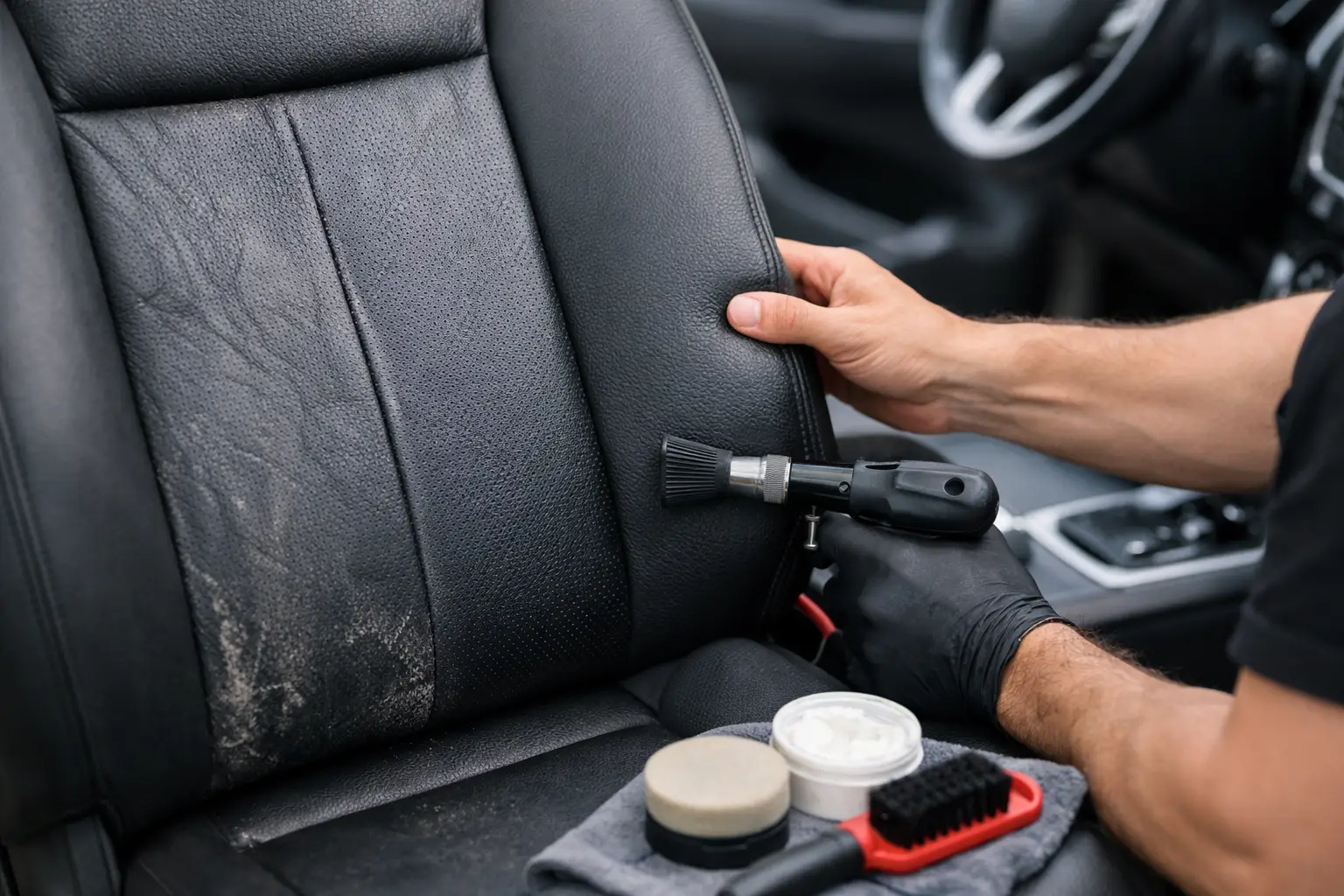
In practical terms, restoration may include repairing torn leather or vinyl, replacing damaged fabric sections, rebuilding worn seat foam, restitching failed seams, correcting sagging inserts and refitting panels that have lost tension or shape. In older vehicles, there is often more going on beneath the surface. A cracked seat cover may be hiding weakened backing, deteriorated foam or clips and fixings that no longer hold the trim correctly.
This is why experienced workshops do not price serious upholstery work from a single photograph alone. The visible damage matters, but so does the structure beneath it.
Start with condition, not assumptions
Many owners assume there are only two choices: live with the damage or replace everything. In reality, there are usually three routes – repair, partial restoration or full replacement. The right one depends on material age, colour match, panel shape and long-term expectations.
When a repair makes sense
A targeted repair suits damage that is isolated and where the surrounding material is still sound. A small split on one panel, a seam opening due to thread failure, or slight foam compression on one seating area may be corrected without retrimming the whole seat.
The advantage is cost control and less disruption to original trim. The trade-off is that perfect blending is not always possible, especially on sun-faded leather or older material that has changed tone over time.
When partial restoration is the better route
If one section is badly worn but neighbouring sections remain structurally healthy, replacing selected panels can be the sensible middle ground. This is common with seat base bolsters, headrests and frequently handled areas such as armrests.
Done properly, this preserves more of the original interior while correcting the sections that have genuinely reached the end of their service life. Done badly, it creates obvious mismatches. Material selection and pattern accuracy matter here.
When full retrimming is worth it
If the upholstery is brittle, heavily cracked, stained through, shrunken, or previously repaired poorly, a full retrim often delivers better value than repeated patchwork. The same applies where multiple panels have failed or where foam and support layers have degraded together.
A full retrim costs more at the outset, but it gives control over fit, consistency, stitching and finish across the complete seat or cabin section. For vehicles being kept long term, this is often the cleaner and more durable decision.
Material choice affects both finish and lifespan
One of the most important parts of any car upholstery restoration guide is understanding materials. Not all leather, vinyl and fabric perform the same way, and not every replacement material suits every vehicle.
Leather offers a premium look and feel, but it requires the correct grade, backing and finish for automotive use. Cheap material may look acceptable on day one and then stretch, dry out or wear prematurely. Vinyl can be the right choice in certain applications because it is practical, stable and easier to maintain, but it still needs to be selected carefully to match the vehicle’s original appearance and intended use.
Fabric interiors bring a different challenge. Matching weave, shade and texture can be difficult, especially in older cars. If an exact match is not available, a disciplined workshop should say so clearly rather than overpromise. Honest advice early on prevents disappointment later.
Foam matters too. Seat comfort does not come only from the outer trim. If the foam has collapsed, even the best new upholstery will not sit correctly. Restoring shape and support beneath the surface is often what separates a proper job from a cosmetic one.
Why workmanship matters more than most owners expect
Upholstery is one of those trades where shortcuts are easy to hide at first. A seat can look acceptable in photos and still fail in daily use because the stitching tension is wrong, the cover has been pulled unevenly, or the old foam has been left underneath to save time.
Good workmanship shows in the details. The seams should sit straight. The panels should align correctly. The grain and direction of the material should look intentional. The fit should be snug without over-stretching. Most importantly, the restored part should feel secure every time the seat is used.
This is where in-house execution makes a real difference. When inspection, cutting, sewing, fitting and final checking are controlled within the same workshop, quality is easier to manage. There is clearer accountability, fewer communication gaps and a more disciplined process from start to finish. For owners, that means peace of mind from the very beginning.
What affects the cost of upholstery restoration
There is no single price for upholstery restoration because the labour and material requirements vary widely. A simple seam repair is not comparable to rebuilding multiple seats and replacing damaged trim panels.
The main factors are the extent of damage, the type of material, the complexity of seat design, whether foam reconstruction is needed, and how closely the replacement must match the original. Sports seats, premium interiors and classic vehicles generally require more time because their patterns, contours and detailing are more demanding.
Previous repair work can also increase cost. Once a seat has been glued incorrectly, stapled badly or retrimmed with the wrong material, the workshop may need to undo that work before proper restoration can begin. That extra labour is not always visible at quotation stage, which is why transparent assessment is essential.
How to choose the right specialist
If you are comparing workshops, look beyond the headline price. Upholstery restoration is specialised work, and serious specialists will usually ask better questions. They will want to know how the damage occurred, how long you plan to keep the vehicle, whether originality matters, and whether you want a repair that blends in or a full refresh.
A reliable workshop should also explain limitations. If a colour match will be close rather than exact, say it. If the foam condition cannot be confirmed until the cover is removed, say that too. Clear advice is part of good workmanship.
For owners who value accountability, there is a practical benefit in choosing a specialist that handles the core work in-house rather than sending it out. It removes middleman mark-ups and keeps responsibility where it belongs. That approach is central to how 8 Cushion works, and it is one reason many owners prefer a specialist workshop over a general service centre.
Common mistakes to avoid
The most common mistake is waiting too long. Small cracks become splits, minor sagging becomes structural wear, and stains that could have been treated become permanent. Early intervention usually gives more options.
Another mistake is choosing by price alone. Cheap repairs often focus on appearance rather than longevity. If the underlying foam, backing or stitching is failing, surface improvement on its own will not hold.
It is also worth being realistic about DIY products. Surface dyes, filler kits and off-the-shelf patch solutions may help in very minor cases, but they rarely solve deeper wear on daily-driven cars. On visible, high-contact areas such as seat bolsters and centre panels, poor home repairs usually stand out.
A restoration mindset gives better results
The best upholstery decisions come from treating the interior as part of the vehicle’s long-term condition, not an afterthought. A well-restored seat improves comfort every day you drive. It preserves the look of the cabin, supports the value of the car and avoids the gradual decline that makes even a mechanically sound vehicle feel neglected.
If your interior is showing wear, the right next step is not always the biggest job. It is the most appropriate one, carried out with proper materials, careful assessment and disciplined workmanship. Done that way, upholstery restoration does more than tidy up a cabin. It brings the vehicle back to a standard that feels right each time you open the door.
Related posts

Best Seat Bolster Repair Methods That Last
Learn the best seat bolster repair methods for leather, vinyl and fabric, and wh

Can a Convertible Top Canvas Be Repaired?
Can a convertible top be repaired? Yes - but it depends on the damage, material
How to Clean Fabric Convertible Tops Properly
Learn how to clean fabric convertible tops without causing stains, fading or wat