


How to Maintain Convertible Soft Top Properly
A convertible soft top usually starts giving warnings long before it fails. The fabric loses its even finish, the folds begin to sit awkwardly, water stops beading, or a small line of wear appears near a hinge point. If you are wondering how to maintain convertible soft top condition properly, the aim is not just to keep it looking clean. It is to protect the fabric, stitching, seals and frame before minor wear turns into a leak, shrinkage problem or expensive replacement.
In Singapore, that matters even more. Heat, humidity, heavy rain and regular UV exposure are not kind to soft-top materials. A roof that is neglected for a few months can age far faster than many owners expect. Good care is less about frequent aggressive cleaning and more about disciplined, correct handling.
How to maintain convertible soft top without shortening its life
The first rule is simple. Clean it gently, and only as often as needed. Many owners damage a soft top by over-scrubbing, using household cleaners, or pressure washing too closely. Fabric roofs and vinyl roofs do not respond well to harsh treatment, and clear rear windows can mark even faster.
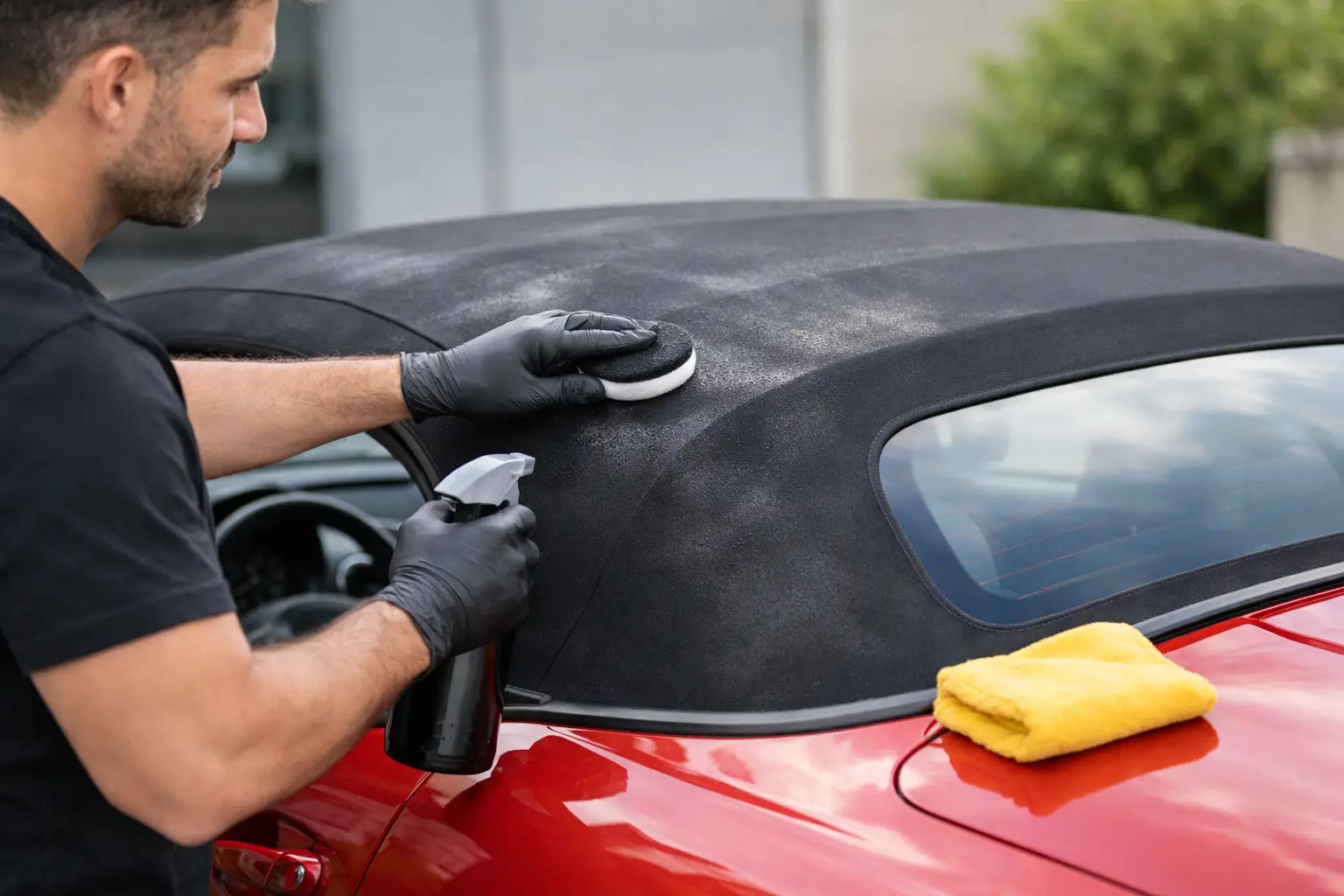
Start with a dry brush or a soft vacuum to remove loose dust, grit and leaf debris. This matters because rubbing dirt into the roof during washing can abrade the outer layer. Once the surface debris is gone, rinse with clean water and use a cleaner that matches the roof material. Fabric and vinyl are different systems, so one-size-fits-all products are rarely the best choice.
Use a soft brush with light pressure, working in straight, controlled motions rather than aggressive circles. Pay attention to stitch lines, fold areas and the lower edges where contamination tends to collect. Then rinse thoroughly. Any cleaner left behind can attract more dirt or interfere with waterproofing treatments.
Let the roof dry fully before applying any protectant. If the material is still damp, you can trap moisture in the surface, which is the opposite of what you want in a humid climate.
Know whether your roof is fabric or vinyl
This is where many owners go wrong. Fabric soft tops usually need a cleaner and reproofing product designed to preserve breathability while restoring water repellency. Vinyl roofs need products formulated to clean and condition without leaving a greasy finish that attracts dust.
If you are not sure what your car has, do not guess. The wrong chemistry can discolour the material, weaken coatings or leave patchy marks that are difficult to reverse. On older or premium vehicles, that mistake can be costly.
Washing habits that protect the roof and seals
A soft top should never be treated like a painted body panel. Automatic car washes are one of the bigger risks, especially if the brushes are stiff or poorly maintained. Even touchless systems can force water into tired seals if pressure is too high or angles are unfavourable.
Hand washing is the safer approach. Keep the water pressure moderate, and do not aim a strong jet directly at seams, seal edges or the join between the roof and side windows. If the car already has slight seal compression or age-related gaps, pressure washing can reveal a problem that was quietly manageable before.
It also helps to wash the seals themselves. Dirt trapped around rubber edges acts like an abrasive every time the roof is opened or closed. Clean seals with a mild product and keep them free from sand, dust and old residue.
Protect the rear window properly
If your convertible has a plastic rear screen, take extra care. It can scratch very easily, and once it hazes over, visibility drops quickly. Use a clean microfibre cloth, plenty of water, and no rough brushes. Never fold the roof if the rear screen is bending in a way the design does not allow.
If the rear section is glass, care is simpler, but the surrounding seals and stitched areas still need attention. The glass itself may be durable, but the trim around it is often where ageing starts to show.
Storage and parking matter more than most owners think
If a convertible lives outdoors all the time, maintenance needs to be more disciplined. UV exposure dries materials out, fades colour and accelerates thread deterioration. Tree shade sounds helpful, but it often means sap, bird droppings and organic debris, which can stain fabric and encourage mould if left sitting.
Covered parking is always preferable. If that is not possible, regular inspection becomes even more important. Look at the same areas every few weeks – front leading edge, side rails, fold lines, rear corners and stitching. Small changes are easier to manage when caught early.
Try not to store the car for long periods with the roof dirty or damp. In humid conditions, trapped moisture encourages mildew, staining and odour. If the roof has been caught in heavy rain, let it dry completely before covering the car or parking it up for several days.
Opening and closing the roof the right way
Part of learning how to maintain convertible soft top condition is understanding that wear often comes from operation, not just weather. A roof should open and close smoothly, with the fabric folding as intended. If you force it while material is stiff, trapped, misaligned or dirty, you create stress points.
Never lower the roof when it is wet unless you have no practical choice. Folding damp fabric into itself traps moisture and can leave pressure marks, mildew or premature wear at the crease lines. Likewise, avoid operating the roof when debris is sitting on the surface. Small particles caught in folds can rub through the material over time.
On cars with power-operated roofs, stop if movement looks uneven or sounds strained. A specialist should inspect the frame, straps, tension cables or hydraulic system before the issue damages the top itself. Replacing a worn strap is one matter. Replacing a roof damaged by a misbehaving frame is another.
Seals, drains and stitching need regular checks
Owners often focus on the visible fabric and miss the supporting components that keep the cabin dry. Rubber seals around windows and header rails harden with age. Drains can block. Stitching can weaken from UV and repeated tension. The roof material may still look acceptable while water is already finding a route inside.
Run a visual check after cleaning. Look for lifted stitching, frayed seams, shrinking edges, cracked rubber and any area where the roof no longer sits evenly against the frame. If water is lingering where it should drain away, investigate early. Damp carpets, condensation and musty smells are usually signs that something has already progressed beyond surface cleaning.
This is where specialist inspection has real value. A leak is not always caused by the obvious area. Water can travel along channels, seals and trim before it appears inside the cabin.
When cleaning is not enough
There is a point where maintenance stops being the answer. If the fabric has worn thin, the stitching is failing, the inner lining is separating, or the frame geometry is affecting how the roof sits, no amount of shampoo will put that right. The disciplined approach is to assess the roof honestly and repair what can still be saved before replacement becomes unavoidable.
That is especially true for older premium convertibles and restoration-worthy cars. Proper in-house assessment matters because material condition, frame alignment and trim fit all affect the final result. A cosmetic fix may look cheaper at first, but if the underlying issue remains, it rarely stays cheap for long.
At 8 Cushion, this is why specialist convertible work is handled with a workshop-first mindset rather than treated as general car grooming. The roof is part material, part mechanism and part weather seal. It needs to be judged as a system.
A practical care routine that works
For most owners, a sensible maintenance rhythm is enough. Light cleaning when visibly dirty, a more thorough wash and protection treatment every few months depending on use, and regular checks after storms or long outdoor parking will prevent most avoidable issues. The exact schedule depends on whether the car is a daily driver, a weekend vehicle or stored under cover.
What matters is consistency. Soft tops age badly when they are ignored, then attacked with strong products once the staining becomes obvious. Gentle, regular care always beats occasional heavy-handed cleaning.
Treat the roof as a specialist surface, not just another part of the car. If something changes in the way it looks, folds, seals or sounds, take that seriously. A convertible roof rarely rewards delay, but it often responds well to early, correct attention.
Related posts

Inside The Car Was Her Special Place
The little girl always loved going out, sitting in her father’s car as he drov
How to Find Convertible Replacement Tops Near Me
Looking for convertible replacement tops near me? Learn what to check, what affe
Roadster Window Restoration: What Proper Work Takes
Roadster window restoration protects clarity, weather sealing and value. Learn w