


Can a Convertible Top Canvas Be Repaired?
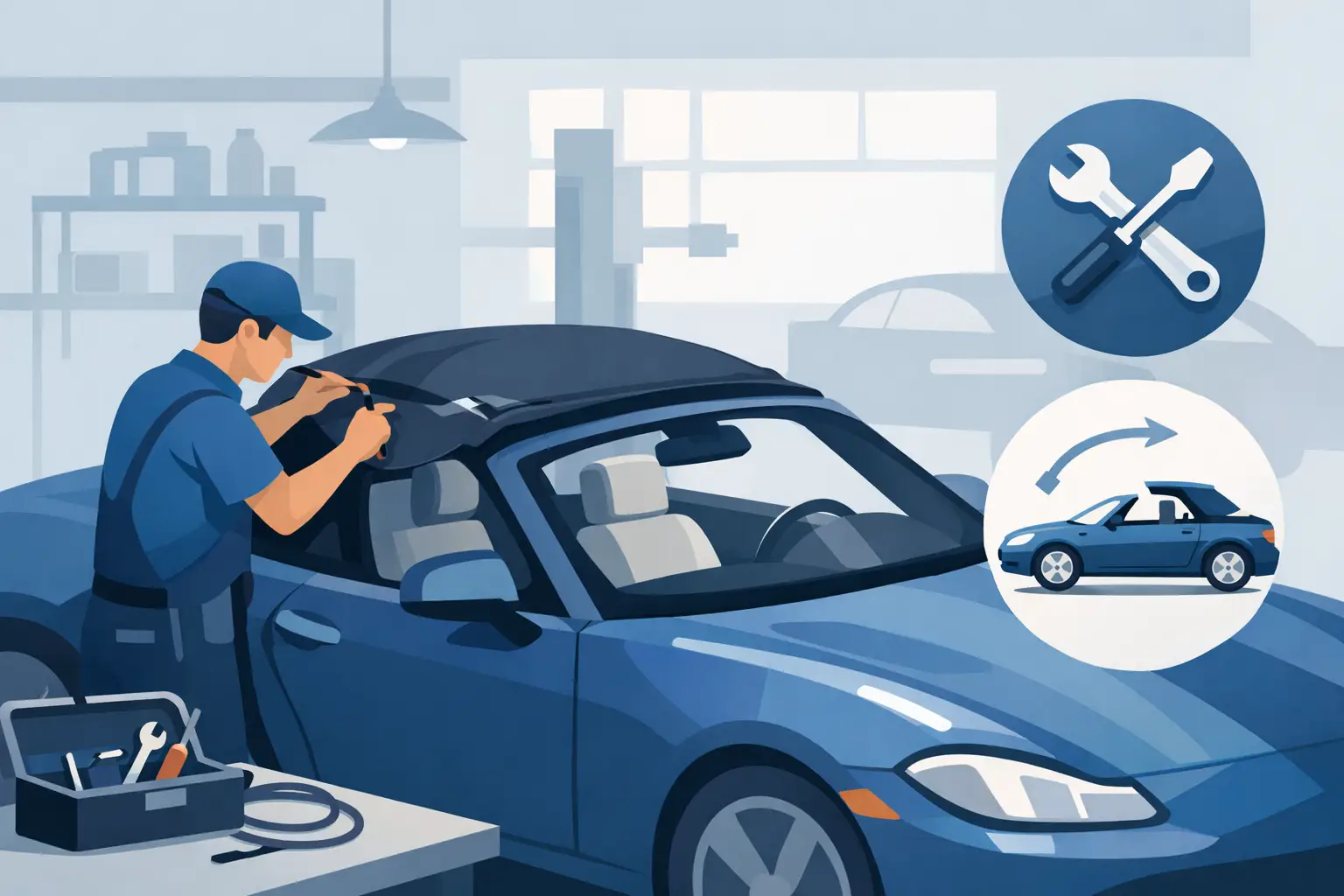
A convertible roof rarely fails all at once. It usually starts with something small – a lifted seam, a split near a fold line, a slow leak after rain, or a rear window edge beginning to separate. That is why car owners often ask, can a convertible top be repaired? In many cases, yes. But the honest answer is that it depends on what has failed, how long it has been left, and whether the surrounding structure is still sound.
A proper assessment matters because a convertible top is not just a sheet of canvas stretched over a frame. It is a working roof system. The outer material, inner lining, tension cables, seals, frame alignment and drainage all affect whether a repair will hold. A neat-looking patch on the wrong problem can waste money and delay the work the car really needs.
Can a convertible top canvas be repaired or does it need replacement?
The right answer depends on the type and extent of damage. Small, localised issues can often be repaired successfully, especially when the rest of the roof is still in healthy condition. That might include a minor tear, loose stitching, a section of separated binding, or an early-stage leak caused by a seal or fastening point.
Replacement becomes the better route when the roof material has aged broadly across the whole surface, the stitching has become brittle in multiple areas, the frame is out of alignment, or previous repair attempts have distorted the canvas. If one problem is only the visible part of a much larger decline, a repair may look cheaper at first but cost more in repeat work.
For owners of premium or older cars, this distinction is important. A disciplined repair preserves original material where it makes sense. A disciplined replacement restores proper fit and function where repair no longer offers lasting value. The decision should be based on condition, not guesswork.
What types of convertible top canvas damage can be repaired?
Some issues are very repairable when caught early. Small tears in canvas or vinyl can sometimes be repaired if they are not sitting directly on a high-stress fold point. Seams that have started to open can often be restitched or reinforced, provided the surrounding material still has strength. Edge separation around the rear window can also be repairable in certain cases, though this depends heavily on how the window is bonded or sewn into the top.
Water leaks are another common concern. Not every leak means the roof material itself has failed. The source may be worn seals, blocked drains, incorrect tension, loose trim interfaces, or shrinkage that has pulled the top away from a contact point. A specialist workshop will trace the leak properly before recommending work.
There are also mechanical issues that owners mistake for roof material failure. If the roof is not closing evenly, rubs at one corner, or has begun to sit awkwardly, the problem may involve frame geometry, straps or tension components. Repairing the visible canvas without addressing those causes is rarely a sound job.
When repair is no longer the sensible option
There is a point where repair becomes temporary by nature. If the top is heavily faded, dry, shrunken, brittle or cracked across several sections, it has usually reached the end of its service life. The same applies when multiple seams are failing or the roof has already had several patch repairs.
A rear window issue can also push the decision towards replacement. On some tops, the window is integrated in a way that makes isolated repair poor value or visually untidy. On others, the surrounding material may already be too weak to support a clean repair for long.
Mould, water saturation and neglected leaks deserve special mention. Once water has been entering for some time, the damage may extend below the top itself into padding, headlining, adhesive areas and metal structure. At that stage, treating only the visible symptom is not enough.
Canvas, vinyl and the limits of repair
Material type changes what is possible. Canvas tops can often be repaired neatly if the tear is limited and the weave remains stable. However, canvas also shows age in ways that matter structurally, not just cosmetically. UV exposure, trapped moisture and repeated folding can weaken areas that still look acceptable from a distance.
Vinyl tops behave differently. They may resist some surface wear well, but once they crack or shrink significantly, repairs become less reliable. A repaired split may hold in one area while adjacent material begins to fail next.
This is where specialist judgement matters. The question is not only whether a patch or stitch can be done. It is whether the material around that repair still has enough life to justify the work.
Why quick fixes often fail
Convertible tops are exposed to heat, rain, movement and tension every time the roof is used. That is why quick adhesive fixes sold as universal solutions often disappoint. They may hold briefly on a static tear, but they rarely address edge tension, seam stress, water management or frame movement.
We see this especially when owners are trying to stop a leak quickly. Sealant gets applied over the wrong area, trapping moisture or making later repair more difficult. A patch can also change how the roof folds, creating a fresh stress point nearby.
Good repair work is less about hiding damage and more about restoring function. That takes correct inspection, suitable materials, and careful handling of the surrounding sections. It also takes the discipline to say when a repair is not the right recommendation.
What a proper inspection should cover
Before any repair is approved, the roof should be assessed as a system. That means looking at the visible damage, but also checking seam condition, material elasticity, water entry points, frame alignment, seal condition and how the roof opens and closes.
On older or enthusiast vehicles, inspection should also account for originality and intended ownership. If the car is being preserved, a precise repair may be worth pursuing to retain as much original trim as possible. If the owner wants dependable long-term use in Singapore’s climate, replacement may offer better value than repeated repairs through wet and hot conditions.
At a specialist workshop such as 8 Cushion, the value is not just in doing the work in-house. It is in giving independent advice based on what the roof actually needs. That protects the customer from paying twice – first for a temporary fix, then again for the job that should have been done at the start.
Repair cost versus replacement value
Many owners begin by asking for the cheaper option, which is understandable. But cost should be measured against lifespan, finish quality and the likelihood of related failure. A small targeted repair can be excellent value when the rest of the top is in good order. It preserves material, reduces downtime and avoids unnecessary replacement.
The opposite is also true. If the top is broadly worn, a low initial spend on repair may only postpone replacement by a short period. In that case, replacement can be the more economical route over the life of the vehicle, especially if it restores weather protection, appearance and resale confidence in one job.
This is why transparent scope matters. Customers should know whether they are paying for a meaningful repair or a temporary measure with known limits.
So, can a convertible top canvas be repaired?
Yes – many convertible tops can be repaired, and some should be. Small tears, seam issues, localised leaks and certain window separations are often manageable when diagnosed early and handled properly. But not every damaged top is a good repair candidate, and not every repair is worth doing.
The real question is whether the roof still has enough structural and material integrity to support a lasting result. If it does, a skilled repair can restore function and protect the car without unnecessary replacement. If it does not, the better decision is to replace the top properly and avoid chasing one failure after another.
If your convertible roof has started showing signs of wear, the best time to inspect it is before a minor defect turns into water damage, trim deterioration or frame-related complications. A careful, honest assessment usually saves more than a rushed fix ever will.
Related posts
Best Windscreen Replacement Glass Options Explained
Compare the best windscreen replacement glass options, from OEM to quality after
How to Maintain Convertible Soft Top Properly
Learn how to maintain convertible soft top fabric, seals and rear windows proper
How to Fix Peeling Car Upholstery Properly
Learn how to fix peeling car upholstery properly, when a DIY repair is enough, a