


Choosing Replacement Car Seat Foam Properly
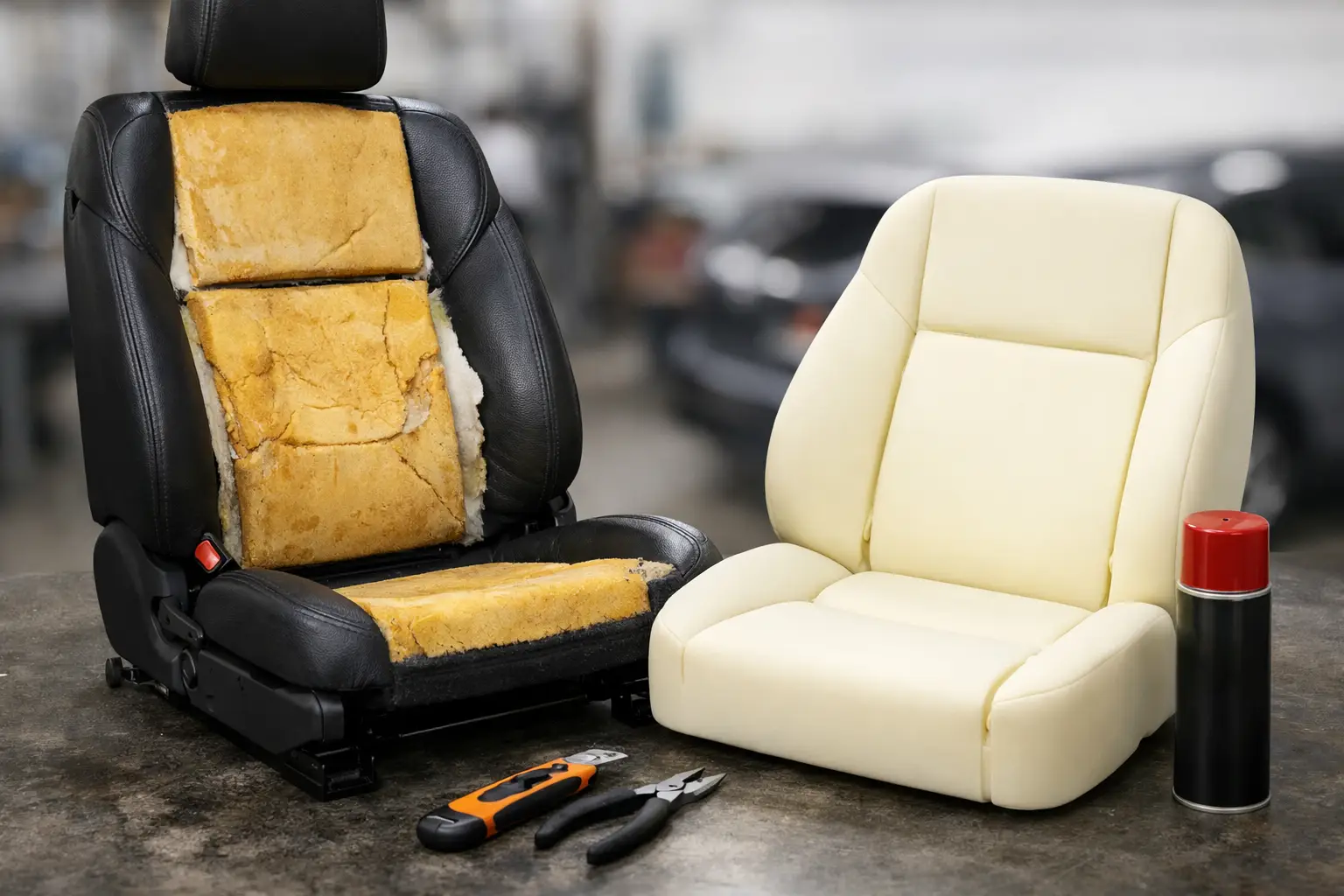
A driver’s seat that has sunk on one side tells you more than the upholstery ever can. The cover may still look presentable, yet the cushion underneath may no longer support the hips, thighs or lower back as intended. Choosing replacement car seat foam is therefore not a matter of buying the softest material available. It is a restoration decision that affects driving comfort, seating position, cover fit and the long-term condition of the seat.
For a worthwhile repair, the foam must suit the vehicle, the damaged area and the way the seat was originally constructed. A carefully selected insert can return definition and support without making an older seat feel artificially hard. The wrong material can leave the cover loose, create pressure points or fail prematurely.
Start with the cause, not the visible damage
Flattened foam is often the result of normal use, especially on the outer bolster of a driver’s seat. Repeated entry and exit compress the same edge of the cushion, while years of heat, humidity and body weight reduce the foam’s resilience. In many cases, the centre of the cushion remains serviceable and only one section requires rebuilding.
However, a soft or uneven seat can also point to a broken spring, damaged webbing, a weakened seat frame or deteriorated support pads. Replacing foam without inspecting these parts may improve the appearance briefly, but it will not resolve the reason the seat has lost support.
A proper assessment begins with removal of the seat cover and inspection of the full structure beneath it. This is where specialist work matters. The condition of the foam, frame, springs, clips, wiring and retaining points should be checked before any material is cut. It keeps the repair scope clear and avoids fitting new foam over an unresolved fault.
Choosing replacement car seat foam by density and firmness
Foam is commonly described by density and firmness, but these are not the same thing. Density generally relates to the amount of material within the foam and is a useful indicator of durability. Firmness describes how readily the foam compresses under load. A dense foam can still feel relatively soft, while a firmer foam may not always provide the longevity required for a heavily used seat.
For automotive seating, the aim is controlled support. The cushion should compress enough to absorb movement, but it should also recover its shape and prevent the occupant from sitting too deeply into the seat base. Low-quality, light foam can feel comfortable on the workbench and disappointing after a few months of daily driving.
The correct specification depends on location. A seat base needs more load-bearing support than a headrest. An outer bolster needs enough resilience to withstand sideways pressure when getting in and out, while the central panel may need a more compliant feel. Using one foam grade throughout a seat is sometimes appropriate, but often it is a shortcut rather than a restoration-led solution.
Thickness is equally important. Adding a thick, firm layer over compressed original foam can raise the seating position and alter the way the driver reaches the pedals, steering wheel and mirrors. On vehicles with pronounced bolsters, it can also pull the upholstery too tight and distort stitch lines. The repair must restore the original profile, not simply add bulk.
Match the foam to the seat design
Factory seats are rarely made from a single plain block of foam. They may include sculpted contours, reinforced edges, lumbar support sections, channels for trim rods and recesses for seat heating elements or occupancy sensors. Premium and sports seats can be especially complex.
Where the original foam has only local damage, rebuilding the affected area and blending it into the sound foam may preserve more of the original construction. Where the foam has become brittle, crumbled or lost its structure across the cushion, a larger replacement section may be the better option. The right approach depends on what remains stable after inspection.
Shape matters as much as material quality. A replacement bolster must follow the seat’s original line so that the cover sits naturally over it. If the contour is too square, too high or too rounded, the difference will show once the upholstery is refitted. Good foam work is measured in the finished seat, not in the cut piece alone.
Do not overlook safety systems and seat functions
Modern vehicle seats may contain side airbags, seat occupancy sensors, heating mats, ventilation components, electric adjustment mechanisms and wiring looms. These should never be treated as incidental details during a foam repair.
Side-airbag seams and deployment paths must remain unobstructed. Sensor mats need correct placement and protection from damage. Heating elements must sit evenly, without sharp edges, excess adhesive or irregular foam surfaces that could create hot spots or lead to early failure. A seat that looks improved but compromises a safety or comfort system is not an acceptable result.
This is also why a universal foam pad is not a substitute for informed workmanship. Generic materials can be useful for minor repairs in simple seats, but they do not account for vehicle-specific contours, attachments or integrated equipment. For seats with airbags, electronics or complex trim, the work calls for a disciplined inspection and refitting process.
Consider the upholstery before selecting the foam
The seat cover and the cushion work as one assembly. Leather, synthetic leather, fabric and Alcantara-style materials respond differently when stretched over renewed foam. Leather may show tension and unevenness more readily, particularly around piping and stitched bolsters. Fabric can conceal minor changes more easily, but it can still wrinkle if the foam profile is incorrect.
A cover that has become loose due to collapsed foam may look remarkably better after the cushion is rebuilt. Conversely, a worn cover with damaged backing, broken stitching or stretched panels may need repair at the same time. Reusing a weakened cover over new foam can limit the final result and may place unnecessary stress on the upholstery.
The fixing method also matters. Hog rings, listing wires, clips and factory retaining channels hold the cover in position and define the seat’s shape. Replacing foam without correctly reinstating these attachment points can cause the surface to shift, crease or wear unevenly. The seat should feel secure and look balanced from every angle.
When a partial repair is enough
Not every worn seat needs a complete foam replacement. A targeted repair is often the sensible choice when the damage is limited to one bolster, a small section of the base or a local tear in otherwise sound foam. It can retain original materials where they remain fit for purpose, reduce unnecessary replacement and offer better value without compromising the outcome.
Full replacement becomes more appropriate when the foam has hardened, degraded extensively, smells persistently of moisture, or has lost its structure throughout. Vehicles exposed to water ingress, prolonged heat or years of heavy use may have deterioration that is not obvious until the cover is removed.
The decision should be based on condition, not a fixed package. Independent advice is valuable here because it keeps the work focused on what the seat actually needs rather than what is easiest to sell.
The workshop standard that protects the result
Replacement foam should be cut, shaped and trial-fitted with the seat frame and cover, not prepared in isolation. Small adjustments during fitting are often what separate a comfortable, factory-looking result from a seat that feels acceptable only at first glance.
At 8 Cushion, seat restoration work is handled in-house so the inspection, foam shaping and upholstery refitting remain under one accountable process. There is no need for the vehicle owner to coordinate between separate foam suppliers, trimmers and general workshops. It also allows the final fit, support and finish to be checked before the seat is returned to the vehicle.
Careful material storage is part of this standard. Foam and upholstery materials should be kept clean, dry and protected from distortion before use. A quality material can still perform poorly if it has been compressed, contaminated or improperly stored.
A better question than “which foam is best?”
There is no single best replacement foam for every vehicle. The better question is: what foam construction will return this particular seat to the support, shape and function it was designed to provide?
That answer comes from examining the seat as a complete system. Check the frame before the cushion, match density and firmness to the repair area, respect airbags and electrical components, and refit the cover with its original structure in mind. When the work is done properly, the result should not call attention to itself. You simply sit down, find the right driving position and feel the difference where it counts.
Choosing Replacement Car Seat Foam Properly
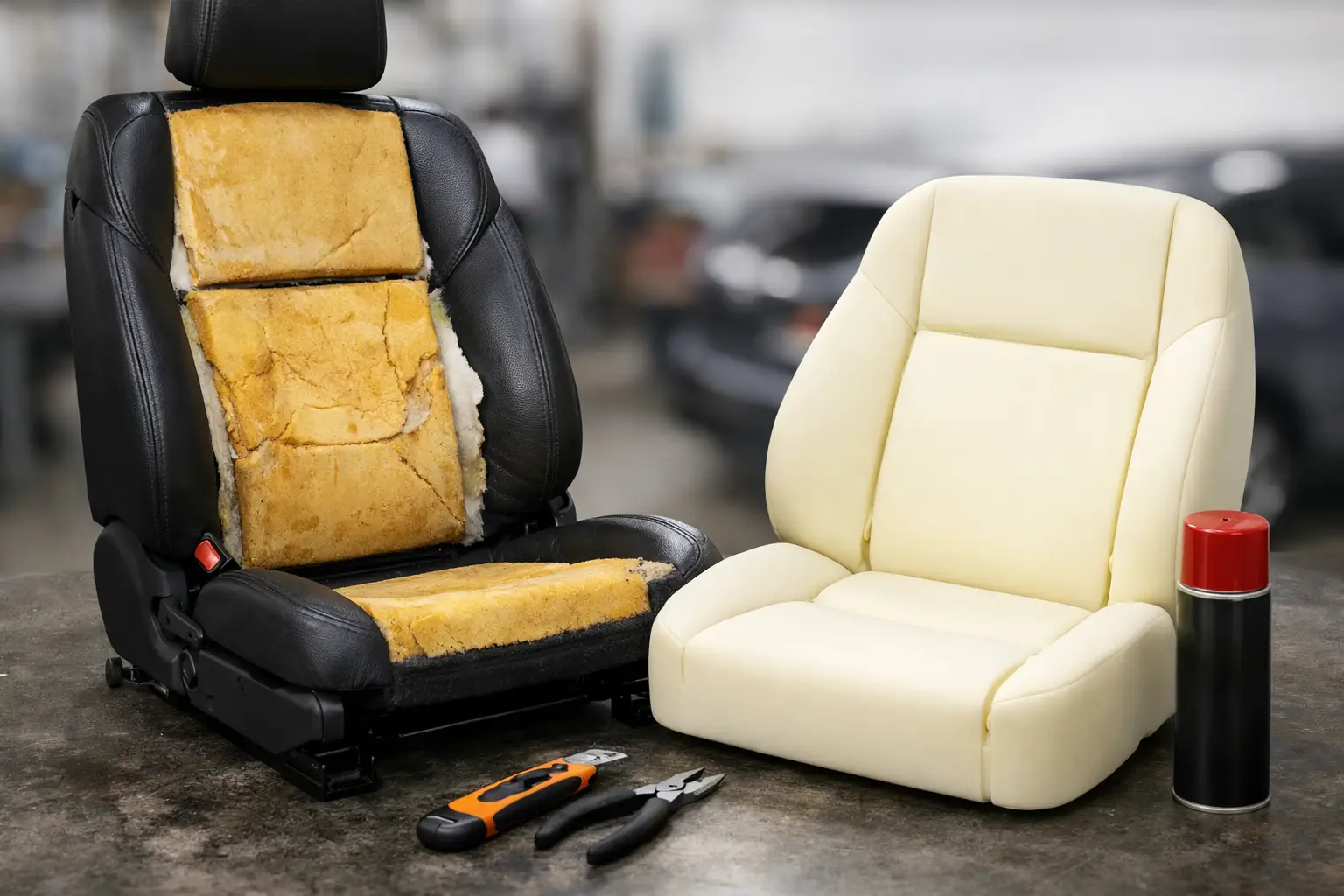
A driver’s seat that has sunk on one side tells you more than the upholstery ever can. The cover may still look presentable, yet the cushion underneath may no longer support the hips, thighs or lower back as intended. Choosing replacement car seat foam is therefore not a matter of buying the softest material available. It is a restoration decision that affects driving comfort, seating position, cover fit and the long-term condition of the seat.
For a worthwhile repair, the foam must suit the vehicle, the damaged area and the way the seat was originally constructed. A carefully selected insert can return definition and support without making an older seat feel artificially hard. The wrong material can leave the cover loose, create pressure points or fail prematurely.
Start with the cause, not the visible damage
Flattened foam is often the result of normal use, especially on the outer bolster of a driver’s seat. Repeated entry and exit compress the same edge of the cushion, while years of heat, humidity and body weight reduce the foam’s resilience. In many cases, the centre of the cushion remains serviceable and only one section requires rebuilding.
However, a soft or uneven seat can also point to a broken spring, damaged webbing, a weakened seat frame or deteriorated support pads. Replacing foam without inspecting these parts may improve the appearance briefly, but it will not resolve the reason the seat has lost support.
A proper assessment begins with removal of the seat cover and inspection of the full structure beneath it. This is where specialist work matters. The condition of the foam, frame, springs, clips, wiring and retaining points should be checked before any material is cut. It keeps the repair scope clear and avoids fitting new foam over an unresolved fault.
Choosing replacement car seat foam by density and firmness
Foam is commonly described by density and firmness, but these are not the same thing. Density generally relates to the amount of material within the foam and is a useful indicator of durability. Firmness describes how readily the foam compresses under load. A dense foam can still feel relatively soft, while a firmer foam may not always provide the longevity required for a heavily used seat.
For automotive seating, the aim is controlled support. The cushion should compress enough to absorb movement, but it should also recover its shape and prevent the occupant from sitting too deeply into the seat base. Low-quality, light foam can feel comfortable on the workbench and disappointing after a few months of daily driving.
The correct specification depends on location. A seat base needs more load-bearing support than a headrest. An outer bolster needs enough resilience to withstand sideways pressure when getting in and out, while the central panel may need a more compliant feel. Using one foam grade throughout a seat is sometimes appropriate, but often it is a shortcut rather than a restoration-led solution.
Thickness is equally important. Adding a thick, firm layer over compressed original foam can raise the seating position and alter the way the driver reaches the pedals, steering wheel and mirrors. On vehicles with pronounced bolsters, it can also pull the upholstery too tight and distort stitch lines. The repair must restore the original profile, not simply add bulk.
Match the foam to the seat design
Factory seats are rarely made from a single plain block of foam. They may include sculpted contours, reinforced edges, lumbar support sections, channels for trim rods and recesses for seat heating elements or occupancy sensors. Premium and sports seats can be especially complex.
Where the original foam has only local damage, rebuilding the affected area and blending it into the sound foam may preserve more of the original construction. Where the foam has become brittle, crumbled or lost its structure across the cushion, a larger replacement section may be the better option. The right approach depends on what remains stable after inspection.
Shape matters as much as material quality. A replacement bolster must follow the seat’s original line so that the cover sits naturally over it. If the contour is too square, too high or too rounded, the difference will show once the upholstery is refitted. Good foam work is measured in the finished seat, not in the cut piece alone.
Do not overlook safety systems and seat functions
Modern vehicle seats may contain side airbags, seat occupancy sensors, heating mats, ventilation components, electric adjustment mechanisms and wiring looms. These should never be treated as incidental details during a foam repair.
Side-airbag seams and deployment paths must remain unobstructed. Sensor mats need correct placement and protection from damage. Heating elements must sit evenly, without sharp edges, excess adhesive or irregular foam surfaces that could create hot spots or lead to early failure. A seat that looks improved but compromises a safety or comfort system is not an acceptable result.
This is also why a universal foam pad is not a substitute for informed workmanship. Generic materials can be useful for minor repairs in simple seats, but they do not account for vehicle-specific contours, attachments or integrated equipment. For seats with airbags, electronics or complex trim, the work calls for a disciplined inspection and refitting process.
Consider the upholstery before selecting the foam
The seat cover and the cushion work as one assembly. Leather, synthetic leather, fabric and Alcantara-style materials respond differently when stretched over renewed foam. Leather may show tension and unevenness more readily, particularly around piping and stitched bolsters. Fabric can conceal minor changes more easily, but it can still wrinkle if the foam profile is incorrect.
A cover that has become loose due to collapsed foam may look remarkably better after the cushion is rebuilt. Conversely, a worn cover with damaged backing, broken stitching or stretched panels may need repair at the same time. Reusing a weakened cover over new foam can limit the final result and may place unnecessary stress on the upholstery.
The fixing method also matters. Hog rings, listing wires, clips and factory retaining channels hold the cover in position and define the seat’s shape. Replacing foam without correctly reinstating these attachment points can cause the surface to shift, crease or wear unevenly. The seat should feel secure and look balanced from every angle.
When a partial repair is enough
Not every worn seat needs a complete foam replacement. A targeted repair is often the sensible choice when the damage is limited to one bolster, a small section of the base or a local tear in otherwise sound foam. It can retain original materials where they remain fit for purpose, reduce unnecessary replacement and offer better value without compromising the outcome.
Full replacement becomes more appropriate when the foam has hardened, degraded extensively, smells persistently of moisture, or has lost its structure throughout. Vehicles exposed to water ingress, prolonged heat or years of heavy use may have deterioration that is not obvious until the cover is removed.
The decision should be based on condition, not a fixed package. Independent advice is valuable here because it keeps the work focused on what the seat actually needs rather than what is easiest to sell.
The workshop standard that protects the result
Replacement foam should be cut, shaped and trial-fitted with the seat frame and cover, not prepared in isolation. Small adjustments during fitting are often what separate a comfortable, factory-looking result from a seat that feels acceptable only at first glance.
At 8 Cushion, seat restoration work is handled in-house so the inspection, foam shaping and upholstery refitting remain under one accountable process. There is no need for the vehicle owner to coordinate between separate foam suppliers, trimmers and general workshops. It also allows the final fit, support and finish to be checked before the seat is returned to the vehicle.
Careful material storage is part of this standard. Foam and upholstery materials should be kept clean, dry and protected from distortion before use. A quality material can still perform poorly if it has been compressed, contaminated or improperly stored.
A better question than “which foam is best?”
There is no single best replacement foam for every vehicle. The better question is: what foam construction will return this particular seat to the support, shape and function it was designed to provide?
That answer comes from examining the seat as a complete system. Check the frame before the cushion, match density and firmness to the repair area, respect airbags and electrical components, and refit the cover with its original structure in mind. When the work is done properly, the result should not call attention to itself. You simply sit down, find the right driving position and feel the difference where it counts.
Related posts
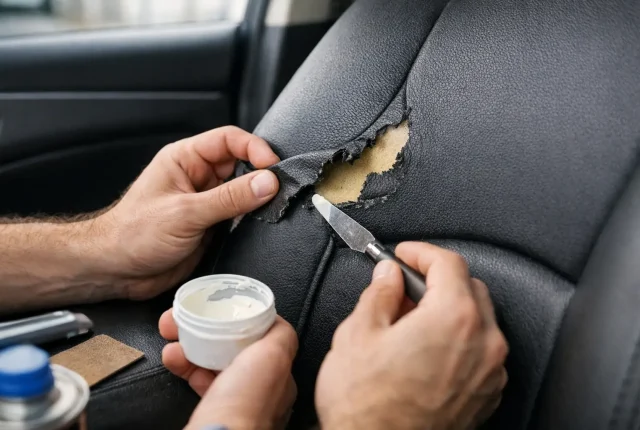
How to Fix Peeling Car Upholstery Properly
Learn how to fix peeling car upholstery properly, when a DIY repair is enough, a
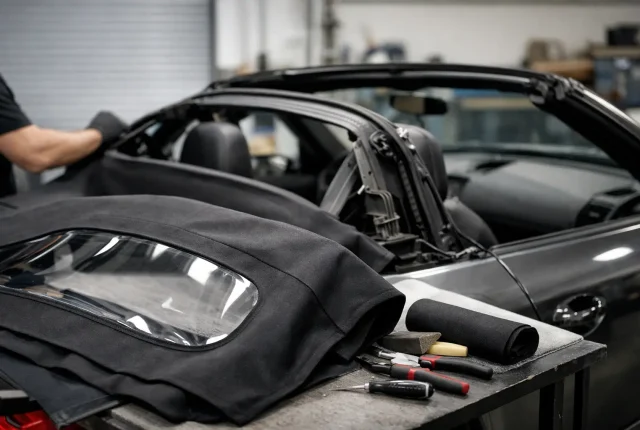
Convertible Top Replacement Buyer Guide
Our convertible top replacement buyer guide explains materials, fit, glass, labo
Choosing a Car Roof Lining Repair Specialist
Choose a car roof lining repair specialist for precise diagnosis, proper materia