


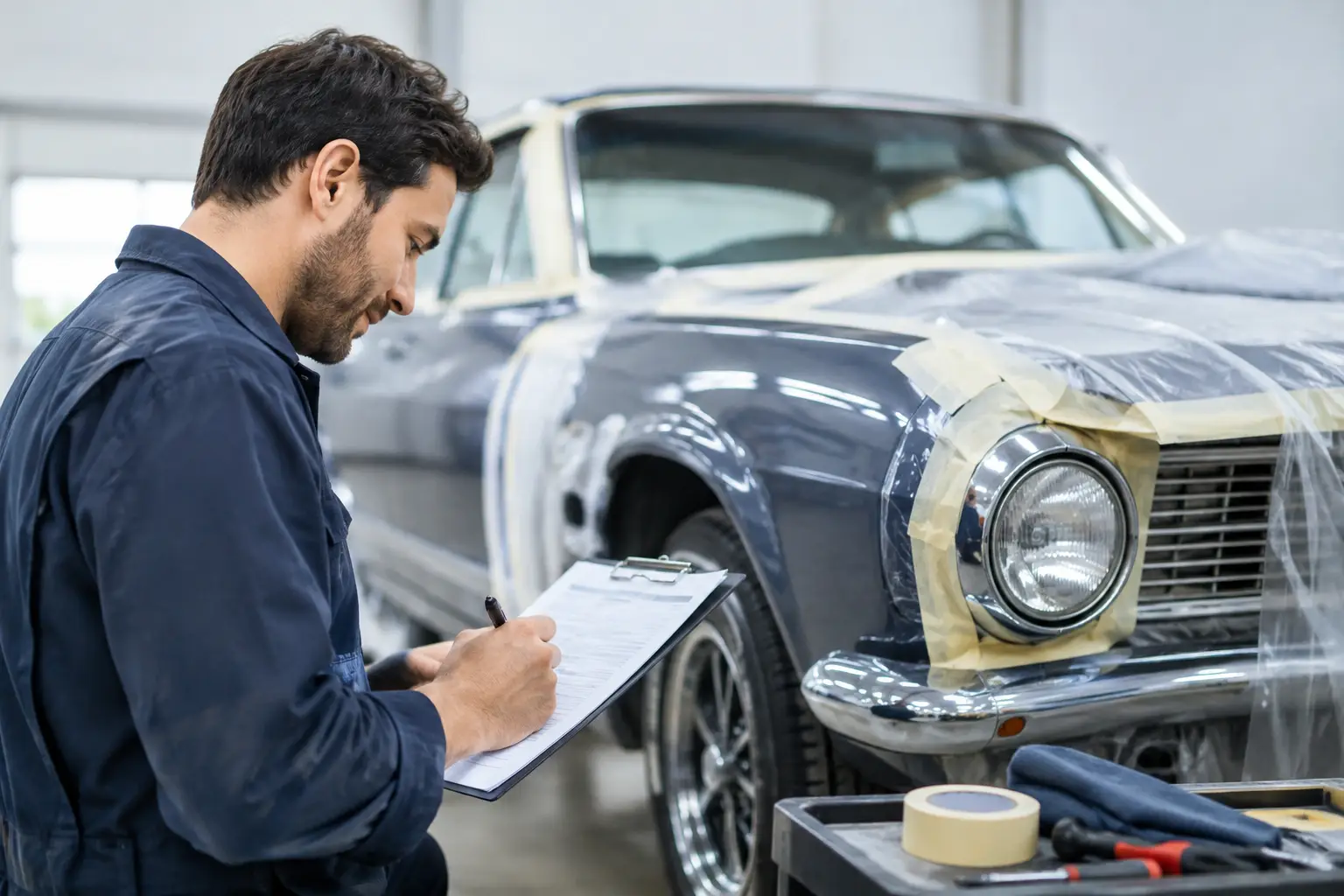
Transparent Car Restoration Pricing Explained
A sagging roof lining, split convertible top or tired leather seat can look like one straightforward repair. Once the trim is removed, however, the real condition of the vehicle becomes visible. That is why transparent car restoration pricing explained properly starts with the work behind the visible fault, not an attractive number given before the car has been assessed.
For specialist restoration work, a fair price should tell you what is being repaired, replaced, prepared and refitted. It should also make clear what may change if hidden damage, previous poor repairs or unavailable materials are discovered. The aim is not to make a restoration sound more complicated than it is. It is to prevent surprises and ensure the finished work is worthy of the vehicle.
What transparent car restoration pricing should include
A proper quotation is more than a single total. It should establish the agreed scope: the affected components, the material specification, the repair method and the expected finish. For a headlining, that may include removal of trims, careful handling of interior fittings, stripping degraded foam, preparing the backing board, fitting new material and reinstalling everything correctly. For convertible-top work, it may involve checking the hood fabric, frame, seals, drainage areas and operating mechanism rather than pricing fabric alone.
Labour and materials are both significant, but neither should be treated as a vague allowance. Quality interior work is manual, measured and vehicle-specific. Two cars with apparently similar damage can require very different amounts of dismantling and preparation.
Transparent pricing should also state whether the quote covers associated items such as clips, adhesives, seals or minor trim repairs. These small parts often determine whether an installation remains quiet, secure and properly aligned after the vehicle leaves the workshop.
Why restoration estimates are rarely one-size-fits-all
Vehicle age, model design and prior repair history all influence cost. A modern roof lining may be accessible once a few trim pieces are removed. An older premium vehicle may require more extensive removal around pillars, lighting, sunroof panels or delicate trim that has become brittle with age. A convertible can add another layer of complexity because weather sealing, tension and roof operation must work together.
Material choice matters too. There is a meaningful difference between selecting a suitable automotive-grade fabric and using a cheaper substitute that may sag, fade or deteriorate prematurely in Singapore’s heat and humidity. Leather, synthetic leather, Alcantara-style trims and original-pattern materials each carry different costs, fitting requirements and lead times.
This is where a specialist should give independent advice rather than push the most expensive option. The right material depends on the vehicle, the owner’s expectations, the intended use and the condition of surrounding areas. A sympathetic repair may be the sensible answer for a well-used daily car. A full restoration may be justified for a cherished classic, premium vehicle or car being prepared for long-term ownership.
The difference between an estimate and a confirmed quote
An initial estimate is useful when you are deciding whether to proceed. It gives a realistic range based on photographs, a description of the issue and the workshop’s experience with similar vehicles. But it cannot always confirm the full scope.
A confirmed quote follows inspection. The specialist can assess access, material condition, prior modifications and the condition of the components beneath the surface. This is particularly relevant for water ingress, collapsed roof linings and convertible-top faults. What appears to be cosmetic damage may have a cause that needs attention before new materials are fitted.
For example, replacing a convertible roof without identifying blocked drains, worn seals or a misaligned frame can leave the owner with a new top and the same leak. The lower initial price may therefore become the more expensive decision. Transparent pricing accounts for the work needed to deliver a sound result, while separating genuinely additional repairs that only become apparent during dismantling.
How hidden work should be handled
Hidden defects are part of restoration, but they should never become a blank cheque. The correct process is simple: identify the issue, explain its effect on the repair, provide the additional cost where possible, and seek approval before proceeding beyond the agreed scope.
Common examples include cracked backing boards behind roof linings, corroded fittings, damaged clips, failed sunroof drainage components, weakened seat foam, or evidence of earlier adhesive work that must be removed. None of these items should be ignored merely to preserve the original figure. Equally, none should be added without clear communication.
This approach protects both parties. The customer understands why the work has changed, and the workshop can maintain the standard required for a durable finish. Peace of mind comes from knowing what is happening to the vehicle at each critical stage, not from receiving a low number that excludes necessary work.
In-house workmanship and the real cost of a repair
Pricing is also shaped by who performs the work. When core restoration work is carried out in-house, the team responsible for the assessment is connected directly to the team fitting the material, repairing the trim or replacing the component. That improves accountability and makes quality control more immediate.
Outsourcing can introduce extra handling, communication gaps and middleman mark-ups. It can also make it harder to resolve a fitment issue because responsibility is spread across several parties. This does not mean every external supplier is unsuitable – specialist glass or parts supply may be necessary depending on the vehicle – but the customer should know which parts of the job are performed by the workshop and which are sourced externally.
At 8 Cushion, the focus is on authentic in-house production for the specialist work entrusted to the workshop. This supports disciplined scheduling, proper material handling and direct responsibility for the finished result. It also means recommendations can be based on the vehicle’s actual condition rather than on a standard package.
Questions worth asking before approving a restoration
The best quote is one you can understand without needing to decode workshop language. Before approving work, ask what is included in removal and refitting, whether the quoted material is automotive-grade, and whether the price includes consumables and replacement clips where required. Ask what condition checks will be performed while the area is accessible.
It is also reasonable to ask what happens if further damage is found. A trustworthy workshop will explain its approval process and distinguish between essential corrective work and optional improvements. If a full replacement is being recommended, ask why repair is not appropriate. The answer may be entirely valid, but it should be specific to your vehicle rather than a generic sales line.
Finally, consider the intended outcome. Are you seeking a tidy repair, an original-style restoration, a colour change, or preparation for sale? The desired result affects the materials, labour and level of detail required. Clear expectations at the start are one of the most effective ways to keep pricing fair.
Value is measured after the work is finished
The cheapest figure is not always poor value, and the highest figure is not automatically proof of quality. What matters is whether the scope is honest, the materials are suitable, the workmanship is controlled and the workshop stands behind what it has done.
A transparent restoration price gives you a basis for comparison beyond the headline amount. It lets you judge whether one quote includes proper preparation while another only covers visible replacement. It also gives the specialist a clear standard to work towards.
If your car has an interior or convertible-top issue, bring it in before the damage spreads. A careful inspection and an open conversation about scope can often protect more of the original vehicle, avoid unnecessary replacement and give you confidence in every dollar spent.
Related posts
Car Headliner Replacement: Repair or Renew?
Car headliner replacement restores comfort, appearance and value. Learn when rep

What Causes Windscreen Distortion in Cars?
What causes windscreen distortion? Learn how glass quality, fitting, heat, damag
Is Car Interior Restoration Worth It in Singapore?
Is car interior restoration worth it? Learn when repair, re-trimming or replacem