


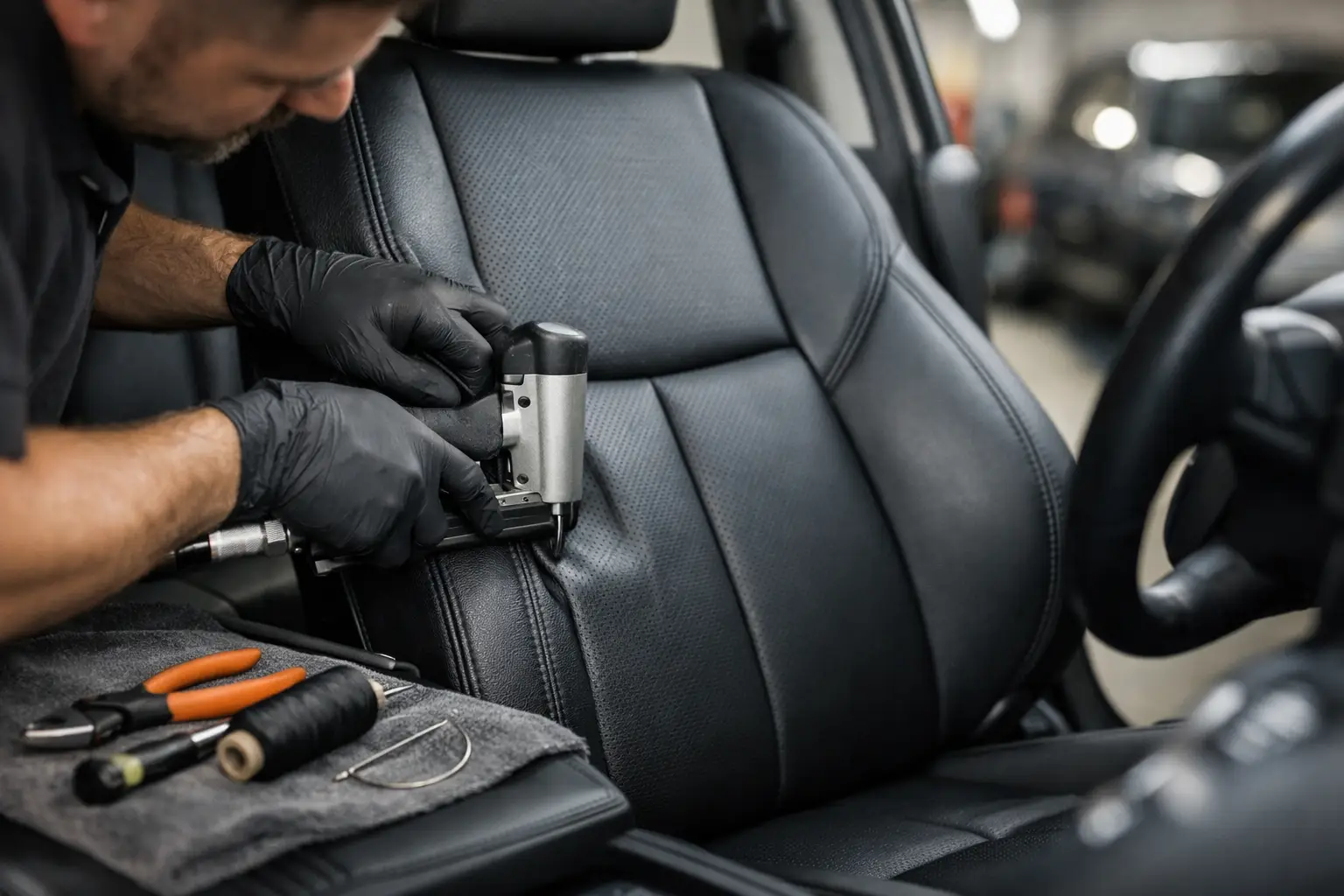
Best Auto Upholstery Repair: What Matters
A split seam on the driver’s seat, a sagging roof lining, or cracked trim in your car’s interior might seem minor at first. But if you leave them alone, these problems get worse and can affect the whole cabin. When you look for auto upholstery repair, the real question isn’t who can fix it the fastest. It’s who can restore your interior the right way, using quality materials, proper techniques, and workmanship that lasts through everyday use.
Many car owners run into trouble when a general workshop says they can “sort it out.” Sometimes, they can handle a simple fix. But most of the time, interior work is treated as just another service, not a specialty. Upholstery, roof linings, convertible tops, and trim all need different skills, and poor repairs are easy to spot. You might see wrinkles, failed adhesives, loose stitching, or mismatched materials that make the cabin look patched up instead of truly restored.
What the best auto upholstery repair really means
The best auto upholstery repair is not always the lowest price, and it does not always mean replacing everything. Quality repairs begin with a proper diagnosis. Sometimes, a worn bolster can be fixed. If the foam base under the cover has collapsed, it might need to be rebuilt. When a roof lining sags, it may seem like a fabric problem, but often the real issue is the worn-out backing and adhesive.
This is why it is important to have a specialist assess the problem. Good upholstery repair combines skill, knowledge of materials, and careful work. The final look is important, but the work you cannot see is just as critical. If the preparation is not done well, even the best materials will not hold up. If the trimming is off, even a straight stitch will not look right when the part goes back in.
People who own premium cars, older vehicles, or convertibles often realize this quickly. The interiors in these cars are less forgiving. They have more complex shapes and use specific materials, so a careless repair can hurt both how the car looks and its value.
Why specialist workshops outperform general repair shops
A specialist upholstery workshop treats the interior as a complete system, not just separate panels. Seats, linings, trim, and soft-top parts all react to heat, humidity, tension, and daily use. In Singapore, the climate can quickly cause fading, glue problems, and worn-out materials. A workshop that deals with these challenges every day is better equipped to suggest the right repairs.
Control is another important factor. When the main work happens in-house, it is easier to ensure quality, fit, and finish. You know who is working on your car, how the parts are handled, and who makes decisions if hidden damage appears. If the job is passed through several middlemen, standards may slip and communication can get unclear.
This is why careful production processes matter. Steps like taking things apart gently, storing parts properly, measuring patterns, choosing the right glue, and fitting everything back accurately may not seem exciting, but they are what make repairs last instead of just looking good for a short time.
The signs of quality in upholstery repair
A quality upholstery repair should look nice, feel comfortable, and last a long time. While this may seem simple, each part really matters.
People usually notice the appearance of a repair first. The stitching should be straight and even, and the material’s grain and color should match the rest of the trim as closely as possible. Panels need to be flat, without puckers or too much tension. For roof linings, the material should fit smoothly over curves and not sag at the edges or around openings.
How the repair feels is just as important. A repaired seat should provide good support. If the foam underneath is not fixed, the seat can still feel uneven or worn out, even if it looks better. This also goes for armrests, bolsters, and padded inserts.
Durability matters too. Some repairs look good at first but start to fail after a few months. This usually happens when cheap glue, rushed work, or low-quality vinyl is used. The best repairs last through heat, daily use, and cleaning.
Repair or replacement – it depends on the condition
A good specialist gives balanced advice. Sometimes, a damaged interior part can be repaired, but other times, replacement makes more sense. The best choice depends on your car, the material, how worn it is, and what you expect.
A small cigarette burn or a minor seam split can often be fixed easily. If a seat has deep cracks and the material is hard in several places, reupholstering is usually the better option. For a sagging roof lining, a full retrim is often needed since the foam and glue underneath have usually failed everywhere.
Convertible interiors can be more complicated. Parts like soft-top surrounds, rear quarter trims, and headliners can be damaged by both age and water. Just fixing what you see might not solve the real issue. It’s important to inspect everything carefully before deciding what work is needed.
Materials matter more than many owners realise
Leather, vinyl, fabric, and lining materials all perform differently. Choosing the right materials for your vehicle and how you use it is key to a good upholstery repair.
If you drive a family car every day, you might care more about durability and easy cleaning than getting the exact factory look. For a luxury car, sports car, or restoration, the right finish and material feel can be more important. It’s always about finding the right balance between cost, authenticity, and how long the repair will last.
That’s why getting independent advice is important. A good workshop will explain your options and the pros and cons of each. Genuine leather can give the right look in some cases, but it isn’t always the best choice. In areas that get a lot of wear or are exposed to the weather, automotive vinyl might work better. Headliner fabric needs the right backing, and convertible tops have to handle folding, tension, and the elements.
The goal isn’t to sell you more. It’s to make sure the repair fits your car and what matters most to you.
How to judge a workshop before you commit
When you compare providers, pay attention to how they discuss the work. A good specialist will ask what happened, how long the issue has been there, how you use your car, and whether keeping original parts is important to you. They should also explain what can only be checked after taking things apart.
Watch out for vague promises. If the price is very low and they do not explain the materials or work, that is a warning sign. Sometimes, interior repairs uncover hidden problems once trims are removed. Honest workshops will tell you this upfront instead of surprising you later. Look for signs that they follow a clear process. Do they talk openly about repair versus replacement? Do they give a realistic timeline? Do they seem familiar with your type of vehicle, especially if it is a convertible, a high-end model, or has an older interior with several issues? Confidence is good, but careful work is even more important.
At 8 Cushion, this specialist approach is at the heart of what we do. We handle interior repairs, roof lining, convertible tops, and restoration jobs in-house. This means customers get better quality control, direct advice, and no uncertainty from outsourcing.
Common mistakes buyers make when choosing upholstery repair
One common mistake is choosing a repair based only on price. Cheap work can end up costing more if it fails and needs to be fixed again. Another mistake is looking only at what you can see. For example, if a seat cover is worn because the foam underneath is damaged, just replacing the cover will not solve the problem for long.
It is also a mistake to think all trimmers have the same skills. Some are great at custom jobs but may not be the best for restoration work. Others can handle regular seats but might not have much experience with convertibles or tricky roof linings. The right choice depends on your car and what you want to achieve.
Many people also wait too long before getting repairs. Small problems can get worse—stitching can open up more, foam can break down, backing can crumble, and moisture can get in where it should not. Fixing issues early usually gives you more options and better value.
What lasting results look like
Good upholstery repair should make you feel confident every time you get in your car. The interior should look and feel whole, not pieced together. Seats should be supportive, linings neat and snug, and materials chosen to match your vehicle, not just hide flaws.
You get these results when the work is done with real care, from careful assessment and proper dismantling to using the right materials and skilled workmanship, along with honest advice. It’s not about quick fixes, but about keeping your car’s interior a place you enjoy.
If you’re deciding what to do about a worn or damaged interior, pick a workshop that takes your car seriously. The right repair isn’t just about looks. It keeps your car comfortable, helps hold its value, and gives you peace of mind from the start.
Related posts
How Long Does Upholstery Repair Take for Cars?
How long does upholstery repair take? Learn what affects car repair times, from
Best Convertible Roof Cleaning Products Reviewed
Find the best convertible roof cleaning products for fabric and vinyl soft tops,

Convertible Roof Lifespan and What Affects It
Convertible roof lifespan depends on material, climate and care. Learn the warni