


Automotive Upholstery Services That Last
A driver notices the problem long before anyone else does. The seat bolster starts to collapse when getting in and out. The roof lining sags just enough to catch the corner of your eye. A small split in the leather becomes a larger tear after a few hot afternoons parked outside. This is where proper automotive upholstery services matter – not as a cosmetic extra, but as specialist work that protects comfort, appearance and long-term vehicle value.
For many cars, interior wear is gradual. That is precisely why it gets ignored. Owners become used to cracked surfaces, loose fabric, faded trim or foam that no longer supports properly. Yet once deterioration sets in, the condition rarely stays the same. Heat, humidity, daily friction and poor previous repairs all accelerate the damage. A disciplined upholstery workshop looks at the issue early, identifies the true scope of work and advises whether repair, restoration or replacement will give the better result.
What automotive upholstery services actually cover
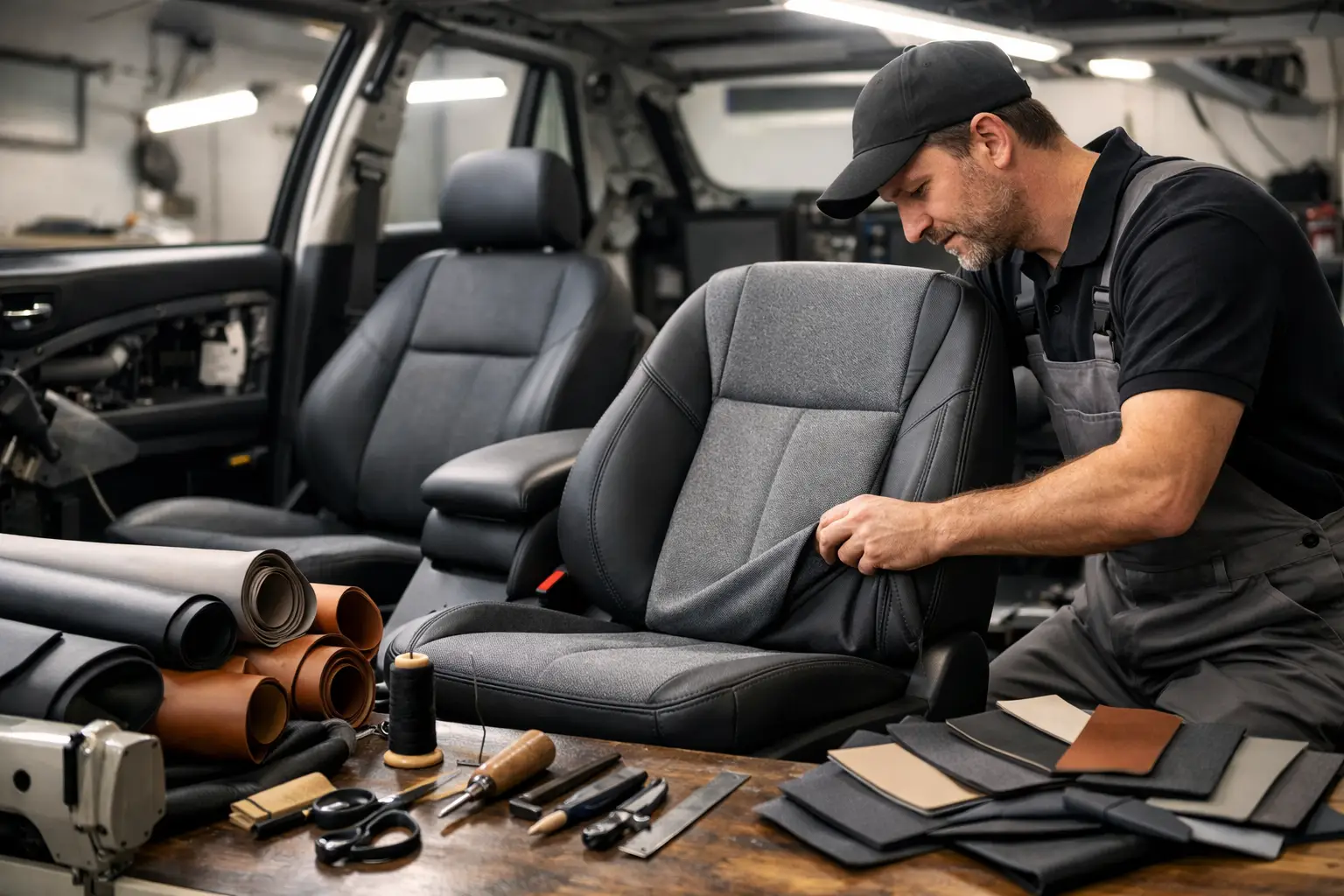
People often think upholstery begins and ends with seat covers. In practice, the scope is much broader. It includes seat repairs, panel retrimming, roof lining replacement, foam rebuilding, leather and vinyl restoration, carpet work, pillar trim, door inserts and interior finishing details that shape how a cabin feels every day.
For older or premium vehicles, the work often demands more than surface improvement. The original stitching pattern may need to be matched. The density of the seat foam may need to be corrected so the seat does not just look right, but feels right. Materials have to suit the vehicle, the climate and the intended use. A weekend classic, a daily-driven family car and a convertible kept for long-term ownership do not all require the same approach.
That is where specialist judgement matters. A general workshop may be able to remove and refit parts, but upholstery decisions are about materials, structure, finish and durability. If those choices are wrong, the result can look acceptable for a few weeks and disappoint for years.
Why in-house automotive upholstery services make a difference
When work is passed from one party to another, quality control becomes harder. Responsibility becomes blurred. Timelines stretch. Costs climb because each handover adds margin and risk. For customers, that usually means less clarity on what is being done and who is accountable if the finish is not right.
In-house automotive upholstery services offer a more disciplined process. Inspection, stripping, material selection, pattern work, sewing, fitting and finishing can be controlled within one workshop environment. That leads to better consistency and better communication. It also means advice can be based on the actual condition of the vehicle in front of the team, not on assumptions made from a photo sent around between vendors.
There is another practical advantage. Interior components are sensitive. Roof linings can crease, trim clips can break, leather can stretch, and removed parts can be damaged if they are not stored properly. A specialist workshop that handles these jobs routinely will have systems for protection, storage and refit. That is not glamorous, but it is often the difference between a proper job and a rushed one.
Repair, restore or replace – the answer depends on the car
Not every worn interior needs a full retrim. Equally, not every damaged panel should be patched. The right answer depends on condition, material type, age of the vehicle and the owner’s expectations.
If a seat has a localised tear but the surrounding leather remains healthy, a targeted repair may be sensible. If the material has become brittle across multiple panels, repairing one area can leave the rest failing shortly afterwards. The same applies to roof linings. A section that has detached is usually a sign that the backing foam has broken down across the whole panel. Reattaching the loose area is rarely a lasting fix. Replacement is usually the correct route.
For restoration projects, preserving the original character matters. That can mean retaining factory-style panel shapes, stitch lines and material textures rather than pursuing a flashy redesign. For daily-use vehicles, practicality may take priority. Owners may choose more resilient materials that stand up better to Singapore’s heat and regular use, even if the finish differs slightly from factory specification. Neither approach is wrong. It depends on whether originality, durability or budget leads the decision.
Material choice is not a minor detail
The cabin is one of the harshest environments in a vehicle. Constant UV exposure, trapped heat, humidity and friction all work against the interior. Choosing materials on appearance alone is a mistake.
Leather, synthetic leather, vinyl, fabric and specialised convertible materials each have strengths and compromises. Leather can age beautifully when the grade and finish are suitable, but poor-quality leather can dry and crack quickly. Synthetic options can offer consistency and value, yet some lower-grade products delaminate or harden under heat. Roof lining materials need the correct backing and adhesive system. Convertible tops require weather resistance, structural integrity and precise fitment.
This is why independent advice matters. A proper workshop should not push one material for every job. It should explain what will wear well, what will match best and what makes sense for the vehicle’s real use. Transparent guidance saves customers from paying for the wrong finish now and paying again to correct it later.
The hidden cost of quick fixes
A cheap repair often looks attractive because interior damage feels non-urgent. The problem is that poor upholstery work tends to reveal itself quickly. Stitching starts to pull. Adhesives fail. Panels sit unevenly. Colours do not match in daylight. The seat feels lumpy because the foam underneath was ignored.
There is also the cost of rework. Once incorrect adhesives, unsuitable materials or rough disassembly have been introduced, the next repair can become more complex. Trim boards may need replacing. Extra labour may be required to undo earlier mistakes. What looked cheaper at the start becomes more expensive overall.
For owners of premium, ageing or restoration-worthy vehicles, that risk is even higher. Interior parts may be difficult to source. Original trim details may be impossible to replace exactly once lost. Good workmanship protects what can still be preserved.
What a disciplined upholstery process should look like
Customers do not need every technical detail, but they do need confidence in how the job is handled. A specialist upholstery process should begin with honest assessment. Not every issue visible on the surface reflects the real source of failure. Foam fatigue, substrate damage, hidden water ingress or previous substandard work often sit underneath.
From there, scope should be made clear. Which parts are being repaired, restored or replaced? Will surrounding panels need to be matched? Are there expected limitations because of material age or part availability? Clear answers at the start reduce frustration later.
Production discipline matters just as much. Patterns need to be accurate. Sewing must be consistent. Materials should be stored properly. Removed components should be handled carefully and refitted without creating rattles, wrinkles or trim damage. At a specialist workshop such as 8 Cushion, that in-house control is not a selling line for effect – it is what gives customers peace of mind from the very beginning.
When to act before the damage gets worse
Interior deterioration rarely improves on its own. If a roof lining is beginning to sag, a seat seam has started to split, or a convertible top is showing wear at stress points, early intervention usually gives more options. Smaller repairs may remain feasible. Matching can be easier. Secondary damage can be avoided.
This matters in Singapore, where heat and humidity speed up ageing. Moisture can weaken adhesives. Sun exposure can dry surfaces and fade colour. A cabin that already shows minor fatigue can decline quickly if left through another season of daily use.
Owners planning to sell should pay attention too. Buyers notice interior condition immediately. Even when the mechanical condition is sound, worn trim changes the perceived care level of the whole car. A well-restored interior improves not just comfort, but confidence in the vehicle.
The best automotive upholstery services are not about dressing up a tired cabin for a few photographs. They are about making sensible, lasting decisions with the right materials, the right process and clear accountability from start to finish. If your interior is showing its age, the smart move is not to wait until the damage becomes obvious to everyone else. It is to have it assessed properly while good repair and restoration options are still on the table.
Related posts

Can Car Seat Leather be Repaired?
If you’ve spotted a tear, hole, or crack in your leather car seat, it’s unde
How to Choose Convertible Hood Material
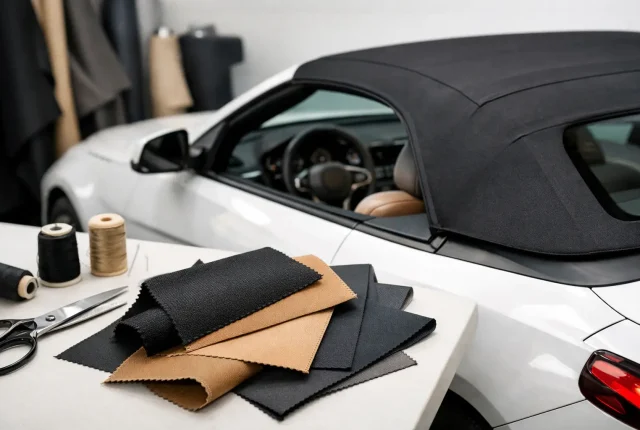
Learn how to choose convertible hood material with expert advice on fabric, viny
What Affects Windscreen Replacement Cost?
Understand windscreen replacement cost in Singapore, from vehicle glass and sens