


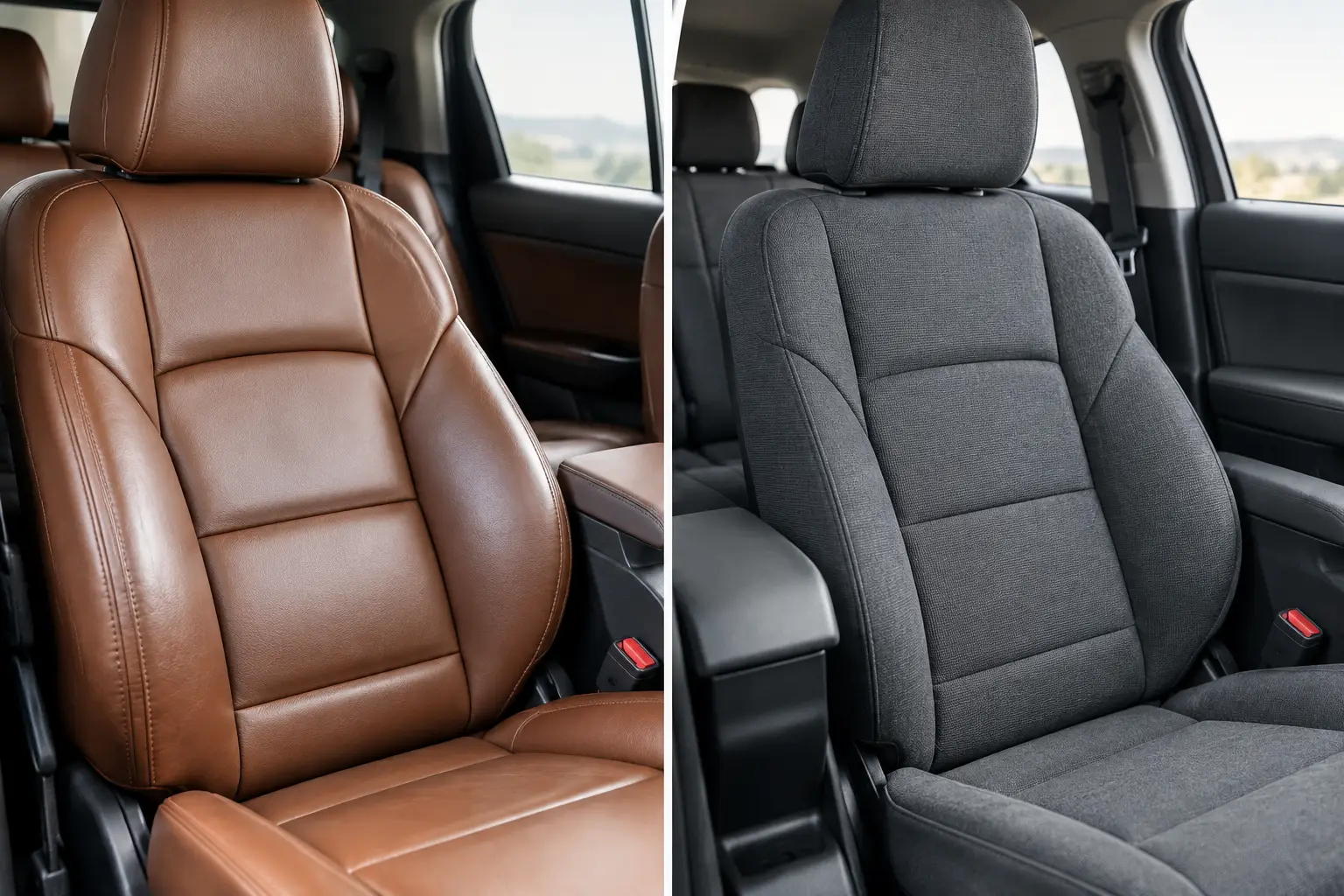
Leather Upholstery Versus Fabric Seats Compared
A split seam on a leather bolster and a flattened fabric driver’s seat may look like similar problems, but they call for very different decisions. When considering leather upholstery versus fabric seats, the right answer is rarely about which material appears more premium. It is about how the car is used, where it is parked, who travels in it, and what condition the underlying seat structure is in.
For Singapore vehicle owners, heat, humidity, daily traffic and covered or open-air parking all affect how upholstery performs. A well-chosen retrim should improve comfort and presentation without creating a material that demands more care than the owner is prepared to give.
Leather upholstery versus fabric seats: the real differences
Leather is usually chosen for its refined appearance, smooth finish and association with premium vehicles. It can make a tired cabin look more composed, particularly in executive saloons, luxury SUVs and classic restorations where the original specification called for leather. A quality leather retrim can also support resale appeal when the workmanship, colour and grain suit the vehicle.
Fabric seats offer a different set of strengths. They are generally less slippery, feel less exposed to temperature changes and can suit family cars, performance-oriented vehicles and daily drivers particularly well. A good automotive fabric gives the cabin a more relaxed feel while still providing a durable, tailored finish.
Neither material is automatically better. The important question is whether it suits the vehicle and the owner’s expectations over the years ahead.
Comfort in Singapore’s heat and humidity
This is often the deciding factor. Leather absorbs and releases heat differently from fabric. A dark leather seat left in direct sun can feel uncomfortably hot at first, even when the cabin has cooled down. Lighter colours help, as do window tinting, shaded parking and properly functioning air conditioning, but the material will still react more noticeably to heat than fabric.
Fabric generally feels more forgiving on a warm day. Its textured surface provides more immediate comfort, and it is less likely to feel sticky during humid conditions. This can matter on a daily commute, especially for drivers who park outdoors or make frequent short trips.
That does not make leather unsuitable for Singapore. Many owners value it for its feel and appearance, and ventilated seats can improve the experience where fitted. The key is to make an informed choice. Selecting pale leather for a vehicle frequently parked in the open is not a guarantee of comfort, but it is usually a more sensible starting point than black leather in the same circumstances.
Appearance, character and vehicle value
Leather gives an interior a clean, formal finish. It works naturally in vehicles designed around leather trims, where the dashboard, door cards and centre console already support a more premium specification. In a restoration project, matching the original leather type, grain and stitch detail can preserve the car’s character rather than simply making it look newer.
Fabric has its own place, particularly in cars whose original interiors used cloth, velour or patterned textile inserts. Replacing a factory fabric interior with generic leather may be attractive at first glance, but it can alter the vehicle’s intended character. For some enthusiast and classic vehicles, accurate fabric restoration is the more authentic and valuable choice.
Colour selection deserves as much attention as material selection. Light leather can make a small cabin feel open, but it shows colour transfer from denim and everyday marks more readily. Dark fabric disguises minor staining better, although it can make a cabin feel visually heavier. A specialist should assess the existing trim, carpets, headlining and door panels before proposing a replacement material.
Cleaning and everyday upkeep
Leather is straightforward to wipe clean when spills happen quickly. This makes it appealing for owners with young children, pets or frequent passengers. Dust, light dirt and most fresh spills sit on the surface rather than working into the material immediately.
However, leather needs appropriate care. Body oils, heat and repeated movement gradually dry it out, especially on the driver’s outer bolster. Without regular cleaning and conditioning, it can become shiny, stiff, cracked or discoloured. Harsh household cleaners are not a shortcut. They can strip protective finishes and leave the surface more vulnerable.
Fabric does not require conditioning, but stains need faster attention. Drinks, food, ink and oily marks can penetrate the fibres, while repeated rubbing can create a visibly worn patch. Deep cleaning may refresh fabric, yet it cannot always reverse permanent staining or fibre damage.
For most owners, the practical distinction is simple: leather needs consistent, correct surface care; fabric needs prompt spill management and periodic professional cleaning. Neither is maintenance-free.
Durability depends on more than the material
A well-made leather seat can last for many years, but leather is not invincible. Entry and exit wear, sharp items in back pockets, metal belt fittings and prolonged sun exposure all leave their mark. The driver’s bolster is commonly the first area to show damage because it carries concentrated pressure every time the driver gets in and out.
Quality fabric can be remarkably hard-wearing, especially automotive-grade materials designed for abrasion resistance. Yet fabric can snag, fade and lose its original texture. Foam breakdown beneath the cover can also make even a clean seat look tired, with loose surfaces, collapsed side bolsters and poor support.
This is why upholstery repair should not focus only on what is visible. A lasting job may involve repairing seat foam, reinforcing damaged backing, correcting broken stitching and checking the frame or seat mechanisms before the new cover is fitted. Covering a weakened cushion with fresh material may improve the appearance briefly, but it does not address the cause of premature wear.
Genuine leather, leatherette and mixed trims
Not every seat described as leather is fully upholstered in genuine hide. Many modern vehicles use leather on the main contact areas and leatherette, sometimes called synthetic leather, on the sides and rear. This is common and can be a practical design choice, but it should be clearly understood before repair or replacement work begins.
Leatherette is usually easier to clean and often more resistant to short-term staining. It can also offer a consistent finish at a lower material cost. Its long-term ageing characteristics differ from genuine leather, though. Lower-grade synthetic materials may harden, peel or crack, particularly in hot conditions.
Mixed trims can offer a sensible balance. Leather or leatherette bolsters paired with fabric centre panels can provide the supportive, grippy feel of fabric while retaining a more structured appearance around the seat edges. For performance cars and regular commuters, this arrangement is often worth considering.
When fabric is the better choice
Fabric is not a compromise by default. It can be the stronger option when the vehicle is used daily, frequently parked outdoors, carries children, or needs a faithful restoration to its original trim. It also suits drivers who value grip and temperature comfort over a formal luxury finish.
The best fabric jobs do not look generic. Correct pattern alignment, tightly controlled stitching, clean piping and carefully shaped panels determine whether the finished seat looks factory-considered or merely covered over. Material selection must be matched by disciplined fitting.
When leather is worth the investment
Leather is often the right choice for premium cabins, luxury vehicle restorations and owners who want a more refined presentation. It is particularly worthwhile when the rest of the interior is in good condition and the new upholstery can be colour-matched properly to surrounding trims.
It also makes sense for owners prepared to maintain it. Regular gentle cleaning, suitable conditioning and reasonable protection from prolonged direct sun can keep leather looking excellent for much longer. Choosing quality automotive leather and correct installation matters more than choosing the most fashionable colour.
Start with the condition of your existing seats
Before deciding on a full retrim, inspect the existing upholstery honestly. A small seam split, isolated scuff or worn bolster may be repairable without replacing every panel. Conversely, widespread cracking, failing foam, previous poor repairs or sun-damaged material may make partial work a false economy.
At 8 Cushion, upholstery work is assessed as a complete seat system, not just a surface issue. The material, foam, stitch lines, seat shape and surrounding interior finish all influence the right scope of work. Keeping this process in-house allows closer control over fit, finish and accountability from inspection through to completion.
Choose the material you will be comfortable living with, not simply the one that photographs best on collection day. A properly specified seat trim should still feel right after the daily commute, a rainy school run and years of getting in and out of the same driver’s seat.
Related posts
When Should a Windscreen Be Replaced?
Learn when should a windscreen be replaced, how to spot unsafe damage, and why e
How to Replace Torn Car Upholstery Properly
Learn how to replace torn car upholstery with sound repair choices, suitable mat
Headliner Repair Versus Replacement Options
Compare headliner repair versus replacement options, from local sagging to full