


What Causes Convertible Top Leaks?
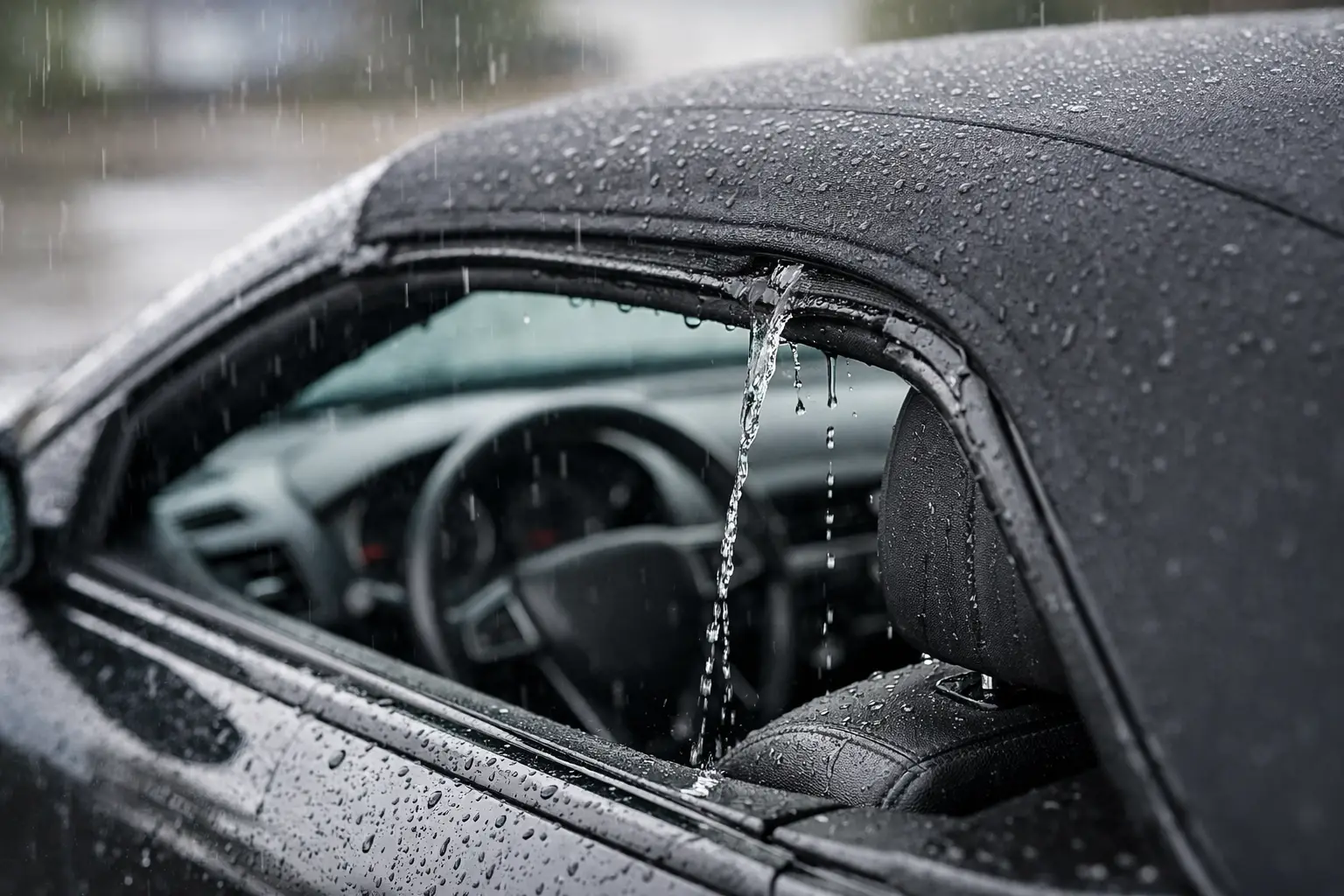
A convertible should not leave you checking the seats after every downpour. Yet that is often how soft-top leaks begin – not as a dramatic failure, but as a damp carpet, misted glass, a musty smell, or water appearing where it should never be. If you are asking what causes convertible top leaks, the answer is rarely just one thing. In most cases, leaks come from a combination of age, fitment, drainage, seal condition, and how the roof has been used over time.
At workshop level, this matters because water ingress is not only a roof problem. Left alone, it can affect trim, insulation, electronics, seat materials, and overall cabin condition. That is why leak diagnosis needs a disciplined approach rather than guesswork or a quick sealant job.
What causes convertible top leaks most often
The most common cause is deterioration in the areas that are supposed to manage water rather than block every drop entirely. Many owners assume a convertible roof works like a fixed metal roof. It does not. A soft top depends on tension, overlap, seals, channels, and drains all working together. Once one part of that system weakens, water starts taking the easiest route into the cabin.
Aged rubber seals are a frequent culprit. Over time, seals flatten, harden, shrink, or crack. In Singapore’s heat and humidity, this process can accelerate, especially on vehicles parked outdoors. When the seal no longer compresses properly against the glass or roof frame, gaps appear. They may be tiny, but that is enough for water to creep past during heavy rain or a wash.
Fabric or material wear is another major factor. Convertible tops are built to handle weather, but they do not last indefinitely. The outer material can become porous, stitching can weaken, and bonded sections can separate. On some roofs, the issue is not a visible tear but material fatigue around stress points where the frame folds. Water enters slowly at first, then becomes a recurring problem.
Poor alignment also causes leaks more often than many expect. If the roof is even slightly out of position, it may not sit evenly against the windscreen header, side glass, or quarter seals. This can happen after wear in the frame, improper adjustment, previous repair work, or repeated operation of a roof that is already under strain. The top may still latch and appear closed, but not with the pressure it needs.
Why leaks are not always coming from the place you see them
One of the more frustrating parts of diagnosing a soft-top leak is that the wet patch is often not the source. Water travels. It can enter near the front seal, run along the frame, soak into interior layers, and show up in the footwell or behind the seats. That is why visual inspection from inside the car is only one part of the process.
Blocked drains are a classic example. Many convertibles have built-in drainage channels around the roof and body openings. These are designed to collect and direct water away safely. When leaves, dust, degraded roof debris, or general grime build up, water backs up and overflows into the cabin. The owner sees wet trim and assumes the fabric roof has failed, when the real issue is drainage.
Window position can also mislead. Frameless or tightly indexed side windows must meet the seals correctly. If the glass sits too low, too high, or at the wrong angle, water can bypass the seal even if the roof fabric itself is sound. In those cases, replacing the top alone will not solve the problem.
What causes convertible top leaks after previous repairs
Not every leak comes from age alone. Previous repair work can create problems if the roof was fitted without the right tension, if seals were reused when they should have been replaced, or if adjustments were made to force a closure rather than restore correct alignment.
This is where specialist work makes a real difference. Soft tops are not generic trim jobs. Pattern, frame geometry, material behaviour, and sealing points all vary by model. A roof installed slightly off can lead to noise, premature wear, and water ingress. It may look acceptable at a glance but fail in real conditions.
There is also the issue of temporary fixes. Household waterproofing sprays, casual silicone application, or adhesive patching may seem attractive when the leak is small. In practice, these often make later repair more difficult. Sealants can trap moisture, contaminate surfaces, interfere with proper bonding, and mask the true leak path. The result is usually more labour later, not less cost overall.
Wear points that deserve closer attention
The front header seal is one of the first places we inspect because it takes repeated compression every time the roof is closed. Side rail seals and quarter window seals are also common failure points, particularly on older vehicles where rubber has lost elasticity.
Stitch lines deserve attention too. Once stitching begins to degrade, water can penetrate through seam areas even if the surrounding material still looks serviceable. Rear window sections, whether glass or plastic, are another stress zone. Bonded edges can fail, and movement during roof operation can enlarge small openings over time.
Then there is the frame itself. Bent linkages, worn pivot points, and tired tension cables all affect how the top sits when closed. This is why leak work should not be approached as fabric-only diagnosis. The roof system has mechanical and trim elements working together.
Can weather and storage habits make leaks worse?
Yes, very much so. Heat, UV exposure, humidity, tree debris, and infrequent cleaning all accelerate deterioration. Cars parked outside full-time generally see faster seal ageing than those kept under cover. If the roof is folded away while damp or dirty, that can also shorten material life and encourage mould or seam degradation.
Infrequent use is not always better either. A convertible top that is never operated can develop stiff seals, flattened contact points, and drainage neglect. On the other hand, constant operation without proper care can wear the mechanism. It depends on the vehicle, how it is stored, and whether maintenance has kept pace with age.
Regular cleaning helps, but only when the right products and methods are used. Aggressive chemicals can dry out seals or damage coatings. Heavy scrubbing can weaken stitched areas. The goal is preservation, not just appearance.
Signs the leak problem is becoming more serious
A few warning signs suggest the issue has moved beyond a minor nuisance. Persistent cabin condensation, recurring damp carpets, water marks on pillars or headlining trim, electrical warnings, and a stale interior smell all point to ongoing ingress. If you hear more wind noise than before, that can also indicate loss of proper sealing pressure.
Another concern is hidden moisture. By the time water is visible on the surface, underlay and insulation beneath may already be wet. In premium or restoration-worthy vehicles, that creates avoidable deterioration in materials that are far more expensive to correct than the original leak.
When repair is realistic and when replacement makes more sense
Not every leaking roof needs full replacement. If the issue is blocked drains, seal condition, glass alignment, or a localised fault, targeted repair may be the right route. If the top material is still structurally sound and the frame is healthy, repair can restore proper performance without unnecessary scope.
But there is a point where replacement is more sensible. If the fabric is heavily aged, multiple seams are failing, the rear section is separating, and the seals and frame need attention as well, repeated patchwork becomes poor value. A proper replacement, fitted and adjusted correctly, gives better long-term control over finish, function, and weather resistance.
That judgement call should be made honestly. Owners deserve independent advice based on the actual condition of the roof system, not a one-size-fits-all answer.
The value of proper inspection
If you want a clear answer to what causes convertible top leaks on your specific car, the roof needs to be inspected as a system. That means looking at fabric condition, seam integrity, frame alignment, window interface, seal compression, drainage paths, and signs of previous repair work. Water testing can help, but only when done methodically. Randomly soaking the car often creates confusion instead of clarity.
At 8 Cushion, this type of work is approached with the same workshop discipline as any serious interior or restoration job – identify the true source, assess the surrounding condition, and recommend a fix that matches the vehicle rather than forcing a shortcut.
A dry cabin is not only about comfort. It protects the value, condition, and credibility of the car as a whole. If your convertible has started to smell damp, collect water, or show new signs of misalignment, treat that as early warning rather than a minor annoyance. The earlier the cause is identified, the more options you usually have.
Related posts
Best Materials for Convertible Tops
Choosing the best materials for convertible tops means balancing durability, wea
Classic Car Trim Restoration Guide for Lasting Results
A classic car trim restoration guide covering inspection, materials, repair choi
How to Choose Convertible Hood Material
Learn how to choose convertible hood material with expert advice on fabric, viny