


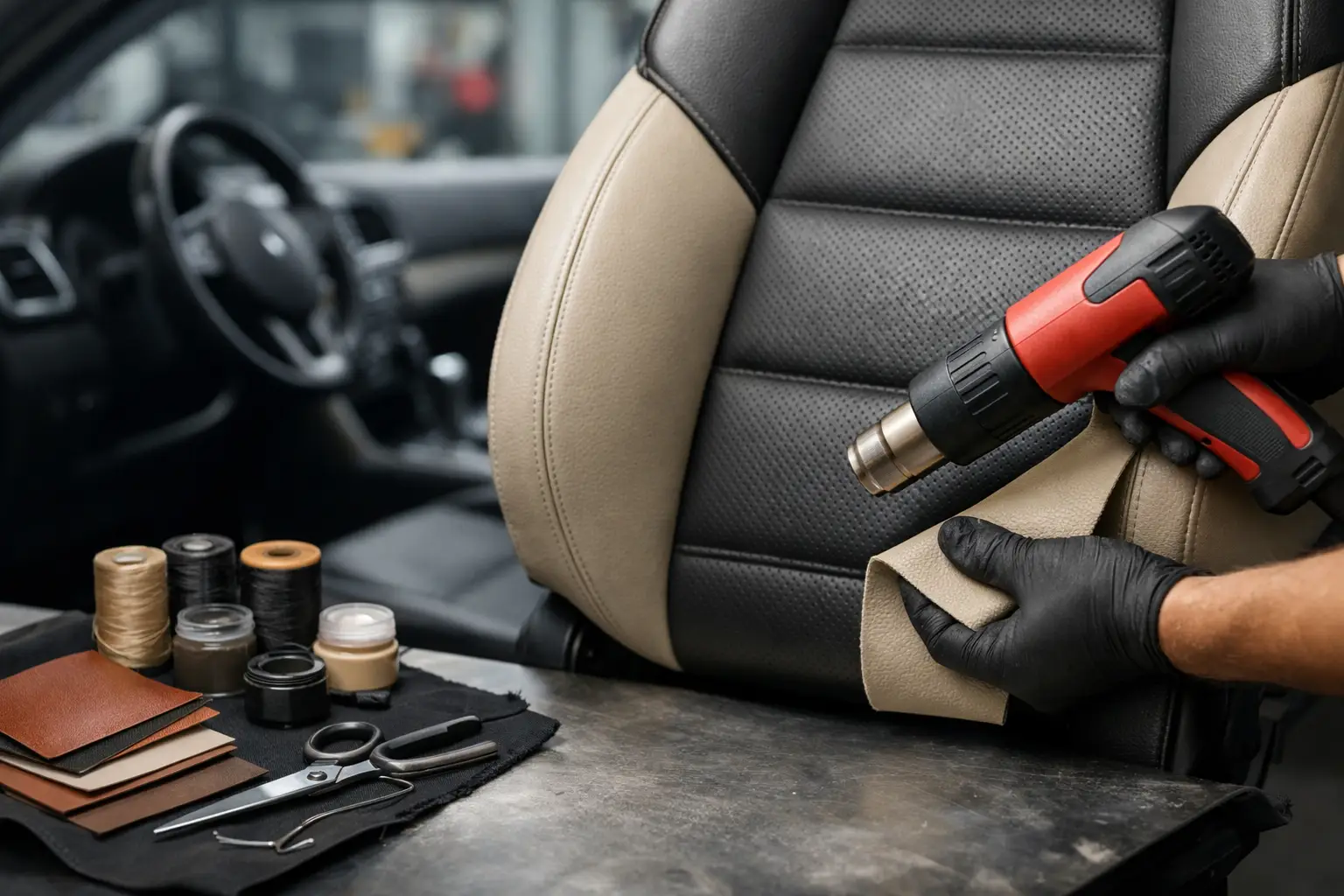
Best Car Seats Repair Solutions for Lasting Comfort
A driver’s seat can look tired long before the rest of the cabin does. The outer bolster flattens where you slide in and out, leather becomes shiny or cracked, fabric tears at a seam, and the cushion loses the support that made longer journeys comfortable. Finding the best car seats repair solutions is not about making damage less visible for a few months. It is about restoring the seat correctly, with suitable materials and careful attention to the parts you cannot see.
For Singapore vehicle owners, heat, humidity, daily use and tight parking spaces all take their toll on upholstery. Premium vehicles, older cars and enthusiast models can also have trims that are difficult to match or replace. A specialist assessment identifies whether the seat needs a local repair, new upholstery panels, foam reconstruction or complete retrimming. That distinction protects both the result and the value of the vehicle.
Best car seats repair solutions start with the cause
A worn seat is not always an upholstery problem alone. Surface damage may be caused by dried leather, friction from entry and exit, a broken stitch line, weakened backing material or collapsed foam underneath. Treating only the visible mark can leave the underlying fault in place.
A proper workshop inspection should consider the seat cover, seams, foam, frame, adjustment mechanisms and nearby trim. On seats with heating, ventilation, occupancy sensors or side airbags, the work must also respect the original design and component placement. These features are not an area for improvised repairs.
The right solution depends on the material, the extent of wear and the expected standard of finish. A small scuff on a newer leather seat may respond well to a controlled repair and colour refinishing. A split bolster with degraded foam usually needs more substantial work. A low-cost patch may initially appear acceptable, but it can pull away, reveal a mismatch or create a hard edge that wears faster.
Repairing leather seats without hiding the problem
Leather seating has a distinctive feel and appearance, but it is not indestructible. Repeated movement across the outer bolster can remove the protective finish, while heat and neglect can leave the leather dry and prone to cracking. Once a crack opens through the surface, conditioner alone cannot restore its strength.
Minor abrasions can often be repaired through careful cleaning, surface preparation, flexible repair materials and colour matching. The aim is to retain as much original material as practical while restoring a consistent finish. This approach is sensible where the leather remains structurally sound and the damage is confined.
For tears, deep cracks or leather that has thinned significantly, replacing the affected panel is often the better long-term decision. A new panel can be cut and sewn to follow the original pattern, with attention paid to grain, colour, stitch spacing and piping where applicable. It is more involved than applying filler, but it avoids asking compromised leather to do a job it can no longer support.
Colour matching deserves particular care. Leather changes with age and exposure, so a factory colour name is only a starting point. A specialist will assess the existing trim in natural and workshop lighting before refinishing or selecting replacement material. The goal is a balanced, credible result rather than a visibly new section beside aged upholstery.
When leather replacement is the wiser option
Complete retrimming is not automatically necessary because one area has worn. However, it becomes worthwhile when damage is widespread, previous repairs have failed, the original material is severely hardened, or the owner is restoring the cabin to a higher standard. It may also be the practical route when matching a heavily faded or discontinued trim is no longer possible through local panel work.
There is a trade-off. Retaining original upholstery can support authenticity in certain classic vehicles, while carefully chosen replacement upholstery can restore comfort, appearance and daily usability. The best choice should be explained clearly before work begins, not presented as a one-size-fits-all package.
Fabric seat repairs require sound backing and stitching
Fabric seats tend to show their age through loose seams, worn side bolsters, burns, snags and foam that begins to show through the cloth. A small tear can grow quickly because the fabric backing has already weakened around it. Simply stitching across the opening without stabilising that area may distort the cover and place more strain on the surrounding fibres.
Where a repair is suitable, the damaged section should be stabilised and sewn with the correct tension. If the material is worn through, replacing a local panel is normally neater and more durable than trying to disguise a thin patch. Patterned fabric presents an additional challenge: the weave and direction need to align with the rest of the seat, or the repair will remain obvious even from a distance.
Owners should be realistic about availability. Original fabric for an older car may no longer be supplied, particularly for specific trims or limited variants. In that case, an independent specialist can advise whether a close-match material is appropriate, whether both front seats should be retrimmed for visual consistency, or whether preservation of the original fabric is the stronger priority.
Restore the cushion, not just the cover
If a seat feels low, lopsided or uncomfortable, the foam may be the main issue. This is especially common on the driver’s side, where years of use compress the outer edge and reduce lumbar support. New upholstery over collapsed foam can improve appearance, but it will not restore the support that makes the seat comfortable.
Foam repair may involve rebuilding an affected section, reshaping the bolster or replacing deteriorated foam where required. The cover must then be refitted with care so it sits evenly rather than looking overstretched or baggy. On certain seats, the condition of webbing, support wires or the base structure should also be checked.
This work makes a practical difference. Better support helps the driver maintain a comfortable position and prevents a newly repaired cover from being stressed by an uneven cushion. It is also why a specialist should inspect the seat in person rather than quote solely from a photograph.
Safety-related seat damage needs a different standard
Car seats are not merely decorative furniture. They work alongside seat belts, head restraints and, in many vehicles, integrated airbags and electrical systems. Damage around a side airbag seam, broken seat frame, faulty reclining mechanism or loose mounting point should never be treated as a cosmetic job.
Any repair around these areas requires an informed assessment of what can be restored and what requires replacement or further mechanical attention. The workshop should not obstruct airbag deployment zones, interfere with sensor wiring or alter the intended operation of the seat. If a fault sits outside the upholstery scope, responsible advice matters more than forcing a cosmetic solution.
This is one reason to be cautious of universal slip covers and unverified repair kits. They may hide a problem, but they cannot confirm what is happening underneath. A cover may also fit poorly, trap moisture or interfere with the way a seat is designed to function.
Choosing a workshop for car seat repair
The best result comes from workmanship, materials and process working together. Look for a workshop that examines the vehicle, explains the repair scope and distinguishes between what can be repaired and what should be replaced. Clear advice is more useful than an attractive quote that leaves important work unspecified.
In-house production also gives customers stronger accountability. When removal, cutting, sewing, foam work and refitting are controlled within the same specialist operation, the team can inspect fit and finish at each stage. It reduces the uncertainty that comes when core work is passed between different parties.
At 8 Cushion, seat repair and restoration work is approached with that discipline: assess the vehicle, recommend the appropriate scope and carry out core craftsmanship in-house. This is particularly valuable where seats form part of a broader interior refurbishment, such as roof lining, door trim or convertible upholstery work, because the materials and finish can be considered as one cabin rather than separate jobs.
Before approving work, ask how the material will be matched, whether damaged foam will be inspected, what is included in removal and refitting, and how the workshop will handle seats with airbags or electronics. These are practical questions, not unnecessary detail. They give you a clearer understanding of the finish you are paying for.
A well-repaired seat should feel as considered as it looks. When the cover sits correctly, the foam supports you properly and the materials suit the vehicle, every journey feels less like a compromise and more like the car has been cared for as it should be.
Related posts
Choosing a Car Roof Lining Repair Specialist
Choose a car roof lining repair specialist for precise diagnosis, proper materia
Restoration Versus Replacement Upholstery
Restoration versus replacement upholstery - learn when to repair, retrim or repl
Benefits of Repairing Car Trim Before It Spreads
Discover the benefits of repairing car trim early, from protecting cabin comfort