


Rear Windscreen Demister Repair: What Matters
A rear windscreen that stays misted after the demister is switched on is more than an inconvenience in wet weather. It reduces rearward visibility, delays a safe departure and can point to damage that needs more than a quick fix. Proper rear windscreen demister repair starts with identifying whether the fault lies in the heater lines, the electrical supply or the glass itself.
For owners of premium, ageing and restoration-worthy vehicles, the right decision also protects the appearance and originality of the car. A visible repair may be acceptable on a daily driver with one broken line. On a well-kept vehicle, a clean and lasting result may call for more careful work or rear-glass replacement.
How a rear windscreen demister works
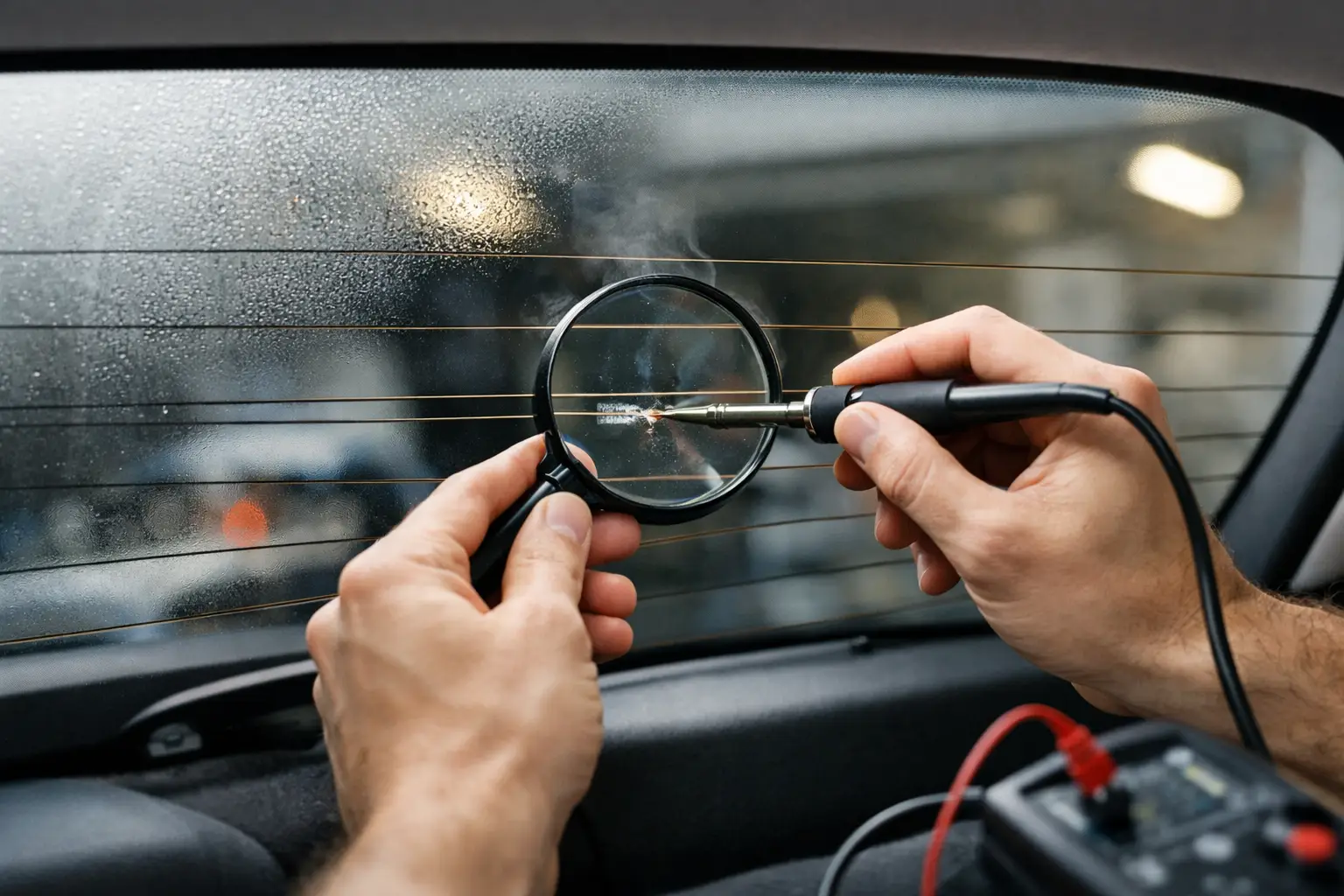
Most rear demisters use fine horizontal conductive lines printed on the inside of the glass. When current passes through them, they warm the glass and clear condensation. Two wider vertical connections at the sides, often called busbars, feed power to those lines.
The system looks simple, but a fault can occur at several points. A damaged heater line affects only a narrow strip of glass. A detached terminal can stop part or all of the grid from working. A blown fuse, failed relay, worn switch, poor earth or broken wiring can produce the same symptom without any damage to the glass.
That distinction matters. Repairing a visible line will not solve an electrical supply fault, while replacing the rear windscreen because of a loose terminal can be unnecessary expenditure.
Signs your demister needs attention
The clearest sign is a horizontal band that remains misted while the surrounding glass clears. This often indicates a break in one or more heating elements. Look closely for scratches, small gaps in the printed line, or marks left by an adhesive pad or improperly removed tint film.
If the entire screen remains misted, first check whether the demister warning light comes on and whether other electrical functions behave normally. A system that works intermittently may have a weak connection or corroded terminal rather than a failed grid.
There are also cases where the demister is functioning, but appears weak. Heavy condensation, a very dirty inner screen, poor cabin ventilation or a short journey can make the clearing process seem slower than expected. The glass should begin clearing in a reasonably even pattern after a few minutes. It does not need to become hot to the touch to be working correctly.
Common causes of damaged heater lines
Rear demister lines are delicate because they sit on the inside surface of the glass. Aggressive cleaning, scraping at stickers and careless loading can break them. A pet barrier, child seat, luggage or loose trim can also rub against the glass over time.
Aftermarket tint removal is another common cause. If adhesive is pulled away too forcefully, it can lift sections of the conductive print with it. Older vehicles may develop deterioration at the side connections through age, moisture or previous repair work.
A rear windscreen replacement can introduce issues too if terminals are not handled correctly during installation. This is why glass work should not be treated as a simple remove-and-refit task. The demister circuit, aerial elements and any integrated features must be checked before the vehicle leaves the workshop.
Rear windscreen demister repair or replacement?
A local repair is often suitable when the damage is limited. Specialist conductive repair material can bridge a small break in a heater line and restore the circuit. Done carefully, it is usually far less noticeable than an improvised repair and avoids replacing sound glass.
However, this approach has limits. Multiple broken lines, long missing sections, lifting print or damage close to the busbar can make a repair less dependable. The repaired area may also remain slightly visible, particularly in certain light. That may be an acceptable trade-off for a practical daily vehicle, but not always for a car where finish and resale presentation matter.
Replacement becomes the more sensible option when the glass is already scratched, chipped, delaminating around the edges, heavily damaged or affected by several demister failures. It can also be the safer route where a side terminal has detached and the glass or conductive layer cannot be restored securely.
The correct replacement must match the vehicle specification. Some rear screens incorporate radio aerials, third brake light arrangements, privacy tint, heating patterns or sensors. Selecting glass on price alone can lead to poor fit, missing functions or a finish that does not match the vehicle.
Why diagnosis should come before any work
A disciplined inspection avoids assumptions. The workshop should visually assess the heater lines and terminals, then test power and continuity where appropriate. This establishes whether the current reaches the glass and whether individual elements are intact.
The vehicle’s rear trim also deserves careful handling. On many models, access to wiring and terminals sits behind interior panels, roof-lining edges or boot trim. Incorrect removal can leave clips loose, panels marked or rattles that were not present before. For convertibles and older vehicles in particular, trim work needs a controlled approach.
A clear diagnosis should explain the fault, the recommended method and the expected finish. There is no benefit in promising an invisible line repair when the damage makes that unrealistic. Straight advice at the beginning gives the owner control over cost, appearance and long-term reliability.
Can you use a DIY demister repair kit?
DIY conductive paint kits are available and can work on a small, clean break. They are most appropriate for an owner who can accurately locate the fault, prepare the surface without damaging neighbouring lines and apply the material with a steady hand.
The trade-off is precision. Too much material can look untidy or bridge adjacent lines. Too little may not carry current reliably. Poor surface preparation can cause the repair to lift, while attempting to reattach a terminal with unsuitable adhesive may create resistance and heat at the connection.
Avoid scraping the grid with blades, using strong solvents without checking their suitability, or applying ordinary glue to a broken electrical terminal. These shortcuts can turn a modest repair into a replacement job. If the car has valuable rear trim, specialist glass, old adhesive residues or several damaged elements, professional assessment is generally the better value.
What quality repair work looks like
Good rear windscreen demister repair is not judged only by whether the warning light illuminates. The grid should clear consistently, terminals should be secure and surrounding trim should be refitted correctly. Where a local line repair is carried out, the work should be neat, contained and tested after curing.
If replacement is required, quality depends on preparation as much as fitting. The old screen must be removed without avoidable damage to paintwork, trim or wiring. The aperture needs to be cleaned and prepared correctly, while the replacement screen should be aligned properly and checked for its integrated electrical functions.
At 8 Cushion, specialist work is handled in-house, allowing the same team to manage the inspection, trim care and completed finish. That accountability matters when glass work meets upholstery, roof linings and vehicle-specific interior details.
Preventing further demister damage
Use a soft microfibre cloth and glass cleaner suitable for interior automotive glass. Wipe across the screen lightly rather than scrubbing hard along the heater lines. Remove stickers and adhesive residues patiently, using a method appropriate for the glass and conductive print.
Keep sharp objects, unsecured loads and abrasive accessories away from the rear screen. If tinting work is planned, ask how the installer will protect the demister lines during removal or replacement. Small precautions are particularly worthwhile when replacement glass is difficult to source or the vehicle carries original factory equipment.
A demister should clear the glass without demanding attention. If yours leaves persistent bands, works only occasionally or has suffered visible damage, deal with it before the next heavy downpour turns a minor defect into a visibility problem.
Related posts
How Long Does Windscreen Replacement Take?
How long does windscreen replacement take? Most jobs take 1-2 hours, but curing
Door Panel Upholstery Repair That Lasts
Door panel upholstery repair restores loose, warped or worn trims with lasting r
Best Windscreen Replacement Glass Options Explained
Compare the best windscreen replacement glass options, from OEM to quality after