


Choosing a Car Roof Lining Repair Specialist
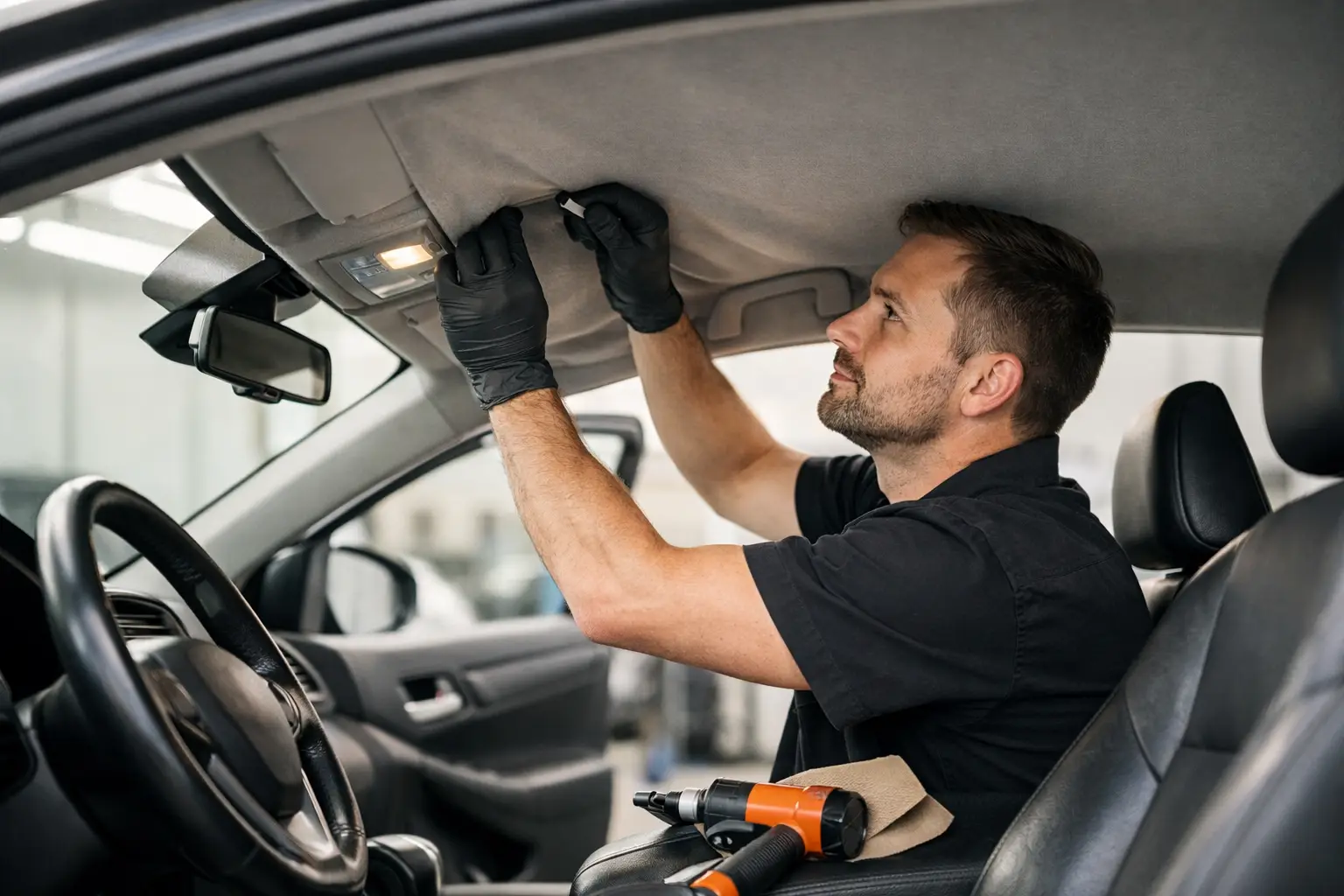
A sagging roof lining rarely starts as a major problem. It may begin with a small section lifting above the rear seats, then spread across the cabin until the fabric hangs in the driver’s view. A qualified car roof lining repair specialist looks beyond the loose material to identify why it has failed, then restores it with the right preparation, adhesive and fitting method.
For owners of well-kept, premium or ageing vehicles, the headlining is not a minor cosmetic detail. It affects how the cabin feels every time you get in, can interfere with visibility when it drops, and can make an otherwise sound car appear neglected. The right repair is therefore about more than making the fabric look tidy for the day. It is about returning the interior to a standard that suits the vehicle.
Why roof linings sag and separate
Most sagging headlinings fail because the original foam-backed material has deteriorated. Over time, heat, humidity and repeated temperature changes break down the foam layer between the fabric and the backing board. Once that layer turns brittle or powdery, the fabric can no longer stay bonded in place.
Singapore’s heat and humidity can accelerate this process, especially for cars parked outdoors or used daily. However, age alone is not always the explanation. Water ingress from a damaged seal, a sunroof drain issue, or previous work carried out with unsuitable adhesive can cause localised lifting. A specialist should inspect the condition of the backing board and surrounding trim before recommending a solution.
Trying to pin, staple or glue a loose section back into place may seem economical, but it usually treats only the visible symptom. The deteriorated foam remains behind the fabric, so the repair often releases again. Pins can also leave permanent marks, while excessive adhesive can soak through and stain the surface.
What a car roof lining repair specialist should assess
A proper assessment starts with the vehicle, not with a one-size-fits-all quotation. Roof linings vary considerably between hatchbacks, saloons, SUVs, coupes and classic cars. Vehicles with sunroofs, panoramic roofs, rear entertainment systems or complex pillar trims require additional care during removal and refitting.
The specialist should establish whether the original board is intact, whether the fabric has detached across the whole surface, and whether there are signs of moisture damage. They should also consider the condition of related items such as sun visors, grab handles, lamps, sunroof surrounds and pillar trims. These components affect the final fit and should not be treated as an afterthought.
There are four warning signs that usually mean the job needs professional attention:
- Fabric drooping across a large area or obstructing the rear-view mirror.
- Fine dust or crumbling foam falling from the roof lining.
- Bubbles, stains or a persistent damp smell around the headlining.
- Loose trim, damaged clips or uneven gaps after a previous repair.
Not every car requires a complete replacement of the roof-lining material. A small area damaged by a specific incident may be repairable if the original foam and board are still stable. In most age-related failures, though, removing the old fabric, cleaning the board thoroughly and recovering it is the durable option.
The difference between a quick fix and a proper recovery
A lasting roof-lining repair involves controlled preparation. The roof board is removed carefully, old fabric and foam residue are stripped away, and the surface is cleaned before new material is applied. Skipping this stage is one of the main reasons a newly fitted lining can fail prematurely.
Material choice matters as much as preparation. Headlining fabric needs the correct weight, stretch and foam backing to follow the contours of the board without wrinkling, pulling away at the edges or affecting trim fitment. A material that looks similar on a sample roll may not perform properly once fitted in a hot cabin.
The adhesive must also be suitable for automotive interior use and applied evenly. Too little coverage can lead to future lifting. Too much can create lumps, bleed-through or stiff sections. A disciplined workshop process gives the adhesive appropriate working time and ensures the fabric is positioned accurately before the board returns to the car.
The result should sit smooth and secure around curves, apertures and edges. It should not have visible creases, loose corners or cut-outs that look roughly trimmed. These details are where specialist workmanship becomes clear.
Why in-house workmanship gives better control
Roof lining work can involve delicate trim removal around pillars, interior lights, wiring and airbags. The job calls for more than upholstery skill alone. It requires familiarity with vehicle interiors and the patience to dismantle and reassemble them without unnecessary damage.
When the assessment, preparation and installation are handled in-house, there is clearer accountability for the finished result. The workshop team can inspect the roof board directly, manage material condition, and respond if an unexpected issue is found during removal. This avoids the confusion that can arise when work is passed between several parties.
At 8 Cushion, the focus is on authentic in-house workmanship rather than outsourcing core jobs. That approach supports tighter quality control, direct communication on the repair scope and pricing without middleman mark-ups. It also means advice can be based on the actual condition of the vehicle, rather than a generic package.
Choosing the right colour and material
Many owners want the cabin returned to its factory appearance, particularly where the car is a premium model, a cherished daily driver or a restoration project. In these cases, colour matching and texture selection deserve time. Beige, grey, black and ivory interiors can vary more than expected, and an almost-matching material may stand out once fitted beside original visors and pillar trims.
There are occasions when changing the finish makes sense. A darker headlining can suit a personalised interior, while a replacement material may be selected for improved durability or to complement newly refurbished seats and door panels. The trade-off is originality. For vehicles where resale value or period correctness matters, retaining a close factory-style finish is usually the safer choice.
A specialist should explain these options plainly. The best material is not automatically the most expensive one. It is the one that suits the vehicle’s use, interior design, condition and owner’s priorities.
Questions worth asking before approving the work
Before leaving your vehicle, ask how the roof lining will be repaired, whether the board will be cleaned and prepared, and what material is proposed. It is also sensible to ask whether related trim or clips need replacement, particularly on older cars where plastic fittings may have become brittle.
You should receive a clear explanation if the workshop finds water damage, a cracked backing board or a sunroof-related issue. Recovering a board without addressing an active leak may only postpone the problem. Equally, a reputable specialist will not recommend unnecessary replacement when a limited repair is genuinely suitable.
Price matters, but it should be considered alongside scope. A low quotation may exclude removal, preparation, trim work or the quality of material needed for a durable result. A transparent estimate helps you understand what is being restored and why.
Protecting the new roof lining
Once repaired, sensible care can help the new lining stay in good condition. Keep windows and sunroofs closed during heavy rain, address water leaks promptly, and avoid attaching accessories or clips directly to the headlining. If the vehicle is frequently parked outdoors, shade or covered parking can reduce prolonged heat exposure.
Most importantly, do not wait until the material has fallen across the cabin. Early inspection gives a specialist more opportunity to assess the cause, preserve surrounding trim and recommend the right level of work. A properly restored roof lining is a quiet improvement, but every drive feels more complete when the cabin above you is secure, clean and finished as it should be.
Related posts

Car Interior Rejuvenation, Uplift Your Self-confidence
Dinner is set at 7pm, Hotel Fullerton. You put on a tie to look smart, styled up
Best Materials for Car Roof Lining
Choosing the best materials for car roof lining depends on heat, durability and
Custom Car Interior Refurbishment Done Right
Custom car interior refurbishment restores comfort, value and finish with specia