


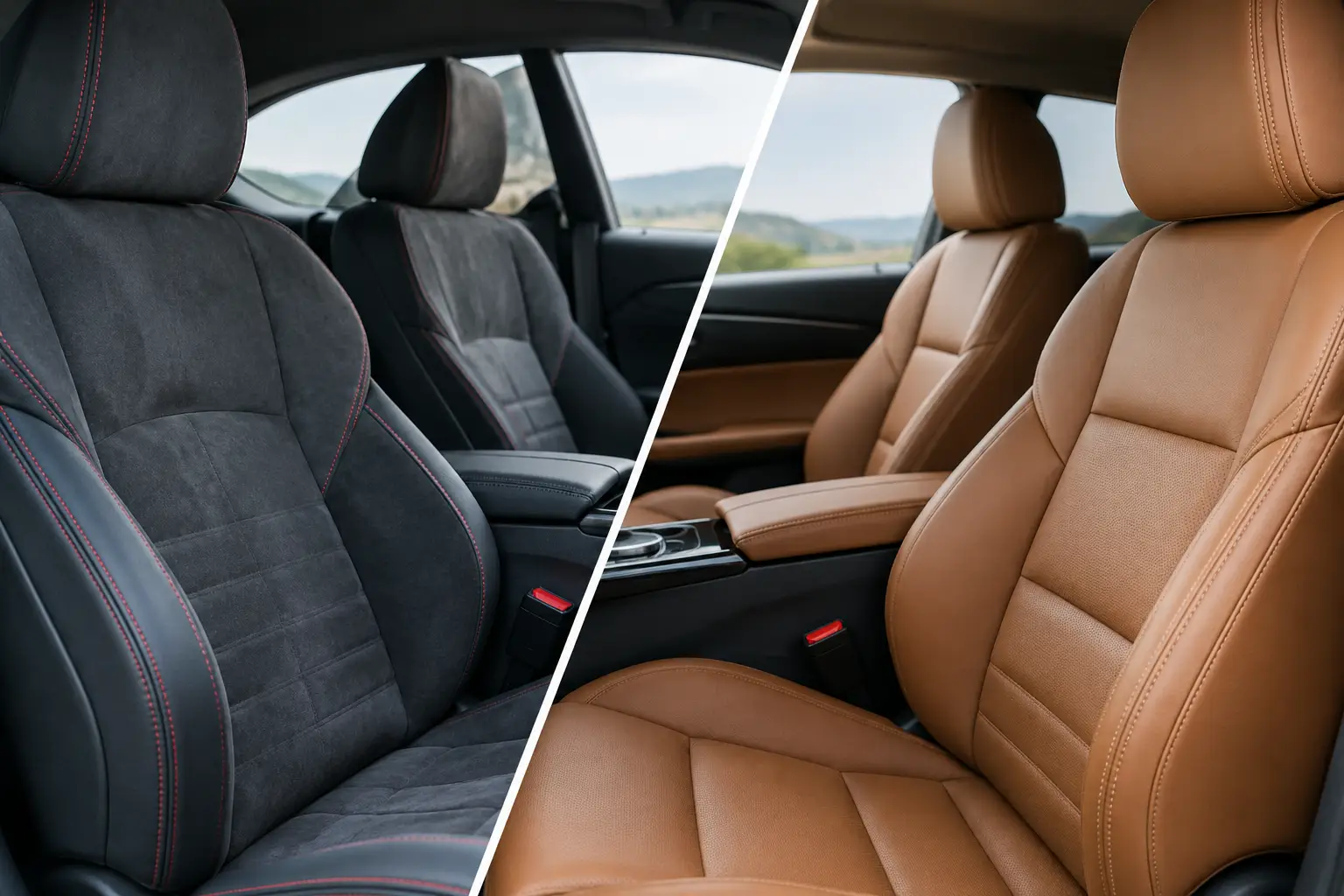
Alcantara Versus Leather Car Interiors Compared
A steering wheel that feels sticky after an afternoon in the sun, a driver’s bolster polished smooth by daily use, or pale seats marked by denim transfer: these are the real deciding factors in alcantara versus leather car interiors. Both materials can make a cabin feel premium, but they age differently, demand different care, and suit different types of ownership.
The better choice is rarely about which material carries the higher price. It is about how the car is used, where it is parked, how much maintenance the owner is prepared to carry out, and whether originality matters to its future value.
Alcantara versus leather car interiors: the essential difference
Alcantara is a branded synthetic microfibre material with a suede-like surface. It is commonly used on performance seats, steering wheels, headlinings, door inserts and dashboard sections because it provides grip, low glare and a purposeful appearance. It is not animal hide, and it does not behave like traditional suede despite the visual similarity.
Automotive leather is natural hide that has been processed, dyed and finished for vehicle use. Most modern leather upholstery has a protective surface coating. This makes it more practical than untreated leather, although the finish can vary considerably between manufacturers, model ranges and aftermarket retrims.
Neither is automatically superior. Alcantara gives a technical, driver-focused character; leather delivers a classic, substantial finish that suits a wide range of cars. The material must be appropriate for the seat design, vehicle age and daily demands.
Comfort in heat, humidity and daily driving
Leather is often chosen because it is easy to wipe clean, but its surface temperature can be unforgiving. A dark leather seat exposed to strong sunlight becomes hot quickly, while a cold cabin can leave it feeling firm until the car warms up. Ventilated seats reduce this issue, but not every vehicle has them.
Alcantara generally feels less extreme against the skin. It does not heat up or cool down as sharply as leather, and its textured surface holds the occupant more securely through corners. This is why it remains popular in sports-oriented cabins, particularly on seat centres and steering wheels.
That same texture creates a trade-off. Alcantara can retain dust, skin oils and loose fibres more readily than smooth leather. On high-contact areas, especially the driver’s seat outer bolster and steering wheel, neglect can leave the material looking dark, flat or matted. A correctly cleaned and brushed surface can often be revived, but heavy wear may require professional repair or replacement.
For a family car, a frequent school-run vehicle or a car regularly carrying pets, leather is usually the simpler material to live with. For an enthusiast car driven mainly at weekends, Alcantara can retain its appeal for longer if cared for properly and protected from unnecessary abrasion.
Appearance and the character of the cabin
Leather reflects light differently from Alcantara. Its natural grain and slight sheen make an interior feel warmer and more formal, particularly in executive saloons, grand tourers and classic vehicles. Well-kept leather also develops a degree of character over time. Some owners value this patina; others see it as wear.
Alcantara has a more muted finish. It reduces reflections in the windscreen and adds visual depth without appearing glossy. In black, charcoal or deep grey, it can make a cockpit feel focused and cohesive. In lighter shades, however, it can show handling marks and uneven nap more clearly.
Original specification matters. Replacing factory leather with Alcantara, or vice versa, may improve personal enjoyment but can alter the car’s intended character. On rare, premium or restoration-worthy vehicles, retaining the correct material, grain, stitch pattern and panel layout is often the more considered decision. An interior should look as though it belongs in the vehicle, not simply as though expensive material has been added.
Durability is about use, not just material
Leather is tough, but it is not maintenance-free. Sun exposure, heat and repeated flexing can dry the surface and eventually cause creasing, colour loss or cracking. Entry bolsters are particularly vulnerable because they take constant pressure as the driver gets in and out. Poor previous repairs, incorrect cleaners and heavy dye applications can make later restoration more difficult.
Alcantara does not crack like leather, but it can suffer from crushing, staining and abrasion. Rings, belt hardware, coarse clothing and repeated sliding across a bolster can damage the fibres. Once the backing cloth is exposed or the pile has been worn away, cleaning alone will not restore the original appearance.
Seat construction also matters. A tight, well-fitted cover with correct foam support will outlast a poorly fitted retrim regardless of material. When upholstery is removed for repair, the underlying foam, seat frame, listing wires and fastening points should be inspected. Surface replacement without addressing collapsed support can lead to premature stretching and wear.
Cleaning and maintenance requirements
Leather benefits from regular, gentle cleaning followed by a suitable conditioner or protective product compatible with automotive coated leather. The aim is to remove body oils and dirt before they work into the finish, not to leave the surface slippery or overly shiny. Avoid household detergents, harsh solvents and excessive water around seams.
Alcantara needs a different approach. Routine vacuuming with a soft attachment helps remove dust before it becomes embedded. Light marks should be attended to promptly with an appropriate fabric cleaner and minimal moisture. After drying, a soft brush can lift the fibres evenly. Aggressive scrubbing is a common cause of rough patches and visible texture changes.
The steering wheel deserves particular attention. Hand creams, sunscreen and natural skin oils accumulate quickly on Alcantara. Regular cleaning is more effective than waiting for a visibly dark ring to form. If the wheel has become heavily worn, recovering it may offer a more durable result than repeated deep-cleaning attempts.
Cost, repairability and long-term value
The initial cost depends on the vehicle, pattern complexity and whether the work involves partial repair or a full retrim. Leather can be expensive because good automotive hides require careful selection, colour matching and skilled cutting to manage grain direction and natural variation. Alcantara is also a premium trim material, and its cost is influenced by the need for precise handling and correct backing.
For localised damage, leather is often more forgiving to repair. A specialist may be able to clean, recolour, fill minor surface damage or replace an individual panel while preserving the rest of the seat. Results depend on the leather’s condition and the accuracy of colour and grain matching.
Alcantara repairs can be less discreet when the nap has changed or a replacement piece differs slightly in shade and direction. In some cases, replacing matched sections, or recovering a complete high-contact component, gives the cleaner result.
Resale value should be considered realistically. A tired, damaged interior will affect buyer confidence, particularly in a premium vehicle. Yet an overly personalised retrim can narrow the market. For cars with strong collector interest, original-specification materials and workmanship usually offer the safest route. For a daily driver kept for personal enjoyment, practical durability may matter more than strict originality.
Which material suits your car?
Choose leather when easy wipe-down cleaning, a traditional premium feel and broad resale appeal are priorities. It is particularly well suited to daily-driven luxury cars, family vehicles and interiors that need to tolerate frequent passenger use.
Choose Alcantara when driving support, reduced glare and a sportier cabin matter most. It works especially well for seat inserts, headlinings and performance-focused interiors, provided the owner accepts a more attentive cleaning routine.
A combination can be the strongest option. Leather on the seat bolsters provides a durable edge where occupants slide in and out, while Alcantara on the centre panels improves grip and reduces heat discomfort. This arrangement is common for good reason, but it still needs correct patterning, foam preparation and matching threadwork to look factory-level.
Before committing to a retrim, inspect the vehicle in the conditions it actually faces: the way the driver enters the seat, the amount of direct sun it receives, the passengers it carries and the state of the existing foam and trim. The right material is the one that will still look appropriate after years of real use, not simply the one that looks best on collection day.
Related posts
Car Roof Liner Repair Guide for Lasting Results
A car roof liner repair guide for owners dealing with sagging fabric, adhesive f
Car Headliner Replacement: Repair or Renew?
Car headliner replacement restores comfort, appearance and value. Learn when rep
Is Car Upholstery Repair Worth It? A Clear View
Is car upholstery repair worth it? See when skilled restoration protects comfort