


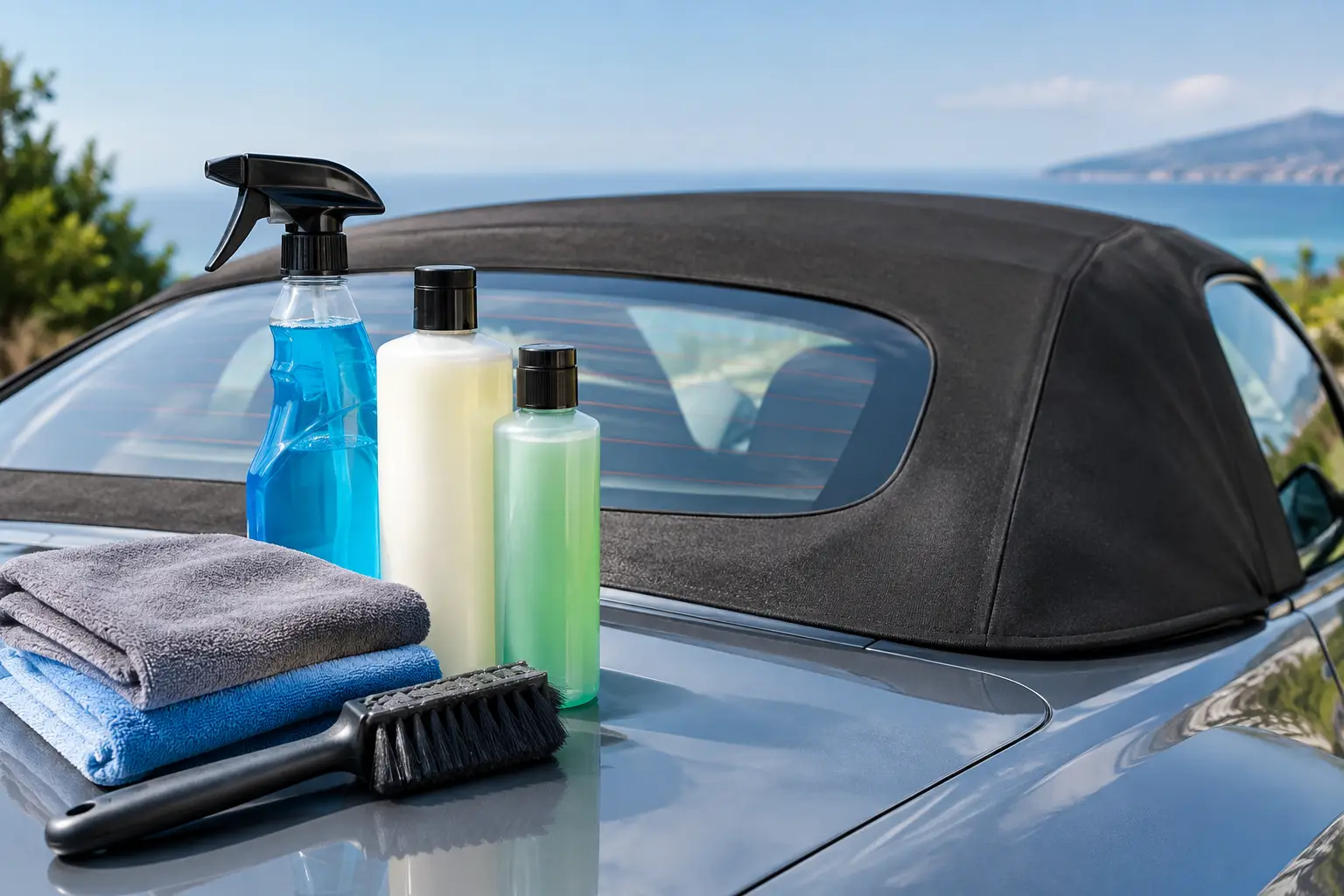
Best Convertible Roof Cleaning Products Reviewed
A convertible roof can look tired long before the rest of the car does. Green staining at the folds, pale water marks, traffic film and clogged fabric fibres all change the roof’s appearance – and the wrong cleaner can make a manageable problem far more expensive. The best convertible roof cleaning products are not necessarily the strongest ones. They are the products matched to the roof material, followed by a careful rinse, controlled drying and proper protection.
For owners of premium, ageing or restoration-worthy cars, cleaning should be treated as maintenance rather than a quick valet step. A soft top is a layered assembly of outer material, stitching, seals, tensioning components and drainage paths. Clean it aggressively and you risk disturbing the water-repellent finish, leaving residues at the seams or forcing water where it should not go.
What makes a convertible roof cleaner worth using?
A good roof cleaner removes embedded dirt without relying on harsh solvents, strong bleach or heavy degreasers. It should rinse freely, work with a soft brush, and leave no slippery or sticky residue behind. Just as importantly, it must suit the roof itself.
Most modern soft tops are fabric, commonly canvas or mohair-style material with a protective backing. They need a dedicated fabric-top cleaner and, after cleaning, a compatible water-repellent protector. Vinyl roofs require a different approach: a mild vinyl cleaner is usually sufficient, followed by a non-greasy protectant if the manufacturer permits it. Using fabric waterproofing on vinyl, or a shiny dashboard dressing on either material, is not proper roof care.
The condition of the roof matters too. A well-maintained top may only need a gentle clean and rinse. A roof with algae, mould, tree sap, dye transfer or longstanding water marks may require repeat treatment, careful brushing and an inspection of the seals and drainage points. There is no benefit in trying to resolve years of neglect in one harsh wash.
Best convertible roof cleaning products by roof type
Rather than looking for one universal bottle, choose a system that suits your material and the level of contamination. The following product ranges are widely recognised choices, but the correct selection still depends on the vehicle’s roof construction and its existing condition.
For fabric, canvas and mohair soft tops
Renovo Fabric Soft Top Cleaner is a sensible choice for deeply soiled fabric roofs. It is designed to lift general grime and atmospheric staining before reproofing. It is particularly useful where a roof has lost its even colour through neglected washing, although heavily faded material may need restoration work rather than more cleaning.
Autoglym Convertible Soft Top Clean & Protect is a practical two-stage option for routine maintenance. The cleaner addresses ordinary road film and light staining, while the protectant restores beading on suitable fabric tops. It is best applied methodically on a cool roof, allowing each stage to dry fully before the car is exposed to rain.
RaggTopp Fabric & Vinyl Cleaner is another established option, especially for owners who prefer a dedicated convertible-care range. On fabric, use a soft natural or synthetic bristle brush with light pressure. The goal is to move dirt out of the fibres, not to scrub the surface flat or fuzzy.
For protection after cleaning, products such as Renovo Ultra Proofer or 303 Fabric Guard can be appropriate for compatible fabric tops. These are not cosmetic sprays. A correctly applied protector helps water bead and reduces the rate at which grime settles into the weave. It cannot repair split stitching, a damaged inner lining or a roof that is already leaking through failed seals.
For vinyl and coated roofs
Vinyl roofs generally need less aggressive chemistry. RaggTopp Fabric & Vinyl Cleaner, used conservatively, can work for routine cleaning, while a mild pH-neutral vehicle shampoo may be enough for a roof that is simply dusty. Always check the roof manufacturer’s guidance first, particularly on older cars where the surface may have become brittle.
Avoid products that leave a glossy, silicone-heavy finish. They can attract dust, create uneven patches and make the roof look artificial. A clean, even satin appearance is the right result. If vinyl has become chalky, cracked or stiff, cleaning will not reverse material deterioration; replacement or specialist repair may be the more honest recommendation.
For green growth and stubborn biological staining
Moss and algae are common where a convertible is parked outdoors or used infrequently. A dedicated soft-top cleaner used more than once is usually safer than reaching immediately for a household mould remover. Domestic bleach-based products can discolour fabric, weaken stitching and damage adjacent paintwork or rubbers.
If biological staining returns quickly after a proper clean, look beyond the product. The car may be stored beneath trees, left damp under a cover, or parked with blocked drains that keep sections of the roof wet. Correcting the cause protects the roof better than repeated chemical treatment.
A careful method matters as much as the product
Start with the roof fully closed and latched. Brush away dry leaves and loose dirt from the seams, rear screen edges and fold areas. Rinse gently with clean water, avoiding a high-pressure jet at seals, stitching and window bonds. A pressure washer can force water past seals and lift vulnerable edges, especially on an older roof.
Apply the cleaner according to its instructions, working one manageable section at a time. Use a soft brush in straight, controlled passes, paying attention to the front header rail, side seams and the area around the rear window. Do not allow cleaner to dry on the roof or surrounding paintwork.
Rinse thoroughly. Residue left in fabric fibres can cause patchiness, while residue near a glass rear screen or plastic window can leave a difficult-to-remove film. Blot excess water with a clean microfibre towel rather than rubbing hard, then leave the roof closed to dry naturally in a sheltered, ventilated place.
Only apply a fabric protector once the roof is completely dry. Partial drying is a common reason for uneven protection. Apply light, even coats rather than saturating the material, and protect painted panels and glass from overspray. Allow the recommended curing time before rain, washing or lowering the roof.
Product choices that can cause costly problems
Household washing-up liquid is often suggested because it cuts grease, but that is precisely why it is a poor routine choice. It can strip existing protection and leave the roof vulnerable to rapid re-soiling. Strong all-purpose cleaners, wheel cleaners, solvent-based stain removers and bleach should also stay away from convertible tops unless a manufacturer specifically confirms their suitability.
Steam cleaning is not automatically safe either. Excess heat and moisture can affect adhesives, stitching, seals and headlining materials. Similarly, hard brushes may remove dirt quickly but can abrade fibres and create a visibly uneven finish. If a product promises instant colour restoration, read the label carefully: some restorative treatments are coatings or dyes, not simple cleaners.
Do not overlook the plastic rear window, if your car has one. It needs a dedicated plastic-window cleaner and a clean, soft cloth. Glass cleaners containing ammonia may cause haze or accelerate crazing in some plastic screens. Keep roof cleaner away from the interior lining as well, since moisture can migrate through ageing fabric or seams.
When cleaning is no longer the answer
A clean roof should repel water more evenly, look consistent in colour and operate without dragging or catching. It should not drip into the cabin, show daylight at the seams, shed threads or leave the headlining damp. Those are repair indicators, not cleaning-product problems.
Water ingress can originate at seals, drain channels, rear-window bonds, tension straps or the roof material itself. Treating the outer surface repeatedly may disguise the issue for a short time while moisture continues to affect the interior. On specialist convertible work, a proper assessment separates surface contamination from wear that needs repair, reproofing or replacement.
At 8 Cushion, that distinction is central to the workshop approach: the right work starts with an honest view of the roof’s material, condition and repairability, not with a one-size-fits-all treatment.
Keep the roof clean before dirt becomes embedded, use a product system made for its material, and allow every stage to dry properly. That measured routine preserves the original roof for longer – and makes it easier to recognise when skilled attention is the better next step.
Related posts
Convertible Roof Repair vs Replacement
Convertible roof repair vs replacement explained clearly - when a repair is enou
How to Stop Convertible Roof Leaks Properly
Learn how to stop convertible roof leaks with proper checks, cleaning, drainage
Car Seat Reupholstery Options That Last
Compare car seat reupholstery options, from fabric and leather to repairs and fu