


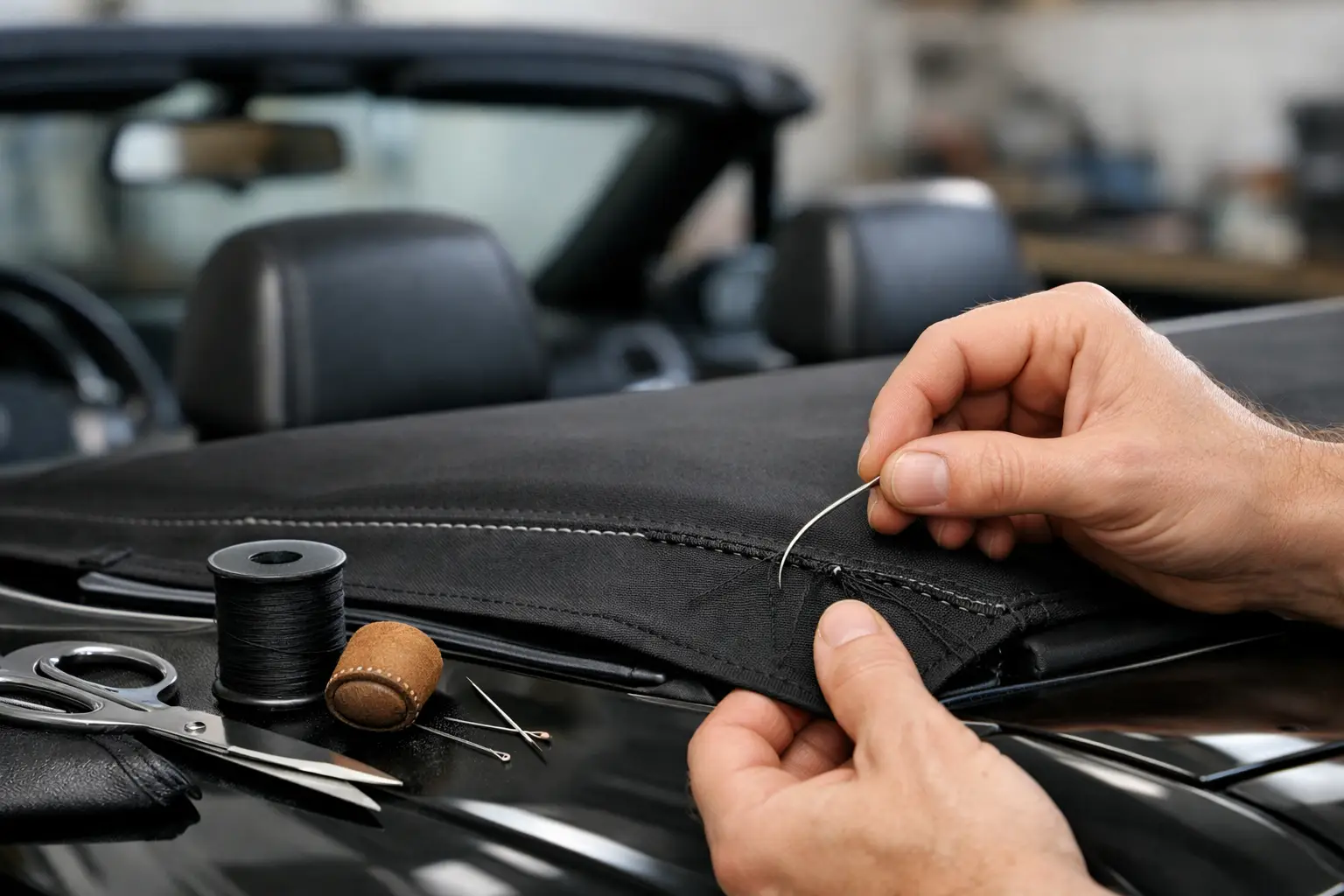
Convertible Soft Top Stitching Repair Explained
A convertible roof can look sound from a distance while one failed seam is quietly doing damage. Convertible soft top stitching repair is not simply a cosmetic tidy-up: the stitching holds shaped roof sections together, supports tension across the fabric and helps keep water where it belongs – outside the cabin. When it begins to fail, early specialist attention can often prevent a manageable repair becoming a replacement project.
For owners of premium, ageing or restoration-worthy cars, the right decision is rarely about finding the quickest patch. It is about understanding why the thread has failed, whether the roof material remains structurally sound and how the repair will behave through heat, rain, folding and regular use.
What failed soft-top stitching really means
A convertible roof is a working assembly, not a fixed panel. Every time it opens and closes, its material folds along set lines, tension shifts through the seams and the stitching carries a repeated load. Sun exposure, moisture, trapped dirt, cleaning chemicals and age all gradually weaken thread and fabric.
The first sign may be a few loose threads at an edge seam, around a rear window or near a tension strap. That does not automatically mean the entire top is beyond repair. In many cases, the original canvas, vinyl or backing remains serviceable while the thread has degraded. A properly planned restitch can retain more of the original roof and restore its appearance without replacing sound material.
There is, however, a limit. If the material around the holes has become brittle, stretched, torn or delaminated, new thread alone may not hold. Stitching through weakened fabric can create a neater-looking seam for a short time, but it may pull through again when the roof is tensioned. This is why inspection must come before any promise of repair.
When convertible soft top stitching repair is viable
A sound repair starts with an honest assessment of both the seam and the surrounding roof. The best candidates are localised seam failures where the roof material still has strength, the affected panel retains its shape and water has not caused extensive damage to the roof lining, frame or interior.
Repair is often viable when a seam has opened gradually, when UV exposure has weakened the thread before the fabric, or when a small section has been snagged. Restitching can also be appropriate after a related repair, such as replacing a damaged binding, reinforcing a stressed corner or resecuring a section around the rear screen.
A complete roof replacement may be the more responsible option when several seams are failing, the outer material is cracked or shrinking, or the roof has lost its original fit. The same applies where leaks have led to corrosion around the frame or dampness beneath the roof lining. It costs more upfront, but repeated temporary repairs to a tired roof can cost more in time and frustration.
The condition of the vehicle also matters. A cherished classic may justify careful preservation of original material where possible. A daily-driven convertible exposed to Singapore’s heat and heavy rain may benefit more from replacement if the roof is already near the end of its service life. Independent advice should reflect the car, its usage and the owner’s priorities – not a one-size-fits-all answer.
Why thread, needle and seam construction matter
Not all stitching is suitable for a soft top. The wrong thread can fade, weaken under ultraviolet exposure or absorb moisture. The wrong needle can leave oversized holes that compromise the fabric. Incorrect tension can pucker the seam, distort the roof panel or create a line that pulls apart under load.
A specialist workshop considers the original seam type, thread size, stitch spacing and the direction in which the material is being tensioned. Some seams are simple joins; others sit beneath binding, carry a weather flap or secure material around a frame channel. Each demands a different approach.
Colour matching matters too, particularly on visible seams. Yet appearance should not be prioritised over strength. A repair must sit cleanly, follow the roof’s original contours and remain stable when the top is closed. If it looks correct only while the roof is relaxed in the workshop, it has not been finished properly.
The inspection points that should not be skipped
Before work begins, the roof should be examined open and closed. A seam can appear acceptable with the roof folded down, then separate once the material is stretched over the frame. The frame itself should also be checked for sharp edges, misalignment or worn pads that may have caused the stitching to fail in the first place.
A thorough assessment considers four connected areas:
- the outer roof material, including fading, cracking, shrinkage and loss of flexibility;
- the seam and binding, looking for broken thread, enlarged needle holes and lifted edges;
- the rear window or screen area, where movement and heat can place additional stress on stitching; and
- the interior side, including the roof lining, insulation and signs of water ingress.
Water marks inside the car do not always mean the visible seam is the sole cause. Drains can be blocked, seals can be compressed and a previous repair may have altered how water travels across the roof. Finding the true source avoids unnecessary work and gives the repair a fair chance of lasting.
A disciplined repair process protects the roof
The repair itself should begin with controlled preparation, not immediate sewing. The affected section is cleaned carefully so the extent of the failure is visible. Loose or deteriorated thread is removed without damaging the fabric further, and any area that needs reinforcement is identified before new stitching is introduced.
Where access allows, a specialist may work from the inside to preserve the roof’s exterior finish. In other cases, parts of the roof assembly, trim or lining need to be released so the seam can be rebuilt accurately. This is slower than running a visible line of thread across the damaged area, but it respects the original construction and reduces the risk of creating new stress points.
Once the seam has been re-established, the roof must be checked through its operating range. It should close without excessive resistance, sit evenly against the seals and show no undue pulling around the repair. A water test, where appropriate, is equally valuable. A dry-looking seam is not proof of a weather-tight result.
At 8 Cushion, this type of specialist work is handled in-house, allowing the assessment, material selection and repair standard to remain under one accountable workshop process. That matters when the condition of a soft top calls for judgement rather than a generic fix.
Avoid the tempting short cuts
Adhesive, household thread and broad sealant applications can appear attractive when a seam starts opening. They are rarely a durable solution. Glue can stiffen a flexible section of roof material, making it more likely to crack along the edge. Sealant may conceal the real leak path while trapping dirt and moisture. Ordinary thread is not designed for prolonged exposure to sun, rain and tension.
There is also a risk in continuing to operate the roof when a seam is actively separating. The folding action can turn a short opening into a larger tear, especially around corners and rear-window sections. If a seam has failed noticeably, keeping the roof closed until it is inspected is often the safer choice.
Owners can help preserve a repaired top with regular but gentle care. Remove leaves and grit from folds and drainage channels, avoid harsh cleaners, and do not force the roof mechanism if it catches. Allow the roof to dry before storing it for a prolonged period, as trapped moisture can affect both stitching and interior materials.
Repair value is about more than the seam
Good convertible soft top stitching repair protects more than the roof itself. It helps preserve cabin comfort, prevents water damage to upholstery and electrical components, and maintains the clean, fitted appearance that gives a convertible its character. For vehicles with strong resale appeal, visible roof neglect can also affect how a buyer judges the rest of the car.
The sensible route is not always repair, and it is not always replacement. It is the option that accounts for material condition, structural integrity, vehicle use and the standard of finish expected. A careful inspection early in the problem gives you the most choices – and the best chance of keeping a well-made roof doing the job it was designed to do.
Related posts
Is Car Upholstery Repair Worth It? A Clear View
Is car upholstery repair worth it? See when skilled restoration protects comfort

Roof Lining Repair Cost: What to Expect
Roof lining repair cost depends on material, damage and vehicle type. Learn what
What Affects Windscreen Replacement Cost?
Understand windscreen replacement cost in Singapore, from vehicle glass and sens