


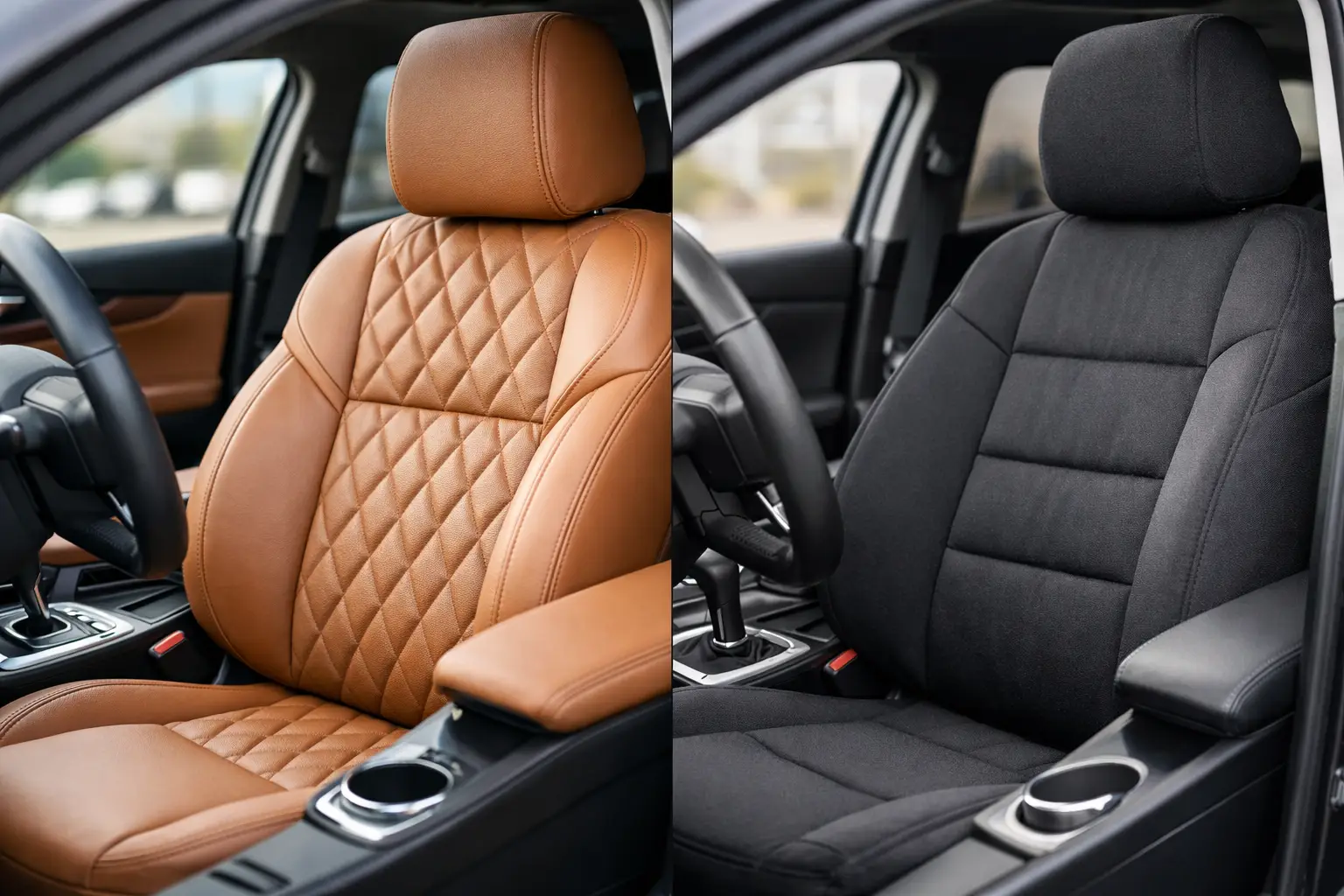
Custom Upholstery Versus Seat Covers Compared
A torn driver’s bolster, a faded rear bench or sticky, peeling synthetic leather can make an otherwise well-kept car feel tired every time you open the door. The decision between custom upholstery versus seat covers is not simply about making the cabin look cleaner. It affects comfort, safety features, long-term durability and the value of the work when you eventually sell the vehicle.
Seat covers can be a sensible protective layer. Custom upholstery is a more involved restoration or transformation of the seat itself. The right choice depends on the condition of your existing trim, how you use the car, the material you want and whether you are preserving an everyday vehicle or restoring one worth keeping for years.
What separates custom upholstery from seat covers?
Seat covers sit over the original seat trim. They may be universal, semi-tailored or made to suit a particular vehicle model. Their main job is protection: shielding factory fabric or leather from spills, abrasion, pet hair, mud and sun exposure. They can also change the apparent colour or texture of a cabin without permanently altering the original seats.
Custom upholstery involves removing the old seat covering and replacing or rebuilding it with new material. Depending on the job, this can include repairing foam, reshaping worn bolsters, renewing backing cloth, stitching new panels and matching the design to the vehicle’s original appearance or a chosen new finish. It is restoration work, not a cover placed over a problem.
That distinction matters. A cover can conceal worn material, but it cannot correct collapsed cushioning, split seams underneath or degraded foam. Where the structure of the seat is still sound and protection is the priority, a quality cover may be enough. Where the seat has lost its support or the trim has genuinely deteriorated, reupholstery is usually the more honest and durable repair.
Custom upholstery versus seat covers for fit and comfort
A properly made seat cover should follow the shape of the seat closely, with secure fixing points and clean openings for headrests, armrests and controls. Even so, it adds another layer between the driver and the original seat. On a hot day, that additional layer can affect breathability. If the cover shifts, bunches around the base or catches when entering and leaving the car, it soon becomes an irritation rather than a benefit.
Custom upholstery is shaped directly around the seat frame and foam. It gives a tighter finish because the material is cut, sewn and fitted as the seat’s finished surface. This allows a specialist to restore the definition of side bolsters and seating panels rather than merely covering flattened areas. For drivers who spend significant time in traffic, the difference in support and feel can be noticeable.
Fit is especially significant in premium cars, convertibles and older vehicles with distinctive seat profiles. A loose cover can make a carefully designed interior look temporary. By contrast, well-executed upholstery can respect the original lines of the cabin while removing the signs of age that have accumulated over years of use.
Safety features need proper consideration
Modern seats may contain side airbags, occupancy sensors, heating elements and electrically operated lumbar systems. A seat cover that is not designed for these features can interfere with their operation or obstruct the intended airbag deployment path. Universal covers are the greatest concern here.
Custom upholstery also demands care. The work must account for airbag seams, sensor locations and wiring before the seats are stripped and rebuilt. This is not a job for guesswork. Before choosing either option, establish what equipment is built into your seats and make sure the proposed work respects the manufacturer’s safety design.
Materials, appearance and the cabin you want to live with
Seat covers offer quick visual variety. Fabric, neoprene-style materials and washable protective finishes can work well for family cars, vehicles used for outdoor activities or cars regularly carrying pets. If the original upholstery is in good condition, a removable cover protects it from everyday wear and gives you the option to return to the factory finish later.
The trade-off is that the material choice is limited by the need to fit over an existing seat. Thick covers can make a cabin feel bulky, while low-cost synthetic materials may become hot, shiny or brittle in Singapore’s heat. Poorly secured covers also tend to reveal themselves through wrinkles and moving edges.
With custom upholstery, the material and construction can be chosen for the actual vehicle and its use. Automotive leather, quality synthetic leather, fabric and suede-like inserts each bring different benefits. Leather can provide a refined finish and is straightforward to wipe clean, but it needs care to prevent drying and surface wear. Fabric often feels cooler and offers better grip, though it can hold stains. Synthetic leather can deliver a clean, consistent appearance at a lower cost, but quality varies greatly.
The best material is not always the most expensive one. A convertible parked outdoors faces UV exposure, moisture and frequent temperature changes. An executive saloon used mainly for commuting may benefit more from a finish that wears gracefully and is easy to maintain. A restoration vehicle may require colour, grain and stitch details that remain faithful to its period. Independent advice should begin with how the car is actually used, not with the most profitable material on a sample board.
Cost: short-term saving or long-term repair?
Seat covers are normally the lower-cost route, particularly if they are ready-made and can be fitted without dismantling the seat. They make practical sense when the goal is to protect clean original upholstery, manage the wear caused by children or pets, or improve a vehicle that will be kept only for a short period.
However, cheap covers can create false economy. Replacing a cover every time it tears, fades or loses its shape is frustrating, and the hidden factory trim may continue to deteriorate beneath it. If moisture or dirt becomes trapped between the cover and the original material, the condition underneath can be worse when the cover is eventually removed.
Custom upholstery costs more because it involves assessment, material selection, cutting, sewing, stripping, fitting and quality checks. The price should reflect the real scope of work. A clear quotation identifies whether the foam requires repair, whether matching door trims are included, what material is being used and how features such as seat airbags will be handled. Transparent scope prevents a simple quotation from becoming an unexpected bill later.
For cars with badly worn seats, a well-planned reupholstery job can be better value than repeated cosmetic fixes. It restores the part of the vehicle you physically use every day. It may also make the car easier to sell, provided the finish is appropriate to the vehicle and the workmanship is clean.
When seat covers are the better choice
Seat covers should not be dismissed as an inferior option. They are often the sensible answer when the original seats are sound and worth preserving. A newer car on a family run, a vehicle used for work, or a car exposed to sand, wet clothing and pets may benefit from protection that can be removed and cleaned.
Choose tailored covers rather than generic ones where possible, and avoid fitting anything that compromises airbag areas or seat controls. Check the fastening system, openings and material thickness before committing. If the cover looks loose in the showroom, it will not improve after months of daily use.
When custom upholstery is the right investment
Reupholstery is the stronger choice when the damage is already in the seat itself. Cracked leather, torn fabric, peeling synthetic surfaces, failed stitching, faded panels and collapsed foam all call for more than concealment. It is also the better route when you want an original-style restoration, a coordinated interior upgrade or a finish that genuinely belongs to the car.
The workshop process matters as much as the material. In-house work provides accountability from inspection through to fitting. The people assessing the damaged bolster or advising on a colour match should understand how the material will be cut, sewn and installed. At 8 Cushion, this direct approach supports tighter control over the workmanship and avoids unnecessary middleman mark-ups.
Ask to see and feel the material before work begins. Discuss how the new finish will behave in heat, how it should be cleaned and whether related areas such as door cards, centre armrests or headlining need attention. A beautifully renewed driver’s seat can make untouched surrounding trim look more worn by comparison, so the overall cabin should be considered honestly.
Make the choice based on the real condition of the seat
There is no single winner in custom upholstery versus seat covers. Covers protect good seats and suit owners who need a practical, removable barrier. Custom upholstery repairs and renews seats that have already passed the point where a cover is a meaningful solution.
Start with the condition beneath the surface. If the original upholstery is worth saving, protect it properly. If the seat is worn, unsupportive or out of keeping with the rest of the vehicle, invest in a repair that restores the cabin with the care the car deserves.
Related posts
Choosing a Car Roof Lining Repair Specialist
Choose a car roof lining repair specialist for precise diagnosis, proper materia
Why In House Car Restoration Workmanship Matters
In house car restoration workmanship gives Singapore owners clearer accountabili
How to Clean Fabric Convertible Tops Properly
Learn how to clean fabric convertible tops without causing stains, fading or wat