


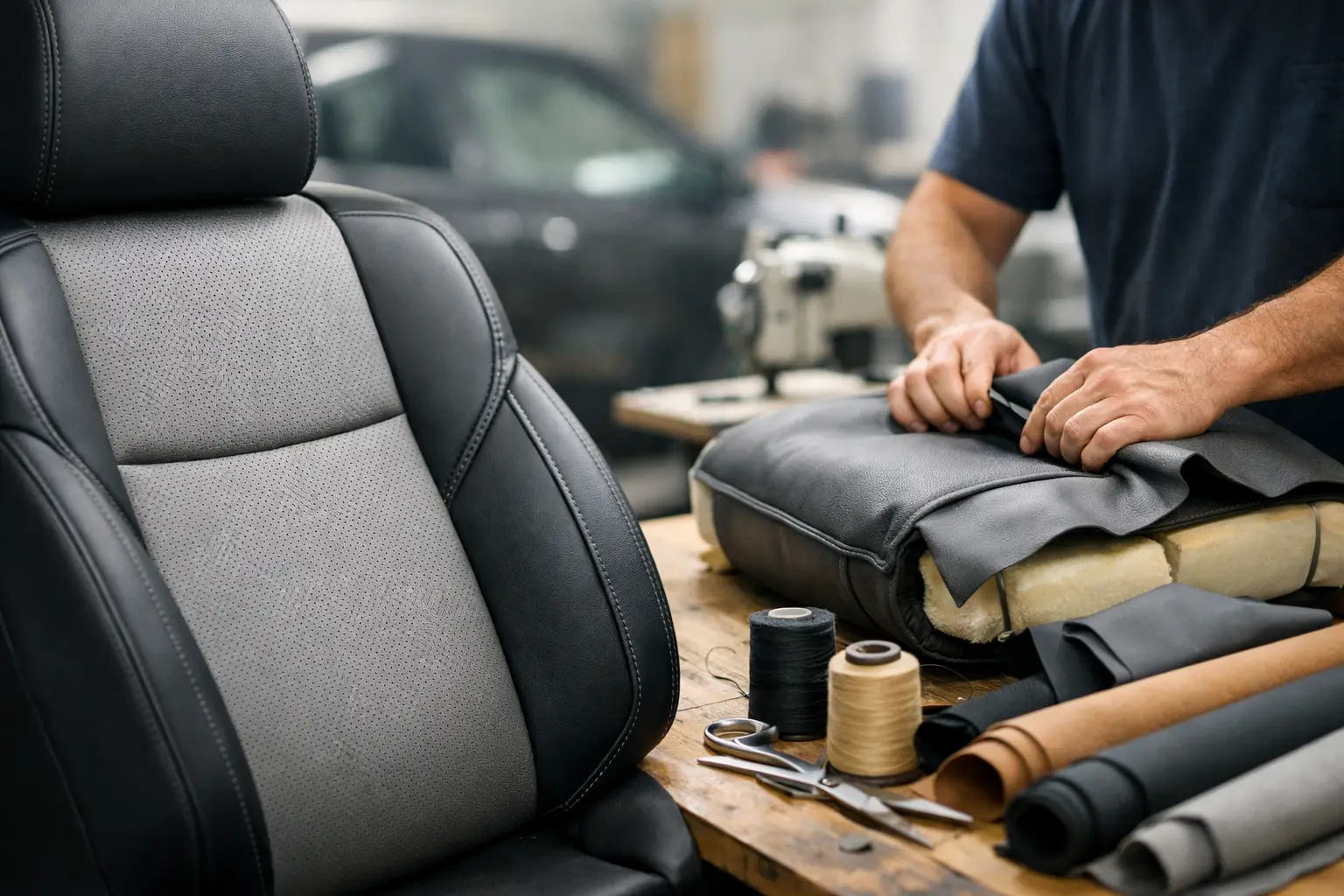
Car Seat Reupholstery Options That Last
The driver’s bolster is usually the first place to show its age. Leather cracks where you slide in and out, fabric thins at the edge, stitching opens, and seat foam loses the support that once made every journey comfortable. The right car seat reupholstery options are not simply about making a cabin look newer. They should restore comfort, preserve the character of the vehicle, and hold up to daily use in Singapore’s heat and humidity.
A good result starts with an honest assessment. Not every worn seat needs a complete retrim, and not every visible tear can be solved properly with a quick surface repair. The material, the condition of the foam and frame, the location of the damage, and the intended life of the vehicle all influence the right scope of work.
Start With the Condition Beneath the Surface
Seat upholstery is only one part of the assembly. Under the cover are foam cushions, support wires or frames, clips, adjustment mechanisms and, in many modern vehicles, side airbags or occupancy sensors. A new cover fitted over collapsed foam or a damaged support structure may look acceptable at first, but it will not feel right and may crease or wear prematurely.
Before selecting a material, a specialist should inspect the full seat. This identifies whether the work is limited to the visible trim, whether a section of foam needs rebuilding, or whether the seat needs more involved restoration. It also prevents a common mistake: matching a new panel to a faded original cover without discussing how different the colours may appear once fitted.
For premium, older or enthusiast-owned vehicles, retaining the original look often matters as much as durability. For a daily-driven family car, a hard-wearing finish that is easy to clean may be the more practical choice. Neither approach is automatically better. The right one depends on how the vehicle is used and what you expect from it over the next few years.
Car Seat Reupholstery Options to Consider
Localised repair for minor damage
A localised repair can suit a small split seam, a minor scuff, a cigarette burn in fabric, or a limited area of worn stitching. Where the original material remains sound around the damaged spot, repairing the affected section can be the sensible and cost-conscious option.
However, repairs have limits. Leather colour restoration may reduce the appearance of surface wear, but it cannot recreate material that has become thin, brittle or deeply cracked. Likewise, a patch on a heavily worn driver’s bolster may solve the immediate hole while leaving the surrounding material close to failure. A disciplined workshop will explain where a repair is appropriate and where it merely postpones a larger job.
Single-panel replacement
Replacing one upholstery panel is often effective when wear is confined to a bolster, centre insert, headrest or seat base section. This retains more of the original trim while renewing the area that receives the most use.
The key consideration is matching. Grain pattern, texture, perforation, stitching style and colour all need to sit naturally with the existing material. On older upholstery, the untouched sections may have faded or developed a softer sheen. A technically correct new panel can still look noticeably different if this is not considered during consultation.
Partial retrim for the most-used areas
A partial retrim involves renewing multiple affected sections, such as both front seat bases and backrests, while leaving sound rear seating or less-worn components in place. This can provide a balanced result for vehicles where the front seats have deteriorated far more quickly than the rest of the cabin.
It is especially useful where a vehicle has a two-tone design, fabric centre panels with leather bolsters, or contrast stitching. The work can be planned to retain the original design language while replacing the materials that no longer meet the required standard.
Full seat retrim
A full retrim removes and replaces the seat covers completely. It is the clearest route when the material is generally worn, colours have faded unevenly, multiple panels are damaged, or an owner wants to change the cabin’s finish entirely.
This option offers the greatest control over material choice, stitch pattern, piping, perforation and colour. It also creates the opportunity to address tired foam and minor structural issues while the seat is dismantled. For classic cars and restoration projects, a full retrim can return the interior to a period-correct appearance. For modern vehicles, it can renew a cabin that remains mechanically sound but no longer feels worthy of the car.
A full retrim should not mean adding unnecessary features. Overly thick padding, unsuitable piping or poorly positioned seams can alter the seat’s shape and comfort. The best work respects the original seat design unless a deliberate, well-considered custom finish is requested.
Choosing Between Fabric, Leather and Synthetic Materials
Material choice affects comfort, maintenance, cost and long-term appearance. It should be based on the vehicle and its use, rather than a catalogue image alone.
Fabric remains a strong option for many cars. Quality automotive fabric is comfortable in warm weather, offers good grip and can suit original interiors where cloth was specified from new. It may also be preferable for owners who find leather seats hot after the car has been parked outdoors. The trade-off is that fabric can absorb spills and may require more attention to prevent staining.
Automotive leather brings a refined finish and can be highly durable when correctly selected and maintained. It is well suited to executive cars, luxury SUVs and restoration projects where the original cabin used leather. Different grades, coatings and grain patterns matter. A material that looks convincing in a small swatch may not provide the wear resistance needed for a frequently used driver’s seat.
Synthetic leather and other automotive-grade alternatives can offer easier cleaning and a consistent appearance at a lower cost than some leather options. Quality varies significantly. A suitable automotive material needs to cope with heat, ultraviolet exposure, friction and repeated flexing. Domestic upholstery materials may look attractive initially but are not designed for the demands of a vehicle cabin.
For mixed-material seats, keeping the factory-style arrangement is often the most cohesive option. Fabric inserts can improve breathability, while leather or synthetic bolsters provide a structured edge. Contrast stitching should be chosen carefully: it can sharpen a design, but it also makes every stitch line more visible.
The Details That Separate a Proper Retrim From a Cover-Up
A seat should be removed and handled with care before upholstery work begins. This allows access to the full cover, foam condition and fixing points. It also avoids the shortcuts associated with fitting loose material around mechanisms or working around damage that should have been repaired first.
Proper patterning, cutting and stitching are essential. Covers must follow the original contours, account for stretch in the material, and sit correctly around headrests, lumbar sections and seat controls. Tightness alone is not proof of quality. Excessive tension can strain seams and distort the seat, while insufficient tension creates wrinkles and movement.
Where airbags, sensors or electrically operated features are involved, the work requires particular attention. Side-airbag seams, wiring and occupancy components must not be obstructed or altered carelessly. This is not an area for generic seat covers or improvised trimming methods.
At 8 Cushion, upholstery work is handled in-house, allowing the workshop to maintain control over material preparation, production and final fitting. That matters when a project needs accurate decisions at each stage, rather than a chain of handovers between different parties.
Planning for Comfort, Value and Daily Use
Cost naturally influences the decision, but the cheapest route is not always the most economical. Repeated small repairs on failing material can cost more over time than replacing the affected panels properly. Conversely, a full retrim is difficult to justify when a carefully matched panel replacement will restore the seat for years.
Ask for clear advice on what is being replaced, what remains original, and whether foam or internal repairs are required. You should also understand how the selected material is expected to age. Light colours can brighten a cabin but show denim transfer and dirt more readily. Highly textured materials can hide wear, while smooth finishes may be easier to wipe clean.
For owners considering resale, a sympathetic retrim in a factory-style material and colour usually has the broadest appeal. For a car you intend to keep, personal comfort and practical use may carry more weight. Both are valid priorities when the workmanship is sound.
The best time to act is before a small tear becomes a split, before weakened foam changes the seat shape, and before fading makes a close material match difficult. A considered inspection gives you a clear scope, a suitable material and a finish that makes every time you open the door feel right again.
Related posts
How to Repair Cracked Dashboard Trim Properly
Learn how to repair cracked dashboard trim with the right materials, preparation
Why Does Car Roof Lining Sag?
Why does car roof lining sag? Learn the real causes, warning signs and when repa
Convertible Hood Replacement Guide for Owners
This convertible hood replacement guide covers inspection, materials, fitting st