


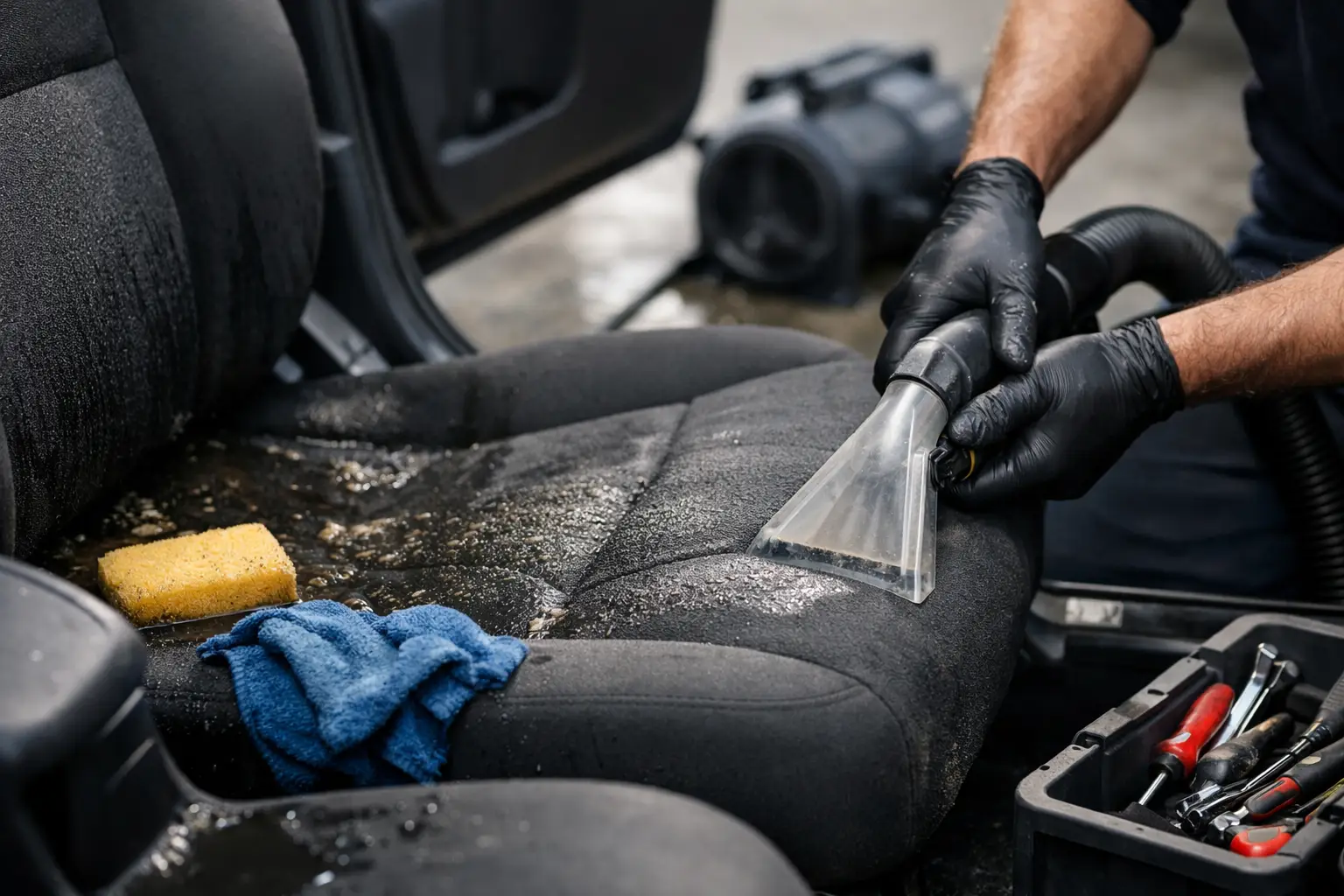
Water Damaged Car Interior Repair Guide
A wet carpet after a storm is rarely just a wet carpet. In many cases, the visible moisture is the smallest part of the problem. By the time a driver notices the smell, damp seats, misting glass or marks on the roof lining, water may already have travelled through foam, insulation, wiring channels and trim panels. That is why water damaged car interior repair needs a proper assessment, not a rushed surface clean.
For owners of premium cars, convertibles, older vehicles or restoration projects, the stakes are higher. Interior materials do not all respond to water in the same way. Leather can stiffen or stain, adhesives can fail, roof linings can sag, foam can hold hidden moisture, and electrical components under seats or beneath carpets can suffer long after the cabin looks dry. A disciplined repair process protects comfort, appearance and long-term value.
What water actually damages inside a car
Water rarely stays where it first enters. It follows gravity, seams, wiring routes and low points in the floor. A blocked drain, failed windscreen seal, damaged door membrane, worn boot seal or leaking convertible top can send water into areas the owner cannot easily inspect.
The first layer of damage is cosmetic. You may see tide marks on fabric, discolouration on leather, lifted trim edges or a stained roof lining. The second layer is structural within the interior itself. Backing boards can warp, stitching can weaken, seat foam can break down, and adhesives used on linings and trim can lose their bond.
The third layer is where repair decisions become more serious. Underlay and sound insulation hold moisture for much longer than most people expect. That trapped damp creates odour, encourages mould growth and can affect metal floor sections, seat mountings and electrical connectors. In some cars, especially modern models with electronics placed low in the cabin, delayed faults can become part of the repair picture.
When water damaged car interior repair becomes urgent
Timing matters. If the car has only recently been exposed to water, there is often more that can be saved. Once moisture has sat for days in warm conditions, contamination, smell and material breakdown become harder to reverse.
There are a few warning signs that should not be ignored. Persistent fogging on the inside of the glass often means hidden moisture remains in the vehicle. A musty smell points to damp materials that have not fully dried. Crackling electrical behaviour, inoperative seat functions or warning lights can suggest water has reached connectors or control units. If the roof lining begins to sag after a leak, the adhesive and board may already be compromised.
For flood exposure, urgency is even greater. Clean rainwater entering from a localised leak is one scenario. Floodwater is another entirely. Once contaminated water has entered the cabin, cleaning alone may not be enough because silt, bacteria and residue can stay deep in foam, felt and stitched areas.
A proper repair starts with finding the source
Drying the cabin without fixing the water path is wasted effort. A specialist workshop will first identify how the water entered. Depending on the vehicle, that may involve checking windscreen bonding, cowl drains, door seals, sunroof drains, boot seals, body grommets, air-conditioning drains or convertible roof seals and channels.
This part is where specialist knowledge matters. A convertible does not leak like a saloon, and an older car does not behave like a newer one with more glued assemblies and low-mounted electronics. The source can be obvious, but it can also be deceptive. Water may enter at the top edge of the screen and collect in the footwell, or come through a rear seal and present as damp under a front seat.
Without source diagnosis, even a well-finished interior repair can fail again. That is why serious workshops treat leak tracing as part of the job, not a side issue.
What can usually be saved, and what often needs replacement
This is where honest advice matters most. Not every water-affected interior needs full replacement, but not every interior can be rescued to the standard an owner expects.
Leather upholstery can sometimes be cleaned, conditioned and restored if the exposure was limited and the hide has not hardened, shrunk or developed deep staining. Fabric trim may respond well if contamination is low and the backing remains stable. Hard trim panels can often be cleaned and refinished if they have not swollen or warped.
Roof linings are less forgiving. If the board has taken on moisture, warped or lost adhesive integrity, replacement or re-trimming is often the proper route. Carpet sets also depend on the extent of saturation. Surface damp can sometimes be managed, but heavily soaked underfelt and insulation often justify removal because trapped moisture tends to return as smell and condensation.
Seat foam is another judgement point. It can look acceptable on the outside while still holding water inside. If the foam remains contaminated or degraded, reusing it may compromise both comfort and hygiene. In higher-value vehicles, keeping original trim where practical is sensible, but only if the result is structurally and visually sound.
The water damaged car interior repair process
A disciplined repair process is less about speed and more about control. The first step is inspection and strip-down to the extent needed for access. That may include seats, carpet sections, sill trims, lower panels, boot trim or roof lining components. Hidden moisture cannot be treated properly through visible surfaces alone.
Once exposed, affected materials are assessed individually. Some parts can be dried and treated. Others need replacement, re-trimming or rebuilding. The key is separating salvageable components from those that will continue to cause odour, staining or poor finish later.
Drying is not simply a matter of leaving doors open. Proper drying requires time, airflow and access. If underlays, foam or insulation remain damp beneath finished surfaces, the cabin is not dry. After this, affected upholstery, carpeting or lining materials can be restored or replaced as required. If adhesives have failed, those sections need to be rebuilt correctly rather than pressed back into place.
For specialist workshops such as 8 Cushion, the advantage of in-house interior work is straightforward. Diagnosis, material handling, trimming and fitment stay under one standard of control. That reduces guesswork, avoids middleman delays and gives the owner clearer accountability from start to finish.
Why cheap fixes often cost more later
The most common mistake is treating water damage as a valeting problem. Deep shampooing and fragrance can improve the smell temporarily, but if the source remains open or the underlayers are still wet, the issue returns. Sometimes it returns worse because heat and humidity accelerate mould growth under the surface.
Another mistake is partial dismantling. Lifting only the visible edge of a carpet or drying the top face of a seat may save time, but it does not deal with hidden moisture. In some cases, owners end up paying twice – once for a quick cosmetic clean and again for proper remedial work when odour, staining or electrical issues persist.
There is also the question of fit and finish. Water-damaged trim that is reinstalled without proper restoration can end up puckered, loose, sagging or mismatched in colour and texture. On a vehicle you care about, that is not a saving. It is a compromise.
Choosing the right workshop for interior water damage
Not every workshop is equipped for this category of work. Mechanical garages may address leak points, but interior restoration is a different discipline. Material knowledge, trim removal skill, reassembly standards and honest judgement about what can be saved all matter.
Ask how the workshop handles the work, whether key stages are done in-house, and how they decide between restoration and replacement. The right answer is rarely one-size-fits-all. It depends on the vehicle, the material, the source of water and how long the moisture has been present.
Owners in Singapore also need to consider climate. Warm, humid conditions are unforgiving to trapped damp. A cabin that seems almost dry can still hold enough moisture to create smell, condensation and material deterioration if the repair is not carried through properly.
If your car has taken on water, the best next step is not to wait for the smell to get worse. Have it assessed while more options are still open. A proper repair protects more than the cabin appearance – it protects the integrity of the vehicle you plan to keep, enjoy or preserve.
Related posts

Car Windscreen Replacement Complete Guide
Car windscreen replacement complete guide for Singapore drivers - costs, timing,

Best Upholstery Choices for Hot Climates
Choose the best upholstery choices for hot climates: materials, colours and cons
How to Assess Windscreen Chip Damage
Learn how to assess windscreen chip damage properly, spot repairable chips early