


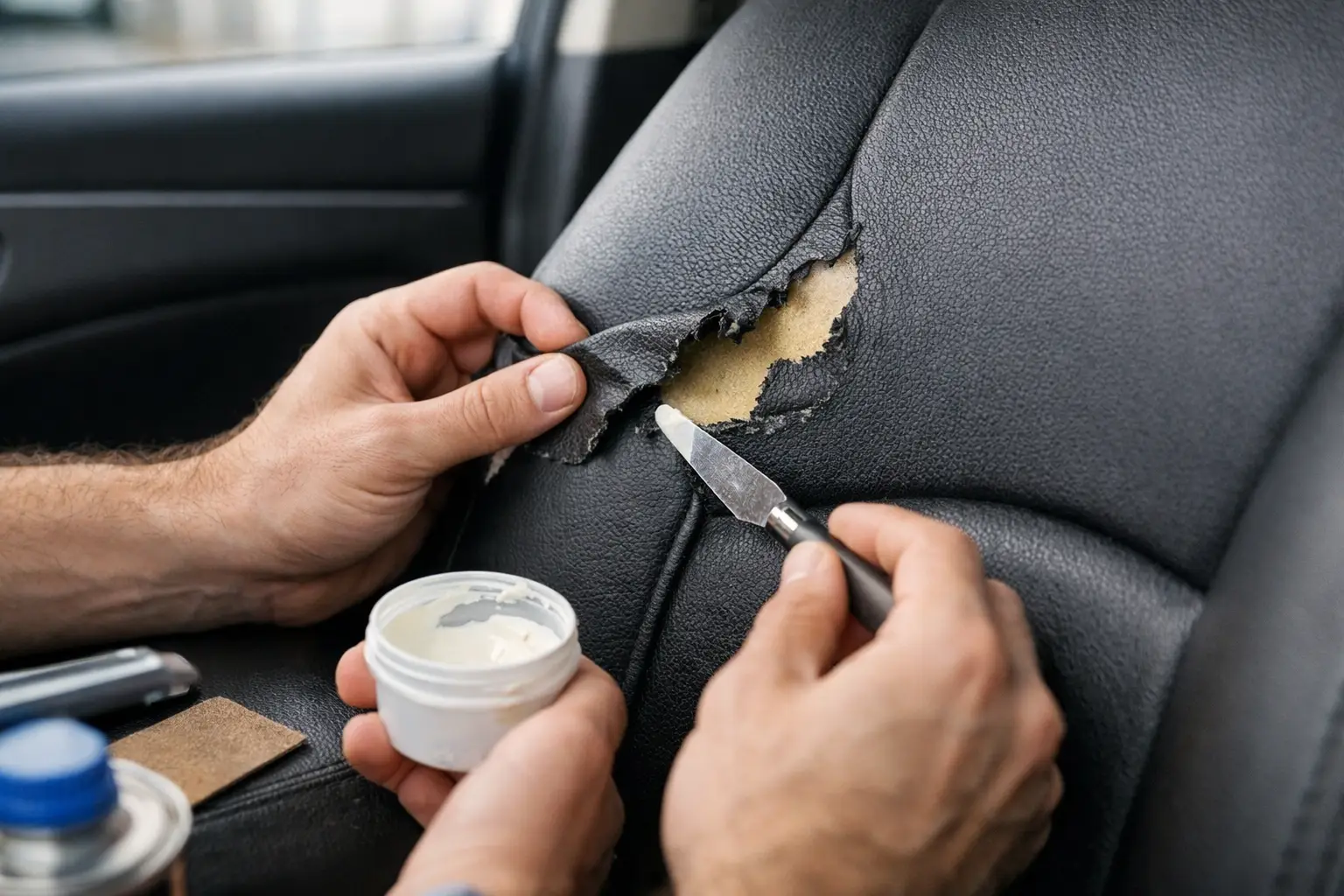
How to Fix Peeling Car Upholstery Properly
Peeling upholstery rarely starts as a dramatic failure. More often, it begins with a small patch on a seat bolster, a lifting door panel insert, or a flaky steering wheel trim that gets worse every time you get in the car. If you are searching for how to fix peeling car upholstery, the real question is not just how to stick it back down. It is how to repair the damage without making the finish look patchy, short-lived, or out of place with the rest of the interior.
In our workshop, this is where many owners get caught out. What looks like a simple adhesive problem is often material breakdown. Once that top layer starts separating, the correct repair depends on what has actually failed – the surface coating, the synthetic skin, the foam backing, or the substrate underneath.
Why car upholstery starts peeling
Most peeling in modern car interiors happens on synthetic materials rather than genuine leather. Many seats, door trims, armrests and dashboards use vinyl, PU leather, or coated composite materials. These can look refined when new, but they age differently from natural hide.
Heat is one of the main causes. In Singapore, cabin temperatures climb quickly, and repeated heat exposure hardens adhesives, dries out coatings, and weakens laminated surfaces. Friction does the rest. The driver seat outer bolster, centre armrest and door grab areas usually fail first because they take constant contact.
Cleaning products can also accelerate the problem. Strong detergents, alcohol-heavy wipes and glossy dressings may strip protective finishes or leave the surface brittle. In some cases, previous repair attempts make matters worse. A quick glue job can trap dirt, stain the material, or create ridges that become more visible over time.
How to fix peeling car upholstery – first assess the material
Before any repair, identify what you are dealing with. This step matters because the right method for one surface can ruin another.
If the material is genuine leather, peeling may actually be finish loss rather than the leather itself disintegrating. That can sometimes be repaired through surface preparation, recolouring and sealing. If it is vinyl or PU, peeling usually means the top layer is failing, and cosmetic touch-up alone may not hold for long.
You also need to check how far the damage has spread. A small lifted edge on a door insert is very different from a seat face where the material has started cracking across the panel. Once the base fabric or foam is affected, localised patching becomes less reliable.
A disciplined repair starts with three questions. Is the substrate still sound? Is the surrounding material stable? And will a spot repair age consistently with the rest of the trim? If the answer to any of these is no, replacement of the affected panel is usually the cleaner option.
When a DIY repair can work
There are cases where a careful owner can improve the appearance of a minor issue. Small sections of lifting trim on low-wear interior panels may respond to a controlled adhesive repair, provided the material itself is not crumbling.
The area must be cleaned properly first. That means removing dust, skin oils and old adhesive residue without soaking the trim. The wrong cleaner can soften the material further, so gentle preparation is safer than aggressive scrubbing. Once clean, a suitable trim adhesive can be applied sparingly and evenly, then clamped or pressed according to the product instructions.
This is not the place for household glue. General-purpose adhesives often bleed through, leave shiny marks, or become brittle in heat. Even when the bond holds, the finish may not.
DIY can also be reasonable for very small cosmetic areas if your goal is to tidy the cabin rather than restore it to a workshop standard. But expectations need to stay realistic. Matching grain, sheen and colour across aged upholstery is difficult, especially on visible surfaces such as seat bolsters or armrests.
When DIY usually fails
If the upholstery is peeling on a seat, the problem is almost never just surface-level for long. Seats flex under load, and that movement places stress on both the material and the seams. Even if you reattach a peeling section, the repaired area may lift again once the seat is used daily.
Door panels and dashboard sections have their own risks. Many modern trims are heat-formed and foam-backed. Once the top skin starts separating, it can shrink or distort. Glue cannot always pull it back to its original shape. You may secure one corner only to find tension lines, bubbling or edge lift elsewhere.
Another common problem is over-repair. We see interiors where too much adhesive has been used, or where filler and paint have been applied over unstable material. The result looks acceptable for a short period, then fails more noticeably than the original damage. At that stage, the eventual professional repair often involves more preparation because the failed DIY work has to be removed first.
The professional approach to peeling upholstery
A proper repair is not based on hiding damage. It is based on isolating the failed section, checking the condition beneath it, and deciding whether restoration or retrimming will give the more durable result.
For a minor isolated issue, a specialist may be able to remove the affected panel, prepare the surface, stabilise the substrate and refinish the area to blend with the surrounding trim. This is most viable when the material around the damage is still healthy.
Where the original covering has started breaking down, retrimming is often the better investment. That means replacing the damaged upholstery section with a new, suitable automotive-grade material rather than trying to preserve a failing skin. On seats, this may involve replacing a single panel or bolster rather than the entire seat, depending on pattern matching and overall wear. On door panels and armrests, it may mean stripping the insert and recovering it properly in-house.
That distinction matters. Customers often ask for the cheapest visible fix, but a disciplined workshop should tell you when the material has gone past the point of a reliable touch-up. Short-term savings do not help if the same area peels again within months.
Choosing repair or replacement
There is no single answer for every vehicle. The right solution depends on age, material type, interior condition and owner expectations.
If the car is relatively new and the damage is localised, a targeted repair may preserve the factory look well enough. If the vehicle is premium, collectible or part of a broader refurbishment, replacing the affected trim section often makes more sense. It gives better consistency, better durability and a finish that sits properly with the rest of the cabin.
Budget does matter, of course. But so does the value of doing the work once. A clean, well-matched retrim can protect comfort, presentation and resale appeal far better than repeated patch jobs.
How to prevent peeling from coming back
After repair, the interior needs sensible care. Keep the cabin as cool as practical, especially if the car is parked outdoors regularly. Sunshades, covered parking and regular ventilation all help reduce heat stress on trim surfaces.
Cleaning should stay simple. Use interior products suited to automotive leather or vinyl, depending on the material, and avoid anything harsh or overly glossy. A surface that feels slick after cleaning is not necessarily protected – sometimes it is simply coated in residue.
It is also worth dealing with minor wear early. A small lifted edge or rubbed bolster is easier to stabilise than a large section of peeling trim. Once the top layer starts breaking across a wider area, repair options narrow quickly.
What to ask before booking the work
If you are comparing providers, ask whether the job will be done in-house, what material they recommend for your car, and whether they expect repair or panel replacement to last longer. A specialist should be able to explain the trade-offs plainly.
That is especially important with ageing interiors, where surface damage can hide foam collapse, weak backing boards or old adhesive failure underneath. Good advice is not just about saying yes to the requested job. It is about being honest when the requested job is not the right one.
At 8 Cushion, that workshop discipline matters because upholstery work is rarely just about appearance. It is about proper preparation, correct material handling and a finish that holds up in daily use.
If your upholstery has started peeling, treat it as an early warning rather than a cosmetic nuisance. The sooner the material is assessed properly, the better the chance of achieving a repair that looks right, feels right, and does not send you back to the same problem a few months later.
Related posts
Classic Car Interior Restoration Guide
A classic car interior restoration guide covering trim, roof linings, seats, car
How to Stop Convertible Roof Leaks Properly
Learn how to stop convertible roof leaks with proper checks, cleaning, drainage
Vinyl Versus Canvas Convertible Tops
Vinyl versus canvas convertible tops - compare durability, noise, care, appearan