


Convertible Roof Repair vs Replacement
A convertible roof rarely fails all at once. More often, it starts with a damp patch after rain, a crease that was not there before, a slower closing motion, or stitching that has begun to separate at one edge. That is usually the point when owners start asking the right question: convertible roof repair vs replacement – which one is actually worth doing?
The honest answer is that it depends on the roof’s condition, the age of the materials, the frame beneath it, and what result you expect from the job. A cheaper repair is not always better value. A full replacement is not always necessary either. The right decision comes from proper inspection, not guesswork.
Convertible roof repair vs replacement – what changes the decision?
From a workshop point of view, the decision is less about one visible fault and more about the roof as a complete system. The outer fabric or vinyl matters, but so do the pads, tension cables, seals, rear window condition, frame alignment and drainage points. If one section has failed because the rest of the roof is tired, a local repair may only delay a larger problem.
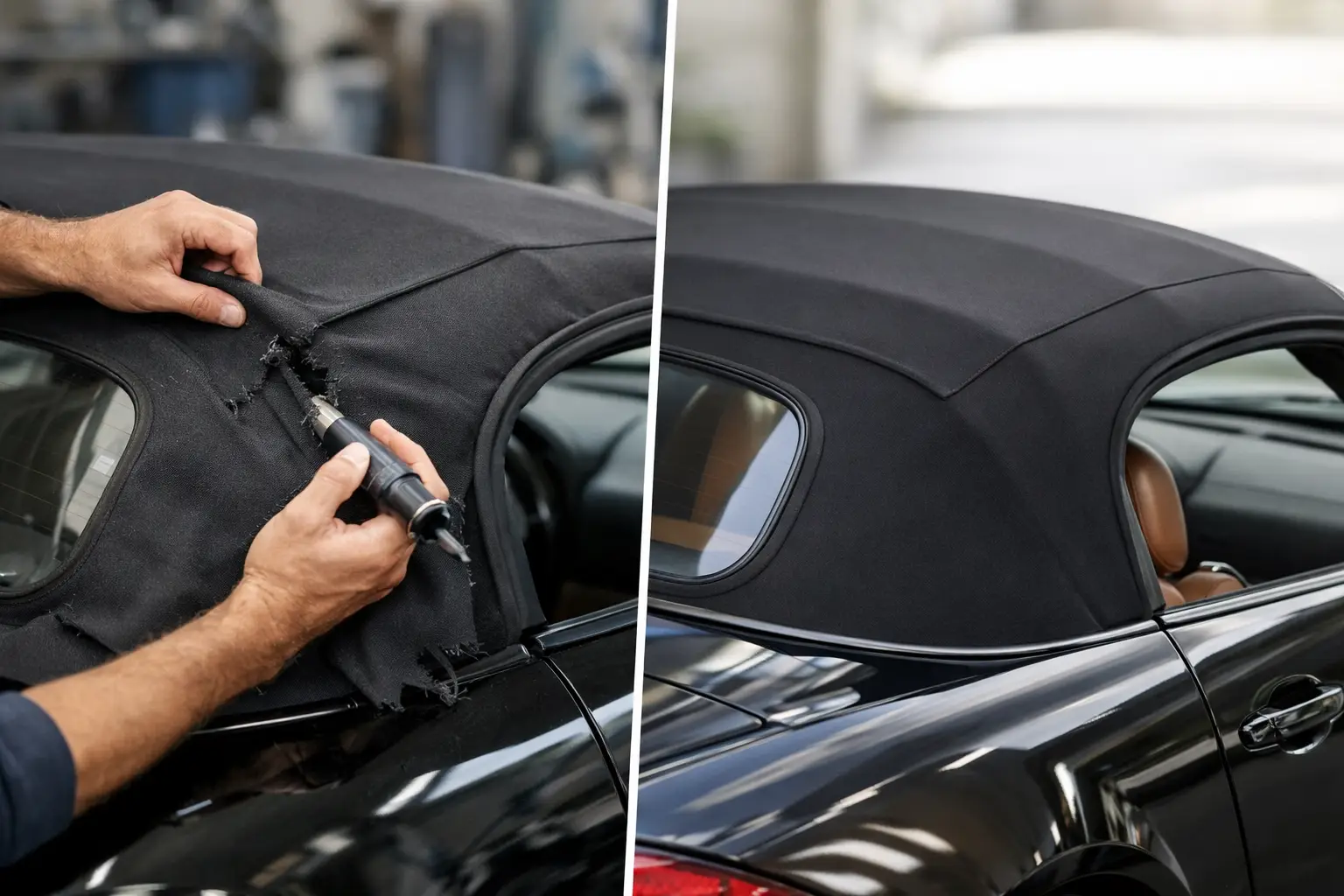
A repair usually makes sense when the issue is isolated. That could mean a small tear, loose stitching along a seam, a seal issue causing minor water ingress, or a rear screen problem where the surrounding hood material remains sound. In these cases, targeted work can restore function without replacing good material unnecessarily.
Replacement becomes the better route when deterioration is broad rather than local. If the roof fabric has gone thin, shrunk, faded unevenly, cracked at stress points and started leaking in more than one area, repairing one fault often leaves the owner paying again for the next one. For ageing convertibles, that pattern is common.
When repair is the sensible option
A disciplined repair is worthwhile when the roof still has structural life left in it. If the main hood material is stable, the frame is operating correctly and the problem can be traced to a limited section, a repair can preserve the original roof while controlling cost.
This often applies where damage has an obvious cause. A branch may have caught the fabric. A seam may have opened because of local strain. A seal may have flattened in one section and allowed water to pass through. If the surrounding material has not hardened or perished, the repair can be a practical and durable solution.
It also matters how the car is used. Some owners keep a second vehicle for daily driving and use their convertible less frequently. If the roof is generally sound and the issue is isolated, a repair may be enough to restore confidence without committing to a full replacement ahead of time.
That said, a proper repair is still specialist work. Hood materials stretch differently from ordinary trim materials. Stitching, bonding, pattern alignment and water management all matter. Poor repairs often look acceptable at first but fail where stress loads are highest, or they introduce fresh leak paths at the edges.
When replacement is the smarter investment
There is a point where repeated repairs stop being economical. If the hood has multiple weak areas, if the inner lining is affected, if the rear window has detached or distorted, or if the roof no longer sits correctly across the frame, replacement usually gives a better long-term result.
This is especially true for premium and restoration-worthy vehicles where appearance matters as much as weather protection. A patched roof can remain visibly uneven. You may solve one leak while keeping faded fabric, tired stitching and distorted fitment. That may not suit the standard of the car.
Replacement also allows the full assembly to be assessed properly during removal and fitting. Tension components, frame issues, contact points and hidden wear can be identified while access is open. That is one of the biggest practical advantages of specialist in-house work. The visible roof is only part of the job.
For owners planning to keep the vehicle, replacement often makes better financial sense than a sequence of temporary fixes. You pay more upfront, but you avoid the stop-start cycle of patching one section after another while the rest of the hood continues to age.
The false economy of delaying the decision
Many convertible owners wait because the roof is still technically usable. It opens, closes and only leaks slightly. The risk is that minor roof faults rarely stay minor for long in Singapore’s heat, humidity and rain. UV exposure dries materials. Moisture works into stitching and seals. A small weakness becomes a larger split under tension.
Delaying can also affect areas beyond the hood itself. Water ingress can damage headlining sections, carpet, trim, electronic components and stored interior moisture levels. What began as a manageable roof repair can turn into a wider refurbishment problem.
This is where honest advice matters. A specialist workshop should not push replacement where repair is enough, but it should also say clearly when repair no longer offers good value. Customers are better served by a realistic assessment than by a low initial quote that does not solve the actual condition of the roof.
How a specialist assesses a convertible roof properly
The most reliable decisions come from inspection in person. Photos can help, but they rarely show fabric brittleness, hidden frame stress, water tracking or the true condition of mounting points and seals.
A proper assessment looks at the age and type of material first. Canvas, mohair and vinyl all age differently. Then it considers where the damage sits. A fault at a high-tension fold line is not the same as one in a low-stress panel area. The inspection should also check whether the hood has shrunk, whether it still sits square on the frame and whether the opening and closing action is placing uneven load on the material.
The rear window area is another important clue. If the window section is cloudy, pulling away or stressing the surrounding panel, that can indicate broader material fatigue. Likewise, if seals have flattened or drainage paths are compromised, the leak you notice may not be the only one developing.
In a specialist workshop, this process is not treated as a generic trim job. It is handled as a fitted system that affects weatherproofing, presentation and long-term usability. That difference matters.
Cost is important, but value matters more
Owners often frame the question around price first, which is understandable. Repair is usually cheaper than replacement. But cost alone can be misleading if the repair only buys a short period before further failure.
Value comes from matching the scope of work to the roof’s true condition. If a £300-equivalent repair prevents years of trouble, it is good value. If that same repair is followed by fresh leaks, more stitching failure and eventual replacement within months, it was simply a delay cost.
Replacement tends to feel expensive because it is more comprehensive. Yet for many older convertibles, it resets the roof properly and protects the vehicle’s condition, appearance and resale appeal. For cherished cars, that has real value beyond the invoice.
A trustworthy workshop should explain the trade-off clearly. What can be saved? What cannot? What is cosmetic, what is functional, and what is likely to worsen soon? Straight answers make better decisions possible.
Repair or replacement for older and premium cars
Older and premium vehicles deserve extra care because roof work affects more than just weather protection. It changes the way the car presents, the way panels align visually and the standard buyers or enthusiasts expect to see.
On some vehicles, preserving original components where sensible has merit. On others, a tired hood lets the whole car down. If the bodywork, interior and trim have been kept to a high standard, an ageing roof becomes more obvious, not less.
This is also where workmanship discipline matters. Patterning, material handling, tensioning and finish quality all show up clearly on convertibles. Owners investing in proper care do not want shortcuts, outsourced fitting or guesswork hidden behind a tidy handover. They want accountability from the start.
For that reason, the best outcome is rarely the cheapest one on paper. It is the one that restores confidence in the car every time the roof is raised, lowered or left outside in heavy rain.
If you are deciding between repair and replacement, do not focus only on the damage you can see. Focus on the condition of the full roof system, the standard you want for the vehicle, and whether the proposed work will still make sense a year from now. A good specialist will help you protect the car properly, not simply postpone the decision.
Related posts
Is Headliner Replacement Worth It for Your Car?
Is headliner replacement worth it? Learn when repair makes sense, what affects c
Rear Windscreen Demister Repair: What Matters
Rear windscreen demister repair: practical advice on failed heater lines, durabl
When Should a Windscreen Be Replaced?
Learn when should a windscreen be replaced, how to spot unsafe damage, and why e