


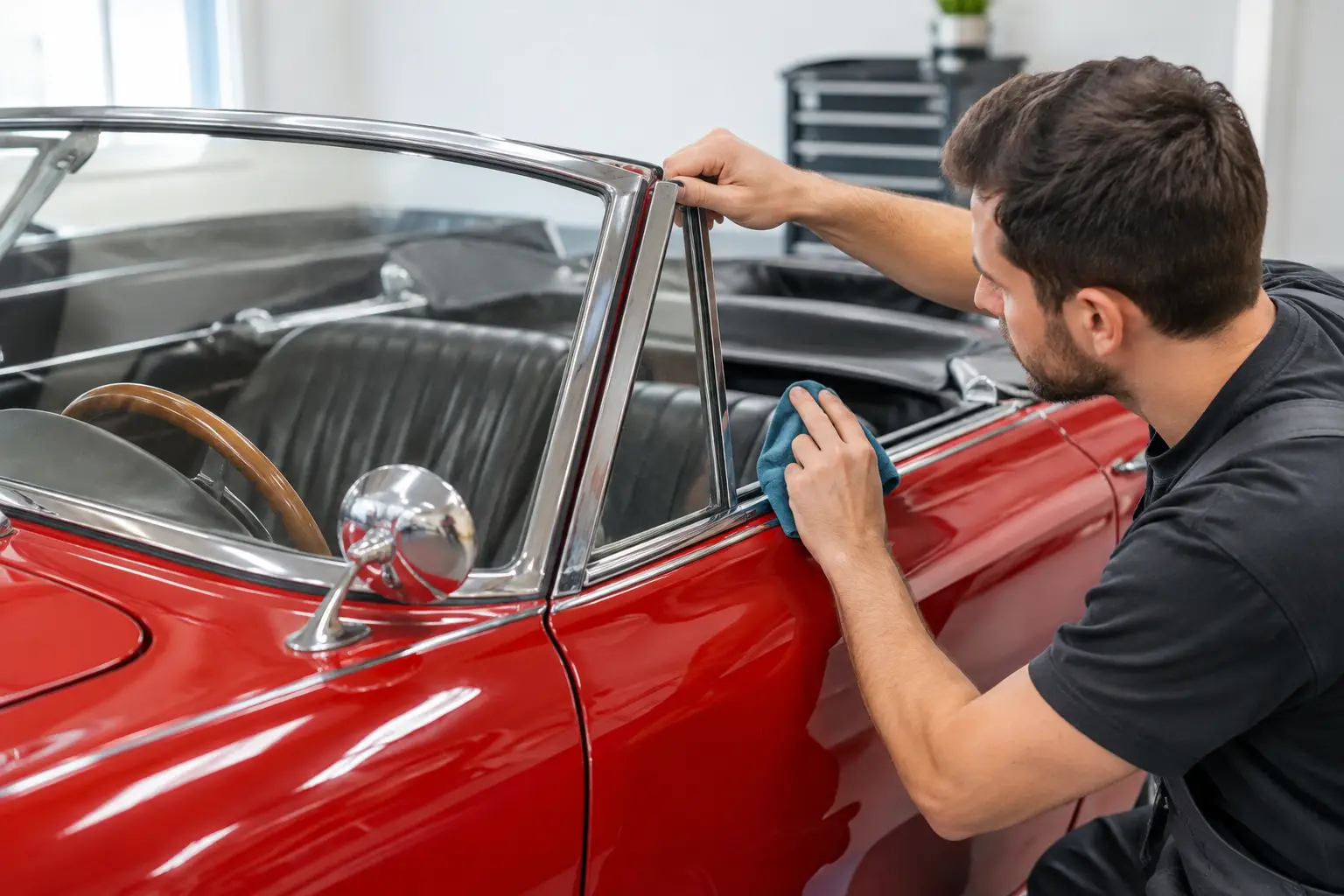
Roadster Window Restoration: What Proper Work Takes
A roadster can look immaculate with its roof down, then feel tired the moment its windows are raised. Clouded rear screens, scratched side glass, loose channels and tired seals do more than spoil the appearance. Roadster window restoration is about restoring the weather protection, visibility and precise fit that make an open-top car enjoyable to use in real conditions.
For convertible owners, this work deserves more care than a quick polish or a universal replacement part. Roadster windows sit within a moving roof system. Every pane, plastic screen, guide, seal and tension point has to work together. If one part is out of position, the result may be wind noise, water ingress, a struggling window mechanism or damage to the roof fabric itself.
What roadster window restoration really involves
The term can describe different jobs, and the correct approach depends on the vehicle. Some roadsters use framed or frameless glass side windows, while others have removable side screens. Many soft-tops have a flexible clear PVC rear window stitched or bonded into the hood. Older cars may have original glass with scratched or deteriorated rubber surrounds that are worth preserving. Newer models may require careful calibration after glass or regulator work.
A proper assessment starts by identifying the source of the problem. A window that rattles may have worn guides, a loose regulator, hardened seals or poor roof alignment. A rear screen that looks milky may be surface oxidation, deep scratching, creasing or material breakdown. These faults can look similar from outside, but they do not call for the same repair.
The aim is not simply to make the window look better for collection day. It is to restore dependable operation without introducing strain elsewhere in the hood or door system.
Clear plastic rear windows need a different judgement
PVC rear screens are common on classic and older convertible hoods. Over time, heat, ultraviolet exposure and repeated folding can turn the material yellow, hazy or brittle. Light surface marks can sometimes be improved through controlled cleaning and polishing. This can be worthwhile where the screen remains flexible, the seams are sound and visibility is only moderately affected.
There are limits. Polishing cannot remove deep creases, cracking, severe discolouration through the material or a split edge. Aggressive compounds may create temporary clarity while thinning or stressing an already ageing screen. In these cases, replacing the rear window section is the more responsible repair.
Where a new PVC screen is fitted, the quality of the stitching, binding and tension matters as much as the material. The screen must sit correctly in the roof panel and fold as intended. A poor fit can pull at seams, distort the hood or leave uneven tension that becomes obvious after a few cycles.
Glass windows are not just glass jobs
Roadster side glass and windscreen work often affects more than the glass itself. Frameless door glass, for example, relies on accurate adjustment to meet the roof seal without excessive pressure. Too low, and rain and wind can enter the cabin. Too high, and the glass may catch the roof edge, damage the seal or place extra load on the regulator.
A professional restoration process checks the movement of the glass through its full travel, the condition of the channels and the compression of the weather strips. It also considers whether the door has dropped slightly on its hinges, whether the roof frame is sitting true and whether previous work has altered the original adjustment points.
This is why replacing a piece of glass without inspecting its surrounding system can become a false economy. The new component may be correct, yet the original problem remains.
When restoration is sensible and when replacement is safer
The right decision is guided by condition, safety and the owner’s priorities. Original components can add authenticity to a classic roadster, particularly where the glass carries correct markings or the vehicle has a well-documented history. If the piece can be restored safely and the seals can be renewed without compromising fit, preservation may be the best route.
Replacement is usually the better option where visibility or structural integrity is affected. A windscreen with cracks, delamination or damage in the driver’s field of vision should not be treated as a cosmetic concern. Likewise, severely scratched glass, brittle rear PVC or distorted window frames are unlikely to provide lasting results through superficial repair.
Availability can also shape the work. Genuine seals, mouldings and rear-screen patterns are not equally easy to obtain for every model. A specialist workshop should be clear about whether it is using original-equipment parts, quality reproduction items or carefully selected alternatives. There is no single right answer, but there should be no uncertainty about what is being fitted and why.
The details that protect the finished result
Window restoration is often judged by first appearance. The more meaningful test comes after the car has been driven, washed and parked outside in heavy rain. That is when careful preparation shows its value.
Before refitting, the surrounding channels should be cleaned and checked for corrosion, broken clips, old adhesive or trapped debris. Drainage paths matter too. Water is designed to pass through specific areas of a door and hood structure. If those paths are blocked, moisture can sit against trim, cause odours and eventually damage interior materials.
Rubber seals require close attention. Hardened seals may look intact but no longer conform to the glass. Shrinkage can leave small gaps at corners, while incorrect seal positioning can create a whistle at speed. Reusing an old seal may be appropriate when it remains supple and correctly shaped. When it does not, new seals are often a better investment than repeated adjustments.
The roof should then be raised and lowered several times. This confirms that the rear screen folds cleanly, side windows clear the roof frame and no section is being dragged, pinched or over-tensioned. A convertible roof is a mechanism, not merely a covering. Its windows must be restored with that principle in mind.
Why in-house workmanship matters
Roadster window restoration can involve trim removal, glass adjustment, hood work, upholstery protection and sometimes windscreen fitting. Handing each stage to separate parties makes accountability difficult if the final fit is poor. The owner is left trying to establish whether the issue came from the glass, the roof, the seal or the adjustment.
At 8 Cushion, restoration-led work is handled with the full system in view. Keeping core work in-house allows the condition to be assessed before dismantling, materials to be selected for the specific vehicle and fitment to be checked before handover. It also means the person responsible for the finish understands what was found beneath the trim, rather than working from assumptions.
This approach is especially valuable on older, premium and enthusiast-owned cars. Small details such as the angle of a quarter window, the seating of a chrome surround or the tension at a stitched rear screen can change both the appearance and the usability of the vehicle.
Preparing your roadster for an assessment
Owners can help make an assessment more accurate by noting when the fault occurs. Does water enter only after heavy rain? Is wind noise worse on one side? Does the glass stop short of the roof, or does the rear screen become opaque only at night? These observations help separate a material issue from an alignment or mechanism issue.
Avoid forcing a slow or misaligned electric window. Repeated operation can damage guides, cables or the regulator. Similarly, avoid folding a cold, brittle PVC rear screen where possible. Gentle warming may improve flexibility, but it will not cure an ageing screen. If the material is cracking, have it inspected before a small fault becomes a torn roof panel.
Photographs can be useful, but the final decision should be made after physical inspection. Convertible systems reveal their real condition through movement, tension and contact points that a photograph cannot show.
A well-restored roadster window should not demand attention. It should rise smoothly, seal cleanly, remain clear in changing weather and let the roof operate as the manufacturer intended. That quiet confidence is the standard worth protecting every time you put the hood down.
Related posts
Car Seat Bolster Repair That Lasts
Car seat bolster repair restores comfort, support and appearance. Learn when rep
How to Prepare Your Car for Upholstery Restoration
Learn how to prepare car for upholstery restoration with a clear workshop-ready
Water Damaged Car Interior Repair Guide
Water damaged car interior repair starts with fast action. Learn what can be sav