


Windscreen Chip Repair Methods That Protect Glass
A chip may be no larger than a small coin, yet it can quickly become the reason for a full windscreen replacement. Singapore heat, sudden downpours, road vibration and the daily use of air-conditioning all place stress on automotive glass. Understanding windscreen chip repair methods helps you act before a minor impact mark spreads across your line of sight or compromises the structural role of the windscreen.
A proper decision is not based on chip size alone. Its location, shape, depth, age and level of contamination matter just as much. At a specialist workshop, the first task is to inspect the damage carefully, explain what can realistically be achieved, and recommend repair only when it is the sound option.
What Happens When a Windscreen Is Chipped
Modern windscreens are laminated. They are made from two layers of glass bonded around a clear plastic interlayer. This construction is designed to hold together in an impact, support the vehicle roof structure and contribute to airbag performance. A chip typically begins on the outer glass layer, but it may develop cracks that travel further when the glass is stressed.
Temperature change is a common trigger. Parking under direct sun, then cooling the cabin sharply, can make a small crack extend. So can closing a door firmly, driving over uneven surfaces or directing high-pressure water at damaged glass. The damage is not always dramatic at first. Fine legs can develop from the original impact point and become harder, or impossible, to repair cleanly.
For this reason, avoid pressing on the chip or washing the area aggressively. Cover it with clean, transparent repair film or tape if possible, keeping moisture and dirt out until it can be assessed. Do not use opaque tape that may leave adhesive residue or obstruct visibility.
Windscreen Chip Repair Methods Explained
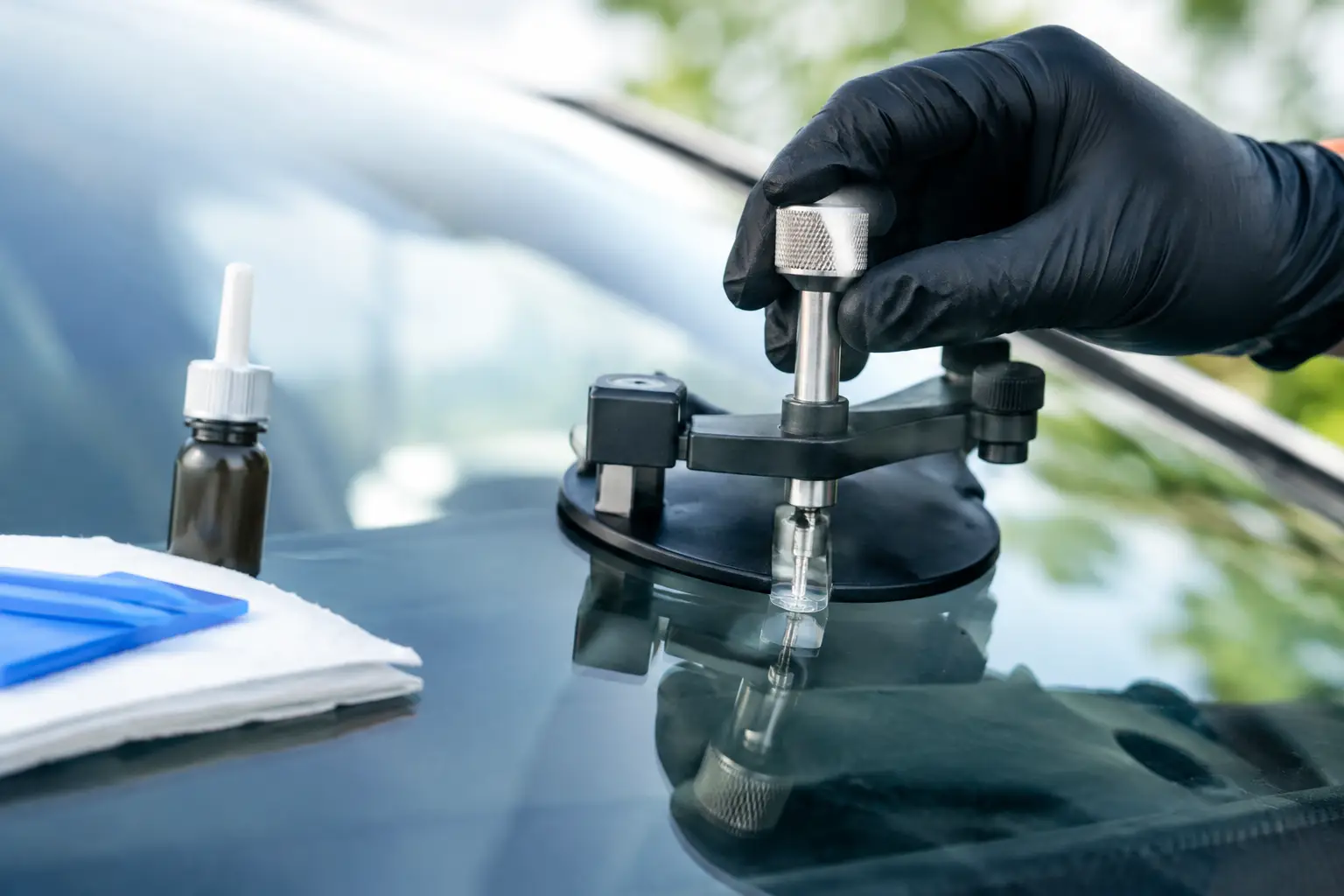
The most established professional method is resin injection. A technician mounts a repair bridge over the damaged area, creates a controlled seal, and uses vacuum and pressure cycles to draw air from the break before introducing a specialist clear resin. Ultraviolet light then cures the resin, helping to restore the integrity of the outer glass layer and reduce the visibility of the impact point.
The result is not an invisible windscreen. A well-executed repair often makes the chip far less noticeable, but a faint mark may remain. What matters most is that the resin properly fills the break, arrests crack growth where possible and restores strength to the damaged area. Any workshop promising a completely undetectable result without inspecting the glass is setting the wrong expectation.
Bullseye and combination chips
A bullseye chip has a roughly circular impact area. When it is contained, recent and away from critical viewing zones, it is often among the more repairable forms of damage. Combination chips have multiple features, such as a central impact point with short radiating cracks. They can still be repairable, but their outcome depends on the length and direction of those cracks.
Star breaks and short cracks
A star break has several fine legs spreading from the impact point. These require particularly careful resin flow because trapped air may remain in narrow cracks. A short crack can sometimes be stabilised with resin injection, especially when treated promptly. Once cracks become longer, reach an edge, or branch extensively, replacement is normally the safer recommendation.
Surface damage that does not need resin
Not every mark is a chip. Light wiper scuffs, mineral staining and superficial scratches may affect clarity without breaking the glass structure. These need a different assessment. Polishing may improve very shallow surface marks, but aggressive polishing can distort glass optics, especially in the driver’s viewing area. Deep scratches are rarely a sensible polishing job and may call for replacement instead.
When Repair Is the Right Choice
Repair is usually worth considering when the damage is small, isolated and limited to the outer glass layer. It should also sit away from the edge of the windscreen and outside the driver’s primary viewing area. This is not merely about appearance. Even a technically successful repair can leave a visual blemish that becomes distracting under sunlight, street lighting or rain.
Fresh damage gives the best chance of a clean result. A chip that has collected road dust, wax, water or cleaning chemicals is more difficult to restore because contaminants can prevent resin from bonding properly. In some cases, a specialist can clean and dry the break before repair. However, there are limits, and transparent advice matters more than forcing a repair that will not last.
Repair also has a practical sustainability benefit. Keeping an otherwise serviceable windscreen in use avoids unnecessary replacement and preserves the vehicle’s original factory fitment. For owners of premium, classic or carefully maintained vehicles, retaining original components where sensible is often part of good restoration practice.
When Windscreen Replacement Is the Safer Method
Replacement is generally the correct route when cracks are long, damage reaches the edge of the glass, the inner layer is affected, or the chip sits where the driver needs an uninterrupted view. A replacement should also be considered if an earlier repair has failed, moisture has entered deeply, or the glass has multiple impact points.
Vehicles with advanced driver-assistance systems need additional attention. Cameras and sensors positioned behind the windscreen may require calibration after replacement. The correct replacement glass, accurate installation and required calibration all affect how systems such as lane support, collision warning and automatic braking perform. This is not an area for shortcuts or vague assumptions.
The quality of fitting matters as much as the glass itself. A windscreen must be bonded correctly to maintain weather sealing, cabin refinement and structural performance. Poor installation can lead to wind noise, water leaks, trim damage and, in more serious cases, compromised adhesion. A disciplined workshop process should protect the surrounding paintwork and interior trim, prepare the bonding surfaces correctly and observe proper curing times before the vehicle returns to normal use.
Why DIY Kits Have Limits
DIY repair kits can appear attractive for a small, fresh chip, particularly when immediate professional assessment is not available. Some can improve a simple impact mark if used precisely and early. But they provide little room for error. Incorrect bridge placement, poor sealing, insufficient vacuum or curing resin before it fully penetrates the break can leave air pockets within the damage.
There is also no reliable way to judge internal crack depth from the outside without experience. A DIY attempt may make later professional repair more difficult, particularly if low-quality resin or contaminants have been introduced. For a vehicle you intend to keep, restore or present well, the saving may not justify the risk.
A Practical Response After Stone Impact
When a stone strikes the windscreen, pull over safely if visibility is affected and inspect the glass in good light. Photograph the damage for your records, but avoid poking it to test its depth. Keep the chip dry and arrange an assessment promptly.
Until then, avoid sudden temperature extremes. Do not blast the affected section with cold air-conditioning after the vehicle has been parked in heat, and do not pour hot water over the windscreen. Drive gently where possible, particularly over rough roads and speed humps. These small precautions can make the difference between a straightforward repair and a crack that demands replacement.
Choosing a Workshop With the Right Standards
The best windscreen chip repair methods are only as reliable as the inspection and workmanship behind them. Ask whether the workshop will assess repairability before recommending a solution, explain the likely cosmetic result, and identify whether your vehicle requires camera or sensor calibration. You should also know who will carry out the work and whether the job is handled in-house.
At 8 Cushion, the approach is based on clear assessment and accountable workmanship. Where a repair will protect the glass and meet proper standards, it should be presented honestly. Where replacement is the safer long-term choice, that advice should be just as direct. No unnecessary work, no outsourcing of core workmanship, and no uncertainty about the scope of the job.
A chip is easiest to deal with when it is still small, clean and stable. Arrange an expert assessment early, protect the damaged area from moisture and temperature shock, and let the condition of the glass determine the right repair or replacement decision.
Related posts
Why In House Restoration Quality Control Matters
In house restoration quality control protects workmanship, pricing and accountab
Car Seat Stitching Repair Service That Lasts
Choose a car seat stitching repair service that protects your upholstery, preser
7 Signs of Windscreen Seal Failure
Spot the signs of windscreen seal failure early. Learn what leaks, noise, rust a