


Are Cloudy Windscreens Repairable? What to Check
A windscreen can look clean in the workshop yet turn milky the moment you drive towards low sun, into rain, or under street lighting. That is when the question becomes urgent: are cloudy windscreens repairable, or is the glass no longer safe to keep?
The honest answer is that it depends on where the cloudiness sits and what has caused it. Some haze is a surface problem that can be removed or reduced. Other forms of cloudiness are within the glass itself, and no amount of polishing will restore clear vision. A proper assessment prevents money being spent on a cosmetic treatment when replacement is the responsible solution.
What a cloudy windscreen is really telling you
“Cloudy” describes an appearance, not a single fault. The glass may look foggy, streaky, dull, iridescent or permanently greasy. It may be visible across the whole screen or appear only in the swept area of the wipers. The pattern matters because it helps identify whether the issue is on the outside surface, on the cabin-facing surface, within the laminated glass, or around the edge of the windscreen.
A windscreen is made to provide structural support as well as a clear view of the road. Modern vehicles may also position cameras, rain sensors and driver-assistance equipment behind it. Treating poor clarity as a minor appearance issue can overlook a problem that affects visibility, wiper performance or, in some cases, the windscreen’s condition around its bonded perimeter.
The first task is therefore not to choose a polish. It is to establish the cause.
Are cloudy windscreens repairable when the haze is on the surface?
Surface haze is the most repairable type, but even here the correct method depends on the contamination or damage involved.
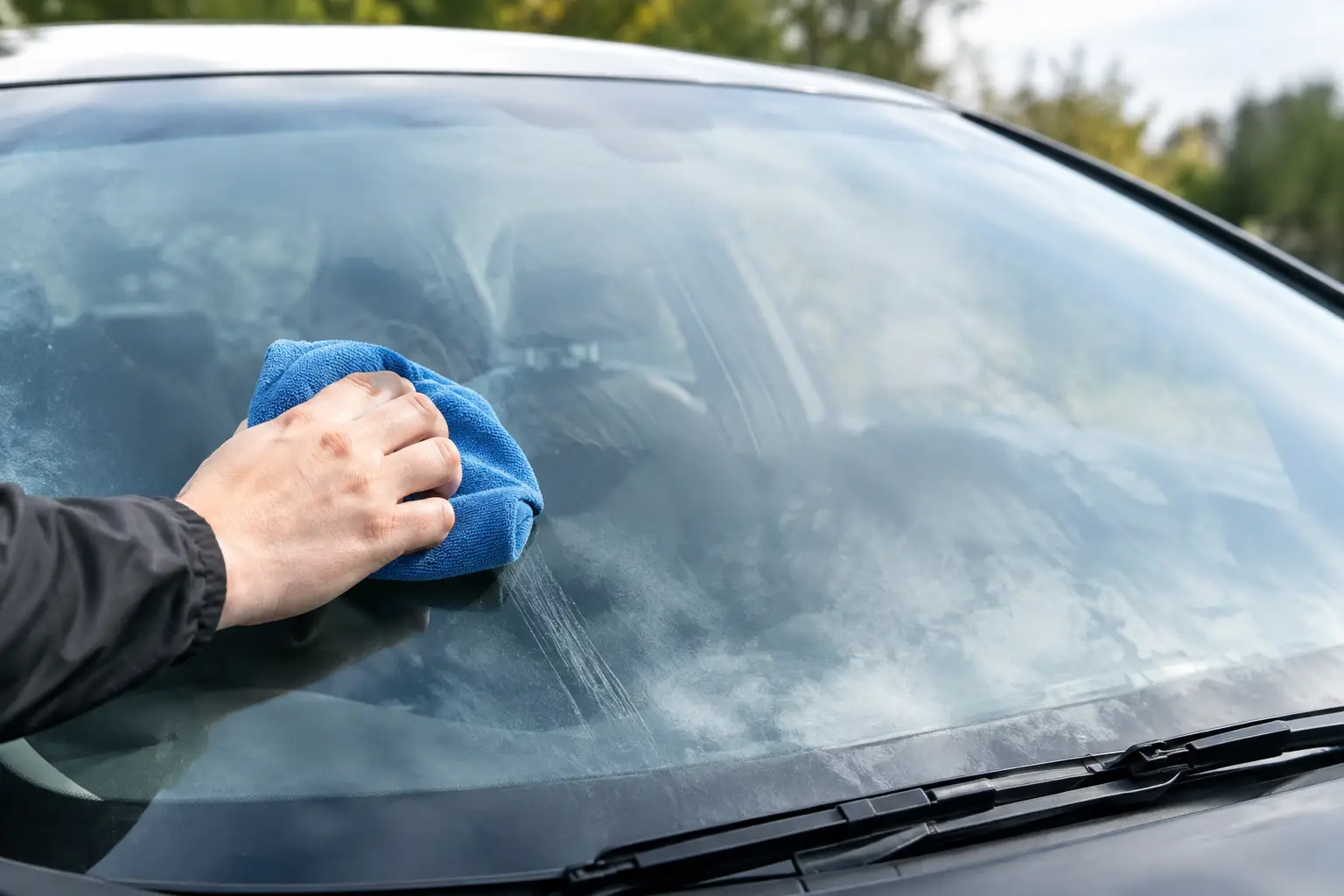
Mineral deposits are a common example. Water allowed to dry repeatedly on glass can leave stubborn marks, particularly where hard water, rainwater residue or overspray has built up. These marks scatter light and can make the windscreen appear cloudy from certain angles. If the deposits have not etched deeply into the glass, a specialist glass-cleaning or controlled polishing process may improve clarity considerably.
Traffic film, oily residue and silicone-based detailing products can also create a smeared, hazy finish. This is especially noticeable at night or when the wipers are operating. In many cases, thorough decontamination of the glass, wiper blades and surrounding areas resolves the issue. Replacing worn or contaminated blades is often part of the remedy, since old rubber can repeatedly transfer residue back onto the screen.
Fine wiper scratches may be more difficult. Dust or grit trapped beneath a damaged blade can create thousands of light scratches that show up as glare in direct sunlight. Very light scratches can sometimes be reduced with glass polishing, but the work must be controlled. Glass is not paintwork. Removing too much material or concentrating heat in one area can create optical distortion, which is worse than the original haze.
A specialist should assess the glass under strong light and from the driver’s normal viewing position. A windscreen that looks acceptable from outside the vehicle may still cause distracting flare from behind the wheel.
When polishing is not the answer
Polishing is not a universal repair. It will not correct cracks, deep scratches you can catch with a fingernail, chips in a critical viewing area, or cloudiness caused by failure inside laminated glass. It should also not be used as a quick fix for a screen that has become visibly distorted.
Aggressive household abrasives, harsh compounds and improvised drill attachments are particularly risky. They can leave swirl marks, uneven patches or a lens-like effect in the glass. The result may look clearer in one light condition but become more distracting when driving.
Cloudiness inside the windscreen usually means replacement
Most front windscreens are laminated. Two sheets of glass are bonded around a clear plastic interlayer, which helps the screen remain together if it breaks. When this construction begins to fail, the cloudiness cannot be cleaned away from either side.
Signs of internal deterioration include a white or milky appearance near the edges, bubbling between layers, moisture-like marks that do not move, or a rainbow effect spreading from the perimeter. This may be linked to age, previous damage, poor bonding, water ingress or prolonged heat exposure. The exact cause varies by vehicle, but the practical outcome is the same: the windscreen requires replacement.
Internal haze can gradually spread. Waiting may mean living with worsening glare and reduced confidence in wet or night-time driving. If the affected area reaches the driver’s line of sight, replacement should not be delayed for cosmetic reasons.
The same applies where a windscreen has been badly pitted by road debris. Tiny impacts across the surface may not look serious individually, but together they scatter headlights and sunlight. There is no meaningful way to rebuild the original smooth glass surface once pitting is widespread. Replacement generally gives the better long-term result.
Do not overlook the inside of the glass
Not every apparently cloudy windscreen is damaged. A film on the inside can be caused by off-gassing from dashboard plastics, interior dressings, cigarette smoke or condensation residue. It often appears as a greasy bloom that returns quickly after an ordinary clean.
This requires careful cleaning with products suitable for automotive glass and clean cloths that do not transfer lint, wax or fabric softener residue. The dashboard and demist system should also be considered. A recurring oily film may indicate that interior products are being over-applied, while persistent condensation can point to moisture entering the cabin.
If the haze only appears when the air-conditioning or demister is running, inspection is worthwhile. A leaking heater component is less common, but it can leave a distinctive residue and should be addressed promptly rather than repeatedly cleaned from the windscreen.
A disciplined assessment saves unnecessary replacement
Before recommending repair or replacement, a competent workshop should inspect the screen in different lighting conditions, check the condition of the wipers, and identify whether the mark is inside, outside or between the layers. The surrounding seals and bonded edge also deserve attention, particularly if there are signs of water ingress or previous windscreen work.
For vehicles fitted with forward-facing cameras or sensors, the job does not end when new glass is installed. The correct windscreen specification matters, including the necessary mounting points, shading and sensor compatibility. Camera calibration may also be required after replacement. Using unsuitable glass or overlooking calibration can affect safety systems and create avoidable warning lights.
At 8 Cushion, windscreen-related replacement work is approached as a proper vehicle restoration task, not simply a glass swap. Clear scope, suitable materials and accountable in-house workmanship help protect the finish around the screen and the condition of the vehicle interior.
Repair, replacement or cleaning: the practical decision
A professional clean is appropriate when the issue is surface film, recent contamination or light water spotting. Controlled glass correction may be considered for minor etching or very fine scratches, provided the screen remains optically sound.
Replacement is normally the right route when cloudiness is within the laminate, pitting is extensive, scratches are deep, cracks are present, or the driver’s view remains compromised after cleaning. It may cost more initially, but it avoids repeated attempts to improve glass that cannot be restored safely.
Owners of older, premium or restoration vehicles should also consider the broader condition of the car. A deteriorating windscreen can affect the appearance of fresh upholstery, roof lining or convertible-top work. Addressing the glass properly completes the result and makes every journey more comfortable.
If your windscreen looks cloudy only in difficult light, do not wait until the next night drive or heavy rain to investigate it. A clear assessment of the cause will tell you whether careful restoration is realistic or whether replacement will provide the lasting clarity and peace of mind your vehicle deserves.
Related posts
Car Headliner Replacement: Repair or Renew?
Car headliner replacement restores comfort, appearance and value. Learn when rep
How to Choose a Windscreen Replacement Properly
Learn how to choose windscreen replacement for your vehicle, from correct glass
Windscreen Repair Versus Replacement Guide
A practical windscreen repair versus replacement guide for Singapore drivers - w