


How Long Does Upholstery Repair Take for Cars?
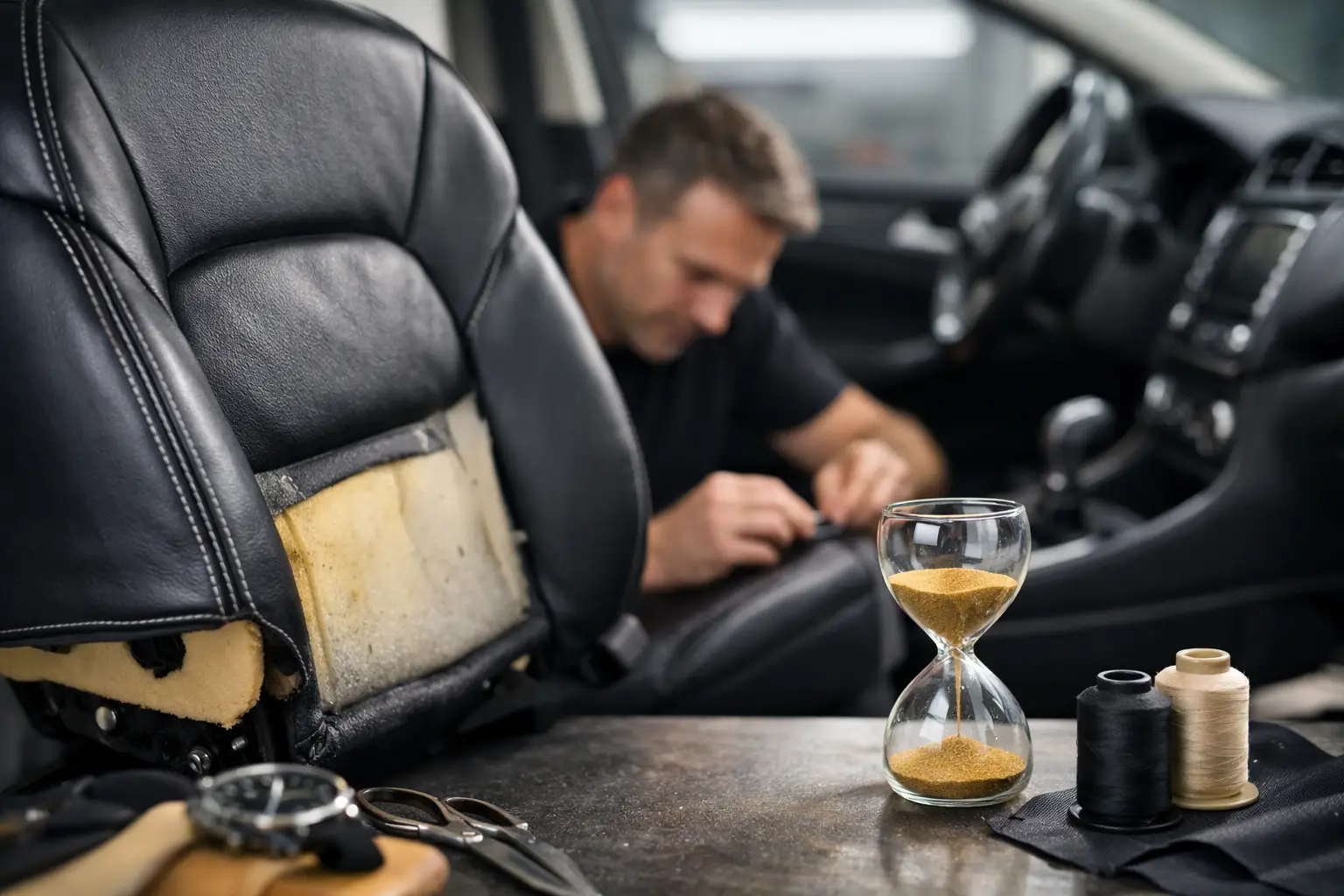
A split seat seam can sometimes be repaired within a working day. A complete interior retrim may require several days of careful removal, pattern work, material preparation and refitting. So, how long does upholstery repair take for a car? The honest answer depends on the damage, the materials involved and whether the job is a targeted repair or a restoration designed to last.
For vehicle owners, the most useful question is not simply how quickly the car can be returned. It is whether the work has enough time for proper preparation, fitment and checking. Upholstery is one of the most visible parts of a vehicle, and rushed work often shows up in uneven stitching, loose trim, poorly aligned panels or premature wear.
How long does upholstery repair take in practice?
Most automotive upholstery work falls into a few practical timeframes. Small repairs, such as a loose seam, minor cigarette burn, worn bolster section or detached door insert, may take a few hours to one working day if the material is available and the affected section can be accessed cleanly.
Moderate repairs commonly take one to three days. This can include replacing a seat base panel, repairing cracked or sagging sections of trim, renewing a headlining area, or correcting several damaged points across the cabin. The extra time is usually not spent on stitching alone. Seats and interior panels often need to be removed, stripped down, repaired and reassembled without damaging clips, electrical connections, airbags or surrounding trim.
A full seat retrim, complete headlining replacement or restoration of multiple interior surfaces can take several days to a week or longer. Convertible interiors and classic vehicles may need additional time because their components, materials and fitment tolerances are less straightforward. If specialist material has to be ordered, the overall booking period can extend beyond the hands-on workshop time.
These are working estimates, not promises made before inspection. A specialist should assess the vehicle first, explain what is visible, and flag areas that may only become clear once the trim is removed.
The factors that determine the repair time
The condition of the upholstery is only part of the picture. A small tear in a simple fabric seat is very different from damage to perforated leather on a ventilated, electrically operated seat. Good repair planning accounts for the construction beneath the surface as well as the visible finish.
Repairing a section versus replacing a cover
A localised repair can be faster and more cost-effective when the damage is contained and the surrounding material remains sound. A skilled trimmer may be able to restitch a seam, replace one panel or repair a worn bolster while retaining the original look of the seat.
However, local repairs are not always the right choice. Leather that has become brittle, fabric that has faded unevenly, or foam that has collapsed may mean a patch would look out of place or fail to address the real problem. Replacing the relevant cover section takes longer, but can give a cleaner and more durable result.
Material matching and preparation
Material matching can influence the schedule considerably. Original upholstery may have a particular grain, perforation pattern, stitching colour or backing layer. On older, premium and restoration-worthy vehicles, finding a close match is often more important than taking the quickest available route.
When new material is selected, it may need to be ordered, inspected and prepared before cutting. Leather must be assessed for grain direction and natural variation. Fabric may need to be aligned with existing panels. Vinyl, Alcantara-style materials and specialised automotive textiles each behave differently under tension and around curved seat forms.
Seat design and vehicle technology
Modern seats can contain side airbags, occupancy sensors, lumbar mechanisms, heating elements, ventilation systems and electric adjustment motors. These features do not prevent upholstery repair, but they require controlled removal and refitting.
A simple rear bench seat may come out quickly. A front seat with electrical functions and airbag components needs more methodical handling. The work must preserve safety systems, prevent warning lights and ensure the completed trim does not interfere with the seat’s operation.
Hidden damage beneath the trim
The visible tear may be the final symptom rather than the whole issue. Once a seat cover is removed, a workshop may find deteriorated foam, broken support wires, weakened backing material or previous repairs that were not carried out properly.
This is where transparent communication matters. A proper workshop will explain any newly identified work before proceeding where possible, rather than covering up a weakened base and sending the vehicle out with a cosmetic-only improvement.
Workshop scheduling and parts availability
Repair duration and turnaround time are related, but they are not identical. A repair may require one day of active workmanship yet be scheduled around other booked jobs, material delivery dates or curing time for certain adhesives and finishes.
In Singapore’s heat and humidity, material storage and preparation also matter. Interior materials should be kept and handled properly to maintain their condition before fitting. A disciplined production process protects both the finish and the expected timeline.
Why a quick repair is not always a better repair
It is understandable to want the vehicle back as soon as possible, especially when it is used daily. But upholstery work is not a job where speed alone should set the standard. A seat cover needs to sit evenly across foam, follow the original contours and retain suitable tension once the driver gets in and out of the vehicle repeatedly.
Shortcuts can create problems that are expensive to correct later. Reusing damaged foam, forcing clips into place, skipping proper cleaning of underlying surfaces or fitting a poorly matched panel may save hours at first. It can also leave the interior looking unfinished and reduce the lifespan of the repair.
The right balance is efficient workmanship with no unnecessary delay. In-house handling is valuable here because the team carrying out the work can inspect, prepare, repair and fit the components under the same quality control. There is no need to pass the job through layers of subcontracting, each with different priorities and lead times.
What happens during a proper upholstery repair?
The process usually begins with an inspection and discussion of the desired outcome. Some owners want a near-original restoration for a classic or premium model. Others need a durable repair that improves comfort and presentation while keeping costs proportionate to the vehicle.
After the scope is agreed, the relevant seats or interior panels are removed carefully. The trim is then assessed from both sides. The workshop checks seams, backing, foam, frame condition, attachment points and any electrical features before deciding whether repair, partial replacement or retrimming is the soundest route.
New panels are measured and cut to suit the seat shape. Where required, stitching, piping, perforations and other details are recreated. The cover is then fitted and tensioned progressively, rather than pulled into place in one hurried step. Finally, the seat is reassembled, refitted and checked for alignment, comfort and function.
For headlinings, the process can be equally detailed. Sagging material is often caused by failed foam backing, so simply gluing loose fabric back up rarely provides a lasting answer. Proper replacement involves removing the board where possible, stripping failed material, preparing the surface and fitting suitable new lining with careful attention to edges, pillars and fittings.
How to help keep the job on schedule
The best way to avoid surprises is to share accurate information when requesting an assessment. Photographs of the damage are helpful, but mention whether the seat has heating, ventilation, electric controls or airbags. Tell the workshop if the vehicle has had previous interior repairs, water ingress or rodent damage, as these can affect what is found beneath the trim.
If colour matching is important, bring the vehicle in for inspection rather than relying on photographs alone. Lighting can make leather and fabric appear different, and a close match should be judged against the actual interior. For restoration projects, allow time for material sourcing and sample approval rather than committing to a deadline before the scope is clear.
At 8 Cushion, the focus is on work that can be managed properly in-house, with clear advice on repair options and realistic timing. That approach helps owners make an informed decision before their vehicle enters the workshop.
A well-planned upholstery repair should leave more than a tidier seat or roof lining. It should restore comfort, protect the vehicle’s presentation and give you confidence that the material beneath the surface has been dealt with as carefully as the finish you can see.
Related posts
Rear Windscreen Demister Repair: What Matters
Rear windscreen demister repair: practical advice on failed heater lines, durabl
Convertible Roof Fabric Review: What Matters
Convertible roof fabric review for Singapore owners: learn how material, fit, st
Windscreen Calibration After Replacement Guide
Our windscreen calibration after replacement guide explains when ADAS recalibrat