


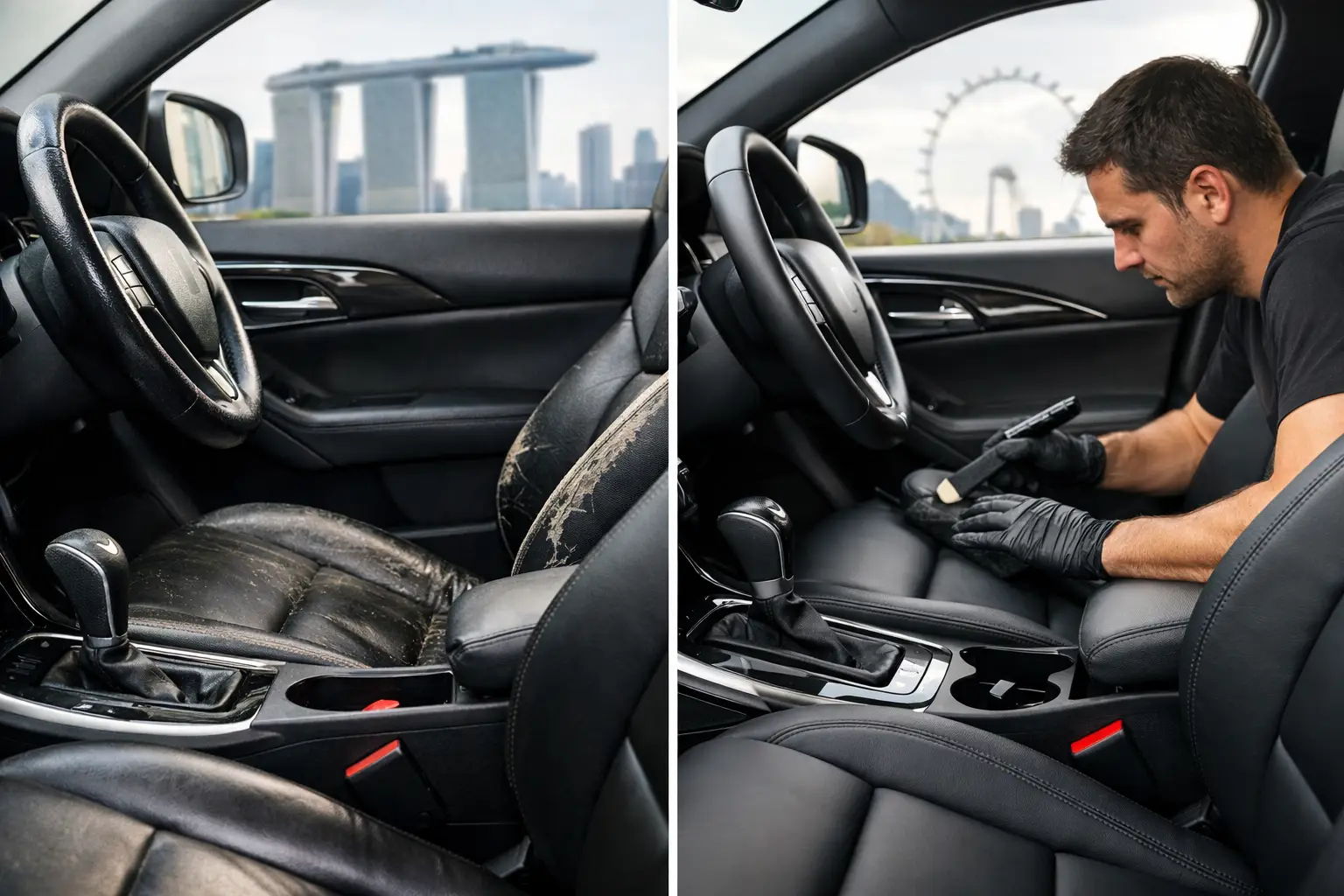
Is Car Interior Restoration Worth It in Singapore?
A sagging roof lining, a split driver’s seat or a convertible top that no longer seals properly can make an otherwise sound car feel neglected. So, is car interior restoration worth it? For many owners in Singapore, the answer is yes – provided the work addresses the real cause of deterioration and is carried out to a proper standard.
Interior restoration is not simply about making a cabin look newer. It can restore day-to-day comfort, prevent small defects from becoming larger repairs and help preserve a vehicle that still has years of useful life ahead. The value depends on the car, the condition of its trim, the quality of materials selected and whether restoration is a better decision than replacement or sale.
When car interior restoration is worth it
Restoration tends to make most sense when the vehicle is mechanically reliable and the deterioration is concentrated in its interior trim. A car with a sound engine, gearbox and chassis does not become less practical because its headlining has dropped or its upholstery has worn through. These are visible and functional problems, but they are usually repairable with the right process.
It is particularly worthwhile for premium cars, well-kept older vehicles and models with personal or enthusiast value. Factory-quality interiors are often difficult to replace accurately, while original trim details can contribute to the character and resale appeal of the vehicle. A careful restoration can retain that character rather than covering the problem with an ill-fitting universal solution.
There is also a practical case for acting early. Loose headlining fabric can continue to peel across the roof. A small tear in a seat bolster can spread as people enter and leave the car. Water entering through a damaged convertible soft top can affect the lining, carpets, electronics and interior odour. Timely repair is often more controlled and less costly than waiting for several related problems to develop.
The condition of the vehicle matters more than its age
Age alone does not determine whether restoration is sensible. A ten-year-old car that has been regularly maintained may be a far stronger candidate than a newer car with major mechanical, accident or corrosion concerns. The question is whether the vehicle has a future worth investing in.
Consider how long you plan to keep it. If the car will remain with you for several years, better upholstery, a renewed roof lining or a correctly repaired soft top can be enjoyed every day. If you are preparing to sell, restoration may still be worthwhile, but the scope should be disciplined. Addressing obvious defects that undermine buyer confidence is different from spending heavily on bespoke changes that a future owner may not value.
For classic, rare or sentimental cars, financial return is only one part of the decision. Originality, comfort and preservation matter. In these cases, specialist advice on whether to repair, restore or replace a component is more valuable than a blanket recommendation.
What a proper restoration can improve
A well-executed interior job improves more than appearance. Seats regain support and presentability. Roof linings sit correctly rather than hanging above the occupants. Door trims, carpets and panels can once again look cared for. In convertibles, a sound top and lining contribute directly to weather protection, cabin comfort and the enjoyment of open-top driving.
The difference is often most noticeable in the driver’s seat. It is the surface used most frequently, and worn bolsters, collapsed foam or cracked material can make the entire cabin feel tired. Rebuilding the affected area with appropriate materials can extend the use of the original seat rather than requiring a complete replacement.
A renewed interior can also improve buyer perception. Prospective buyers tend to see badly worn trim as a sign that other maintenance may have been neglected, even when that is not the case. Clean, properly fitted upholstery and linings communicate care. They do not guarantee a higher sale price, but they can make the vehicle easier to present and more credible when compared with similar examples.
Repair, restoration or replacement?
These terms are often used interchangeably, but they involve different decisions. Repair focuses on a localised fault, such as a split seam, damaged bolster or detached lining. It is usually the right route when surrounding material remains sound and the defect has not spread.
Restoration is broader. It may involve removing old material, preparing the underlying surfaces, renewing foam or backing, and re-trimming a complete section so the finish is consistent. This is appropriate when materials are brittle, stained, shrunken, sagging or otherwise beyond a durable local repair.
Replacement is necessary when a component cannot reasonably be restored. A heavily damaged convertible top frame, a windscreen with significant damage, or trim pieces compromised by water may need replacement rather than cosmetic treatment. The right choice should be based on condition, safety and long-term reliability – not just the lowest initial quote.
Why workmanship changes the value equation
Interior trim work is highly visible. Misaligned stitching, loose edges, poor adhesive preparation and incorrect material tension can all show immediately. Worse, shortcuts may only reveal themselves after Singapore’s heat and humidity have had time to work on adhesives, foams and fabrics.
That is why the process behind the finished surface matters. Proper removal allows the workshop to inspect what sits beneath the trim. Substrates can be cleaned and prepared, damaged backing can be dealt with, and new materials can be fitted with the correct tension and finish. On a convertible, fitting must also account for alignment, sealing and the operation of the roof mechanism.
In-house execution gives customers clearer accountability. There is one team responsible for assessment, material handling, production and final fitment, rather than a job passing through several parties with unclear responsibility. 8 Cushion approaches restoration work on this basis: specialist assessment, disciplined workshop processes and no outsourcing of core work.
Costs: look beyond the lowest quotation
Interior restoration can range from a targeted repair to a substantial refurbishment, so no responsible workshop should offer a meaningful price without understanding the vehicle and the fault. The material type, access required, hidden damage, model-specific construction and level of finish all affect the final scope.
A low quotation can appear attractive, but it may exclude removal work, use a material that does not suit the application, or treat only the visible symptom. For example, reattaching a sagging headlining without addressing degraded backing or preparation may not provide a lasting result. Similarly, a seat cover fitted over damaged foam may look acceptable at first while doing little to restore comfort or shape.
Good value is not the same as the cheapest price. It is a clear scope, suitable materials, careful fitment and a result that holds up to normal use. Ask what is being repaired, what is being replaced, whether related components will be inspected and how the final finish will be checked before handover.
Situations where restoration may not be the best choice
There are cases where spending on the interior should wait. If a vehicle has serious mechanical faults, structural corrosion, major accident damage or unresolved water leaks, those concerns should take priority. Fresh upholstery cannot compensate for a car that is unsafe or unreliable.
It may also be sensible to limit the scope if the car is nearing the end of its usable life and has little personal value. A small repair that improves comfort or prevents further damage may still be justified, while a complete bespoke retrim may not be. The honest answer is sometimes to repair only what is necessary.
Owners should also be realistic about resale. Restoration can strengthen presentation and protect value, but it does not always return every dollar spent. The strongest return is often the combination of better ownership experience, avoided deterioration and a more saleable vehicle when the time comes.
How to make a confident decision
Start with an inspection of the interior as a whole, not just the most obvious defect. Look for signs of moisture, loose trim, hardened materials, failed foam, worn seat edges and damage around seals or roof mechanisms. If one component has deteriorated, nearby areas may require attention as well.
Then decide what outcome matters most. You may want to preserve originality, improve comfort, prepare the car for sale or keep a favourite vehicle in proper order. That objective will guide whether a focused repair, partial restoration or full replacement is appropriate.
The best restoration work is not about making every vehicle look modified or brand new. It is about returning the cabin to a condition that suits the car, its use and its owner. When the scope is honest and the workmanship is properly controlled, investing in your interior can make every journey feel like the vehicle has been cared for again.
Related posts

Car Windscreen Replacement Complete Guide
Car windscreen replacement complete guide for Singapore drivers - costs, timing,
Automotive Upholstery Services That Last
Automotive upholstery services restore comfort, value and finish when handled in
Eco Friendly Car Upholstery Restoration That Lasts
Eco friendly car upholstery restoration preserves comfort, value and materials.