


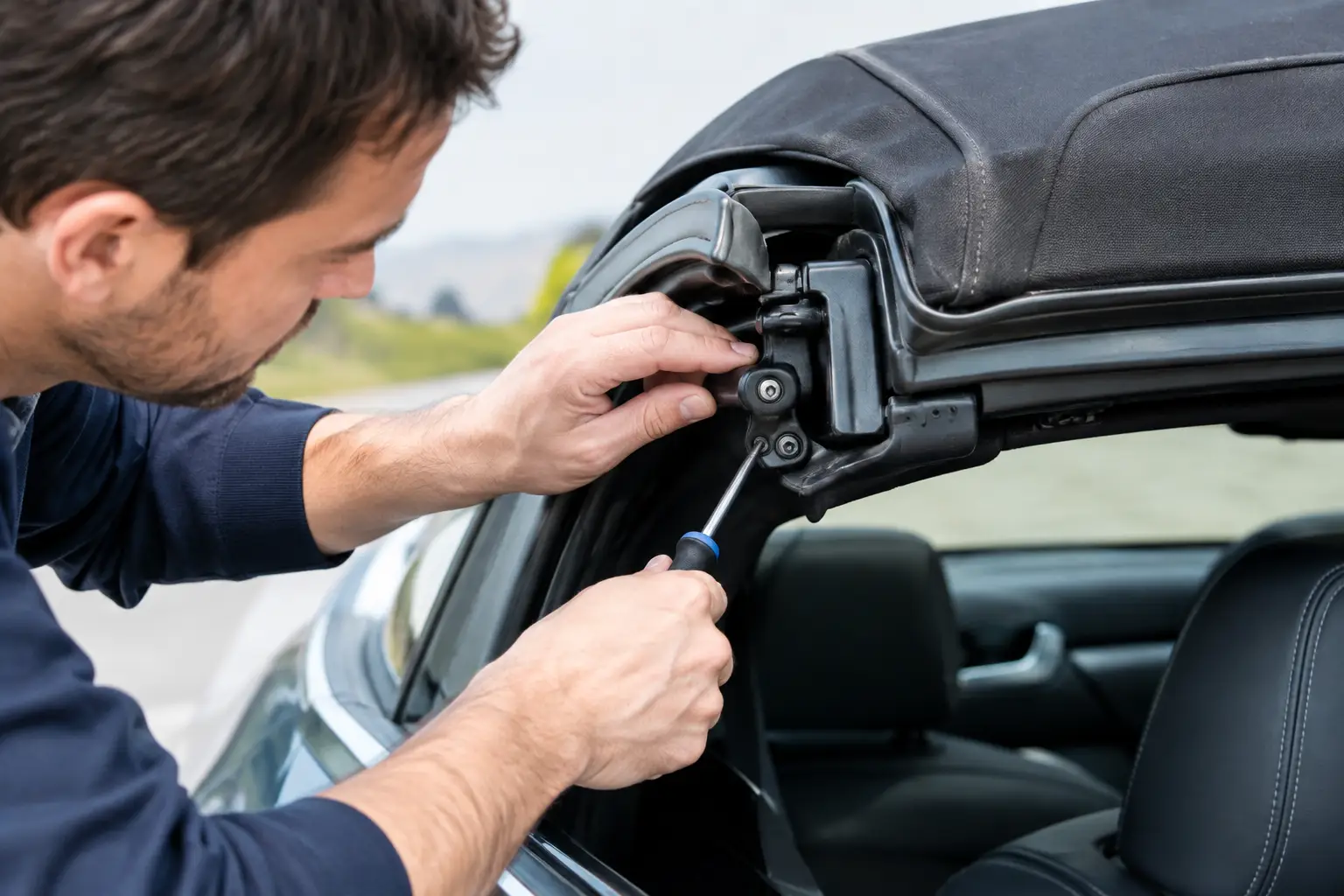
How to Fix a Loose Convertible Roof Latch Safely
A convertible roof should close with a firm, even engagement – not a rattle, a visible gap, or a handle that feels too easy to lock. Knowing how to fix a loose convertible roof latch starts with recognising that the latch is only one part of a carefully aligned roof system. A quick adjustment may seem tempting, but forcing the mechanism can damage the hook, striker plate, seals, roof frame or electric roof motor.
For convertible owners, especially those preserving a premium or older vehicle, the right repair is about restoring secure closure without placing extra strain elsewhere. The cause could be minor, such as loose trim fasteners, or more involved, such as a distorted frame, worn latch components or a roof that no longer sits squarely on the windscreen header.
What a loose convertible roof latch feels like
A loose latch does not always mean the roof will open while driving. More often, it begins as a change in feel: the handle closes with little resistance, the roof needs to be pushed down by hand before it locks, or one side latches before the other. You may also hear wind noise at motorway speeds, notice water marks around the top of the windscreen, or see that the roof-to-glass seal is compressed unevenly.
On electrically operated roofs, the warning signs can be less obvious. The roof may pause during its closing cycle, report a roof fault, or complete the cycle while leaving a small gap at one corner. These symptoms should not be ignored. A latch that is not holding the roof in its intended position allows movement, and movement accelerates wear in the seals, frame joints and latch assembly.
Why convertible roof latches become loose
Convertible latches work under repeated load. Every opening and closing cycle places pressure on the latch hook, release cable or actuator, mounting points, roof frame and windscreen header striker. Over time, small changes in any of these areas can make the latch feel loose.
Normal wear is one cause. The latch hook, striker plate and pivot points can wear gradually, particularly on vehicles that have spent years being opened and closed frequently. A dry or contaminated mechanism may also fail to return cleanly to its proper position.
Alignment is another common cause. Soft tops use tension from the fabric, roof bows and seals to create a weather-tight fit. As fabric relaxes with age, seals flatten, or frame joints develop play, the roof can sit slightly lower or further back than intended. The latch may still catch, but it will not achieve the correct preload.
Previous repairs deserve consideration too. A replacement windscreen, roof fabric installation, accident repair or poorly adjusted latch can alter the relationship between the roof and windscreen frame. This does not necessarily mean the earlier work was poor, but it does mean the roof should be assessed as a complete system rather than adjusted in isolation.
Singapore’s heat, humidity and sudden rain also place demanding conditions on convertible materials. Rubber seals can harden or take a set, while lubrication can dry out or collect dust. Regular inspection is a practical part of protecting the roof, not an unnecessary extra.
Before you try to fix a loose convertible roof latch
Start with a calm visual inspection. With the roof raised but not latched, compare both sides. Check whether the roof meets the windscreen header evenly and whether one latch hook appears to sit higher, lower or further forward than the other. Look for torn rubber seals, loose screws, cracked plastic covers and signs of rubbing around the latch or striker plate.
Then close the roof gently. Do not pull the handle hard to overcome resistance. If the roof needs force to meet the latch, stop and investigate the alignment first. Excessive force can bend a hook, strip a mounting thread or place unnecessary load on an electric roof mechanism.
It is also worth checking the vehicle handbook for the intended closing procedure. Some models require the roof to be fully tensioned before the latch is turned, while others use motors or hydraulic assistance that must complete their cycle before manual locking. Following the correct sequence prevents a simple operating issue from becoming a repair job.
Safe checks you can carry out
A light clean can sometimes improve latch operation. Use a clean cloth to remove dust and old residue around accessible latch surfaces. If the manufacturer specifies a lubricant, apply only a small amount to the approved moving points. Excess grease attracts grime and can transfer onto headlining, fabric or trim.
Check visible mounting screws for obvious looseness, but avoid tightening anything without knowing what it secures. Some fasteners set the latch position rather than merely holding a cover in place. Turning them can change roof alignment immediately.
The same caution applies to striker plates. Many are adjustable, often by only a few millimetres. That small movement can alter closing effort, seal compression and the position of the entire roof edge. If both latches have become loose at the same time, the issue is more likely to be roof position, seal compression or frame adjustment than two identical latch failures.
A useful rule is simple: cleaning, observing and checking for visible damage are sensible owner checks. Adjustment should be deliberate, measured and tested with the roof fully closed.
When adjustment is appropriate
A professional latch adjustment can be the correct repair when the latch itself is sound but no longer meets the striker at the right depth. The aim is not to make the handle feel tighter at any cost. It is to achieve even contact across the windscreen header, balanced tension from left to right and proper compression of the weather seals.
This work is best carried out with the roof fabric, frame geometry and seals assessed first. For example, moving a striker plate may cure a rattle temporarily, but if the underlying issue is a sagging roof bow or compressed front seal, the latch can become overloaded. The result may be a stiff handle, premature wear or a roof that leaks at the corners.
On older convertibles, a specialist may recommend servicing or rebuilding the latch rather than simply repositioning it. Worn bushes, springs, hooks and release cables can often be addressed before a complete latch replacement is necessary. That is usually a better outcome for originality, fit and long-term reliability, where parts availability allows.
Signs the roof needs specialist attention
Arrange an inspection if the roof will not latch without force, releases unexpectedly, leaks after adjustment, or closes unevenly from side to side. A clicking electric mechanism, a roof warning light, loose frame joints or frayed fabric near the front edge also call for more than a basic latch check.
Specialist attention is particularly worthwhile after a windscreen replacement or body repair. The windscreen header and roof latch work as a matched closing point. Even a slight change in glass position, trim fitment or body alignment can affect how the roof locks.
At 8 Cushion, convertible roof work is assessed in-house with attention to the latch, seals, frame, fabric and surrounding trim. This avoids the common mistake of treating a loose latch as a standalone fault when the real cause lies elsewhere. Clear advice on repair, restoration or replacement helps owners make a decision based on the condition of their specific vehicle, not a one-size-fits-all fix.
Protecting the repair after the latch is fixed
Once the latch closes correctly, keep the roof clean and avoid slamming it shut. Operate the roof on level ground where possible, as uneven parking can slightly twist the body and make an already marginal alignment feel worse. Inspect the front seals periodically and clear debris from the roof storage area and drainage paths.
If your car is stored for extended periods, raise and latch the roof occasionally unless the manufacturer advises otherwise. This helps prevent seals from remaining compressed in one position and gives you an opportunity to spot stiffness or misalignment early.
A convertible roof should feel secure, controlled and weather-tight every time it closes. Addressing a loose latch early protects more than the latch itself – it preserves the fit, finish and confidence that make open-top motoring worth owning.
Related posts
What Causes Convertible Top Leaks?
Learn what causes convertible top leaks, from worn seals to blocked drains, and
How to Replace Torn Car Upholstery Properly
Learn how to replace torn car upholstery with sound repair choices, suitable mat
Mercedes Bolster Restoration: Repair or Replace?
Mercedes bolster restoration protects comfort, appearance and value. Learn when