


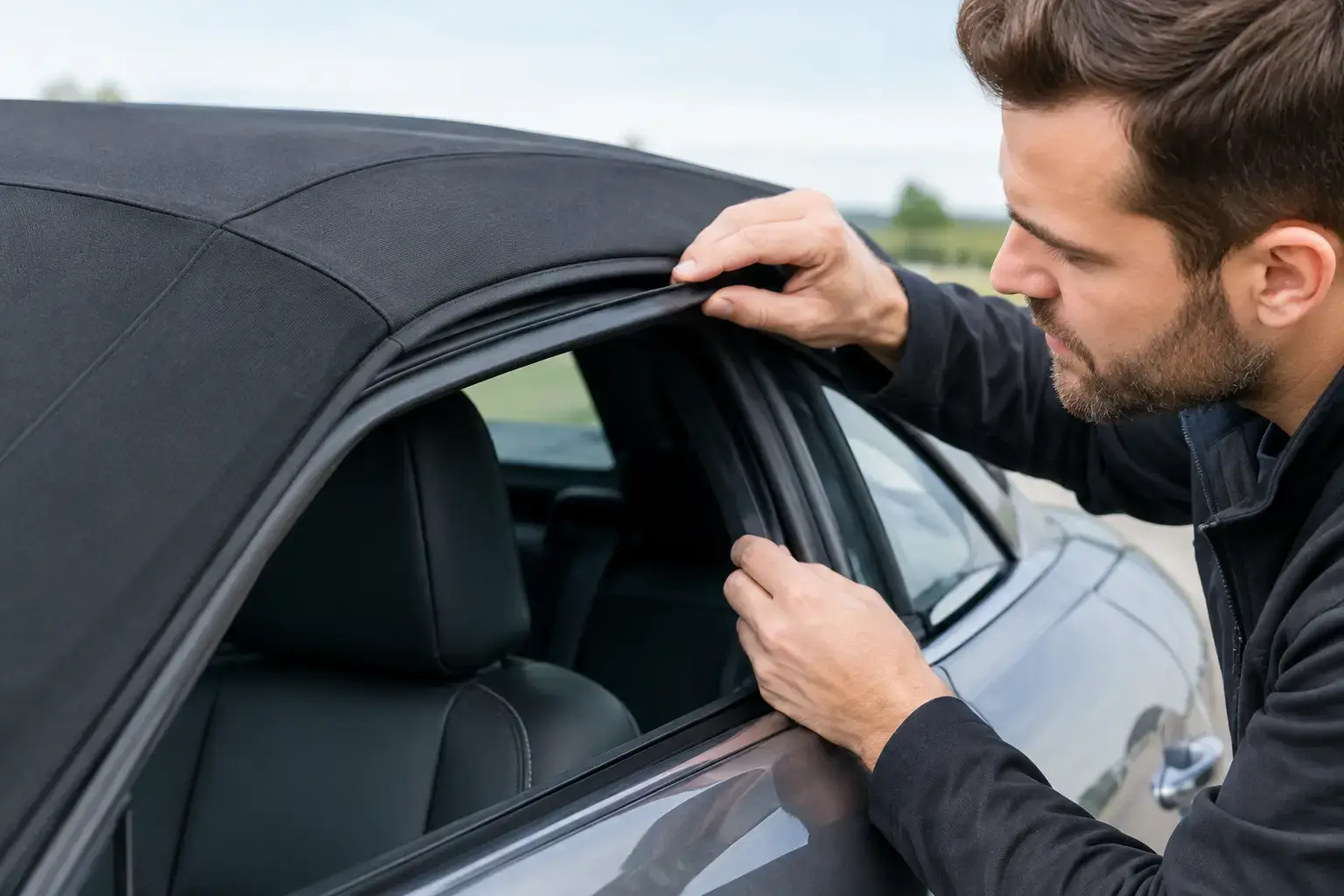
How to Inspect Convertible Roof Seals Properly
A convertible can look perfectly sound with the roof raised, yet a tired seal may already be allowing water, wind noise and heat into the cabin. Knowing how to inspect convertible roof seals gives you a chance to address small faults before they stain the headlining, damage interior trim or turn into a more involved soft-top repair.
Roof seals are not simply strips of rubber. They guide water away from the cabin, cushion moving roof sections, maintain a clean roofline and help the bonnet close under the correct pressure. Their condition matters just as much as the fabric, frame and drainage system around them.
How to Inspect Convertible Roof Seals: Start Clean and Dry
Do not assess seals immediately after washing the car or during heavy rain. Water can disguise surface cracking, while dirt can make a healthy seal look more worn than it is. Park in good daylight, raise and latch the roof fully, then wipe the seals gently with a clean microfibre cloth.
Avoid harsh household cleaners, solvents and oily dressings. These can dry rubber, leave a slippery residue or make it harder to identify defects. A specialist-approved rubber cleaner is the safer choice where a deeper clean is needed.
With the roof closed, inspect the full route of the seals. This usually includes the windscreen header seal, the seals above each side window, the joints around the rear quarter area and the seal where the roof meets the body or boot section. Roof designs vary considerably, so do not assume a seal arrangement is identical across makes or models.
Check the Rubber for Wear, Hardness and Distortion
Start with a close visual inspection. Healthy weather seals should have a consistent profile and sit neatly in their channels. They may show minor surface marks on an older car, but they should not be split, flattened beyond recovery or pulling away at the corners.
Look carefully for cracking along folds and high-contact points. These areas are repeatedly compressed as the roof opens, closes and latches. Small cracks may remain harmless for a time, but a split that reaches the sealing lip can create a direct route for water or wind.
Gently press the rubber with a fingertip. It should feel flexible and return to shape. If it feels unusually hard, sticky, brittle or permanently flattened, it may no longer create enough contact pressure. In Singapore’s heat and humidity, this ageing process can accelerate, particularly for cars parked outdoors.
Pay particular attention to the corners where seals meet. A seal can be intact along its length but shrink or deform at a joint, leaving a small gap that only becomes apparent in rain or at motorway speed. Check that every join is aligned and that no section has curled inward or outward.
Inspect the Contact Marks and Window Alignment
Convertible roof seals need even contact with the glass and roof frame. A useful clue is the contact mark left on the rubber after the roof has been closed for some time. It should be consistent rather than heavily compressed in one short area and untouched in another.
Lower each window slightly, then raise it again with the roof closed. Watch how the glass enters the seal. It should slide into place without catching, folding the rubber or leaving a visible gap. Frameless windows commonly drop a small amount when the door opens and rise again when it closes. If this movement is slow, inaccurate or absent, the glass can press against the wrong part of the seal.
Do not force a window into position by hand. The cause may be an adjustment issue, a tired regulator, a door alignment problem or a distorted seal. Repeatedly shutting the door hard will not solve it and can make the damage worse.
Signs of an uneven fit
A roof seal deserves closer attention if you notice a whistle near one window, a change in wind noise, damp carpeting, misting on the inside of the glass or water marks on the roof lining. These symptoms do not automatically mean the rubber itself has failed. A roof frame, window position or blocked drain can produce similar results.
That distinction matters. Replacing seals without identifying the source of the poor fit can add cost without curing the leak.
Check for Trapped Dirt and Blocked Water Paths
Leaves, grit, old polish and road film often collect in seal channels. Over time, this debris prevents the rubber from sitting correctly and can hold moisture against surrounding trim. Carefully inspect the grooves and channels with the roof open, using a soft brush or cloth to remove loose contamination.
Also look at the drainage areas around the roof mechanism and rear body sections. Most convertibles are designed to direct water into dedicated drains rather than keep every drop away from the roof structure. If these drains block, water may overflow into the cabin or collect near seals that appear to be at fault.
Do not push wire, compressed air at high pressure or sharp tools into drain tubes. They can disconnect a hose, puncture it or force dirt further into the system. If drainage is slow or you can see standing water where it should not be, professional inspection is the sensible next step.
Perform a Controlled Water Test
A water test can reveal faults that a visual inspection misses, but it must be done carefully. Use a gentle flow from a hose rather than a high-pressure jet. High pressure can force water past even a sound seal and create a misleading result.
Work section by section, starting at the windscreen header, then moving along the side windows and rear roof area. Keep the water flow above the seal line, as natural rainfall would. Have someone sit inside the car with a torch and check the roof lining, window edges, pillar trims and footwells for moisture.
If water enters, stop and note the exact location. Water often travels along the inside of a frame before appearing elsewhere, so the point where it drips is not always where it started. Photographing the area and noting the order of the test will help a specialist diagnose the issue efficiently.
Never use a pressure washer to test a convertible roof. It can disturb ageing fabric, force water through drainage paths and cause unnecessary concern over a roof that would remain watertight in normal use.
Know When Cleaning Is Enough and When Repair Is Needed
A clean, supple seal with light surface dirt may only need routine care. A seal that is torn, loose, shrunken, hardened or badly flattened is a different matter. Some sections can be refitted or adjusted if the underlying rubber remains sound. Others need replacement, especially where the profile has lost its shape.
The correct approach depends on the vehicle. Many modern roof seals are model-specific and integrate with trim clips, roof mechanisms or window calibration. Older and restoration vehicles may require careful sourcing, repair of surrounding structure or precise fitting to achieve the original line.
This is why a specialist inspection is valuable when leaks persist. The work should consider the full system: roof fabric or panels, frame alignment, latches, window position, drains, interior trims and seals. Treating only the most visible rubber strip is rarely the disciplined answer.
Build Seal Checks Into Routine Roof Care
Inspect your convertible roof seals every few months, and always after a period of heavy rain, a long outdoor parking spell or an incident where the roof has been forced or caught on an obstruction. A brief check takes little time and helps prevent water damage that may remain hidden beneath carpets and trims.
Keep the roof clean, close it gently and avoid storing the car for long periods with damp seals or a wet roof lining. If the roof operation changes, a window no longer meets its seal cleanly, or a musty smell develops inside the cabin, arrange an assessment before the issue spreads.
At 8 Cushion, convertible work is assessed as a complete system, with the aim of protecting fit, finish and long-term usability rather than masking a leak temporarily. A well-maintained seal should disappear from your thoughts – leaving you to enjoy the car with the roof up or down, whatever the weather brings.
Related posts
What Is Automotive Interior Restoration for Cars?
What is automotive interior restoration? Learn how car repairs renew upholstery,
Can Torn Car Seats Be Repaired?
Can torn car seats be repaired? Yes - depending on the damage, material, and pan
Best Auto Upholstery Repair: What Matters
Looking for the best auto upholstery repair? Learn what separates specialist wor