


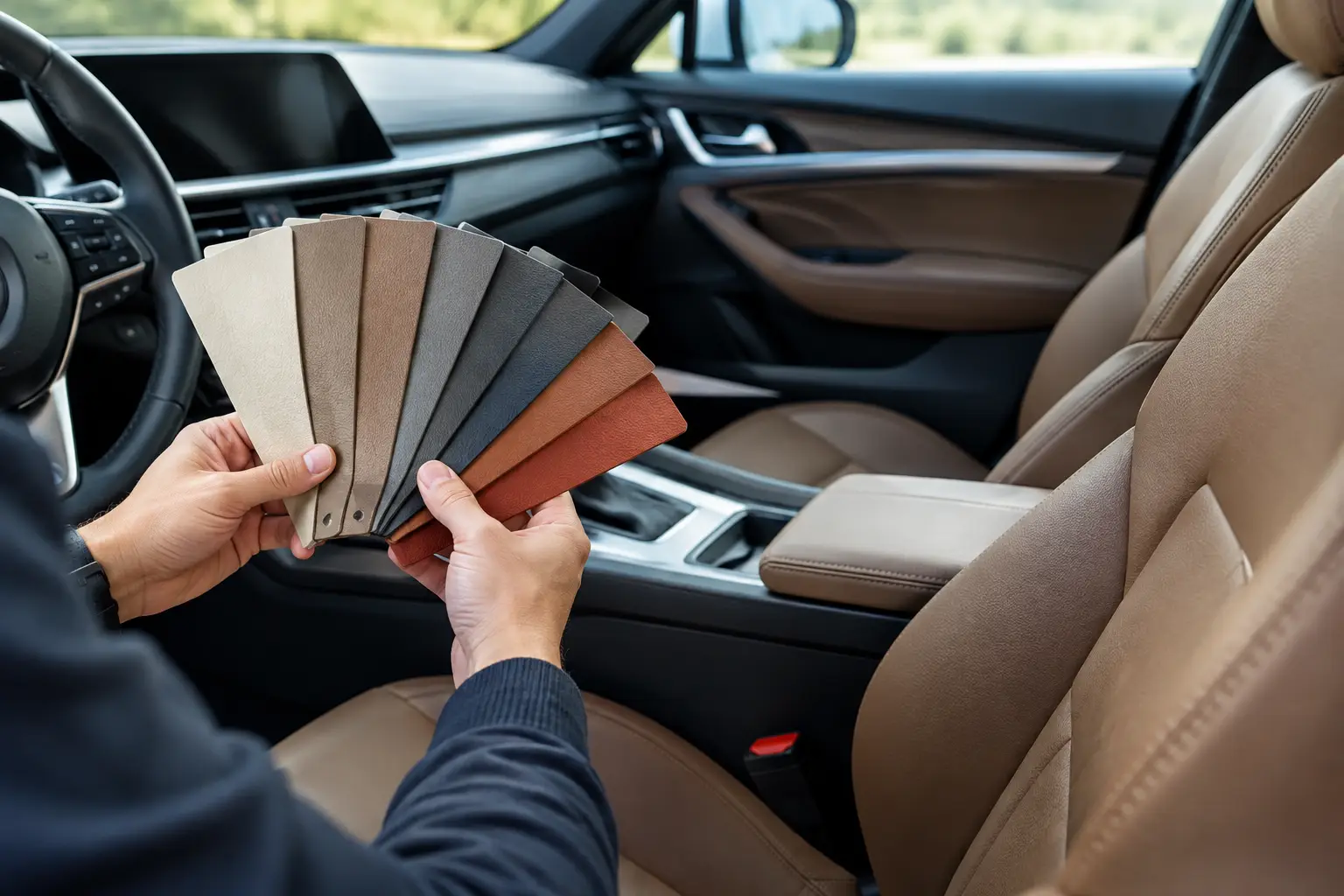
Automotive Interior Colour Matching That Lasts
A worn bolster, faded door insert or repaired dashboard panel can stand out immediately when its colour is even slightly wrong. Automotive interior colour matching is not simply about finding a similar-looking beige, black or grey. It is about restoring a surface so it belongs with the surrounding trim, under daylight and cabin lighting, while retaining the material’s original character.
For owners of premium, ageing and restoration-worthy vehicles, this detail matters. A poor match can make a small repair look more obvious than the original damage. A carefully assessed repair, however, can preserve a well-kept interior, improve daily comfort and support the vehicle’s overall condition without replacing more material than necessary.
Why Interior Colour Matching Is More Than Choosing a Shade
Vehicle interiors are made from materials that age differently. Leather develops a patina through use, vinyl can fade and harden under heat, fabric changes through wear and cleaning, and plastic trim may become dull or chalky. Even two pieces that left the factory in the same colour can look different after years of sunlight, humidity, friction and previous repairs.
This is particularly relevant in Singapore. Strong UV exposure and high cabin temperatures can alter the appearance of seats, door cards, dashboards and convertible interiors more quickly than many owners expect. The shaded side of a car may not even match the side exposed regularly to direct sun.
A correct match therefore considers the current condition of the vehicle, not just the original manufacturer specification. Factory colour references are useful starting points, but they cannot account for the ageing that has already taken place. The goal is usually to blend a repaired section into the interior as it exists today.
Colour alone is only one part of the result. A pale leather repair with too much gloss can look artificial; a dark vinyl repair with a finish that is too flat can appear patchy. Grain pattern, texture and sheen are all visible at close range, especially across broad areas such as seat cushions, dashboard sections and door trims.
Assessing Automotive Interior Colour Matching Properly
The best work begins before any colour is mixed or applied. A specialist needs to identify the material, establish whether it has been dyed or repaired before, and inspect the condition around the damaged area. Surface contamination from conditioners, silicone products, oils or unsuitable cleaners can also affect adhesion and final appearance.
Lighting is equally important. A colour that appears right under workshop lights may reveal a warmer, cooler or darker tone outside. Assessment should take place under more than one light source where possible, because interiors are seen in changing conditions throughout the day.
Shade, grain and sheen must work together
A close shade match can still fail if the surface finish is wrong. Leather often has a soft, low-sheen appearance, while some vinyl trims carry a more consistent satin finish. Hard plastics may need a different treatment again. Matching all three elements – shade, grain and sheen – is what helps a repair disappear into the surrounding material rather than announcing itself.
Grain is particularly significant on seats and door cards. Where a damaged section has been filled, patched or replaced, the texture must be handled carefully. Applying colour over an incorrect or flattened surface may hide the damage briefly, but it will not produce a convincing restoration.
The size and location of the repair also influence the approach. A small scuff on an outer seat bolster may be blended locally. A large faded panel, by contrast, may require refinishing across a wider area to avoid a visible transition. There is no responsible one-size-fits-all answer.
Repair, Recolour or Replace?
Owners often ask whether a damaged interior part should be repaired, recoloured or replaced. The answer depends on structural condition as much as appearance.
A minor scuff, surface abrasion or colour loss can often be repaired and refinished when the underlying material remains sound. This is usually the most preservation-minded option, retaining the original upholstery and avoiding unnecessary replacement. It can also be more economical than replacing a complete seat cover or door trim.
However, colour work cannot solve every problem. Leather that has become brittle and cracked throughout, foam that has collapsed, fabric that has torn extensively or vinyl that has shrunk may need more substantial restoration. Covering severe deterioration with surface colour may make it look better initially, but it does not restore strength or comfort.
Replacement can be the correct decision where a component is beyond repair, provided the new material is selected carefully. The challenge is that new upholstery may look cleaner or brighter than adjacent original sections. In these cases, matching the replacement material and considering the condition of surrounding trim are essential to prevent one renewed section from looking out of place.
A disciplined workshop will explain this trade-off clearly. The least expensive short-term option is not always the best value, particularly on a vehicle you intend to keep, enjoy or sell in good condition.
What a Controlled Matching Process Looks Like
Quality automotive interior colour matching relies on preparation and process control. Rushing from damage assessment straight to colour application is where inconsistent results begin.
First, the affected surface is cleaned and prepared to remove ingrained contaminants and unstable previous coatings. Damage such as scuffs, splits or worn edges is addressed before refinishing starts. If the substrate is not stable, the new finish will have little chance of lasting.
Next comes colour formulation and testing. A technician may adjust tone gradually to account for fading, warmth, depth and the surrounding material. Test applications are valuable because colour can shift once applied and dried on the actual surface. It is better to refine the match at this stage than to commit a large section to an approximation.
The finish is then built in controlled layers, with attention to even coverage and the correct sheen. Depending on the material and repair area, colour may need to be blended beyond the immediate damage so there is no sharp edge between old and renewed surfaces. Proper curing matters as well. A finish that is handled too soon may mark, wear prematurely or lose consistency.
At 8 Cushion, this type of work benefits from an in-house approach. The assessment, material handling and restoration process remain under one workshop’s control, giving owners a clearer point of accountability from consultation through to final inspection. There is no need for assumptions to pass between unrelated parties.
Common Mistakes That Make Repairs Obvious
The most visible interior repairs are often caused by shortcuts rather than difficult damage. Using a generic off-the-shelf dye without testing can leave a noticeable colour difference. Applying too much coating can fill the grain and create an unnatural, painted appearance. Skipping preparation may result in poor adhesion, particularly on high-contact areas such as seat bolsters and steering wheels.
Over-conditioning can be another issue. Some products leave residues that attract dirt or interfere with future repairs. Others add shine to materials designed to look matte, making an otherwise good colour match appear incorrect.
Owners should also be cautious about treating all interior surfaces as the same. Leather, synthetic leather, vinyl, fabric and plastic each require appropriate materials and methods. A product suited to one surface may discolour, stiffen or damage another.
Protecting the Match After Restoration
A repaired or refinished interior should be maintained with restraint. Regular gentle cleaning removes oils, dust and dye transfer before they become embedded. Avoid harsh household chemicals, strong solvents and heavily fragranced products that leave a glossy residue. For leather, use products suited to automotive hides and follow the recommended frequency rather than applying conditioner whenever the surface looks dry.
Sun protection also makes a practical difference. Parking under cover where possible, using a sunshade and keeping windows closed during prolonged exposure can reduce heat build-up and slow uneven fading. Convertible owners should pay particular attention to surfaces that receive direct sunlight when the roof is down.
If you notice new wear, staining or a small scuff, address it early. Localised damage is generally easier to restore before it spreads into cracking, peeling or loss of material. The aim is not to make an older interior look unnaturally new. It is to keep its original materials, colour balance and character in good order for the years ahead.
Related posts
Car Windscreen Replacement Complete Guide
Car windscreen replacement complete guide for Singapore drivers - costs, timing,
What Causes Convertible Top Shrinkage Over Time?
Learn what causes convertible top shrinkage, how heat, age and poor care affect

How to Fix Sagging Car Headliner Properly
Learn how to fix sagging car headliner issues properly, when DIY works, what cau