


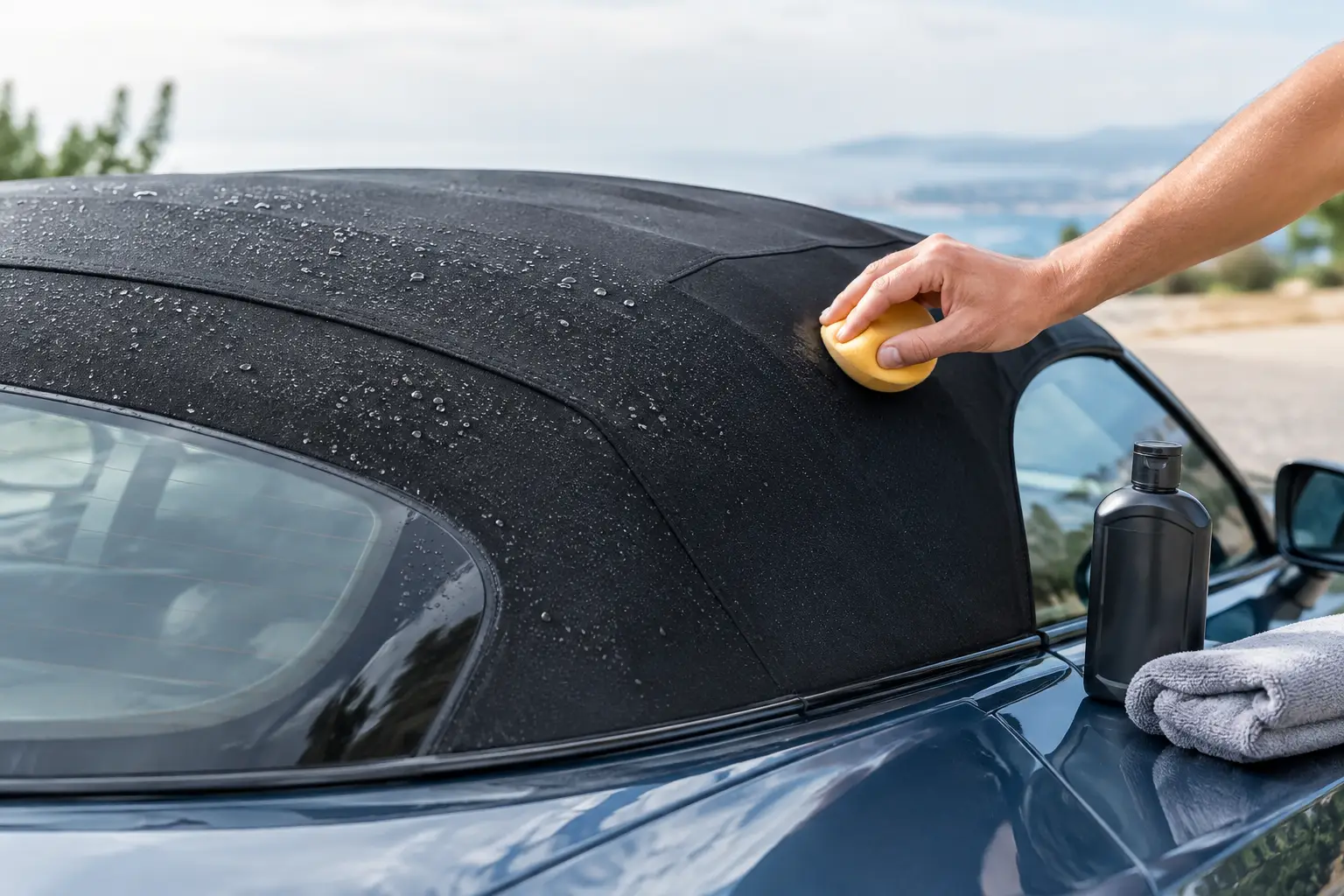
Soft Top Waterproofing Treatment Guide for Cars
A convertible roof can look clean after a wash yet still be absorbing water. The first warning is usually darker patches after rain, water beading that disappears quickly, or a damp smell inside the cabin. This soft top waterproofing treatment guide explains how to restore water repellency properly, without damaging the fabric or mistaking a coating problem for a roof fault.
Waterproofing is preventative maintenance, not a substitute for repair. A treatment can help rain run off the outer surface, reduce water uptake and make routine cleaning easier. It cannot seal torn stitching, shrinkage, perished rubber seals, blocked drains or a damaged inner membrane. Getting that distinction right protects both the roof and your budget.
What a waterproofing treatment actually does
Most modern fabric convertible tops are made from layered material. The visible outer cloth provides appearance and weather resistance, while inner layers contribute to insulation and water protection. Over time, sunlight, heat, road grime, tree residue and repeated washing wear down the outer water-repellent finish.
A suitable treatment refreshes that surface protection. Water should form rounded beads and roll away rather than soaking into the cloth. This matters in Singapore’s heavy rain and humidity, where a wet roof can remain damp for longer than expected. It also helps reduce the conditions that encourage staining and mildew.
However, strong beading alone does not prove the whole roof is sound. Water may still enter through seams, around the side windows, at the header seal or through blocked drainage channels. If the cabin is wet, the cause needs to be inspected rather than simply covered with more spray.
Start with the correct roof material
There is no one treatment suitable for every convertible. Fabric roofs, vinyl roofs and older restoration materials require different products and cleaning methods. Applying a fabric protector to vinyl may leave an uneven finish or offer limited benefit. Using a harsh cleaner on canvas can strip colour, weaken fibres or create marks that cannot be reversed.
Check the vehicle handbook where available, but do not rely on generic product descriptions alone. The roof’s age, previous repairs, colour and condition all affect the right approach. A black, well-maintained modern fabric top may tolerate routine cleaning and reproofing well. A faded or delicate older roof may need a more cautious process, including a small test area before any full application.
For premium, ageing or restoration-worthy vehicles, independent specialist advice is often more valuable than a quick off-the-shelf solution. The objective is not merely to make the roof bead for a few weeks. It is to preserve the material, finish and fit for the long term.
Preparation decides the result
Waterproofing over dirt is one of the most common mistakes. Dust, traffic film, algae and old dressing products prevent the treatment from bonding evenly. The result can be patchy water repellency, visible tide marks or a roof that looks worse once it dries.
Begin by parking the car in a shaded, well-ventilated area. The roof should be cool to the touch. Avoid treatment in direct sun, just before rain, or in very windy conditions, as these can cause the product to dry too quickly or land unevenly on paintwork and glass.
Brush away loose debris with a soft brush, working gently along the fabric rather than aggressively across it. Use a dedicated convertible-top cleaner and a soft applicator or brush. Do not use washing-up liquid, household degreasers, strong wheel cleaners or stiff brushes. They may seem effective at first, but can remove protective coatings and leave the roof vulnerable.
Rinse thoroughly with clean water at low pressure. High-pressure water directed at seams, window edges and fabric joins can force water where it does not belong. Pay attention to the lower edges of the roof and the drainage areas around the rear deck, where dirt tends to collect.
Allow the roof to dry completely before applying any protector. This is non-negotiable. Moisture trapped in the material can dilute the treatment, prevent proper adhesion and promote mildew beneath the surface. Depending on weather conditions, a genuinely dry roof may require several hours or overnight shelter.
Applying a soft top waterproofing treatment
Read the treatment manufacturer’s instructions before starting. Coverage rates, drying times and recommended coats vary. More product is not automatically better. Over-application can leave a stiff texture, streaking or residue on surrounding trim.
Mask or protect painted panels, glass and rubber seals if the product instructions recommend it. Some treatments can leave marks on glass or affect the appearance of matte trim. Keep a clean microfibre cloth nearby to wipe accidental overspray immediately.
Apply the treatment in thin, even passes. Work systematically from one side of the roof to the other, including the seams and curved areas around the rear window, but do not saturate the material. The aim is consistent coverage, not a visibly wet coating. If a second coat is advised, allow the first to flash off or dry for the stated time before proceeding.
Once applied, leave the roof undisturbed for its full curing period. Do not lower the roof, wash the car or expose it to rain before the coating has cured. Folding a damp or uncured roof can transfer product to the inner lining, create crease marks and compromise the finish.
After curing, test the result with a light mist of clean water. Beading should be relatively even across the roof. If one area absorbs water markedly faster than the rest, it may need a further light application, provided the product permits it. Persistent local absorption can also indicate contamination, worn fabric or an earlier repair that requires professional assessment.
How often should a convertible roof be treated?
For a car kept outdoors in Singapore, inspect water repellency every few months and expect to reapply protection roughly once or twice a year. The correct interval depends on how the vehicle is stored, how often it is driven, the amount of rainfall and sun exposure, and the cleaning products used.
A garaged weekend car may hold its treatment longer than a daily-driven convertible parked outside. Conversely, frequent washing with unsuitable shampoo can strip a fresh treatment surprisingly quickly. Treat the roof according to condition, not a fixed calendar alone.
Signs that it is time to clean and reproof include water soaking in rather than beading, visible dullness after washing, increased dirt retention, or prolonged damp patches after rain. Do not wait for leaks before acting. By that point, the issue may involve more than the outer fabric finish.
When waterproofing is not the answer
A treatment will not correct physical defects. If water enters the cabin, inspect for split seams, torn fabric, loose stitching, hardened or flattened seals, misaligned windows, damaged rear-window bonding and blocked drains. Convertible roof mechanisms also need to close evenly. A roof that sits under tension on one side can create gaps that no coating will solve.
Musty odours, recurring condensation or damp carpets deserve prompt attention. Moisture can affect roof linings, electrical components, trim boards and upholstery before the visible source becomes obvious. Drying the cabin and identifying the entry point matters more than masking the symptom.
At 8 Cushion, convertible-top work is assessed as a complete system: material condition, seams, seals, roof operation and interior evidence of water ingress. This avoids the common cycle of applying another treatment when the actual problem is mechanical or structural.
Good habits between treatments
Keep the roof clear of leaves, bird droppings and tree sap, particularly around gutters and drainage points. Clean contaminants promptly using methods suitable for convertible fabric. When washing the vehicle, avoid polishing compounds, tyre dressing and waxes that can migrate onto the roof and stain it.
Lower the roof only when it is clean and fully dry. Folding damp fabric into storage creates an ideal environment for mildew and can leave permanent crease lines. If the car will be unused for an extended period, store it under cover where possible, with the roof raised and correctly latched.
A well-applied waterproofing treatment is a small part of proper convertible ownership, but it has a meaningful effect on appearance and preservation. Give the roof the same disciplined care you would give paintwork or leather, and investigate any change in water behaviour before a minor maintenance job becomes a repair.
Related posts
How Long Does Upholstery Repair Take for Cars?
How long does upholstery repair take? Learn what affects car repair times, from
Mercedes Bolster Restoration: Repair or Replace?
Mercedes bolster restoration protects comfort, appearance and value. Learn when
7 Signs Your Convertible Roof Needs Replacement
Learn the signs your convertible roof needs replacement, from leaks and noise to