


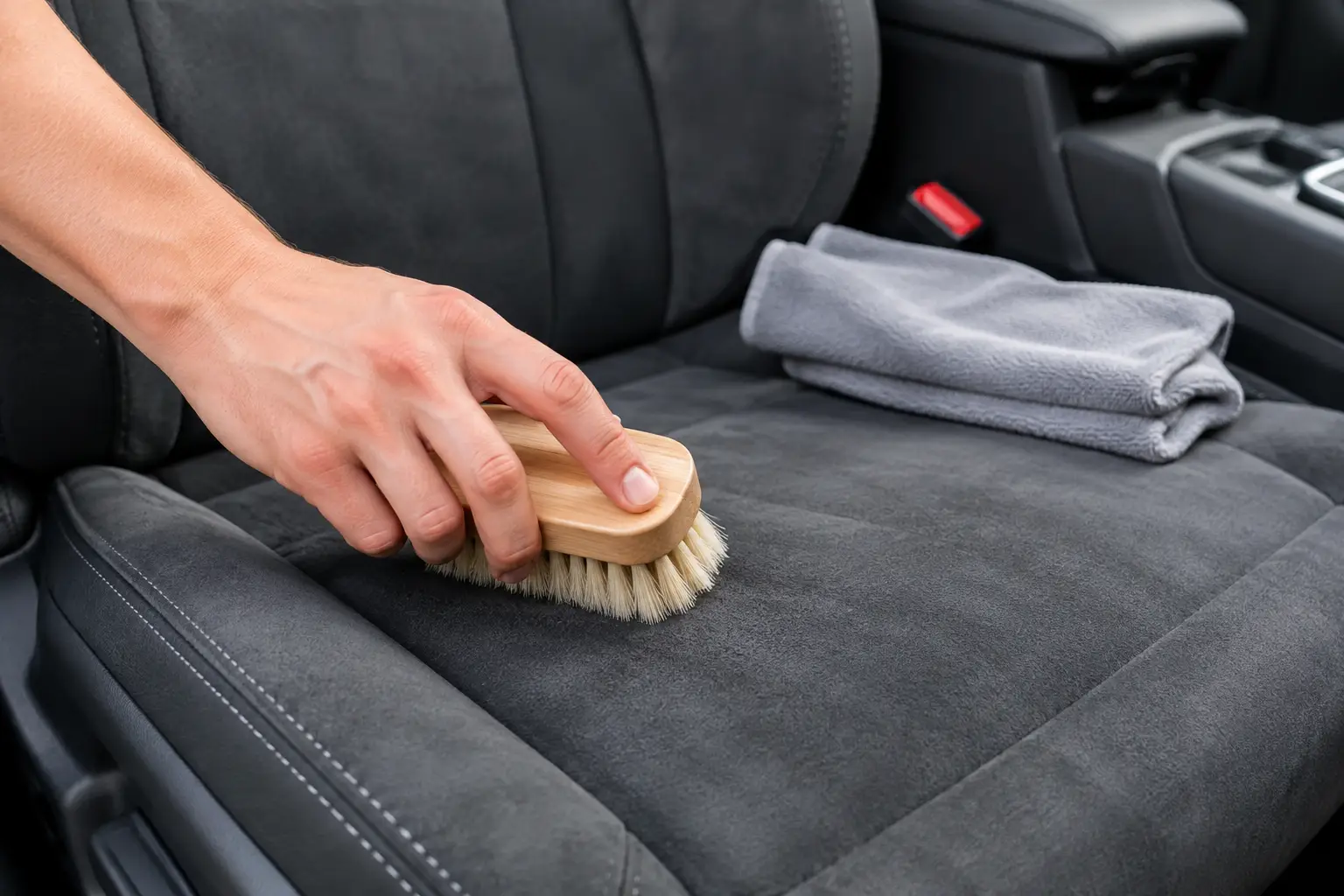
How to Clean Suede Car Upholstery Safely
A dark patch on a suede seat can look alarming, particularly in a premium or older car where the original trim is part of its character. The instinct is often to reach for an all-purpose interior cleaner and scrub until the mark disappears. That is precisely how permanent water rings, flattened fibres and faded areas begin. To clean suede car upholstery safely, use as little moisture and friction as possible, and first make sure the material is actually suede.
Start by identifying the material
True automotive suede is less common than many owners assume. It may be used on seat centres, door inserts, steering wheels or headlinings in certain performance, luxury and classic vehicles. It has a natural, irregular nap and will change shade when brushed in different directions.
Many modern cars instead use synthetic suede, often sold under brand names such as Alcantara. It has a more uniform feel and is generally more tolerant of careful cleaning, but it can still become matted or develop tide marks if it is soaked. Some trims are simply brushed fabric designed to resemble suede. The right method depends on what is fitted.
If you are unsure, check the vehicle handbook or ask a trim specialist before applying any product. A small test in a concealed area, such as beneath the seat cushion or at the lower edge of a door insert, is sensible. This is not unnecessary caution. Different dyes, backing materials and previous repairs can all react differently to moisture.
What makes suede difficult to clean
Suede has an open, raised surface. It traps dust, skin oils, food residue and dye transfer more readily than smooth leather, while also showing disturbances in the pile. Rubbing one isolated spot too hard can leave a clean-looking circle surrounded by a darker, flattened area.
Water is not automatically harmful, but excess water is a problem. It can carry dirt into the material, leave a ring as it dries, affect adhesives beneath the trim and create an uneven texture. Heat adds another risk. A hairdryer, heater or direct sunlight may dry the surface quickly while making the nap stiff or causing the colour to shift.
The safest approach is controlled and gradual. Remove dry contamination first, treat only what remains, then allow the material to dry naturally.
Gather gentle, clean tools
For routine care, you need a soft vacuum brush attachment, a clean white microfibre cloth, a suede brush or soft upholstery brush, and a small amount of distilled water if a damp clean is required. A dedicated suede or upholstery cleaner may be appropriate, provided it is suitable for automotive use and tested first.
Avoid coloured cloths, household washing-up liquid, leather conditioners, strong degreasers, disinfectant sprays and wet wipes. They can transfer colour, leave residue or alter the surface finish. Steam cleaners are also a poor choice for suede and synthetic suede trim. Their heat and moisture are difficult to control around stitched seams, foam and bonded panels.
Clean suede car upholstery safely, step by step
Remove loose dust before treating a mark
Vacuum the area gently using a soft brush attachment. Do not press the nozzle directly into the fabric or drag it aggressively across the surface. Work with light passes in more than one direction to lift dust from the nap.
Next, use a suede brush with very light pressure. Brush a whole panel rather than only the stained point, following one consistent direction at the end. This helps restore an even appearance and prevents a visibly groomed patch against an untouched seat.
Blot spills immediately
For a fresh spill, blot rather than wipe. Place a clean, dry white microfibre cloth over the liquid and lift it away repeatedly. Start at the outer edge and work towards the centre so the spill does not spread.
If the mark is oily, such as sunscreen, takeaway food or grease, do not add water straight away. Blot first and allow the area to settle. An unsuitable cleaner can spread oil deeper into the fibres. At this stage, professional assessment is often the more economical decision, especially on light-coloured trim or a seat with perforations and contrast stitching.
Use minimal moisture for water-based marks
For a small dried mark that appears water-based, lightly dampen a white microfibre cloth with distilled water. The cloth should feel barely moist, not wet enough to drip. Dab the affected area gently, extending slightly beyond the mark to reduce the chance of a hard edge forming.
Do not saturate the seat. Do not pour cleaner directly onto the upholstery. A controlled amount on the cloth lets you judge the change as you work. If the mark is lifting, continue with patient dabbing. If it is spreading, darkening or changing texture, stop and let the area dry before deciding on the next step.
Once dry, brush the panel lightly to revive the nap. Drying should happen naturally with the car ventilated. Leave windows slightly open where safe, or park in a shaded, airy location. Avoid sitting on the seat until it is completely dry, as pressure can flatten damp fibres.
Treat general soiling across the full section
A driver’s seat bolster, armrest insert or steering wheel may become generally darkened through regular contact rather than a single spill. Spot cleaning only the darkest part can create uneven colour. In this situation, clean the entire suede section with a suitable low-moisture product, applied sparingly to a cloth or soft brush rather than directly to the trim.
Work in small areas with gentle, overlapping motions. Lift residue with a second clean, dry cloth, then allow the whole section to dry evenly. The trade-off is simple: a full-panel clean takes longer, but it gives a more consistent result than repeatedly attacking one dark patch.
Stains that need a specialist approach
Some contamination is not suitable for home treatment. Ink, dye transfer from dark denim, oil, cosmetics, pet accidents, mould, adhesive residue and unknown chemical spills can require a material-specific process. So can old stains that have already been treated with household products.
Be particularly careful with headlinings. Suede-effect roof linings are often bonded to foam-backed boards. Too much liquid can weaken the adhesive, leading to sagging that cannot be corrected by cleaning alone. Convertible interiors also need added care, as moisture can reach seams, mechanisms and weather-sensitive trim.
A specialist can assess whether a panel needs cleaning, colour correction, retrimming or replacement. That distinction matters. Trying to save heavily worn suede with repeated cleaning may remove surface contamination but will not restore fibres that have been abraded away.
Prevention protects the finish
Regular light vacuuming is more effective than occasional deep cleaning. Remove grit before it is ground into the material, and deal with spills while they are fresh. If you wear dark new denim, be aware that dye transfer is common on pale suede and synthetic suede seats. Clean, dry hands also make a difference on steering wheels and gear gaiters.
For vehicles stored for long periods, keep the cabin dry and ventilated. Avoid leaving damp towels, gym clothes or umbrellas inside. Humidity encourages odours and can contribute to mould, particularly in cars with ageing seals, convertible tops or water ingress.
At 8 Cushion, trim work is assessed as a whole system: the visible material, its backing, seams, foam and the condition of surrounding panels. That disciplined approach avoids cosmetic fixes that create bigger problems later.
When suede upholstery is valuable, original or already showing wear, restraint is often the best form of care. A gentle clean can preserve it; an aggressive one can turn a manageable mark into a restoration job.
Related posts
Car Seat Bolster Repair That Lasts
Car seat bolster repair restores comfort, support and appearance. Learn when rep
Water Damaged Car Interior Repair Guide
Water damaged car interior repair starts with fast action. Learn what can be sav
Door Panel Restoration Guide for Lasting Results
A practical door panel restoration guide for assessing wear, choosing proper mat