


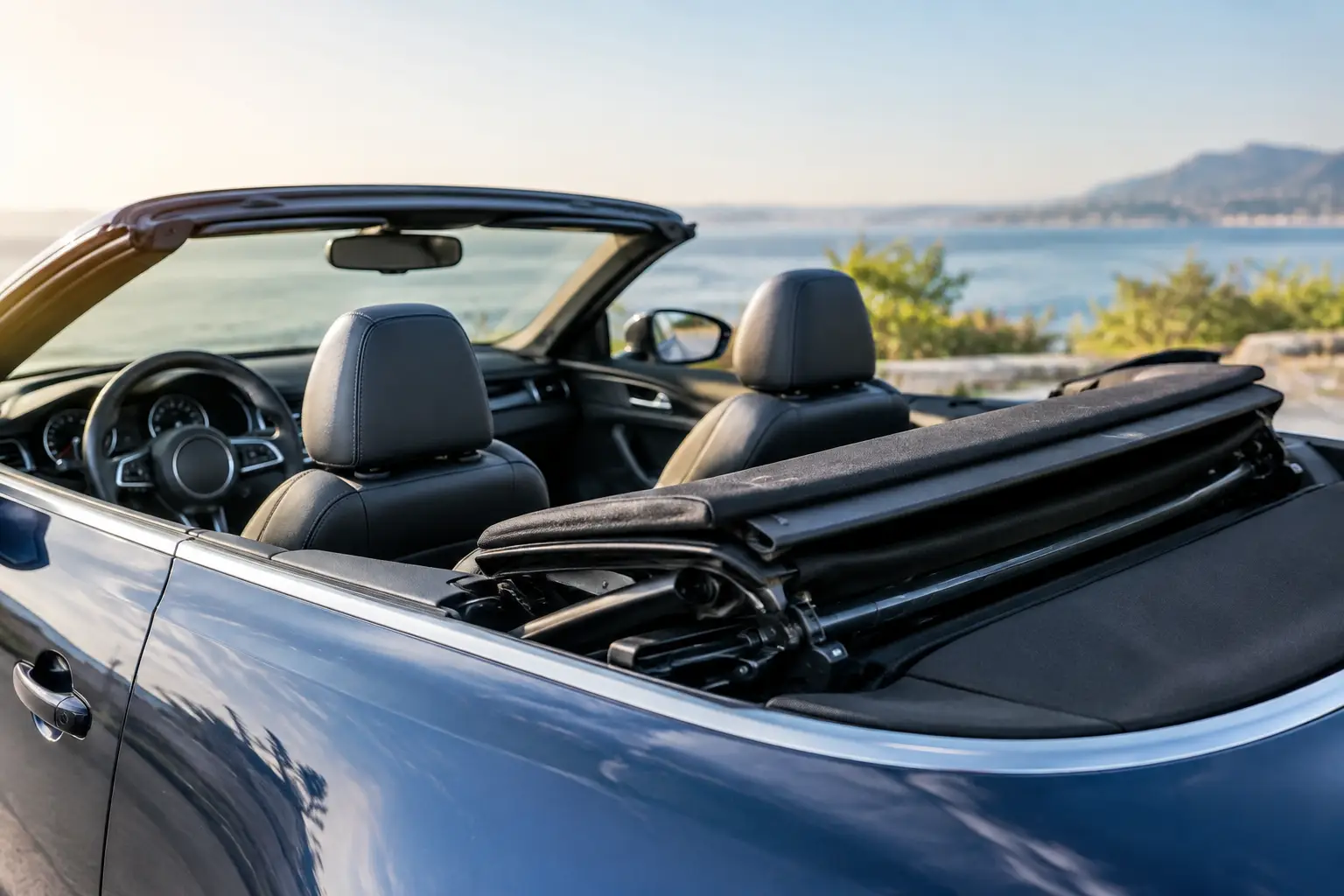
Convertible Roof Lifespan and What Affects It
A convertible roof can look perfectly presentable when it is parked, yet show its real condition the first time heavy rain arrives or the mechanism is asked to operate. Convertible roof lifespan is not decided by age alone. The material, storage conditions, cleaning habits, drainage system and previous repair work all play a part.
For Singapore owners, heat, humidity and sudden downpours add further pressure. A well-made soft top can provide many years of reliable use, but only when its fabric, seals, frame and moving components are treated as one working system. Addressing early wear is usually more cost-effective, and far less disruptive, than waiting for a roof to fail completely.
How Long Should a Convertible Roof Last?
There is no single mileage or calendar date at which every convertible roof needs replacement. As a broad guide, a quality fabric soft top may last around 10 to 15 years with regular care and sensible parking habits. In a harsher climate, or on a car that lives outdoors every day, visible deterioration can begin earlier. Vinyl roofs may have a similar service life, although they can become brittle or shrink as they age.
The roof fabric is only one part of the equation. Rubber weather seals can harden, stitching can weaken, rear windows can haze or separate, and drain channels can become blocked. Electric motors, cables, hydraulic lines and latches also require attention on power-operated roofs. A roof may therefore be structurally sound but leak through tired seals, or look worn while the operating mechanism remains in excellent order.
Retractable hardtops follow a different pattern. Their painted panels can last as long as the car, but the seals, linkages, microswitches and drainage paths still age. Repairing a hardtop mechanism can be more involved because access is limited and correct alignment is critical. The key point is that a convertible roof should be assessed as an assembly, not judged from the outer surface alone.
What Reduces Convertible Roof Lifespan?
Singapore’s climate is demanding on automotive trim. Constant ultraviolet exposure dries protective coatings and fades dark fabrics. Heat expands materials, while humidity encourages mildew where moisture is trapped. A short, intense rainstorm can then expose a blocked drain or compressed seal that has gone unnoticed during dry weather.
Parking arrangements matter more than many owners expect. A car kept under cover, cleaned appropriately and allowed to dry properly will generally retain its roof for longer than one exposed to sun, tree sap and standing water every day. A car cover can help only if it is clean, breathable and fitted correctly. A damp or abrasive cover can mark the roof and hold moisture against it.
Incorrect cleaning is another avoidable cause of damage. Strong household detergents, harsh brushes and silicone-based dressings can strip water repellency, roughen fabric fibres or leave residues that attract dirt. Pressure washing too close to seams, windows or seals can force water into places it should not reach. The roof should be cleaned with products suited to its specific material, using measured pressure and a soft brush where necessary.
Repeatedly operating the roof when the fabric is dirty, wet or obstructed also takes its toll. Grit caught around hinges and rub points acts like an abrasive. Folding a wet roof and leaving it closed for extended periods can encourage odour and mildew. The roof does not need to be kept permanently raised, but it should be dry and free from debris before it is stowed.
Warning Signs That Need Attention
A convertible top rarely fails without giving some indication first. The following signs justify a specialist inspection before a small issue becomes a replacement-level job:
- Water marks on the headlining, damp carpets or a musty smell after rain.
- Frayed stitching, lifting seams, pinholes or fabric that is thinning at fold lines.
- Cracks, clouding, scratches or separation around a plastic or glass rear window.
- A roof that moves slowly, stops partway, makes unusual noises or needs help to latch.
- Wind noise that has become noticeably worse, particularly around the front header rail or side windows.
Leaks deserve prompt investigation. Water may enter at the roof, but it can also travel through a blocked drain, worn window seal or misaligned glass before appearing inside the cabin. Simply applying sealant at the visible wet area can hide the symptom without correcting the cause. Proper diagnosis involves checking water paths, seals, frame alignment and the condition of the surrounding trim.
Maintenance That Extends Service Life
Regular inspection is more useful than occasional emergency repair. At washing time, look closely at seams, edges and the points where the roof folds. Remove leaves and debris from accessible channels, and make sure water is not pooling around the rear deck or side drains. If there is uncertainty about where a drain exits, do not probe deeply with wire or sharp tools. It is easy to dislodge a hose or damage a fitting that is not visible.
Fabric roofs benefit from periodic cleaning and reproofing with material-appropriate products. Reproofing does not repair torn fabric or failed seams, but it helps water bead and reduces the amount of moisture absorbed by the outer layer. Rubber seals should be cleaned gently and checked for flattening, splits and loss of elasticity. Treatments should be chosen carefully, as the wrong product can create staining or interfere with paint and glass.
Mechanical operation needs equal discipline. Open and close the roof on level ground where possible, with the vehicle stationary and the luggage area correctly arranged. Many mechanisms rely on clear stowage space and precise sequence control. Forcing a reluctant roof can damage cables, latches or frame joints that would otherwise have needed only adjustment or servicing.
For vehicles used infrequently, operate the roof periodically rather than leaving it untouched for months. This helps reveal developing faults while they are still manageable. However, do not operate a roof with a weak battery. Low voltage can interrupt the sequence and leave the roof partly open, which may complicate the reset procedure.
Repair or Replacement: Making the Right Call
Replacement is not always the honest answer. Localised seam work, rear window repairs, seal replacement, drainage cleaning and mechanism adjustments can extend usable life where the core fabric and frame remain sound. These repairs make particular sense on a newer top with isolated damage, or on a restoration vehicle where retaining original components has value.
A full replacement becomes more sensible when fabric has degraded across multiple panels, stitching is failing in several areas, the roof has shrunk out of alignment, or repeated patch repairs would compromise appearance and weather protection. The same applies where previous poor-quality work has distorted the fit. A convertible top must be tensioned and aligned correctly to seal against the windscreen frame and side glass. A cheap cover fitted without care can create wind noise, water ingress and premature wear from the outset.
Material selection should suit the vehicle and its use. Some owners prioritise an original-style finish for a classic car; others need modern durability for a daily-driven vehicle. Colour, grain, insulation, window specification and rooflining condition all affect the finished result. Independent advice matters because the best option is not automatically the most expensive one.
Why Specialist Workmanship Matters
Convertible roof work combines trim craftsmanship with mechanical accuracy. The roof must be removed without damaging surrounding panels and interior finishes, while the frame, seals and operational system need to be inspected before a new cover is installed. Good material cannot compensate for poor preparation, incorrect tension or skipped drainage checks.
At 8 Cushion, convertible roof work is handled in-house so the condition of the vehicle, material choice and fitting process remain under direct workshop control. That allows the work scope to be explained clearly before repair or replacement begins, without unnecessary middleman mark-ups or uncertainty over who is responsible for the finished result.
If your roof has begun to leak, fade, bind or lose its shape, arrange an assessment while the issue is still contained. Timely, properly specified work protects cabin comfort, preserves the car’s appearance and lets you enjoy open-top driving with greater peace of mind.
Related posts

Inside The Car Was Her Special Place
The little girl always loved going out, sitting in her father’s car as he drov
How to Find Convertible Replacement Tops Near Me
Looking for convertible replacement tops near me? Learn what to check, what affe
Automotive Upholstery Services That Last
Automotive upholstery services restore comfort, value and finish when handled in