


What Is Automotive Interior Restoration for Cars?
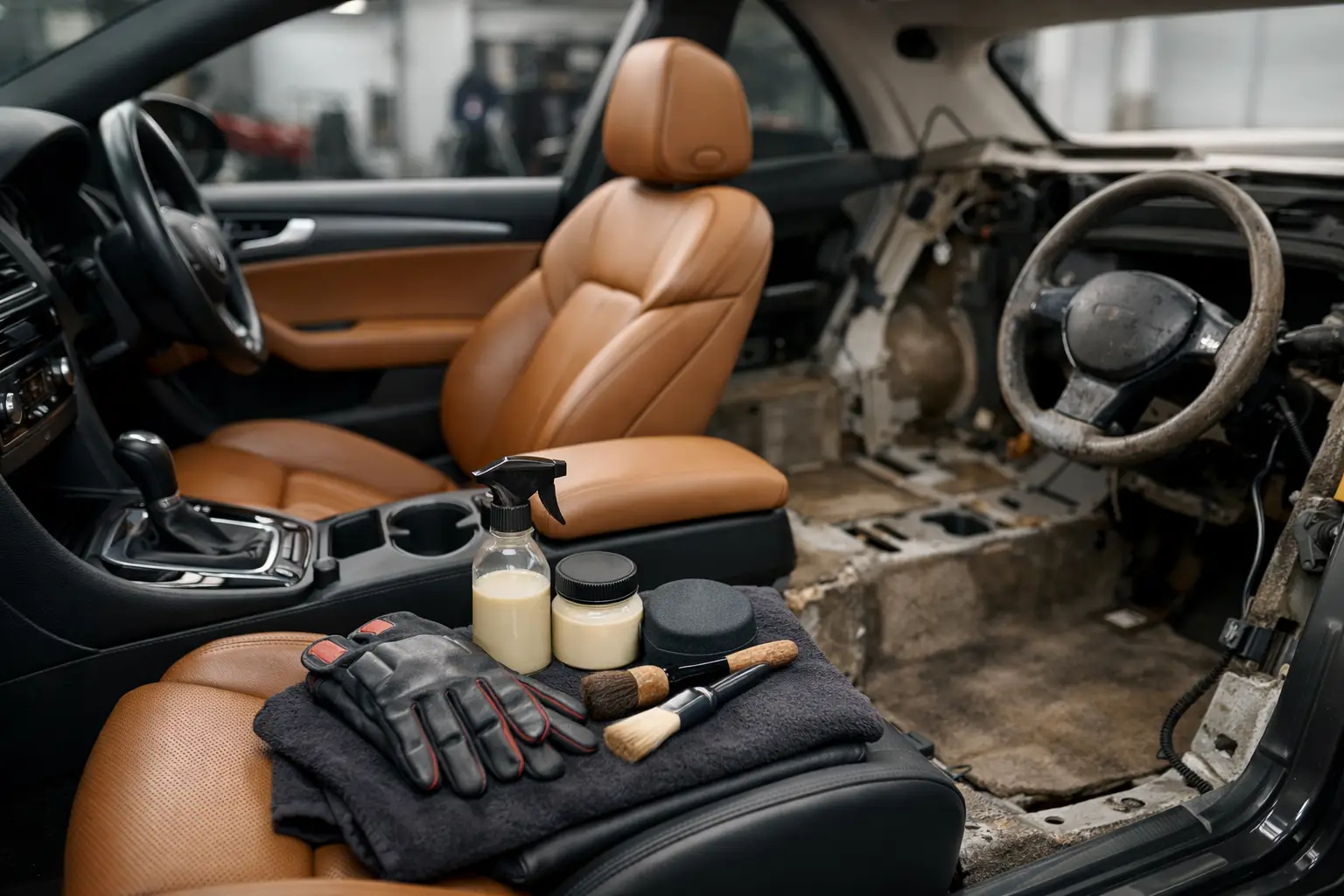
A sagging roof lining, split seat bolster or cloudy windscreen can change how a car feels long before it affects how the car drives. What is automotive interior restoration? It is the specialist process of repairing, renewing or carefully replacing worn interior and trim components so the vehicle regains its comfort, appearance, function and character without unnecessary work.
It is not simply a quick clean or a universal seat-cover job. Proper restoration considers the vehicle’s age, construction, material type and intended use. A daily-driven family car may need durable, practical renewal. A premium, classic or convertible vehicle may require materials, fitting methods and finishing details that preserve its original look as closely as possible.
What Automotive Interior Restoration Covers
Automotive interior restoration can be as focused as repairing one damaged section of upholstery or as extensive as renewing the cabin and related trim systems. The scope depends on what has failed, what can be saved and what standard of finish the owner expects.
Common work includes upholstery repair and replacement, seat foam rebuilding, headlining and roof-lining replacement, door panel refurbishment, carpet renewal, dashboard and trim repairs, and convertible soft-top restoration. It may also involve windscreen replacement where damaged glass, seals or fitting issues affect safety, visibility or the finished appearance of the vehicle.
The objective is not always to make every component look factory-new. In many cases, the better result is a sympathetic repair that restores strength and presentation while retaining original materials that are still sound. This is especially relevant for older vehicles, where replacing everything can remove details that give the car its authenticity.
Restoration Is Different From Detailing or Simple Replacement
Detailing improves cleanliness and surface appearance. It can remove stains, refresh leather and reduce odours, but it cannot correct deteriorated foam, delaminated roof lining, torn seams or weakened convertible-top fabric. These are structural trim problems, not cleaning problems.
Simple replacement, on the other hand, can be appropriate when a component is beyond repair. Yet replacement alone does not guarantee a proper result. A new material must be selected for the correct application, cut accurately, tensioned correctly and fitted with care around clips, seams, seals and moving parts.
Restoration sits between preservation and replacement. It asks what is worth retaining, what must be renewed and how the work can be carried out without creating new problems. That judgement is one reason specialist workmanship matters.
The Materials Matter as Much as the Finish
Car interiors are exposed to heat, humidity, UV light, body oils, friction and regular movement. In Singapore, high temperatures and moisture can accelerate adhesive failure, mould growth and deterioration in foam, fabric and leather finishes. A repair that looks acceptable on collection day may fail early if unsuitable materials or shortcuts were used.
Upholstery is not one category. Leather, synthetic leather, cloth, Alcantara-style materials, vinyl and woven fabrics all respond differently to wear and repair. Even two materials that look similar can differ in grain, thickness, stretch and backing. Matching colour is only one part of the task. The material must also behave correctly once fitted.
Roof linings require similar care. Sagging is often caused by degraded foam backing or failed adhesive, not merely loose fabric. Re-gluing old material over crumbling foam rarely gives a lasting result. Proper headlining work typically involves removal, preparation of the backing board, selection of suitable material and controlled refitting so the lining sits cleanly around lights, handles and pillars.
Convertible Tops Need Specialist Attention
Convertible tops are working exterior systems as well as visual features. They must open and close correctly, sit under even tension, manage water effectively and seal against the windscreen frame and side glass. Wear may show up as faded fabric, torn stitching, cracked rear windows, leaks, damaged straps or a roof that no longer folds as it should.
Restoring a soft top is therefore not just a matter of fitting new canvas. The frame, seals, drainage paths, tension cables and alignment should be assessed as part of the job. A new top fitted over an unresolved alignment issue may look good initially but wear prematurely or allow water ingress.
There is also a practical trade-off. A small tear or loose seam may be repairable if the surrounding fabric remains strong. If the material is brittle, heavily faded or shrinking, a local repair may only delay a more complete replacement. Honest advice should explain the likely lifespan of each option rather than presenting the lowest immediate cost as the best value.
A Proper Restoration Process Starts With Inspection
The quality of an interior restoration is often decided before any material is removed. A disciplined inspection identifies visible damage and the causes behind it. For example, worn driver’s-seat leather may be linked to collapsed bolster foam. A water-stained roof lining may point to a blocked drain, failed seal or windscreen leak. Replacing the visible surface without addressing the cause can lead to repeat damage.
A specialist should discuss how the vehicle is used, whether originality is a priority and what outcome the owner has in mind. Some owners want a close-to-original restoration for a cherished car. Others need a hard-wearing, neat interior for daily use. Both are valid, but they call for different material choices and work scopes.
Once the scope is agreed, the work should be planned around proper removal, preparation, repair or replacement, refitting and final checks. In-house execution provides clearer accountability at every stage. It also avoids the uncertainty that can arise when core work is passed through multiple parties with different standards and mark-ups.
When Repair Makes Sense and When Replacement Is Better
Repair is usually worthwhile when damage is localised and the surrounding material remains stable. A split seam, minor cigarette burn, loose trim edge or small leather tear may be corrected without rebuilding an entire seat or panel. This can preserve original material and keep costs proportionate.
Replacement becomes the stronger option when deterioration is widespread. Cracked vinyl, hardened leather, flattened foam, failing headlining backing and a perished convertible roof are often signs that the material has reached the end of its useful life. Repeated patching may create an uneven appearance and cost more over time.
The right answer depends on the car and the owner’s priorities. A restoration-worthy vehicle may justify a higher level of material matching and original-style detailing. For a well-used daily car, sensible durability and clean fitting may matter more than exact factory specification. The essential point is that the recommendation should be based on condition, not on selling the largest possible job.
Why Interior Restoration Can Protect Value
A cared-for interior makes a strong difference to ownership satisfaction and buyer perception. Drivers touch the steering wheel, sit on the seats and look through the glass every time they use the car. These contact points shape whether a vehicle feels neglected or properly maintained.
For premium, enthusiast and older vehicles, an orderly cabin can also support resale value. Buyers are often wary of sagging linings, water marks, damaged convertible tops and torn upholstery because they suggest hidden neglect. Addressing these issues professionally gives future buyers greater confidence in the car’s overall care.
That does not mean every restoration produces a direct pound-for-pound return. The value may be personal: better comfort, pride of ownership, a more usable convertible or the ability to keep a familiar vehicle on the road rather than replacing it. Restoration is also a practical form of sustainability, extending the life of components that do not need to be discarded.
Choosing the Right Workshop
Look beyond photographs of finished seats. Ask whether the work is carried out in-house, how the workshop identifies underlying causes, and whether it can advise on repair versus replacement. Clear answers on materials, expected finish, timing and price help prevent misunderstandings.
Specialisation is particularly valuable for headlinings, convertible tops, upholstery and windscreen-related work because these jobs depend on trim knowledge, not just general mechanical experience. At 8 Cushion, the focus is on controlled in-house workmanship, practical consultation and a work scope that suits the vehicle rather than a one-size-fits-all package.
Before committing, inspect the problem closely and avoid waiting until a small issue becomes widespread damage. A loose roof lining, worn seat edge or early water leak is usually easier to address while the surrounding structure and materials are still in good condition.
Related posts
When Dashboard Restoration Is Worth the Repair
Dashboard restoration can renew a faded, cracked or lifting car interior. Learn
Convertible Roof Lifespan and What Affects It
Convertible roof lifespan depends on material, climate and care. Learn the warni
How to Clean Suede Car Upholstery Safely
Learn how to clean suede car upholstery safely, remove fresh marks gently, and k