


Convertible Hood Replacement Guide for Owners
A convertible hood that leaks at the header rail, flaps at speed or has begun to shrink around the windows is more than a cosmetic issue. It can allow water into the cabin, damage trim, create wind noise and make a well-kept car feel neglected. This convertible hood replacement guide explains how to assess the job properly, choose the right materials and recognise the workmanship that protects your vehicle for years rather than months.
Start by confirming that replacement is necessary
Not every tired-looking hood needs to be replaced. Surface marks, light staining and blocked drainage channels can sometimes be addressed without fitting a new roof. Likewise, a detached seam or a small area of lifting may be repairable if the fabric remains sound and has not significantly shrunk.
Replacement becomes the sensible route when the hood material has split, the rear window has separated, stitching has failed across several sections, or the fabric has become hard and shrunken. Deep creasing, persistent leaks after drainage checks, and cracking around fold points are further warning signs. On older vehicles, deterioration in the tension straps, cables or seals may be exposed only once the hood is removed.
A proper assessment looks beyond the visible canvas or vinyl. The frame, latches, weather seals, drains, rear window, headlining and operating mechanism all affect the final result. Fitting a new cover over faults in these areas can leave an owner paying twice to correct avoidable problems.
Convertible hood replacement guide: the work behind a proper fit
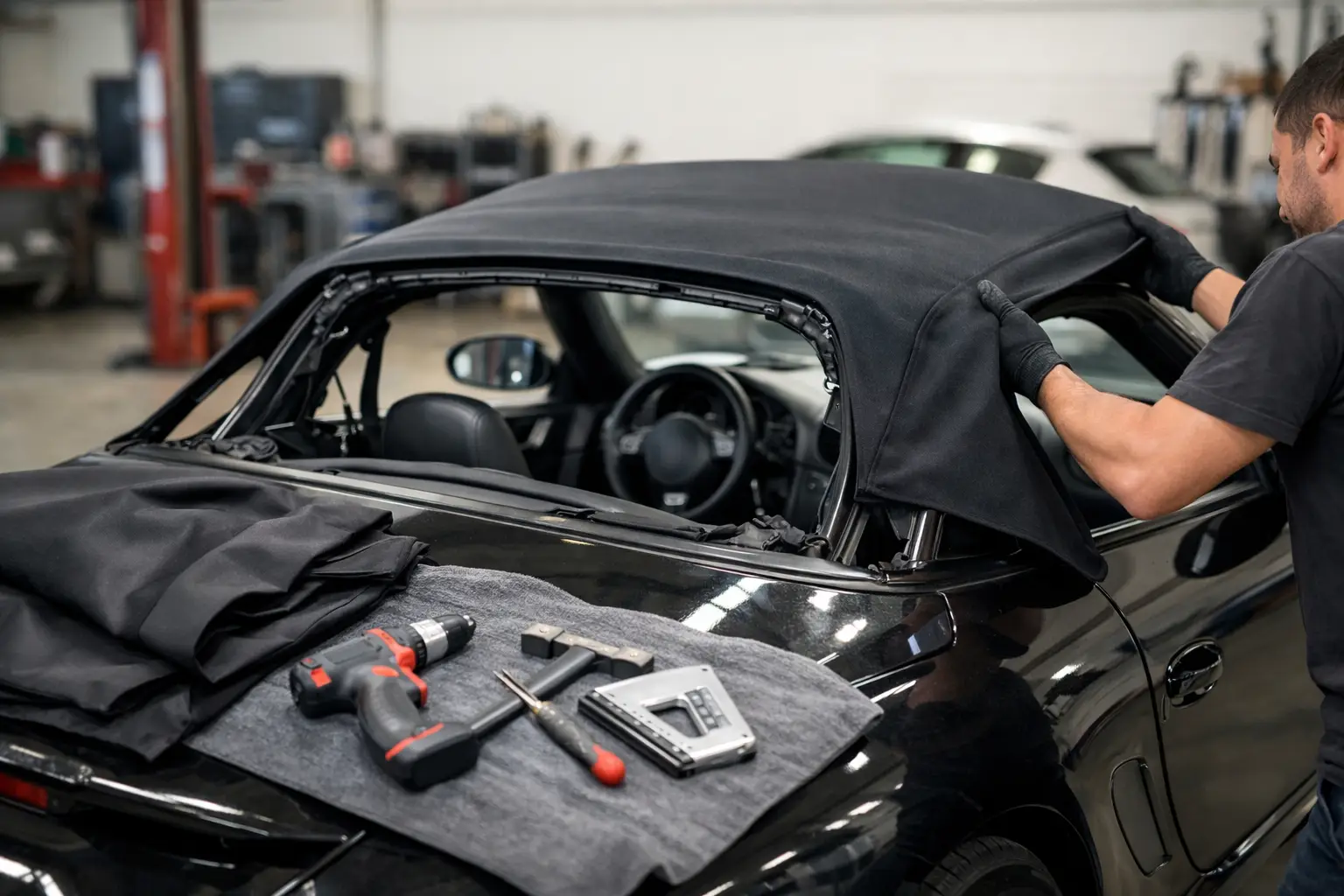
A replacement hood is not simply stretched over the frame and glued into place. Every model has its own fitting sequence, tension points and alignment requirements. The roof must sit correctly when closed, fold cleanly when opened and seal evenly against the windscreen frame and side glass.
The process begins with careful removal of the existing hood and inspection of the underlying structure. This is the point at which worn straps, damaged pads, loose cables or corrosion around the frame can be identified. A specialist should explain any additional work clearly before proceeding, rather than treating it as an unexpected extra after the vehicle has been dismantled.
The replacement material is then positioned and secured in stages. Alignment matters at the front header, side rails, rear deck and window apertures. An apparently small error can cause the hood to sit off-centre, leave excess material at one side or create a gap that becomes obvious in heavy rain. The fitter must also allow for material behaviour. Some fabrics require controlled settling and tensioning before the final adjustment.
Once installed, the hood should be checked through its full operating cycle. It should not catch, bunch excessively or pull away from the seals. Water testing and inspection around the header rail, quarter windows and rear section are essential practical checks. The objective is not merely a new-looking roof, but a hood that functions as the car manufacturer intended.
Choosing the right hood material
The correct material depends on the vehicle, its age, the original specification and how it is used. For many modern and premium convertibles, multi-layer fabric hoods are the appropriate choice. They offer a refined appearance, better acoustic insulation and a finish closer to the original design. Vinyl may be correct for particular classic models and can be an authentic choice where originality matters.
Material selection should not be reduced to colour alone. The weave, backing, thickness, water resistance and suitability for the frame all influence durability and fit. A lower-cost substitute may look acceptable when first installed, yet show premature fading, distortion or seam stress in regular use.
In Singapore’s heat, humidity and intense rainfall, material quality matters even more. A hood needs to resist ultraviolet exposure while remaining flexible enough to fold correctly. Dark colours can be traditional and practical, but they also show dust and water marks more readily. Lighter shades may suit certain cars, although they demand more careful cleaning and can be harder to keep looking fresh.
For restoration vehicles, matching the original texture and construction may be more valuable than choosing the most modern material available. For a daily-driven car, an owner may reasonably prioritise weather resistance, reduced cabin noise and easy maintenance. Independent advice should consider these trade-offs rather than pushing one material for every vehicle.
Rear glass, plastic windows and roof linings
The rear window deserves separate attention. Some hoods use bonded or stitched glass, while older cars may have flexible plastic windows. A scratched plastic screen can sometimes be improved, but cloudy, cracked or brittle plastic often requires replacement. Rear glass must be fitted with correct alignment so that it follows the hood’s shape without placing stress on the surrounding fabric.
Where the vehicle has an inner roof lining, inspect it at the same time. A sagging or stained lining can undermine an otherwise excellent hood replacement. Combining the work may be more efficient because access is already available, but it depends on the car’s construction and the condition of the lining. There is no benefit in replacing sound components simply because the hood is off.
Questions to ask before approving the work
The quality of a hood replacement is shaped as much by preparation as by the finished surface. Ask whether the job is completed in-house, who will inspect the frame and seals, and whether the quote includes fitting materials, adjustment and water testing. Clear answers help avoid a price that appears attractive at first but excludes essential work.
It is also sensible to ask whether the proposed hood is made for your specific model and whether any parts are being reused. Reusing serviceable rails, cables and seals can be sensible. Reusing cracked seals or fatigued tension components to reduce the initial cost can compromise the new hood from day one.
A transparent workshop will distinguish between necessary replacement work and optional restoration improvements. It will also set realistic expectations. A new hood can transform appearance, comfort and weather protection, but it cannot correct misaligned windows, a damaged roof mechanism or water entering through unrelated body seals without those faults being addressed separately.
Avoid the shortcuts that cause repeat work
Convertible roofs are vulnerable to rushed fitting. Adhesives applied without proper preparation can fail in heat. Incorrect tension can lead to pooling water, noisy airflow or difficult latching. Poorly aligned side sections may rub against the glass and wear prematurely.
Another common shortcut is treating drainage as an afterthought. Convertible bodies are designed to manage small amounts of water through channels and drains. If these are blocked, water may enter the cabin or collect in areas that affect electrical components and interior trim. Cleaning and checking drainage should be part of the wider inspection, not an optional extra after a leak appears.
Price matters, but the lowest quotation is rarely the full comparison. Consider the material specification, the condition checks included, the experience of the people fitting the hood and whether the workshop is accountable for the entire job. No outsource and no unnecessary middleman mark-ups give an owner clearer responsibility from assessment through to final inspection.
Caring for a new convertible hood
A well-fitted hood still needs sensible care. Brush off loose dust before washing so that grit does not work into the fabric. Use a cleaner suitable for the hood material, avoid aggressive household chemicals and rinse thoroughly. Let the roof dry fully before lowering it where possible, especially with fabric hoods, as folding a damp roof encourages marks and trapped moisture.
Do not force the mechanism if the hood appears tight in very hot weather or after a long period closed. Check that the windows lower as required by the car’s operating sequence, and keep the seals clean so they can sit properly. Periodic inspection of seams, drains and latch points catches small concerns before they become a replacement-level problem.
For vehicles that spend long periods outdoors, regular washing and an appropriate protectant can help preserve the material. A cover may offer added protection, but only if it is clean, breathable and fitted without rubbing against the hood.
A convertible is at its best when the roof feels like part of the car, not a compromise you have to manage. If your hood is showing its age, choose a specialist who assesses the complete system, uses suitable materials and takes responsibility for the work in-house. That disciplined approach gives you the confidence to lower the roof when the occasion calls for it and close it without a second thought.
Related posts
Car Headliner Replacement: Repair or Renew?
Car headliner replacement restores comfort, appearance and value. Learn when rep
What Causes Convertible Top Leaks?
Learn what causes convertible top leaks, from worn seals to blocked drains, and
Soft Top Waterproofing Treatment Guide for Cars
Use this soft top waterproofing treatment guide to choose, apply and maintain pr