


Is Headliner Replacement Worth It for Your Car?
A headliner that sags above the rear seats, brushes against passengers’ hair, or hangs around the sunroof is more than an untidy detail. It changes how the entire cabin feels and can quickly make an otherwise well-kept car look neglected. So, is headliner replacement worth it? For most cars with widespread sagging fabric, a proper replacement is usually the more durable and better-value choice than repeated patch repairs.
The right decision still depends on the condition of the headliner board, the vehicle’s age and value, the quality of materials used, and whether the work is carried out properly. A headliner is a visible part of the interior, but it is also a fitted component that must sit correctly around trim, lights, handles, visors and roof openings.
What a sagging headliner usually means
Most sagging headliners are caused by the failure of the thin foam layer bonded between the fabric and the backing board. Over time, heat, humidity and age cause that foam to break down. The fabric may initially loosen at one edge, then progressively detach across the roof.
This is particularly common in older vehicles, premium cars with large roof areas, and cars regularly exposed to intense sun. Parking outdoors, fluctuating cabin temperatures and trapped moisture can all shorten the life of the original material.
Once the foam has deteriorated, simply pushing the fabric back into place will not restore the bond. Pins, staples and spray adhesive may hold a small section temporarily, but they seldom solve a widespread failure. The remaining foam continues to crumble behind the fabric, leaving an uneven finish and creating the likelihood of further sagging.
Water staining is a different warning sign. If the headliner has marks around the windscreen, sunroof, roof rails or rear glass, the source of moisture should be checked before a new lining is fitted. Replacing fabric without addressing a leak can result in the same damage returning.
Is headliner replacement worth it when the fabric sags?
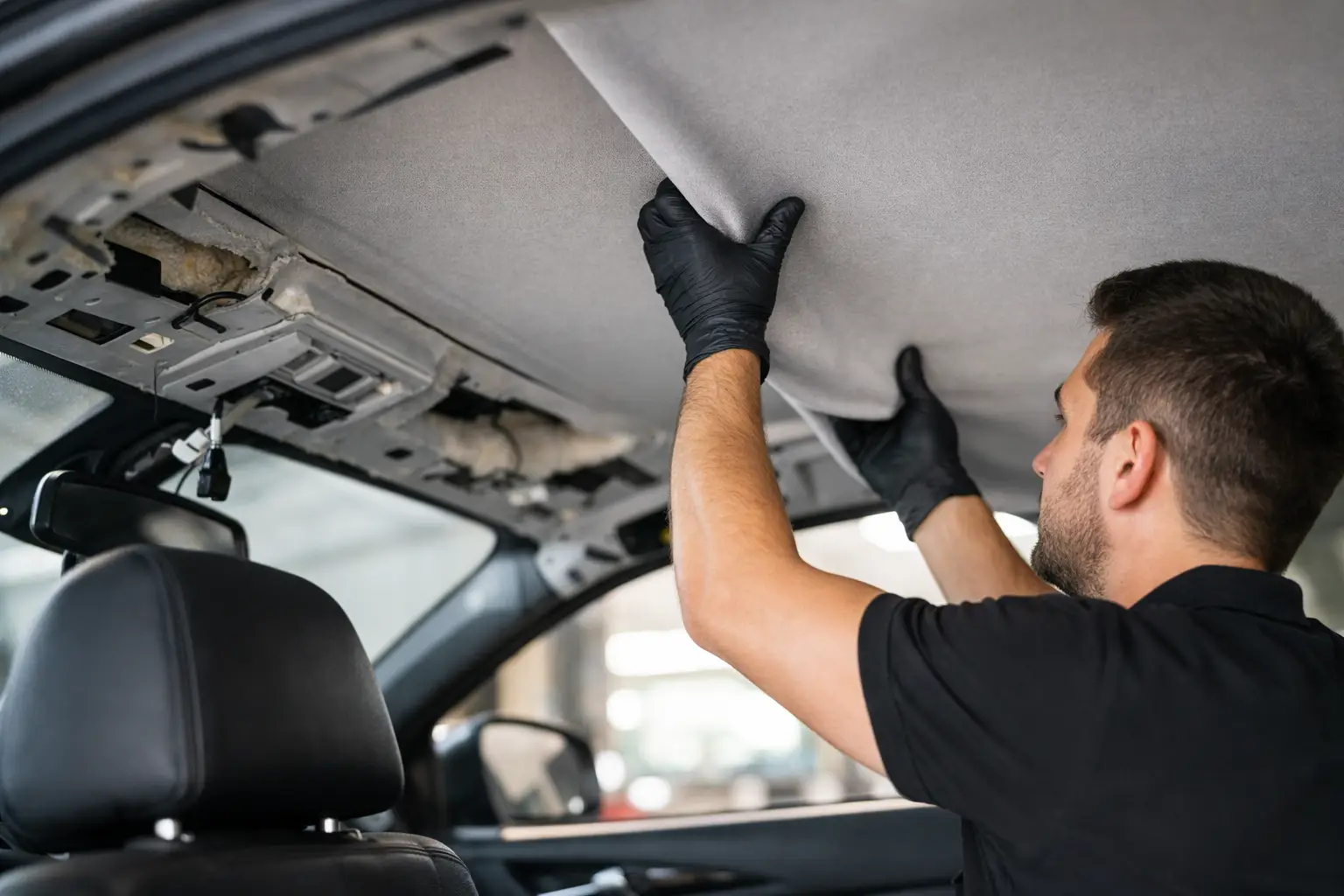
When the fabric is loose across a large area, replacement is generally worth it because the original backing material has reached the end of its serviceable life. A proper job involves removing the headliner board, stripping away old fabric and degraded foam, preparing the board, and applying new automotive-grade material with the correct adhesive.
The result should look fitted rather than merely covered. The material needs to follow the board’s contours without wrinkles, lifting edges or excess tension around openings. That level of finish matters every time you enter the vehicle, especially in a car with a light-coloured interior or a large windscreen that exposes the roof lining clearly.
Replacement can also be worthwhile before selling a vehicle. A sagging roof lining gives buyers the impression that the car has not been cared for, even when the mechanical condition is sound. Restoring it will not automatically add the full cost of the work to the sale price, but it can improve presentation, buyer confidence and the car’s perceived value.
For enthusiasts and owners of restoration-worthy vehicles, the case is stronger. Original-style colours, textures and finishes can help preserve the character of the cabin. The objective is not to make every car look new at any cost. It is to make a considered repair that suits the vehicle and its future use.
When a repair may be enough
A complete replacement is not always necessary. If a trim clip has come loose, a small edge has detached while the remaining foam is still sound, or a fitting around an interior lamp needs attention, a local repair may be appropriate.
However, a workshop should assess the condition honestly. A small repair to a board with deteriorating foam may look acceptable for a short period, but it is not a long-term answer. Clear advice on what will last, what is only temporary, and what the vehicle genuinely needs is more useful than the cheapest possible quote.
What proper headliner replacement involves
A good result begins before the new material is fitted. The removal process must be planned around the vehicle’s interior layout. Grab handles, sun visors, pillar trims, lighting units, roof consoles and other components may need careful removal and refitting. On some vehicles, access is restricted by the shape of the board and the openings available through the doors or tailgate.
The backing board then needs close inspection. If it is warped, cracked, water-damaged or weakened around mounting points, fitting fresh material alone may not be sufficient. Minor flaws can often be repaired, while severe damage may require a different solution. This is one reason headliner work benefits from specialist handling rather than a quick cosmetic treatment.
Material choice also matters. Headliner fabric is not ordinary upholstery fabric. It must be suitable for the roof environment, flexible enough to follow contours and compatible with the adhesive system used. Thickness, foam backing and colour affect both the appearance and how the material performs over time.
A disciplined workshop process should include careful cleaning and preparation of the board, controlled adhesive application, accurate trimming around openings, and secure refitting of all interior components. The goal is a clean roof line with no visible compromise at the edges. Work completed in-house provides better quality control because the same team is accountable from inspection through to final fitting.
Cost, comfort and long-term value
The cost of headliner replacement varies because cars are not built alike. A compact saloon with a simple fixed roof is usually more straightforward than a vehicle with a panoramic roof, complex roof console, multiple openings or delicate interior trim. Material selection, board condition and the amount of dismantling required also affect the scope of work.
It is tempting to compare only the initial price, but the more useful comparison is between a one-time correct repair and several temporary fixes. Cheap adhesives can fail in heat. Incorrect fabric can stretch, show glue marks or detach at the corners. Careless removal can damage clips, trims or electrical components that were not originally part of the problem.
There is also a daily comfort consideration. A clean, taut roof lining reduces the sense of age inside the cabin and makes the car more pleasant to use. For owners who spend significant time driving, carry family members or maintain a premium vehicle, that improvement is practical rather than cosmetic alone.
Headliner replacement versus a DIY fix
A DIY repair can make sense for a low-value vehicle where appearance is not a priority and the owner accepts an imperfect finish. It may also be suitable for a very small, accessible area where the original material remains in good condition.
Full headliner replacement is less forgiving. The board can be fragile after years of heat exposure, and removing it without creasing or cracking it takes care. Adhesive must be applied evenly, the material must be positioned correctly on the first attempt, and the roof lining has to be refitted without trapping or marking the new fabric.
Modern vehicles add further complexity through integrated lighting, sensors, roof consoles and trim systems. If the work involves areas close to safety-related trim or electrical fittings, professional assessment is the sensible route. Saving on labour is rarely worthwhile if it creates damage that costs more to rectify later.
Choosing the right workshop for the job
Ask how the existing board will be assessed, whether the old foam will be fully removed, what grade of headliner material will be used, and whether the work is performed in-house. These questions reveal more than a headline price can.
A specialist should explain the expected finish and any limitations before work begins. For example, an aged board may retain minor imperfections even after careful restoration, while a water-damaged roof lining may require leak investigation first. Straightforward advice gives you control over the decision and avoids surprises after the interior has been dismantled.
At 8 Cushion, headliner work is approached as a restoration task, not a fabric-covering exercise. The focus is on proper preparation, suitable materials and accountable in-house workmanship so the finished interior looks right and stays that way.
If your roof lining has started to sag, address it before the fabric spreads further or becomes contaminated by dust and handling. A careful inspection will tell you whether a limited repair is realistic or whether replacement will give your car the cleaner, longer-lasting result it deserves.
Related posts
Benefits of Repairing Car Trim Before It Spreads
Discover the benefits of repairing car trim early, from protecting cabin comfort
Custom Car Interior Refurbishment Done Right
Custom car interior refurbishment restores comfort, value and finish with specia
What Causes Convertible Top Shrinkage Over Time?
Learn what causes convertible top shrinkage, how heat, age and poor care affect