


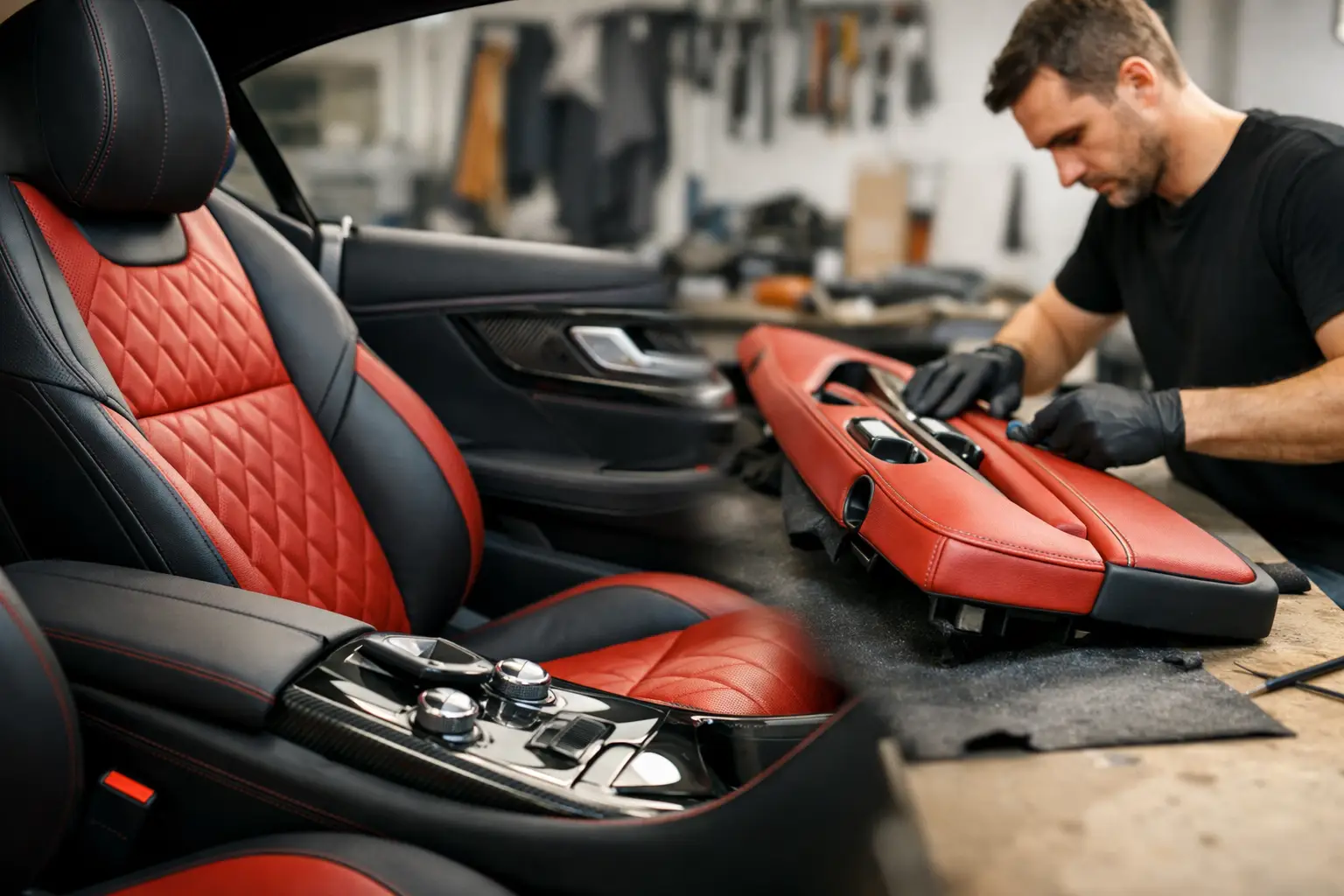
Custom Car Interior Refurbishment Done Right
A sagging roof lining, cracked seat bolsters or faded trim can make an otherwise sound car feel tired every time you open the door. Custom car interior refurbishment fixes more than appearance. It restores comfort, protects value and brings the cabin back to a standard that suits the vehicle rather than forcing a generic repair.
For many owners, the mistake is not waiting too long. It is choosing the wrong kind of workshop too early. Interior refurbishment is not general servicing. It sits in a specialised space where material knowledge, trim removal discipline and consistent in-house workmanship matter just as much as the final look.
What custom car interior refurbishment really involves
The phrase covers far more than replacing a worn seat cover. A proper refurbishment may include roof lining replacement, seat upholstery repair or retrimming, door panel restoration, steering wheel refinishing, carpet renewal, dashboard and trim corrections, and in some cases related restoration work around seals, glass or convertible roof components.
The key word is custom. That does not always mean dramatic colour changes or show-car styling. In many cases, it means the work is tailored to the age, use and character of the car. A daily-driven saloon needs a different solution from a weekend convertible. A modern premium cabin with complex trim fitment needs a different approach from a classic vehicle where preserving original character matters more than chasing a factory-fresh look.
That is why the first conversation should be about condition, expectations and usage, not just price per seat or price per panel. Good refurbishment starts with scope control.
Why owners choose custom car interior refurbishment
Most customers come in with one obvious problem, but the real reason goes deeper. They want the cabin to feel right again. That usually comes down to one or more of four things: comfort, appearance, preservation and resale.
Comfort is often underestimated. Flattened seat foam, loose headlining and damaged trim all affect how a car feels to use. Even a short commute becomes less pleasant when the cabin looks neglected or parts are starting to fail.
Appearance matters too, particularly on premium cars, convertibles and older vehicles worth keeping. Interior wear creates an impression that the whole vehicle has been poorly cared for, even when the mechanical side is in order.
Preservation is another strong reason. Once upholstery splits, roof lining fabric detaches or trim backing degrades, the damage rarely stays still. Heat and humidity accelerate deterioration in Singapore, so an interior problem that looks cosmetic today can become a more expensive restoration issue later.
Resale value is the practical side of the same decision. Buyers notice cabins immediately. A properly refurbished interior can strengthen confidence in the vehicle, while poor patchwork repairs tend to do the opposite.
The difference between repair, restoration and replacement
Not every interior needs to be stripped and rebuilt. This is where specialist advice matters.
Repair is suitable when the damage is localised. A small tear, a collapsed section of stitching or a limited trim defect may be corrected without replacing the entire component. When done well, this is cost-effective and preserves more of the original material.
Restoration is more involved. It is used when age, wear or material failure affect a wider area, but the goal is still to restore the cabin with respect for the vehicle’s design. This is common with roof linings, worn leather seating, aged door trims and classic interiors where matching look and fit are more important than speed.
Replacement becomes the sensible route when the original material is beyond recovery, the backing has failed, the substrate is damaged or previous poor work has created more problems underneath. Replacement is not a shortcut. In many cases, it is the only way to achieve a clean, durable result.
The right path depends on condition, vehicle type and owner priorities. Spending less upfront on a temporary fix can make sense for some cars. For others, it only delays a proper job.
Materials matter more than most people realise
A refurbished interior can look good on collection day and still be the wrong job. Material quality, suitability and handling all have a direct impact on durability.
Leather, vinyl, fabric, suede-style finishes, foam densities and adhesive systems all behave differently under heat and daily use. A headlining job, for example, is not just about changing cloth. The backing material, adhesive choice and preparation of the board determine whether it remains secure over time. The same is true for seat refurbishment. Surface finish may catch the eye first, but support, stitching accuracy and panel shaping affect long-term comfort and wear.
This is also why specialist workshops are careful with storage, handling and process discipline. Interior materials are not generic stock to be pulled from a shelf without thought. Matching texture, colour tone and usage requirements takes judgement.
For owners considering a change in style, restraint usually gives the best outcome. A custom interior should still feel appropriate to the vehicle. Strong personal preferences can work well, but only when they are executed with proportion and material logic.
Why in-house workmanship changes the result
Interior refurbishment involves many points where standards can slip: dismantling, labelling, trimming, stitching, bonding, refitting and final inspection. If those stages are split across multiple parties, accountability becomes blurred.
In-house work gives customers a clearer line of responsibility. It also improves consistency. The team assessing the car understands the original condition. The people carrying out the work can spot hidden issues early. Refitting is handled with knowledge of what was removed and why.
That discipline reduces the common frustrations owners face with outsourced jobs – mismatched expectations, delays, unclear pricing changes and quality variations between one stage and the next.
A specialist workshop is not just selling labour. It is selling control over the process. That matters in refurbishment work where the difference between acceptable and excellent often comes from small details the customer may never see directly.
What to expect from a proper refurbishment process
The process should start with a close inspection and a practical conversation. The workshop needs to understand how you use the vehicle, whether originality matters, where the defects are, and what level of finish you expect.
From there, the scope should be defined clearly. If the roof lining is sagging, the workshop should assess whether the board is still sound. If the seat trim is worn, they should consider whether the foam, frame or adjacent panels also need attention. If there is a convertible involved, interior wear may be linked to exposure, drainage issues or surrounding trim ageing.
Quotation should reflect the actual work required, not a vague promise. Transparent pricing matters because refurbishment projects can vary significantly once panels come apart. Honest specialists explain what is confirmed, what is likely and what can only be verified after dismantling.
Then comes production. This is where disciplined handling makes the difference: careful removal, proper preparation, accurate trimming, controlled fitting and a final check before handover. At 8 Cushion, that in-house approach is central because customers deserve peace of mind from the very beginning, not uncertainty halfway through the job.
When refurbishment is worth doing
It is worth doing when the car still has value to you – financial, practical or sentimental. That includes premium daily drivers, ageing family cars in otherwise good order, collector vehicles, convertibles and restoration projects.
It is also worth doing when the problem is beginning to spread. A loose roof lining never improves on its own. Split upholstery puts extra stress on surrounding sections. Damp-related interior issues can affect more than appearance if ignored.
The exception is when the vehicle’s overall condition makes major investment hard to justify. Even then, a targeted refurbishment can still make sense. Restoring the driver’s seat, replacing a failed roof lining or correcting the most visible trim issues can improve day-to-day use without committing to a full interior overhaul.
The right answer is rarely all or nothing. A good workshop will tell you where full refurbishment adds value and where a selective approach is the smarter decision.
Choosing a specialist workshop
Look for clear scope, material knowledge and direct accountability. If a workshop cannot explain how it handles dismantling, trimming and refitting, or if the work is heavily dependent on third parties, think carefully.
You should also expect straightforward advice. Not every customer needs the most expensive option. Some interiors should be preserved close to original. Others benefit from practical upgrades that improve wear and maintenance. Trust comes from being told what suits your vehicle, not what pushes the highest bill.
A well-executed interior refurbishment should feel calm, precise and properly considered. The aim is not to make promises with flashy language. It is to return your cabin to a standard that looks right, lasts properly and makes the car enjoyable to own again.
If your interior is showing its age, the best time to address it is usually before minor deterioration becomes structural damage. A serious car deserves work that is measured, honest and done by people who understand what the cabin is supposed to feel like when it is finished properly.
Related posts
Convertible Roof Fabric Review: What Matters
Convertible roof fabric review for Singapore owners: learn how material, fit, st
Is Headliner Replacement Worth It for Your Car?
Is headliner replacement worth it? Learn when repair makes sense, what affects c
How to Learn Automotive Upholstery Properly
Learn how to learn automotive upholstery with the right tools, practice plan, ma