


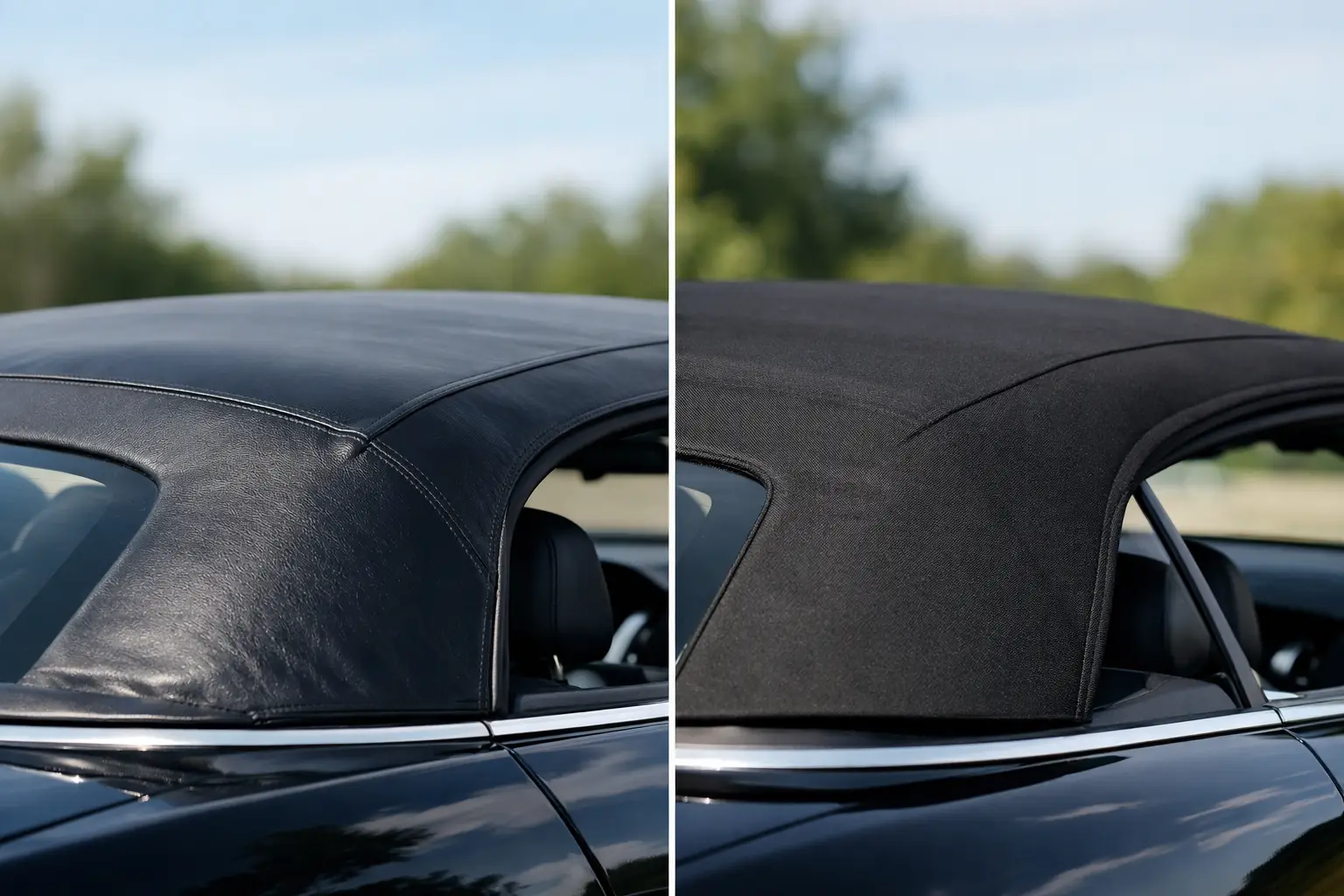
Vinyl Versus Canvas Convertible Tops
A convertible roof tells you a lot about how a car has been looked after. When the material starts to shrink, fade, flap at speed or trap moisture, the car feels older than it should. That is why the question of vinyl versus canvas convertible tops matters well beyond looks. The right material affects cabin comfort, weather protection, maintenance demands and how well the car presents over time.
For owners deciding on a replacement top, there is no single correct answer for every vehicle. The better choice depends on how the car is used, where it is kept, the original factory specification and what standard of finish you expect. A specialist workshop should advise on that properly, not simply fit whatever is cheapest or easiest to source.
Vinyl versus canvas convertible tops: the real difference
At a glance, both materials do the same job. They seal the cabin, fold with the roof frame and protect the interior from sun and rain. In practice, they behave quite differently.
Vinyl has a smoother, more uniform surface and is typically backed with an inner layer for structure. It is often chosen for its straightforward maintenance and lower cost. Canvas, which is commonly a multi-layer fabric material used on premium and European vehicles, has a more refined texture and generally a more factory-correct appearance on higher-end cars.
The difference is not only cosmetic. Material weight, flexibility, insulation and stitch performance all influence how the finished roof fits and ages. A proper comparison has to consider the whole job – material, pad work, tensioning, seals and installation quality.
Appearance and originality
If your priority is a clean, practical finish, vinyl can work well. It tends to look neat from day one and is available in a range of grains and colours. On some classic and older convertibles, vinyl may also be true to the original specification, so replacing like-for-like is often the right restoration decision.
Canvas usually has the edge in appearance on premium vehicles. It gives a richer, more tailored look and sits more naturally on many modern European soft tops. From a normal standing distance, a well-fitted canvas roof often looks more substantial and more in keeping with a high-value car.
This is where independent advice matters. We regularly see owners drawn to canvas because it sounds like the upgrade option, but if the vehicle was designed around vinyl, changing material without considering frame geometry and intended finish can produce a result that looks wrong rather than better.
When factory specification should lead the decision
If resale value, originality or restoration integrity matter, start with the manufacturer’s original material. Deviating from that can affect the visual correctness of the car and, in some cases, buyer confidence. Enthusiasts notice these details.
That said, there are situations where a practical change is justified. A daily-driven car parked outdoors in a demanding climate may benefit from choosing the material that best suits the owner’s real use rather than strict originality. The key is to make that choice with full awareness of the trade-off.
Weather resistance in daily use
Singapore’s climate is hard on convertible roofs. Heat, humidity, UV exposure and sudden heavy rain all place constant stress on the outer skin and the supporting components beneath it.
Vinyl is generally very good at shedding water because of its coated surface. Dirt often sits on the surface rather than embedding into the material, which makes routine cleaning simpler. For owners who want lower day-to-day upkeep, this can be attractive.
Canvas also performs well in wet conditions when it is high quality and correctly installed, but it needs more careful maintenance. The woven outer surface can hold dust, organic matter and moisture for longer if neglected. That does not mean canvas is unsuitable in a humid climate. It means owners need to be more disciplined about cleaning, drying and protection.
Poor installation is often blamed on the material when the real issue is elsewhere. Water ingress may come from tired seals, stretched pads, blocked drains or incorrect tensioning. A new roof skin alone cannot compensate for a roof system that has not been assessed properly.
Noise, insulation and cabin feel
One reason many owners prefer canvas is the cabin experience. Multi-layer canvas tops often provide a quieter, more insulated feel than basic vinyl alternatives. At expressway speeds, that can make the car feel more solid and more premium.
Vinyl can be slightly noisier depending on the roof design and underlayers used, especially if the top is a simpler construction. It may also transmit more of the weather outside – heat, rain impact and road noise. But this varies by vehicle. A well-built vinyl roof on the right car may still perform very well, while a poorly fitted canvas roof can be disappointing.
For customers who use the car regularly, this is worth thinking about carefully. The roof is not just something you see from outside. You live under it every time you drive.
Durability and ageing
Both materials can last well when the roof frame is sound and the car is maintained correctly. The difference is in how they age.
Vinyl may be more prone to hardening, shrinking or cracking over time, particularly if the car lives outdoors and the roof is left exposed without care. Once the material loses flexibility, fold lines and stress points become vulnerable.
Canvas usually ages with a more natural, less brittle appearance, but it is not maintenance-free. It can fade, attract mildew and suffer wear if dirt is allowed to sit in the fibres. Staining is also a more realistic concern, especially on lighter colours.
The real-world lifespan of either material depends heavily on storage conditions. A weekend car kept under cover and cleaned properly will usually outlast a daily-driven car left under harsh sun and rain. That is another reason blanket advice is unreliable.
Installation quality affects lifespan more than many owners realise
A convertible top is only as good as the workmanship behind it. Pattern alignment, seam placement, staple lines, cable tension, rear window treatment and frame preparation all affect how long the roof lasts. Even the best material can fail early if it is stretched incorrectly or fitted over worn supporting components.
That is why specialist in-house work matters. Proper accountability starts at inspection and continues through material handling, production discipline and final fitment.
Maintenance: what ownership really looks like
Vinyl is easier for most owners to live with. It usually needs straightforward washing, sensible drying and occasional conditioning depending on the product used. For a car that sees frequent use, that simplicity can be a genuine benefit.
Canvas asks for more care. It should be cleaned with the right methods, not scrubbed aggressively or treated like painted bodywork. Protection products may also be needed to maintain water repellency and keep the fabric in good order. If that routine is ignored, the material can start looking tired long before it is structurally worn out.
Neither material should be folded when heavily soiled or stored wet for long periods. That is how staining, odour and premature wear begin.
Cost and value
In most cases, vinyl is the more budget-friendly option. The material itself is often less expensive, and it can be the sensible choice for owners who want a clean, serviceable replacement without moving into a higher price bracket.
Canvas usually costs more, but the value question is more nuanced than the invoice total. If canvas is closer to factory specification, improves the look of the car and delivers a better cabin experience, it may be the wiser long-term investment. On the other hand, fitting canvas to a car where vinyl is more appropriate may simply increase cost without improving the result in a meaningful way.
The right comparison is not cheap versus expensive. It is fitness for purpose versus unnecessary compromise.
Which material suits your car?
If your car is a premium convertible, a European model or a vehicle where appearance and original character matter, canvas is often the stronger candidate. If your priority is practical ownership, easier cleaning and lower replacement cost, vinyl may suit you very well.
For restoration work, originality should usually guide the decision first. For regular use, parking conditions and maintenance discipline matter just as much. A well-advised owner tends to make a better material choice than one chasing a generic upgrade.
At 8 Cushion, that is how we approach these discussions – by looking at the vehicle, its condition, its intended use and the finish the owner expects, rather than forcing the same answer onto every car.
A convertible roof should feel right every time you raise or lower it. Choose the material that suits the car you actually own and the way you actually use it, and you are far more likely to be satisfied years down the line.
Related posts
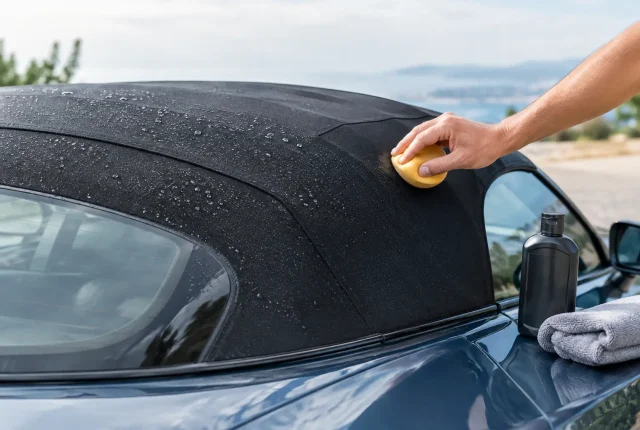
Soft Top Waterproofing Treatment Guide for Cars
Use this soft top waterproofing treatment guide to choose, apply and maintain pr
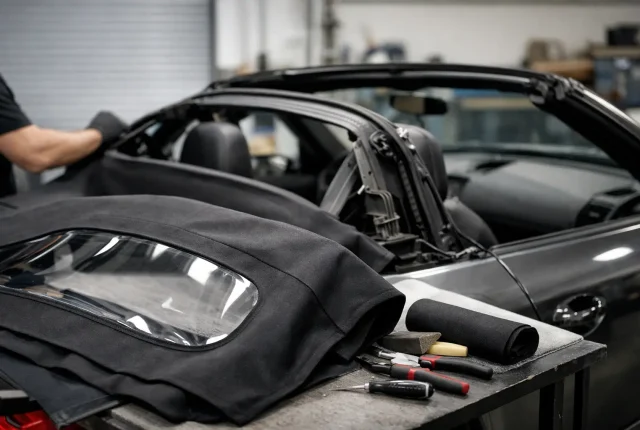
Convertible Top Replacement Buyer Guide
Our convertible top replacement buyer guide explains materials, fit, glass, labo
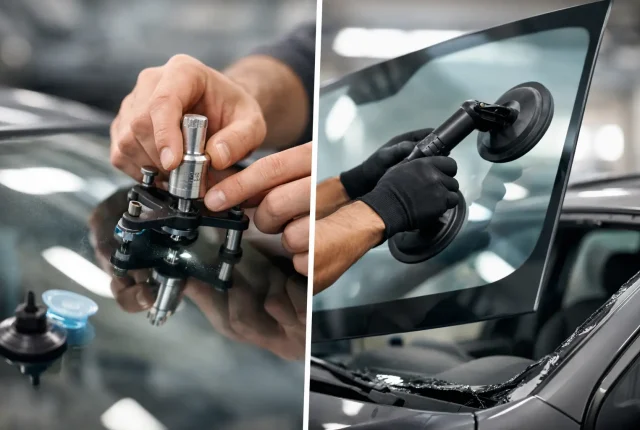
Windscreen Repair Versus Replacement Guide
A practical windscreen repair versus replacement guide for Singapore drivers - w