


Best Materials for Convertible Tops
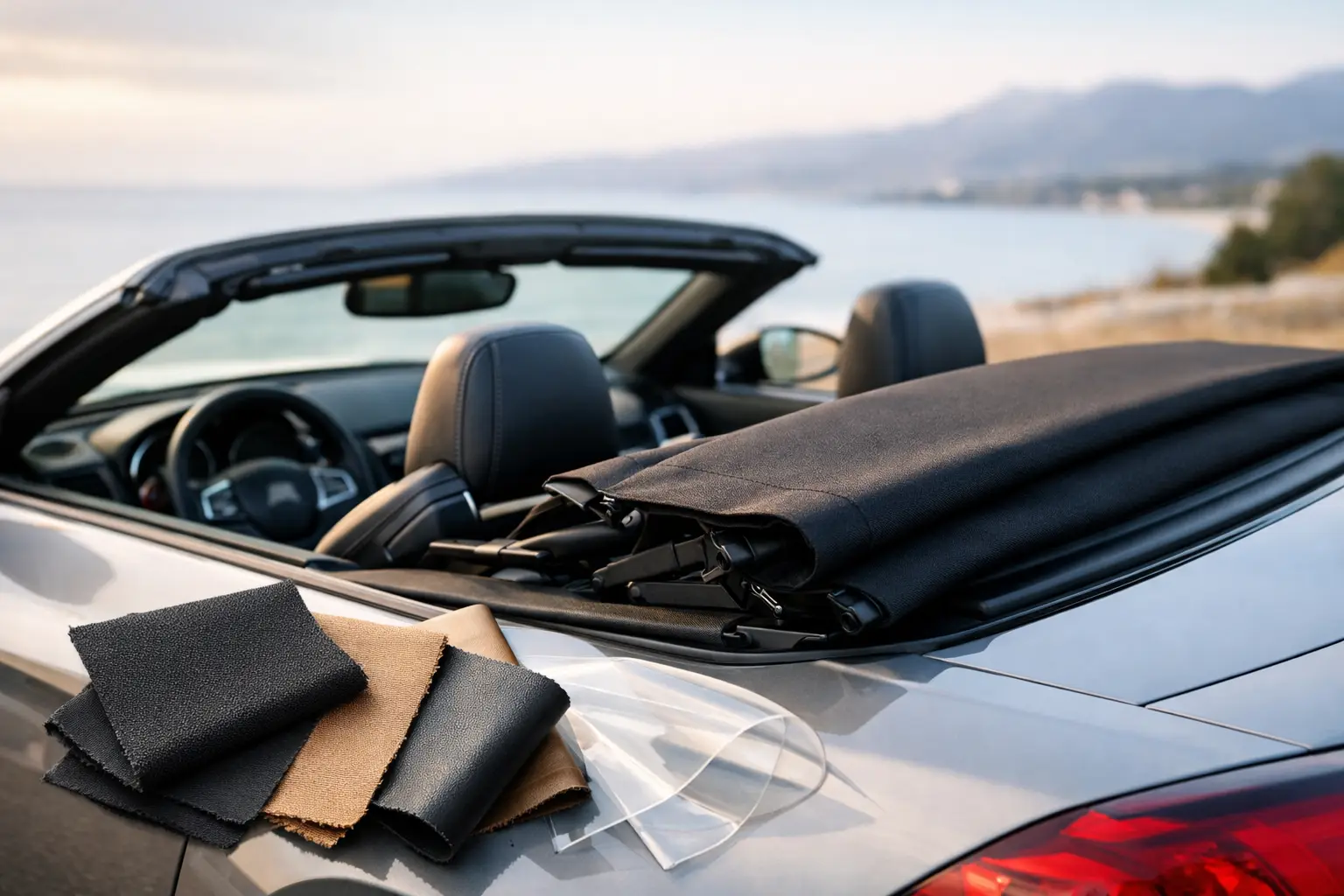
A convertible top rarely fails all at once. More often, the stitching starts to weaken, the outer skin loses tension, the rear window area shows stress, or the fabric begins to look tired long before water gets in. That is why choosing the best materials for convertible tops is not just about appearance. It is about how the roof handles heat, rain, storage, movement and age over time.
For owners in Singapore, material choice matters even more. Constant UV exposure, humidity and heavy rain put soft tops under steady pressure. A material that looks acceptable on day one can age badly if it is not suited to the vehicle, the way the roof folds, or the conditions it lives in. The right choice should match the car, the use case and the standard of finish you expect.
What makes the best materials for convertible tops
The best material is not always the most expensive one. A proper decision comes down to a few practical factors: weather resistance, dimensional stability, folding behaviour, surface finish, noise control and long-term serviceability. If one of these is ignored, the roof may still fit, but it may not perform properly after months of daily use.
A convertible top material also needs to work with the vehicle’s frame geometry. Some roofs require a material with more controlled stretch. Others need a specific thickness to sit correctly against seals and tension cables. On restoration work, this becomes even more important because the wrong material can alter the car’s original profile.
That is why specialist workshops do not treat all soft tops as interchangeable. Material selection is part of the job, not an afterthought.
Vinyl convertible tops
Vinyl has been widely used for years, particularly on older vehicles and some factory applications. It is generally more affordable than premium fabric and offers good water resistance because of its coated surface. For some owners, that makes it a practical option for budget-conscious replacement work or for maintaining a more period-correct look on certain models.
That said, vinyl comes with trade-offs. It can feel stiffer, especially as it ages, and that stiffness affects the way it folds. In hot conditions, the surface can also show wear differently from fabric, with fading, hardening or cracking becoming more noticeable over time. It is usually easier to clean, but it often lacks the richer finish and refined texture that owners of premium convertibles expect.
For the right car, vinyl still has a place. For the wrong car, it can make the roof look and behave like a compromise.
Canvas and cloth-based soft tops
When people ask about the best materials for convertible tops, canvas-style fabric is usually where the conversation becomes more serious. Modern cloth tops are not simple woven sheets. Good-quality versions are engineered multi-layer materials designed to resist weather, manage tension and maintain a cleaner appearance over years of folding and use.
These tops usually deliver a more premium finish than vinyl. They tend to look better on European and luxury convertibles, and they often provide a quieter cabin with a more substantial feel. The outer layer is designed for appearance and weathering, the inner layers help with structure and insulation, and the lining contributes to the finished interior look.
Cloth tops do need proper care. Dirt can embed more easily if the surface is neglected, and poor storage or rushed installation can affect how the material settles on the frame. But when fitted correctly and maintained properly, they usually give the most balanced result in appearance, performance and long-term value.
Mohair and premium twillfast-style materials
At the top end of the market, mohair and premium twillfast-style fabrics are often considered the benchmark. These are the materials commonly associated with high-quality replacements and restoration-grade work. They are valued for their depth of texture, stability, elegant finish and strong resistance to shrinking or distorting when properly manufactured and installed.
Mohair, in particular, is known for its woven outer face and refined appearance. It suits owners who care about originality, resale value and a roof that looks correct rather than merely new. Premium twillfast-style materials offer similar advantages, with excellent colour depth and a high-end surface that works well on many modern and classic convertibles.
The main trade-off is cost. These materials are more expensive, and rightly so. They also demand proper workmanship. A premium fabric fitted poorly will not outperform a mid-range material fitted with care and discipline. The material and the workshop standard have to match.
Why backing layers and inner construction matter
Customers often focus on the outer finish, but the inner construction matters just as much. Many convertible top materials are made in layers, and those hidden layers affect insulation, movement and durability. A roof that looks smart from the outside can still disappoint if the internal structure is weak or unstable.
Better materials tend to maintain their shape more consistently and cope better with repeated opening and closing. They also sit more cleanly across bows and edges, reducing the risk of uneven tension, puckering or premature stress around stitched sections. In practical terms, that means a roof that opens properly, seals better and ages with less visible distortion.
This is where specialist advice matters. Material choice should never be made from a photo alone.
Material choice depends on the car and the owner
There is no single answer that suits every vehicle. A daily-driven convertible kept outdoors may need a different material choice from a collector car stored under cover. A classic British roadster, a modern German cabriolet and a Japanese soft-top do not all respond the same way to identical materials.
Owner expectations matter too. Some customers want the most cost-effective route back to a functional, weather-resistant roof. Others want factory-style appearance, refined cabin feel and restoration-level correctness. Neither goal is wrong, but each requires an honest discussion about priorities.
In a disciplined workshop environment, that discussion should happen before the job starts. It is better to choose the right material once than to pay twice for a roof that never looked or performed properly.
The role of climate in choosing convertible top materials
Singapore’s climate is unforgiving on soft-top materials. High UV exposure can dull colour and weaken surfaces. Heat affects flexibility. Humidity encourages mould and trapped moisture if the roof is not allowed to dry properly. Sudden heavy rain tests seals, stitching and drainage around the top assembly.
That is why weather resistance on paper is not enough. The material also needs to remain stable under daily thermal cycling and frequent wet-dry changes. Premium fabric materials often perform better here because they retain a more controlled shape and finish over time, but suitability still depends on how the top is designed and installed.
Storage and handling also play a part. Even the best material can suffer if folded incorrectly, left dirty, or forced down while damp.
Fit, stitching and installation are part of the material decision
A convertible top is not just a sheet of material stretched over a frame. Pattern accuracy, stitch quality, cable routing, edge finishing and tension setting all determine how the material behaves once fitted. That is why discussions about the best materials for convertible tops should always include installation standards.
Poor workmanship can cause wrinkles, water paths, wind noise and stress points, regardless of material grade. On the other hand, a correctly selected and properly installed top will sit neatly, fold as intended and maintain its shape longer. The workshop process matters as much as the roll of material itself.
This is one reason owners often prefer specialists over general trim services. A specialist understands not only what material looks right, but what material will actually work for that specific roof system.
So which material is best?
For many premium and enthusiast vehicles, high-quality cloth or mohair-style fabric is usually the strongest overall choice. It offers the best balance of finish, durability, refinement and long-term satisfaction. For certain classics or budget-sensitive jobs, vinyl may still be appropriate, especially where originality or cost control is part of the decision.
The better question is not simply which material is best, but which material is best for your car, your usage and your expectations. At 8 Cushion, that is exactly how a proper convertible top conversation should start – with the vehicle in front of us, the condition assessed honestly, and the material chosen to suit the job rather than to force a one-size-fits-all answer.
If your roof is showing age, do not wait for a full failure before asking questions. The best result often starts with choosing carefully while the problem is still manageable.
Related posts

How to Assess Windscreen Chip Damage
Learn how to assess windscreen chip damage properly, spot repairable chips early
Choosing Convertible Top Malfunction Repair Shops
Choosing convertible top replacement shops means looking past price. Learn what
When Should a Windscreen Be Replaced?
Learn when should a windscreen be replaced, how to spot unsafe damage, and why e