


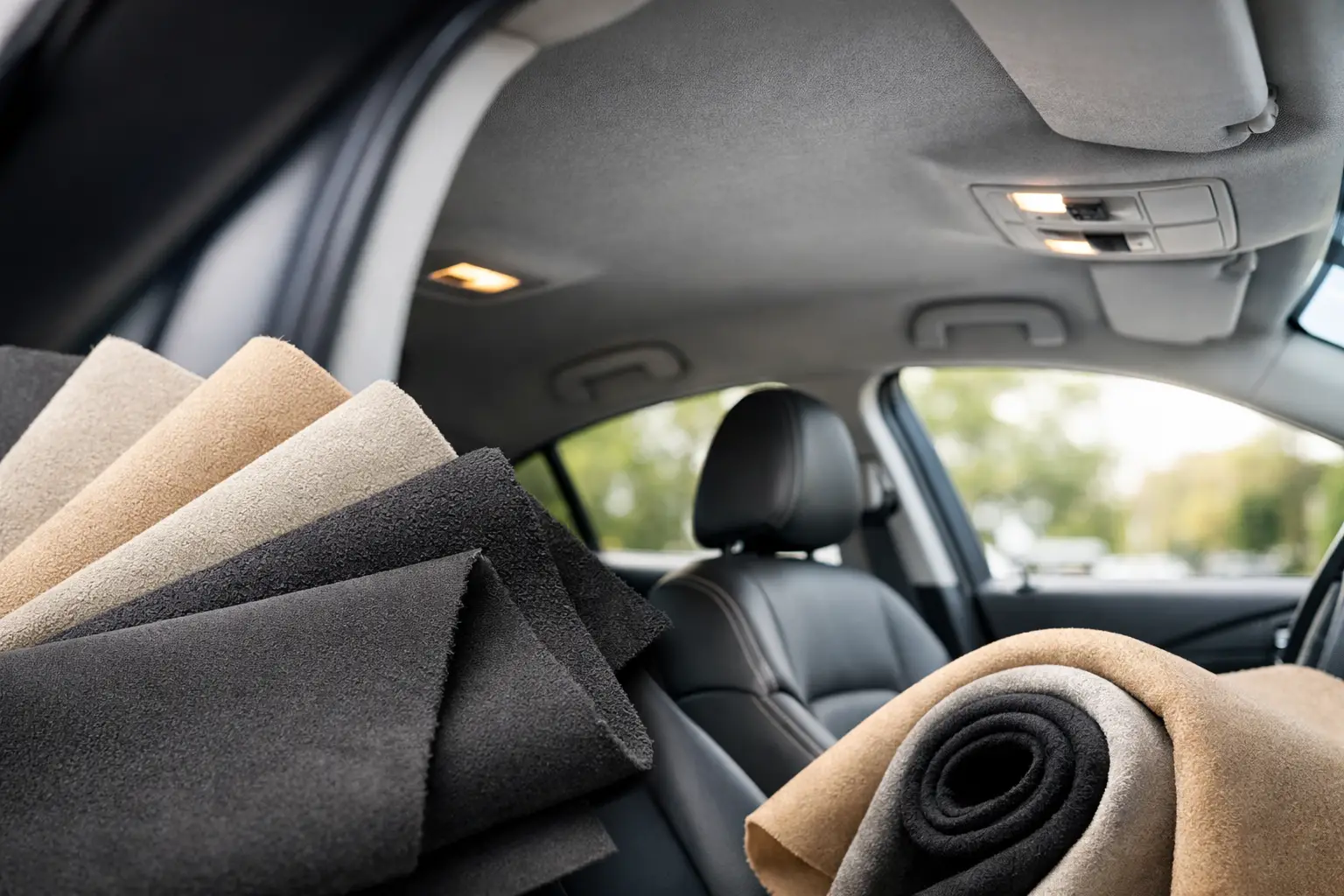
Best Car Headliner Fabric Options Explained
A sagging headliner rarely starts as a fabric problem alone. In most cases, the foam backing has broken down, the adhesive has failed under heat, or the wrong material was used in the first place. That is why choosing the best car headliner fabric options matters more than many owners realise, especially in Singapore, where constant heat and humidity can expose poor material choices very quickly.
A proper headliner material has to do more than look tidy. It needs to sit smoothly across the roof board, follow curves without puckering, resist premature delamination, and suit the character of the vehicle. A practical daily driver, a premium saloon and a restoration project do not always require the same answer.
What makes a good headliner fabric?
The best headliner fabric is not simply the thickest or the cheapest roll available. It needs the right balance of face material, backing foam, flexibility and heat tolerance. If one of those elements is wrong, the finish may look acceptable on the day of fitting and still fail much sooner than expected.
The face material affects appearance, touch and how original the interior feels. The foam backing influences how the fabric sits against the board and helps smooth minor imperfections. Thickness matters too. Too thin, and imperfections underneath may show through. Too thick, and the material may fight against tight contours, overhead console openings or pillar transitions.
Then there is the adhesive relationship. Some fabrics are simply easier to bond properly than others. A specialist workshop will consider the full system – substrate preparation, adhesive choice, curing conditions and material behaviour – rather than treating the fabric as a stand-alone item.
Best car headliner fabric options for different needs
Foam-backed automotive headliner fabric
For most modern vehicles, foam-backed automotive headliner fabric is the standard and usually the safest route. It is designed specifically for roof lining applications, which means it has the flexibility needed to wrap around mild contours while delivering a soft, factory-style finish.
This is often the right choice for owners who want the cabin to look correct rather than customised. It suits many Japanese, Korean and European models, and it can be matched reasonably closely to the original grain and colour when selected properly.
The main trade-off is longevity versus material grade. Lower-grade foam-backed fabric may look fine initially but break down faster in hot climates. Better-grade material costs more, but it generally holds up better and gives a cleaner finish over time.
Suede-style headliner fabric
Suede-style material is popular with owners seeking a more premium interior feel. It gives the cabin a richer visual texture and can work particularly well in executive cars, coupes and enthusiast builds where the owner wants a more tailored finish.
Used well, it can elevate the interior. Used poorly, it can look out of place or too heavy for the vehicle. It also tends to show handling marks, dust and directional shading more easily than standard cloth. That does not make it a poor choice, but it does mean fitment quality becomes even more important.
For some vehicles, suede-style headliners also work better as part of a broader interior refresh rather than a one-piece upgrade. If the rest of the cabin is tired, a plush roof lining alone can make the wear elsewhere more obvious.
OEM-style knit fabric
OEM-style knit fabric is often the preferred option for restoration-minded owners who want the cabin to remain faithful to the vehicle’s original character. This is especially relevant for premium models, older vehicles and projects where resale presentation matters.
The value here is not just appearance. A closer-to-original material tends to preserve the intended interior balance of the car. The texture, reflectiveness and softness of the roof lining all affect how finished the cabin feels.
The challenge is that true OEM-style matching can be more limited by supply. Not every shade and pattern is readily available, and some owners must decide whether to wait for a close match, accept a near match, or re-trim adjacent pieces for consistency.
Vinyl or leather-look materials
Vinyl and leather-look materials are less common for standard passenger car headliners, but they do have a place. They are sometimes chosen for classic vehicles, commercial interiors, selected custom builds or marine-inspired applications where wipe-clean practicality is valued.
That said, they are not universally suitable. Heavier materials can be harder to install cleanly over complex roof boards, and they may not deliver the soft, factory-like finish expected in most modern cars. In some cabins, they can also make the interior feel visually heavier or less refined.
This is one of those areas where honest advice matters. Just because a material can be installed does not mean it is the best decision for the vehicle.
How climate affects the right choice
Heat is one of the biggest reasons headliners fail. In a climate like Singapore’s, parked cars can develop intense cabin temperatures, and that puts constant stress on the adhesive, foam backing and fabric structure.
This is why bargain materials often become expensive fixes. A low-cost fabric with poor foam stability may start separating, bubbling or sagging far earlier than a proper automotive-grade alternative. When that happens, the job usually has to be redone, because patch repairs on headliners rarely produce a lasting or presentable result.
Humidity also plays a role. Materials must be stored properly, handled cleanly and installed with care. A disciplined in-house workshop process matters here because the quality of the final result depends on more than the roll of fabric itself.
Matching fabric to the type of vehicle
Daily drivers
For a daily driver, durability and a neat factory-style finish usually matter most. Foam-backed automotive headliner fabric is often the best fit because it delivers a clean appearance without overcomplicating the job. Neutral grey, beige and black remain the most practical choices, particularly when the goal is to restore rather than personalise.
Premium and luxury vehicles
Premium cabins demand better judgement. The wrong texture or shade can cheapen the interior very quickly. OEM-style knit or a carefully chosen premium fabric is usually the better route, especially when the owner wants the finish to sit naturally with original trim, sun visors and pillar coverings.
Classics and restoration projects
Restoration work is where material choice becomes more sensitive. The nearest available fabric may not be good enough if originality is the objective. In these cases, the decision is often a balance between authenticity, availability and long-term serviceability. A skilled workshop will explain those trade-offs clearly rather than forcing a one-size-fits-all answer.
Custom builds
Custom interiors allow more freedom. Suede-style finishes, darker tones and contrast approaches can all work well. But the material still needs to be suitable for the roof structure, the adhesive system and the owner’s real-world use. Good custom work is controlled, not improvised.
Common mistakes when choosing headliner fabric
The first mistake is choosing by colour alone. A shade that looks close enough on a sample may behave very differently once installed across a full roof board in natural light.
The second is underestimating foam quality. The backing is often where failure begins, yet many owners only compare the visible surface. A smart selection looks at both.
The third is using generic fabric not designed for automotive headliners. Household upholstery and decorative fabrics may appear serviceable, but they often lack the flexibility and heat performance required inside a car.
The fourth is treating the headliner as an isolated panel. Sun visors, pillars, grab handle surrounds and overhead consoles all affect how complete the result looks. In some jobs, partial retention makes sense. In others, it leaves the new headliner looking mismatched.
When professional advice is worth it
Headliner replacement sounds simple until the roof board is out and the weak points become obvious. Some boards are brittle with age. Some have sharp contouring that punishes thick material. Some vehicles need precise disassembly to avoid damage to trims, clips or electronics.
That is where specialist experience matters. At 8 Cushion, material choice is assessed alongside vehicle type, roof structure, interior condition and expected use, so the recommendation is based on the whole job rather than the fabric sample alone. That approach gives owners tighter quality control and better accountability from the start.
So which option is best?
For most owners, the best car headliner fabric options start with proper automotive foam-backed material in the right grade and shade. It gives the most dependable balance of appearance, fit and longevity. If the vehicle is premium, restoration-focused or custom-built, OEM-style or suede-style materials may be the better answer, provided they are selected with care and fitted properly.
The right choice is rarely the most extravagant one. It is the material that suits the vehicle, survives the climate and still looks correct after the excitement of collection day has passed. If you are replacing a tired roof lining, that is the standard worth aiming for.
Related posts
Leather Upholstery Versus Fabric Seats Compared
Leather upholstery versus fabric seats compared for Singapore drivers: comfort,
Best Materials for Convertible Tops
Choosing the best materials for convertible tops means balancing durability, wea
Car Seat Reupholstery Options That Last
Compare car seat reupholstery options, from fabric and leather to repairs and fu