


How to Choose Convertible Hood Material
A convertible hood can make a car look sharp or tired in a single glance. When the material is wrong, owners usually notice the same problems – road noise, poor fit, fading, water marks, awkward creasing, or a finish that simply does not suit the car. That is why knowing how to choose convertible hood material matters before any replacement work begins.
For most owners, the choice is not really about picking the most expensive option. It is about choosing the material that fits the car, the way it is used, and the standard you expect after installation. A newer performance cabriolet, a cherished weekend classic, and a daily-driven soft-top in Singapore all place different demands on the hood.
How to choose convertible hood material without guessing
The first thing to understand is that convertible hood materials are not interchangeable in the way many people assume. Two cars may look similar with the roof up, yet require very different material characteristics to achieve the correct tension, folding behaviour and finish.
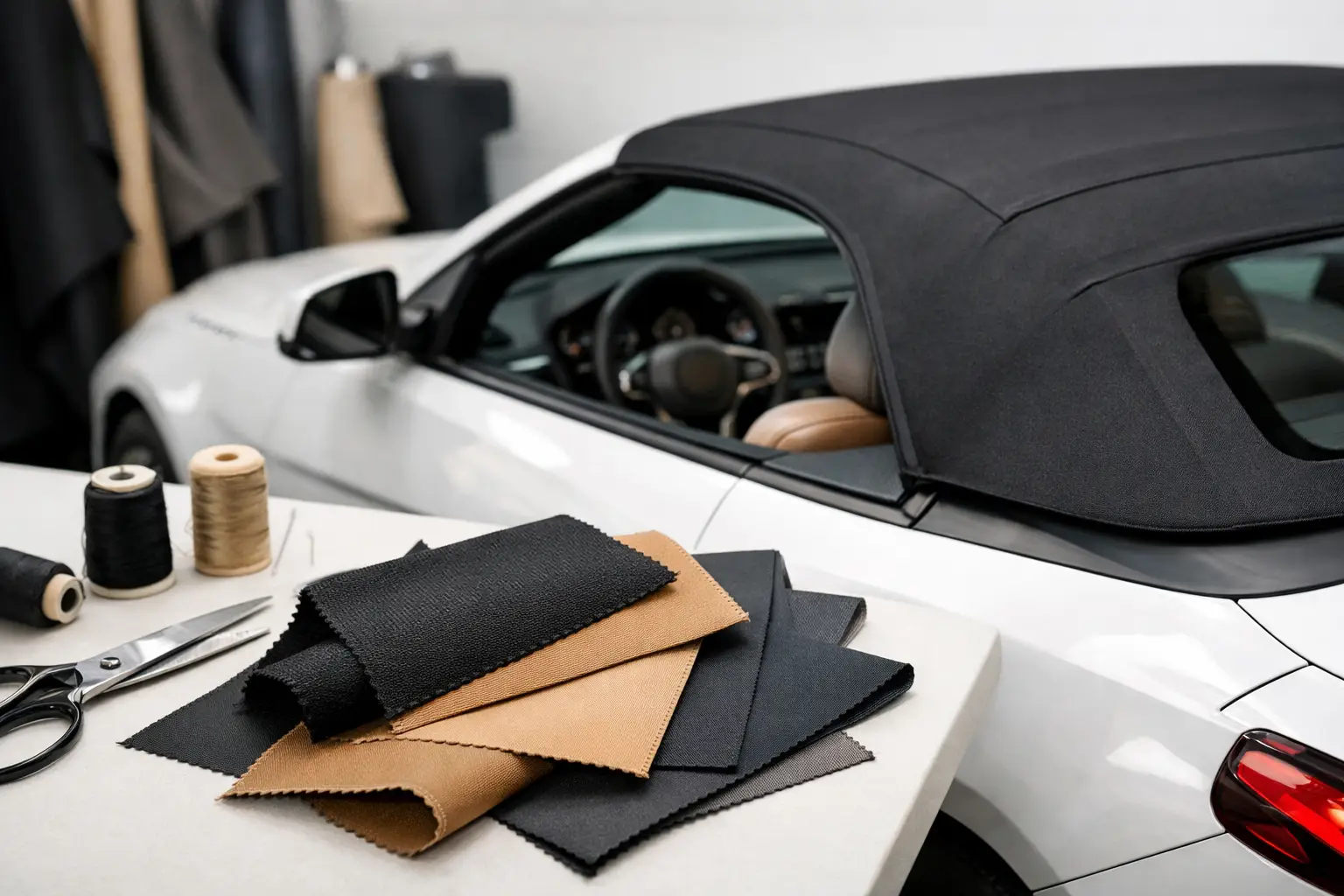
Most replacement hoods fall into two broad groups – vinyl and canvas-style fabric, often referred to as mohair in the trade even though modern versions can be made from several layered textile constructions. Each has strengths, and each suits certain vehicles better than others.
Vinyl is often chosen for practicality, ease of cleaning and a more cost-conscious replacement. It can work well on cars that originally came with vinyl, and it gives a neat, uniform appearance when properly fitted. It is also less absorbent on the surface than fabric. The trade-off is that it can look less refined on some premium or classic vehicles, and in some cases it may not fold and age as gracefully as a higher-grade fabric hood.
Canvas or mohair-style material usually offers a richer appearance, a more original look for many European convertibles, and better perceived quality. It tends to suit owners who care about presentation, restoration correctness and long-term satisfaction. However, it does require proper care, and the quality can vary significantly between suppliers. A fabric hood that looks right on day one but lacks good backing, coating or dimensional stability can become an expensive disappointment.
Start with the car, not the catalogue
The right material begins with what the vehicle was designed to use. That sounds obvious, but it is where many replacement jobs go wrong. Owners are sometimes offered whatever is available quickest, rather than what matches the hood frame geometry, original finish and intended use of the car.
A specialist workshop will first consider the make, model and roof construction. Some hoods rely on the material’s stretch characteristics to sit correctly over the frame. Others need a more stable cloth to maintain clean lines and avoid rippling. If the material is too stiff, the roof may not close or fold correctly. If it is too soft, it may flap, pool water or lose shape over time.
This is especially important for restoration work. A classic car often needs more than visual similarity. Grain, weave, edge finishing and window integration all affect whether the final result looks authentic or obviously replaced.
Original specification versus practical upgrade
There are times when staying close to original specification is the right call, and times when a practical upgrade makes sense. If you are preserving value in a collector vehicle, originality often carries weight. If you use the car frequently and park outdoors, a modern premium fabric with better weather resistance may be the smarter choice.
The key is to be honest about how the car lives. A weekend car kept under cover can prioritise appearance and originality. A daily-use convertible needs a material that can tolerate repeated folding, humidity, UV exposure and regular cleaning.
Climate and storage matter more than most owners think
In Singapore, heat, moisture and strong sunlight are hard on convertible tops. Even a high-quality hood material will struggle if it is poorly stored, badly fitted or left to degrade without care. That is why material choice should never be separated from installation quality and workshop handling.
A hood spends its life expanding, contracting, folding and facing contaminants from trees, traffic film and drainage channels. Fabric materials can perform very well here, but only when they are correctly tensioned and matched to the car. Vinyl can be practical in humid conditions too, though cheaper grades may harden, shrink or show wear in ways owners do not expect.
If the vehicle is parked outside most days, UV stability and water management become central concerns. If it is garaged and used selectively, you may have more freedom to choose a material based on original character or visual finish.
Noise, insulation and comfort
Material choice also affects how the car feels on the road. Some owners focus only on the outer surface, but hood construction contributes to cabin noise, thermal comfort and the overall sense of quality.
A good fabric hood with the right internal layers can offer a quieter, more substantial feel than a lower-grade alternative. That does not mean every fabric hood is automatically better. Much depends on material grade, fitment and the condition of seals, pads and frame components around it. A premium hood material fitted onto a worn structure will not deliver premium results.
How to compare hood materials properly
When comparing options, ask practical questions rather than broad ones. Do not stop at whether the material is vinyl or fabric. Ask what grade it is, whether it is suitable for your specific model, how it behaves when folded, and how closely it matches original appearance.
You should also ask about backing layers, window compatibility and expected maintenance. A material that looks impressive in a sample book may behave very differently once installed on a working convertible frame.
Price is part of the decision, but it should not be isolated from lifespan and finish quality. A lower initial quote may involve a thinner material, weaker stitching compatibility or a less accurate pattern. The result can be a hood that needs attention far sooner than expected.
Signs a material is not right for your car
A poor material choice often reveals itself quickly. The roof may sit with soft wrinkles where it should be taut. The contours around the side rails may look uneven. Folding points can turn white, crease heavily or feel stressed. In some cases, the material may simply look wrong for the era and character of the car.
That last point matters more than many people admit. A convertible roof is a large visual surface. On a well-kept car, the wrong texture or finish can affect the whole appearance and even resale impression.
Installation quality is part of the material decision
Owners sometimes think they are only buying material. In reality, they are buying a finished roof system. Even the best hood cloth will underperform if the pattern is inaccurate, the frame is not assessed, or the fitting process is rushed.
This is where specialist, in-house work makes a real difference. A disciplined workshop does not just replace the skin and hope for the best. It checks the surrounding condition, stores materials properly, manages fitting tension carefully and works with accountability from start to finish. That is how the material choice translates into long-term results.
At 8 Cushion, that practical side of the job matters just as much as the material itself. Advice should be independent, based on the vehicle in front of you, not driven by what is easiest to source or outsource.
How to choose convertible hood material for long-term value
If you plan to keep the car, choose the material that gives you confidence every time the roof goes up and down. That usually means looking beyond the cheapest option and focusing on suitability, finish and durability.
For premium and restoration-worthy vehicles, fabric hoods are often the stronger choice because they deliver the appearance and quality level owners expect. For some models and use cases, vinyl remains a sensible and correct option. There is no single best material across every car. The right answer depends on originality, climate exposure, storage, driving habits and the standard of workmanship behind the installation.
A good workshop should be able to explain those trade-offs clearly. If the advice sounds generic, the job probably will be too.
The best convertible hood material is the one that suits your car properly, wears honestly, and still looks right long after the fitting day has passed. If you are replacing the roof once, it is worth choosing with care.
Related posts
Classic Car Trim Restoration Guide for Lasting Results
A classic car trim restoration guide covering inspection, materials, repair choi
Convertible Drain Channel Inspection Guide
A convertible drain channel inspection helps prevent leaks, mould and interior d
7 Signs Your Convertible Roof Needs Replacement
Learn the signs your convertible roof needs replacement, from leaks and noise to