


How to Stop Convertible Roof Leaks Properly
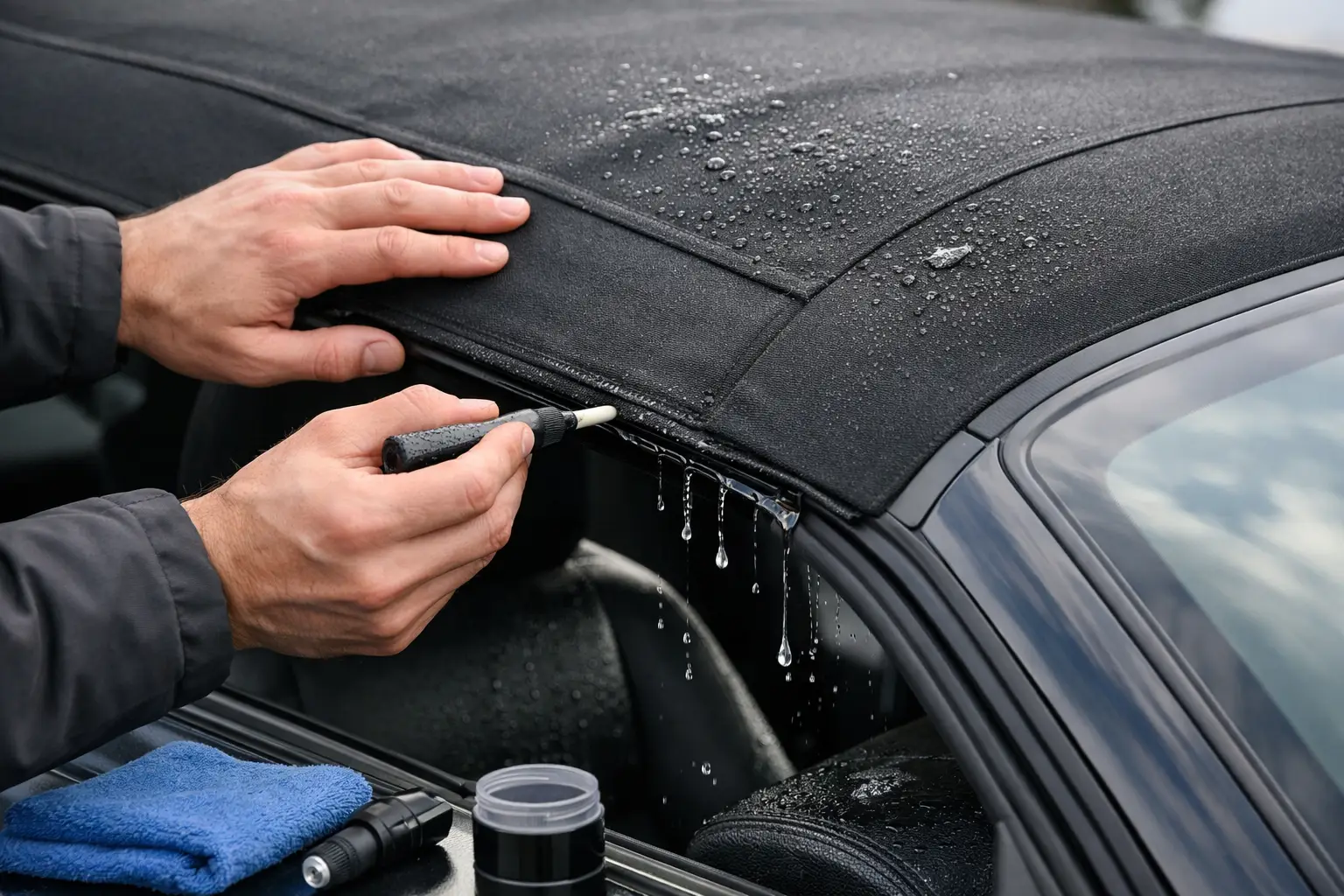
A damp seat bolster, misted glass and that unmistakable musty smell usually appear before you ever see water dripping inside. If you are searching for how to stop convertible roof leaks, the first thing to know is this: the leak you notice is not always where the problem begins. On a soft-top, water can travel through fabric layers, seals, frame joints and blocked drains before it finally shows itself inside the cabin.
That is why quick fixes so often disappoint. A tube of sealant applied in the wrong place may slow the symptom for a week or two, but it rarely addresses the actual fault. If you want a lasting result, the roof needs to be assessed as a system – outer material, stitched seams, tension points, weather seals, drainage channels and frame alignment all working together.
How to stop convertible roof leaks without guessing
The most reliable approach starts with controlled inspection, not trial and error. Begin by checking where the water appears after rain or washing. Is it gathering near the top of the windscreen, around the side windows, behind the seats or in the boot area? Each location points to a different likely cause.
Water at the front header rail often suggests a compressed or damaged front seal, poor latch adjustment or a roof that is no longer sitting square. Dampness near the side glass can mean the window alignment is slightly off, the rubber seal has hardened, or the roof fabric has relaxed over time. Water behind the seats or low in the cabin regularly points to blocked drains rather than a tear in the roof itself.
This is where many owners lose time and money. The roof may look intact from above, yet the drainage path beneath it is clogged with leaf matter, dust and debris. In Singapore’s humidity and frequent rain, that kind of blockage can quickly turn a minor issue into stained trim, mould growth and corrosion in hidden areas.
Start with the simple causes first
Before assuming the roof needs replacement, rule out the common serviceable faults. Dirt on weather seals is one of them. Fine grit can stop seals from seating properly, especially around the windscreen header and quarter window areas. A careful clean with products suitable for automotive rubber and hood materials can restore contact in mild cases.
Blocked drainage channels are another frequent cause. Many convertibles are designed to let some water past the outer sealing line, then direct it safely away through internal channels. When those channels block, water overflows into the cabin. Clearing them sounds straightforward, but it must be done carefully. Poking aggressively with wire or rigid tools can puncture drain tubes or dislodge fittings, creating a bigger problem than the original leak.
Then there is roof alignment. Convertible frames move, settle and wear. A roof that is a few millimetres out can create gaps large enough for wind noise, then water ingress. This is especially common on older vehicles and cars that have had previous roof work done poorly. If the roof has started to sit unevenly, forcing seals or packing gaps with adhesive is not a proper repair.
When the material itself is the problem
If the soft-top fabric or vinyl has aged, shrunk, cracked or separated at seams, cleaning and seal care will not be enough. Material failure tends to show up in predictable places – fold lines, stitched seams, corners under tension and areas exposed to prolonged UV and heat.
Some roofs can be reproofed if the material is sound but has lost water repellency. That can help water bead and run off more effectively. It is useful maintenance, not structural repair. If the backing layer has degraded, seams have opened or the material has worn through, reproofing products will not stop leaks for long.
The rear window bonding area also deserves attention. On certain convertible roofs, the join between the hood material and rear screen can weaken with age. Small failures around that perimeter often go unnoticed until water reaches the parcel shelf or boot trim. By then, the visible wet patch is only part of the story.
Why DIY leak fixes often fail
There is a difference between emergency containment and proper rectification. Taping over a suspect area or applying generic waterproof sealant may get you through a storm, but it usually makes later repair harder. Sealants can contaminate fabric, trap moisture and interfere with correct bonding if specialist work is needed afterwards.
The same applies to over-the-counter treatments sold as universal roof leak solutions. Some are useful in the right situation, but none can compensate for a distorted frame, failed stitch line, split drain tube or hardened seal that no longer makes contact. Convertible roofs are model-specific systems. What works on one car can be ineffective or even damaging on another.
Owners of premium or restoration-worthy vehicles should be especially cautious here. Once interior water damage spreads into headlining components, carpet backing, control modules or trim fixings, the cost moves well beyond the roof itself. A disciplined diagnosis is usually cheaper than repeated patchwork.
What a proper workshop inspection should cover
A specialist inspection should not begin and end with spraying water over the roof. Controlled testing matters because random hosing can flood areas in a way that does not reflect normal water paths. A workshop-led assessment should check the condition of the hood material, seams and tension straps, then examine seals, glass alignment, frame geometry and drainage behaviour.
It should also look below the surface. Wet insulation, trapped moisture under carpets and early corrosion around hidden channels are part of the real repair picture. If a workshop only treats the visible drip point, you may end up back where you started after the next heavy rain.
This is also why in-house specialist work matters. Convertible roof issues sit between trim, body sealing and mechanism alignment. If the diagnosis is fragmented or passed between unrelated parties, accountability becomes blurred. A disciplined workshop process gives you a clearer scope, better quality control and fewer assumptions.
Preventive care makes a real difference
If your roof is not currently leaking, good maintenance can delay expensive repair. Keep the roof clean using products suitable for the specific material. Keep seals free from grime. Avoid folding the roof when wet unless necessary, and if you do, reopen it to dry properly when conditions allow.
Pay attention to changes in closing effort and fit. If the latch suddenly feels tighter, looser or uneven, something has shifted. If wind noise increases around one side, investigate early. Small alignment changes often appear before major leaks do.
Parking habits matter as well. Constant exposure to sun, tree debris and standing moisture accelerates wear. A garaged car generally ages better, but even sheltered vehicles need periodic inspection because drains can still block and seals still harden over time.
How to decide between repair and replacement
Not every leaking roof needs full replacement, but not every roof is worth repairing either. It depends on the age of the material, the extent of seam or seal failure, the condition of the frame and whether previous repairs have compromised the structure.
If the issue is localised – for example a blocked drain, a specific seal fault or an isolated bonding failure – repair can be sensible and cost-effective. If the roof material is widely fatigued, shrinking at multiple points or showing repeated leaks in different areas, replacement may offer better long-term value. The cheapest short-term option is not always the most economical once repeat labour and interior damage are considered.
For owners who care about finish, fit and resale value, appearance matters too. A convertible roof is not just weather protection. It affects cabin noise, roof operation, exterior presentation and the overall impression of the vehicle. A properly fitted top should look right, close correctly and perform consistently in real conditions.
When to bring the car in
If you notice damp smells, recurring misting, water marks on trim, wet carpets, electrical oddities after rain or visible gaps at seals, do not wait for the next storm to confirm the problem. Water ingress tends to compound quietly. By the time it becomes obvious, hidden materials may already be affected.
At 8 Cushion, this kind of issue is approached as specialist roof and interior work, not as a generic quick fix. That matters because the right solution may involve diagnosis across fabric, seals, drainage and trim protection rather than a single visible repair.
A convertible should give you open-air driving without the compromise of a wet cabin every time the weather turns. If your roof is leaking, treat it early, inspect it properly and choose repair work based on cause, not guesswork. Your car will reward that discipline long after the rain has passed.
Related posts
Best Materials for Convertible Tops
Choosing the best materials for convertible tops means balancing durability, wea
7 Signs Your Convertible Roof Needs Replacement
Learn the signs your convertible roof needs replacement, from leaks and noise to
Sun Damaged Car Upholstery Repair Guide
Sun damaged car upholstery repair starts with the right diagnosis. Learn what ca