


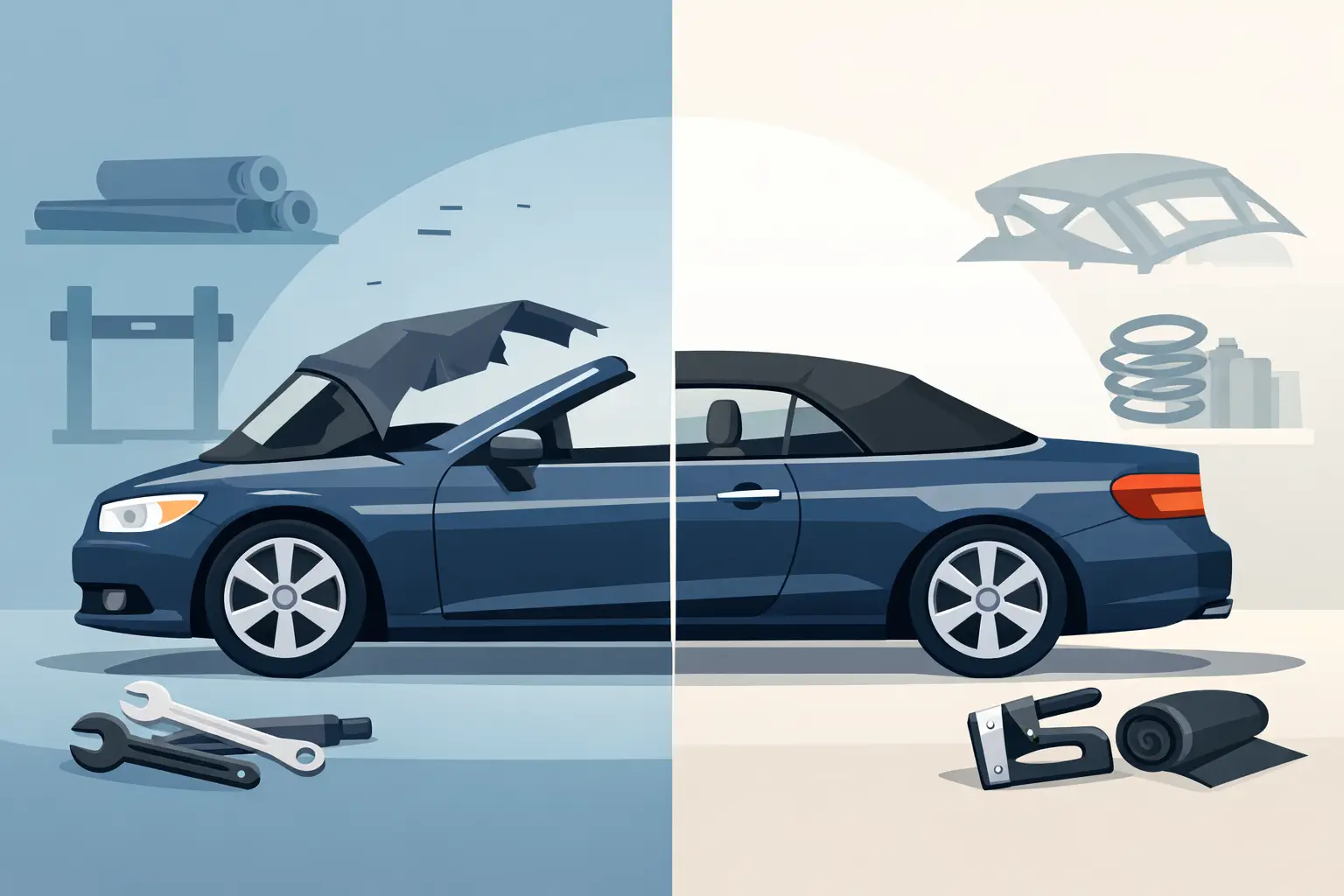
Can You Replace a Convertible Top?
A convertible roof rarely fails all at once. It usually starts with a split at a stress point, a rear screen that clouds or separates, stitching that opens up, or fabric that has simply lost its shape after years of heat, rain and folding. That is why one of the most common questions owners ask is: can you replace a convertible top? In most cases, yes – but whether you should repair part of it or replace the full assembly depends on the roof’s condition, the vehicle model, and the standard of result you expect.
For owners who care about appearance, weather protection and long-term value, this is not a small cosmetic job. A convertible top is a fitted system. The outer skin, tension points, seals, frame alignment, drainage paths and rear window area all work together. If one part has deteriorated, the visible damage may only be half the story.
Can You Replace a Convertible Top on Any Car?
The short answer is that most convertible tops can be replaced, but not every roof should be approached in the same way. Some vehicles allow for a relatively straightforward skin replacement. Others require more extensive dismantling, frame checks, tension cable replacement or attention to worn pads and headlining components.
Age matters. So does brand and design. A newer soft top on a modern European cabriolet may involve tighter tolerances, bonded sections or integrated heated glass. An older classic may need restoration-minded work, where preserving correct fit and material character is just as important as weather sealing. In both cases, the roof can often be replaced, but the process is very different.
This is where specialist assessment becomes important. General trim work and convertible top replacement are not the same discipline. A roof that is installed with poor alignment can create wind noise, water entry, uneven tension or premature wear, even if the new material itself is good.
When replacement makes more sense than repair
Some roofs are still good candidates for targeted repair. A small seam issue, a minor trim separation or localised wear may be addressed without replacing the entire top. But once deterioration affects structure, fit or weather performance, replacement is usually the sounder decision.
If the fabric has become brittle, shrunk or lost its tension, patching one area rarely restores the roof properly. The same applies when stitching has failed in multiple sections or the rear window is separating because the surrounding material is already tired. You can repair one symptom and still be left with an ageing roof that continues to fail elsewhere.
Water ingress is another warning sign. Owners often focus on the visible tear, but leaks may also come from poor seal contact, misaligned frame geometry or fabric that no longer sits correctly under tension. In those cases, fitting a new top without checking the supporting components is only half a job.
What is actually replaced?
When people ask if they can replace a convertible top, they are often referring to the outer fabric or vinyl roof skin. That is usually the primary replacement item, but a proper workshop inspection may reveal other parts that should be addressed at the same time.
These can include tension cables, side straps, pads, seals, rear window sections, insulation layers and parts of the headlining. On some vehicles, the frame itself may not need replacement, but it may need adjustment, cleaning or correction before the new roof is fitted.
This matters because a convertible top does not perform well on a compromised foundation. If the frame is slightly twisted, a latch point is worn, or drainage channels are blocked, even a carefully made roof skin can end up under the wrong load. That affects both lifespan and finish.
Material choice affects the final result
Replacement is not just about making the car look new again. Material selection changes how the roof sits, folds, seals and ages. The right replacement should suit the vehicle, not just the budget.
Canvas and premium fabric tops generally offer a more refined finish and better original-style appearance on many vehicles. Vinyl may suit certain models or owner preferences, particularly where original specification or easier cleaning is a factor. There are also differences in backing, weave, thickness and UV resistance that affect performance in local conditions.
In Singapore, heat, humidity and sudden heavy rain place real demands on convertible roofs. A material that looks acceptable at first may not hold shape or colour well over time if quality is poor. Proper storage and handling of materials before installation also make a difference. A disciplined workshop treats roof material as a fitted component, not just rolled stock on a shelf.
Can you replace a convertible top yourself?
Technically, some owners can attempt it. Practically, most should think carefully before doing so.
A convertible top is not fitted like a seat cover. Installation involves controlled tension, correct alignment, measured positioning, bonding or fastening in the right sequence, and careful handling of trims, seals and frame points. A small error early in the job can show up later as wrinkles, uneven closing, trapped water or stress tears.
There is also the issue of diagnosis. If the old roof failed because of frame wear or drainage issues, simply replacing the skin does not solve the cause. Many DIY attempts end up costing more when the top has to be removed and refitted, or when surrounding parts are damaged during dismantling.
Owners of premium, ageing or restoration-worthy vehicles usually want more than a passable finish. They want the roof to sit properly, close properly and last. That calls for specialist hands, correct workshop process and accountability for the finished result.
The fitting process matters as much as the new top
A good replacement job starts before the old roof comes off. The vehicle should be inspected for frame condition, previous repairs, seal wear, water path issues and hidden deterioration. Only then can the correct scope of work be set.
After removal, the supporting structure needs attention. Old adhesive residue, fatigued components and alignment issues should not be ignored for the sake of speed. The new roof must then be positioned and tensioned according to the design of that specific model. This is not guesswork. It is measured, repeatable workshop work.
Finishing is equally important. Window alignment, edge fitment, latch closure, weather sealing and drainage checks should all be part of the job. When work is done in-house, quality control is clearer. There is no handover between multiple parties and no blurred responsibility if something is not right.
That is one reason owners choose specialists such as 8 Cushion for convertible top work. The value is not only in the replacement part itself, but in disciplined execution from assessment to final fitment.
Cost depends on more than the roof skin
Owners naturally ask about price early on, and fairly so. But convertible top replacement is one of those jobs where a quick figure without inspection can be misleading.
The cost depends on the vehicle model, roof design, material choice, rear window type, condition of the frame and whether related components also need replacement. A simple skin change on a well-kept roof mechanism is very different from a full job involving cables, pads, seals and correction of previous poor workmanship.
Cheap quotes often leave out that second part. The roof may be replaced, but not restored to proper function. That can mean noise, leaks, uneven lines or a shorter service life. Transparent pricing is more useful than low headline pricing because it shows what is actually being done and why.
How to tell if your car is a good candidate
If your convertible still opens and closes correctly, the frame is fundamentally sound, and the damage is mainly in the roof material, replacement is often very worthwhile. It can improve weather resistance, cabin presentation and resale appeal in one job.
If the car has suffered accident damage, severe corrosion around roof mounting points, or long-term water intrusion into surrounding trim, the work may need a broader restoration approach. That does not mean replacement is impossible. It means the job should be scoped properly rather than treated as a routine swap.
For many owners, the deciding factor is whether they want the car to be merely usable or properly finished. Those are different outcomes. A specialist workshop will usually be honest about where your car sits on that scale.
A convertible roof is one of the most visible and hardest-working parts of the vehicle. If yours is tired, leaking or losing shape, replacing it is often not only possible but sensible – provided the work is assessed properly and carried out with care. The best results come when the roof is treated as a precision trim system, not a quick cover change.
Related posts
Can a Convertible Top Canvas Be Repaired?
Can a convertible top be repaired? Yes - but it depends on the damage, material

Can Car Seat Leather be Repaired?
If you’ve spotted a tear, hole, or crack in your leather car seat, it’s unde

Inside The Car Was Her Special Place
The little girl always loved going out, sitting in her father’s car as he drov