


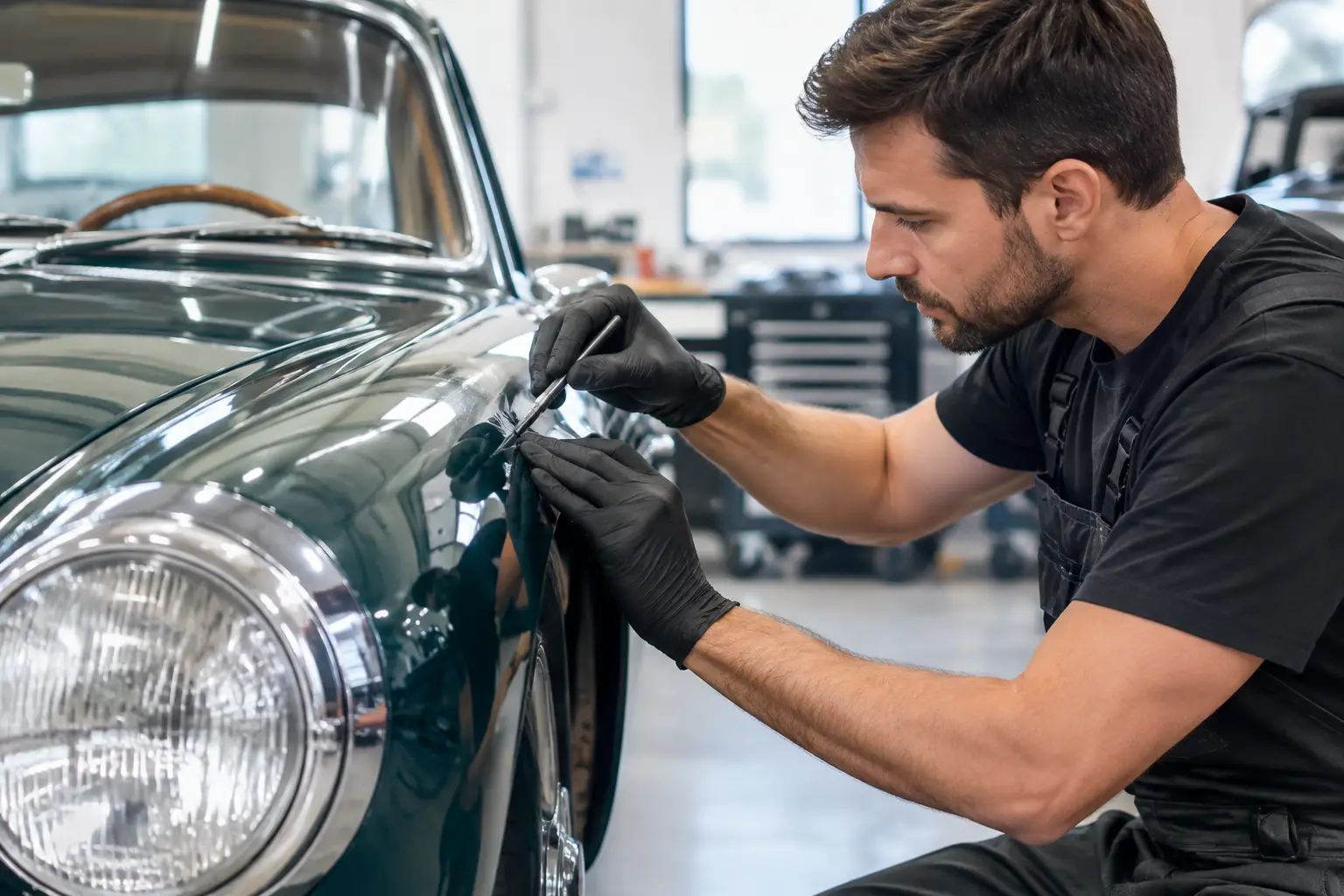
Why In House Car Restoration Workmanship Matters
A sagging roof lining, split seat bolster or tired convertible hood can make an otherwise well-kept car feel neglected. In house car restoration workmanship changes more than the appearance of these faults. It gives the owner a clear line of accountability from the first inspection to final fitting, with the people assessing the problem also responsible for the finished result.
For specialist interior and trim work, that continuity matters. A repair can look acceptable at collection, yet fail early if the adhesive, preparation, material tension or fitting method was wrong. Proper restoration is not simply about covering a damaged surface. It is about understanding why it failed, selecting a suitable remedy and carrying out the work with control at every stage.
What in house car restoration workmanship means
In-house work means the core restoration process is completed by the workshop responsible for your vehicle. The vehicle, materials, patterns and components remain under the care of one specialist team rather than moving through a chain of third parties.
That does not mean every job follows the same formula. A convertible top, for example, may need diagnosis of its fabric, rear screen, frame alignment, seals and drainage points before replacement is even discussed. A roof lining may have deteriorated because its backing foam has broken down, while a leather seat may need localised repair, panel replacement or a full retrim depending on its condition and your expectations.
The advantage of an in-house process is that these decisions are made close to the workbench. The technician can inspect the item as it is removed, identify hidden damage and adjust the approach before a small issue becomes an expensive return visit.
Better control begins before any material is cut
Good workmanship is often most visible in the details owners do not immediately see. Before fitting new upholstery, a specialist should examine the seat frame, foam shape, fixings and electrical functions. Before installing a new roof lining, they should check the headlining board, trims, clips and surrounding seals. Before working on a convertible hood, they should look at the frame operation and the points where fabric is stretched, fastened and sealed.
When assessment and production happen under one roof, information is less likely to be lost between people. There is no need to describe a crease, a loose trim or an awkward fit through several layers of administration. The person carrying out the work can see the original condition and compare it with the agreed scope.
This also supports more honest advice. Sometimes a careful repair is the sensible choice. Sometimes replacing a weakened section will offer better value than trying to preserve material that has already reached the end of its useful life. The right answer depends on the vehicle, the extent of damage, the availability of matching materials and whether the owner is maintaining a daily driver, a premium car or a long-term restoration project.
Materials need more than a close visual match
Automotive interiors are exposed to heat, humidity, movement and regular contact. In Singapore, parked cars face particularly demanding conditions. A material that appears similar in colour or grain may not perform well if it lacks the appropriate backing, thickness, UV resistance or flexibility.
This is where specialist judgement becomes practical value. The workshop must consider how a material will behave around curves, seams, edges and moving parts, not just how it looks on a sample card. Adhesives must suit both the substrate and the temperatures the vehicle may experience. Foam, thread, clips and trims must be selected with the same care as the visible covering.
Proper material storage is part of that discipline. Clean, organised stock and controlled handling help prevent contamination, creasing and avoidable waste. It may sound routine, but restoration quality is built on routine done properly.
Fit and finish are a process, not a last-minute check
A neat seam is not achieved by luck. It relies on accurate measurements, sensible pattern work, correct cutting and careful tension during installation. On a convertible roof, even a minor alignment error can affect water sealing, wind noise or how the hood sits when raised. On a seat, poor tension can create premature creasing or leave the finished surface uneven.
In-house technicians can inspect their own work as it progresses. If a trim does not sit correctly, it can be corrected before the car leaves the workshop. This is far more effective than discovering the issue after installation has been completed elsewhere and responsibility has become unclear.
Accountability protects the owner
Outsourcing is not automatically poor practice, but it can create distance between the customer and the craft. If a job passes through several businesses, it may be harder to establish who inspected the vehicle, who selected the material, who performed the installation and who will resolve a problem afterwards.
With in house car restoration workmanship, the responsibility remains direct. The workshop can explain the condition found, the recommended scope and the limits of a particular repair before work begins. If additional issues appear after dismantling, the customer can be updated with a clear reason for any change rather than being presented with an unexplained result.
This matters particularly on older and premium vehicles. Age can make trims brittle, fasteners unavailable and existing repairs unpredictable. A responsible specialist will not promise factory-new perfection where the underlying component cannot support it. Instead, they will explain what can be restored, what should be replaced and what trade-offs may remain.
No middleman mark-ups, clearer decisions
A direct workshop relationship also makes pricing easier to understand. When the business handling your car is the business producing the work, the quotation can be based on the actual repair method, labour and materials required. There is less risk of extra middleman mark-ups being added simply because a job has been passed on.
Clear pricing does not always mean the lowest price. Skilled restoration takes time, and quality materials have a cost. What it should mean is that you can see the value in the recommendation: whether it is a targeted repair to extend the life of an interior, a replacement roof lining to restore cabin comfort, or a more comprehensive retrim for a vehicle you intend to keep.
The cheapest option may conceal shortcuts such as surface-only repairs, unsuitable materials or incomplete preparation. Those shortcuts are often revealed later through bubbling fabric, lifting edges, colour mismatch, loose fittings or early wear. Spending carefully once is usually preferable to paying twice for the same problem.
A more sustainable way to care for a vehicle
Restoration is also a practical form of sustainability. Replacing a whole component is sometimes necessary, especially where safety, structural condition or water sealing is involved. But many tired interiors do not need wholesale replacement. A worn panel, collapsed roof lining or damaged section of trim may be restored or renewed without discarding every sound part around it.
The key is to avoid false economy. Retaining a component that is too weak to support a durable repair does not reduce waste if it fails shortly afterwards. A specialist assessment helps identify where preservation is worthwhile and where replacement is the more responsible long-term option.
For owners of older cars, this approach can preserve character as well as value. Correct material texture, stitching style and fit can make a significant difference to how authentic the cabin feels. For newer vehicles, it can restore comfort and presentation without treating the car as disposable.
Questions worth asking before you commit
Before approving restoration work, ask who will carry out the job, where the materials will be handled and how the workshop will assess hidden damage. Ask whether the proposed repair addresses the cause of the fault, not only the visible symptom. It is also sensible to discuss material options, expected finish, turnaround time and any limitations arising from the age or condition of the vehicle.
A good workshop will welcome these questions. Clear consultation is not an obstacle to efficient work. It is how expectations are set properly and how owners make confident decisions about vehicles that matter to them.
At 8 Cushion, the principle is straightforward: specialist restoration deserves specialist control. When the same workshop consults, prepares, restores and checks the work, your car receives more than a cosmetic improvement. It receives workmanship built for the road ahead.
Related posts
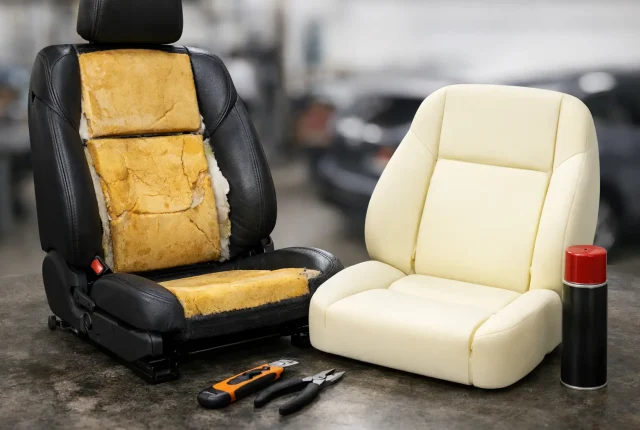
Choosing Replacement Car Seat Foam Properly
Choosing replacement car seat foam is about more than softness. Match density, t
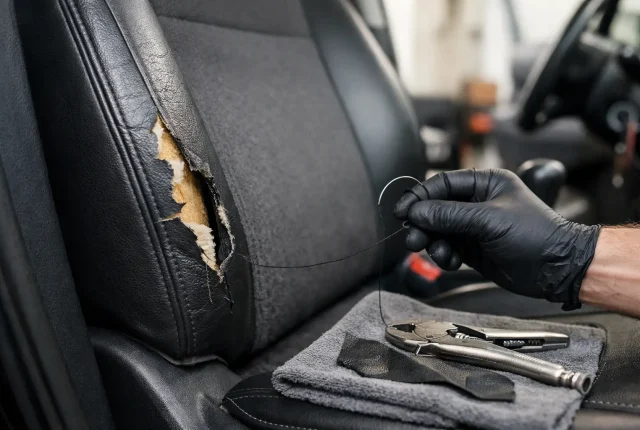
Can Torn Car Seats Be Repaired?
Can torn car seats be repaired? Yes - depending on the damage, material, and pan

How to Assess Windscreen Chip Damage
Learn how to assess windscreen chip damage properly, spot repairable chips early