


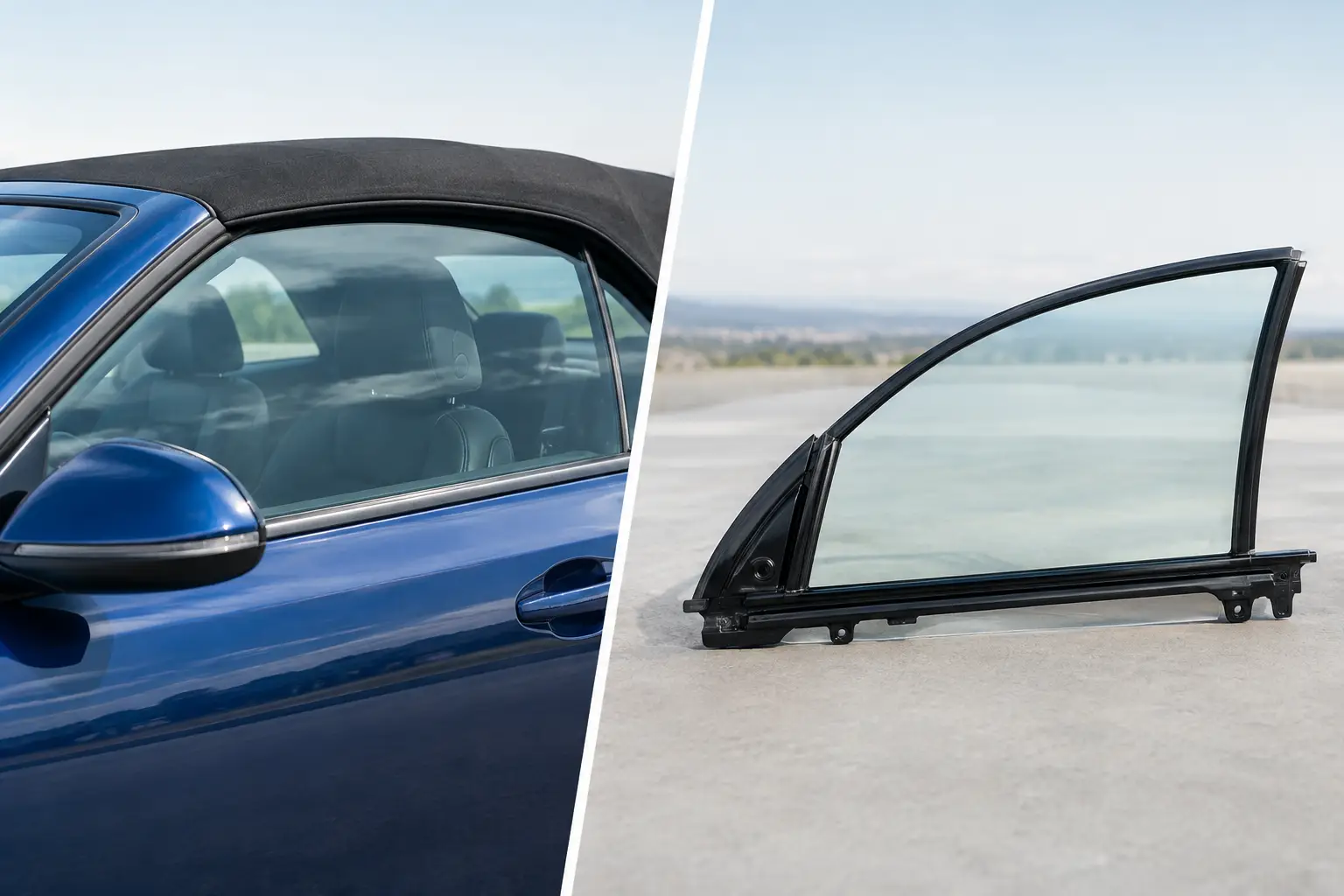
OEM Versus Aftermarket Convertible Windows
A cloudy, split or detached convertible rear window changes more than the appearance of a car. It can admit water, raise wind noise and place extra stress on a soft top that may otherwise still be serviceable. The choice between OEM versus aftermarket convertible windows deserves more care than simply selecting the lowest-priced replacement.
For many convertibles, the rear window is not a stand-alone piece of glass or plastic. It is part of a precisely shaped roof assembly, joined to fabric, stitching, seals and, on some vehicles, heating elements. The correct decision depends on the vehicle, the condition of the existing hood and the standard of finish expected.
OEM versus aftermarket convertible windows: the real difference
OEM means Original Equipment Manufacturer. In practical terms, an OEM replacement is made to the vehicle manufacturer’s original specification, or supplied through its approved parts route. It is intended to match the original window’s dimensions, curvature, tint, fittings and, where applicable, heated-screen connections.
Aftermarket parts are produced by independent manufacturers. Some are made specifically for a certain make and model. Others are more universal in design and may require adaptation during installation. The term aftermarket does not automatically mean poor quality. Equally, an OEM label does not remove the need for a proper inspection and careful fitting.
The relevant question is whether the replacement works correctly with the complete convertible top. A window that appears close enough on a bench can be wrong once the roof is tensioned, folded and exposed to Singapore’s heat and heavy rain.
When an OEM convertible window is the stronger choice
OEM is usually the safer route where the original roof remains in good condition and the vehicle needs an exact factory-style outcome. This can be particularly worthwhile for premium cars, newer models, low-mileage examples and vehicles with strong resale or collector value.
The principal advantage is consistency. An OEM glass rear screen should have the intended curve, correct demister layout and proper mounting points. On plastic-window roofs, the original specification may include a particular gauge, tint or zip arrangement that helps the hood fold as designed. Matching these details reduces uncertainty.
An OEM component can also simplify diagnosis. If the roof has developed a leak, uneven tension or interference with the frame, a known-correct part removes one variable from the repair. That does not mean the job is automatically straightforward. Old stitching, fatigued fabric, corroded fasteners and compressed seals can still affect the final result.
The limitations are availability and cost. Manufacturers may discontinue components for older convertibles, particularly complete roof sections and individual rear-window assemblies. A dealer-supplied part can also cost considerably more, and it may still require specialist trimming work rather than a simple replacement.
When aftermarket can be the sensible option
A high-quality aftermarket window can be a practical answer when OEM supply has ended, the vehicle is used regularly, or the owner wants to preserve a sound hood without paying for a complete replacement top. It may also be the only realistic option for certain classic and specialist convertibles.
The best aftermarket products are vehicle-specific, not generic. They are made to the correct outline and use materials appropriate to the roof design. On a plastic rear screen, clarity, thickness, flexibility and resistance to UV deterioration matter. On a glass screen, correct curvature, edge finishing, tint, heating connections and bonding surfaces are key.
There can be genuine value in aftermarket replacement, but the saving should be assessed across the whole job. A lower-priced screen that requires excessive modification, does not sit correctly against the hood or creates a poor seal is not a saving. The installation quality and condition of the surrounding roof determine whether an aftermarket part performs well over time.
Material, fit and folding behaviour matter most
Convertible windows are exposed to a demanding combination of sun, moisture, vibration and repeated movement. A rear window must not only look right when the roof is raised. It must tolerate the fold pattern when the roof is lowered.
Plastic screens are common on older and more compact convertibles. They are lighter and can fold with the hood, but they can haze, scratch, harden and crack with age. Replacing only the screen can make sense if the hood fabric remains flexible, secure and free from major shrinkage. If the hood is brittle or the stitching is failing, fitting a new window into weak material may only postpone a larger repair.
Glass rear screens offer better visibility and scratch resistance, often with a heated element. They are heavier and rely on the roof’s structure, adhesive system and seals being in good order. A glass-screen repair must account for electrical connections and ensure the screen is positioned accurately before the adhesive cures.
Fit is not judged by appearance alone. The roof should latch without excess force, sit evenly at the side rails and retain its designed tension. Seals should contact consistently, and the window should not pull the fabric out of shape. These checks are especially important after any non-OEM installation.
Do not assess the window in isolation
Before selecting a replacement, a specialist should inspect the hood fabric, rear bow, stitching, zips or bonded edges, drain paths, rubber seals and frame operation. This avoids an all-too-common outcome: a new rear window fitted to a roof that is already approaching the end of its useful life.
A few faults can resemble a failed window but originate elsewhere. Water entering the cabin may come from blocked drains, flattened seals or a misaligned roof frame. Wind noise may be caused by side-window adjustment. A demister that does not work may involve wiring rather than the glass itself. Proper inspection protects the owner from replacing the wrong component.
This is also where independent advice matters. The most expensive route is not always necessary, and the cheapest route is not always responsible. A good workshop should explain whether a window-only repair is viable, whether a complete top gives better long-term value, and what finish or limitation is realistic for an ageing roof.
Installation quality decides the result
Whether the window is OEM or aftermarket, installation is the point at which the repair succeeds or fails. Convertible-top work is trim work, sealing work and structural alignment work at the same time. It should not be treated as a quick glass replacement.
The process may involve removing the roof from the vehicle, releasing trim and tension cables, separating bonded sections or unpicking stitching, then preparing the mating surfaces before fitting the new component. The roof must be aligned under the correct tension. Adhesives require appropriate preparation and cure time, while sewn sections need disciplined stitch placement and finishing.
At 8 Cushion, this type of work is handled in-house so the assessment, material choice and fitting standard remain under one accountable process. That is particularly valuable when the condition of the roof changes the recommended scope after careful inspection.
Owners should be cautious of a quotation that names only a window price without addressing labour, seals, roof condition and water-testing. Transparent work scope makes it easier to compare options fairly. Ask what material is being fitted, whether it is vehicle-specific, how the roof will be checked after installation, and whether related wear has been identified before work begins.
Choosing the right route for your convertible
Choose OEM where exact factory specification, original appearance and known compatibility are priorities, and where the part is available at a sensible project cost. It is often the preferred option for modern, premium and preservation-focused vehicles.
Choose a quality, vehicle-specific aftermarket solution where OEM parts are unavailable, a proportionate repair is needed, or the existing roof can support a properly matched replacement. This is often a sound route for older cars, provided the work is assessed and fitted by specialists.
Avoid universal or poorly documented parts simply because they appear inexpensive. Convertible roofs have little tolerance for imprecise dimensions, unsuitable materials or rushed installation. The visible screen may be the reason for the appointment, but the condition of the entire roof should guide the decision.
A clear rear window is satisfying, but a correctly fitted one delivers the greater value: dry journeys, quieter motoring and a soft top that continues to operate as it should.
Related posts
Can Cracked Leather Car Seats Be Repaired?
Can cracked leather car seats be repaired? Yes - but the right method depends on
How to Restore Sagging Roof Lining Properly
Learn how to restore sagging roof lining with sound diagnosis, suitable material
How to Fix Peeling Car Upholstery Properly
Learn how to fix peeling car upholstery properly, when a DIY repair is enough, a