


Headliner Repair Versus Replacement Options
A sagging roof lining can make an otherwise well-kept car feel neglected every time you get behind the wheel. The material may droop above the rear seats, peel around the sunroof, or hang close enough to obstruct your rear-view vision. When considering headliner repair versus replacement options, the right answer depends less on finding the quickest fix and more on identifying why the lining has failed in the first place.
A proper assessment protects both the appearance of the cabin and the condition of the underlying roof panel. For many vehicles, particularly older premium models and cars exposed to Singapore’s heat and humidity, a headliner failure is not simply a cosmetic inconvenience. It is a material breakdown that calls for the right preparation, adhesive system and fitting method.
Why Car Headliners Fail
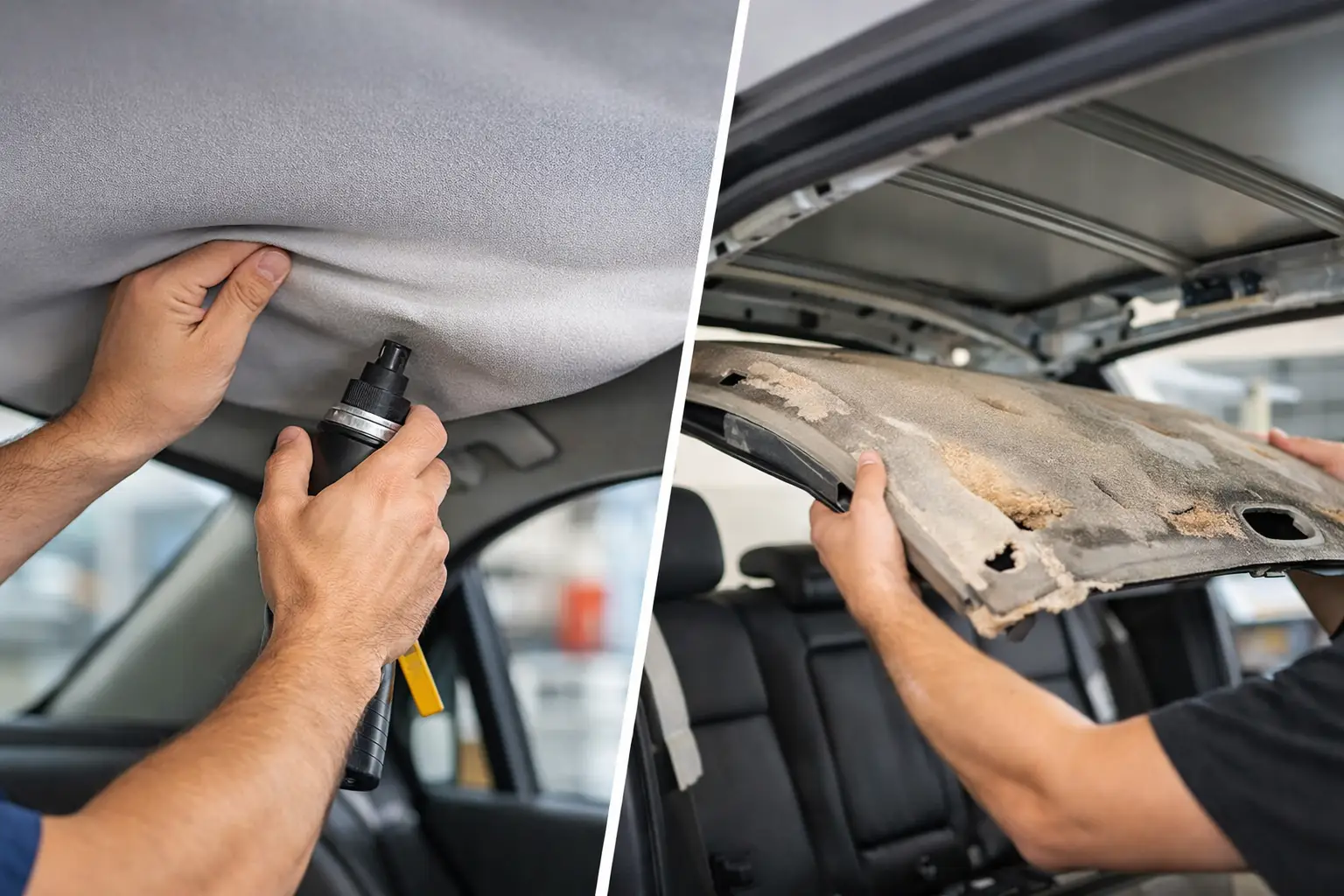
Most sagging headliners begin with the foam backing rather than the visible fabric. Over time, the original foam deteriorates and turns brittle or powdery. Once it no longer bonds properly to the board behind it, the fabric separates and starts to fall.
Heat is a major contributor. A vehicle parked outdoors regularly experiences high cabin temperatures, while humidity places further stress on adhesives and foam. Age, poor previous repairs, water ingress and cleaning chemicals can also accelerate deterioration. Vehicles with a sunroof require particular care because the headliner has more cut-outs, contours and areas where the material must sit precisely.
This is why spraying adhesive onto loose fabric is rarely a dependable answer. It may hold briefly at the edges, but it cannot restore foam that has already failed across the board. The result is often a wrinkled finish, visible staining or another sag within a short period.
Headliner Repair Versus Replacement Options: What Is the Difference?
The word “repair” can mean different things. A small, isolated issue may be repaired without renewing the entire headliner. Replacement usually means removing the headliner assembly, stripping the failed material from the board, preparing the surface and fitting a new lining before reinstalling it correctly.
The decision should be based on the extent of the damage, the condition of the backing board and the standard you expect from the finished cabin.
When a targeted repair is sensible
A local repair may be suitable where damage is genuinely limited. For example, a trim edge may have come loose after work around a windscreen, a pillar cover may need refitting, or a small section may have been disturbed near an interior light fitting. If the original foam remains stable and the surrounding material is clean, taut and properly bonded, a precise repair can make good practical sense.
This route can preserve an original lining where authenticity matters, especially in a vehicle with unusual factory material that is otherwise in excellent condition. It can also reduce downtime and cost when the affected area is small and accessible.
However, targeted repairs have limits. Matching aged fabric can be difficult, and a local fix will not stop deterioration elsewhere if the foam has started breaking down. A careful workshop should be clear about this before work begins rather than presenting a temporary patch as a long-term restoration.
When full headliner replacement is the better investment
Complete renewal is usually the sounder option when the fabric is sagging across a large area, feels loose when pressed, has staining from failed adhesive, or has already been glued back unsuccessfully. It is also appropriate when the lining has become discoloured, torn or distorted around the sunroof, grab handles or roof-mounted electronics.
A full replacement allows the failed material and foam residue to be removed properly. The headliner board can then be inspected for cracks, warping and damaged mounting points before new material is applied. This preparation is where lasting results are won or lost. A new fabric installed over old foam or contaminated adhesive is unlikely to sit smoothly for long.
For owners who intend to keep their car, restore it or prepare it for sale, a correctly renewed headliner gives the cabin a noticeably cleaner, more complete finish. It also prevents the loose material from interfering with visibility and makes the vehicle more pleasant to use every day.
What a Proper Replacement Process Should Include
Headliner work is not a job for rushed trimming. The assembly often needs to be removed through a door opening or rear hatch with care, especially in vehicles with delicate pillars, airbags, sunroof components or aged interior plastics. Forcing the board can cause cracks that are difficult to conceal later.
Once removed, the old fabric is stripped away and the board is cleaned thoroughly. Any remaining degraded foam must be removed so the new adhesive can bond to a stable surface. The board is checked and repaired where necessary before the new material is measured, positioned and formed to the roof contours.
Material selection matters. A headliner fabric needs the right stretch, thickness and backing to follow curves without puckering or lifting. The finish should complement the vehicle’s original character, whether that calls for a close factory-style match or a considered upgrade. Colour, texture and light reflection all affect how the interior feels once the lining is back in place.
The lining is then refitted alongside handles, lights, visors, pillar trims and weather seals. Each part must sit correctly. A tidy-looking fabric surface means little if clips are damaged, trim is misaligned or a sunroof surround is not finished cleanly.
Cost, Downtime and the Value of Doing It Once
A quick glue repair is understandably tempting when the fabric first begins to drop. Yet the lowest initial price can become poor value if it leads to repeated visits, adhesive marks or a full replacement later. The true comparison is not only repair cost against replacement cost. It is the likely lifespan, finish quality and risk of avoidable damage to the cabin.
Full replacement costs more because it involves material, controlled preparation, removal and refitting work. Cars with sunroofs, complex roof consoles, rear entertainment systems or fragile trim can require additional labour. Convertibles and classic vehicles may also need a more specialised approach, as access, material choice and original construction vary considerably.
A transparent quotation should explain the scope clearly: whether the headliner board will be removed, what material is proposed, whether minor board repairs are included and what related trim work may be required. There should be no uncertainty about whether the job is a temporary reattachment or a complete renewal.
At 8 Cushion, headliner work is handled in-house, allowing the workshop to control preparation, material handling and the final fitment. That direct responsibility matters when a vehicle needs careful interior work rather than a one-size-fits-all solution.
Questions Worth Asking Before You Approve the Work
Before choosing between a repair and replacement, ask whether the foam backing is still sound. Ask whether the proposed repair addresses the cause of sagging or only holds the visible fabric in place. It is also sensible to ask how the material will be matched, how the board will be cleaned and whether the vehicle has features such as a sunroof or roof-mounted equipment that affect the work.
Photographs can help a specialist provide an initial view, but an in-person inspection is often the most reliable way to judge the board, trims and extent of deterioration. A trustworthy recommendation will not automatically favour the largest job. If a precise repair is sufficient, it should be offered. If replacement is the only route to a durable finish, the reasons should be explained plainly.
Choosing the Option That Suits Your Car
There is no benefit in replacing a headliner that has only suffered a minor, isolated trim issue. Equally, there is little value in repeatedly repairing a lining whose foam has failed across the roof. The condition of the material, the vehicle’s age, the complexity of its interior and your plans for ownership all shape the sensible choice.
Treat the headliner as part of the vehicle’s overall interior standard, not an afterthought. A measured inspection and properly executed work will leave you with a roof lining that looks right, sits securely and gives every journey the finish your car deserves.
Related posts
How to Stop Convertible Roof Leaks Properly
Learn how to stop convertible roof leaks with proper checks, cleaning, drainage
Best Auto Upholstery Repair: What Matters
Looking for the best auto upholstery repair? Learn what separates specialist wor
How to Maintain Convertible Soft Top Properly
Learn how to maintain convertible soft top fabric, seals and rear windows proper